Mines, Midterms, and AI Accountability: A World of Compounding Pressures
From unconfirmed mine strikes choking the Strait of Hormuz to Trump staffers retaining lawyers ahead of November, Monday's news cycle is defined by cascading crises with no clear resolution in sight.
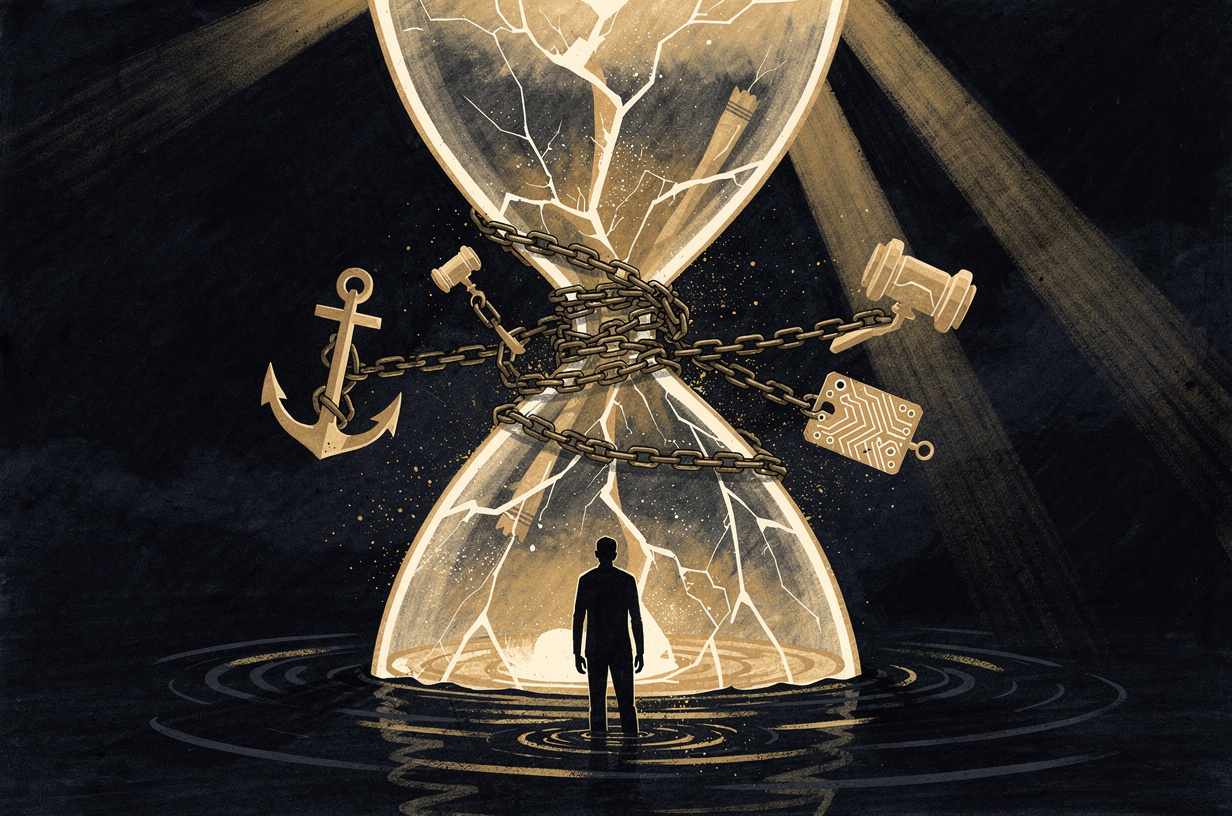
“a verification gap that is itself a strategic instrument, capable of spiking insurance premiums and oil prices without requiring a single confirmed act of war”
How this was made Verified AI
Every Intellegix briefing is generated from that day's broadcast and run through automated checks before it publishes — with a human paged on any flag. Here is the trail for this edition.
Three Tankers, No Witnesses: The Hormuz Mine Claims Roiling Global Markets

The Islamic Revolutionary Guard Corps is claiming a third oil tanker has been struck by a mine in the Strait of Hormuz, alleging the vessel was traveling an unauthorized route with its automatic identification system switched off. None of the three claimed strikes has been independently confirmed by maritime insurers, satellite tracking services, or neutral shipping authorities — a verification gap that is itself a strategic instrument, capable of spiking insurance premiums and oil prices without requiring a single confirmed act of war.
The Strait of Hormuz carries between 15 and 20 percent of the world's oil supply through a navigable channel roughly 21 miles wide at its narrowest point. Mine warfare in that environment is particularly difficult to attribute: mines can be placed days or weeks in advance, giving their deployers a layer of deniability that a drone launch or missile strike does not afford. The IRGC's choice to announce mines rather than direct-fire weapons is strategically significant for precisely that reason.
The conflict has a painful human dimension that surfaced publicly over the weekend. Joey Amor, whose wife was killed in an Iranian drone strike against U.S. forces, directly confronted Vice President Vance and demanded accountability for the commanders responsible. Vance responded that he had not heard about the specific failures being described — an answer delivered to a grieving widower that went viral almost immediately and handed critics a potent symbol of the administration's distance from the war's consequences.
Historical precedent sharpens the stakes. During the 1980s Tanker War, Iran mined international shipping lanes in the Gulf, and the USS Samuel B. Roberts nearly sank after striking an Iranian mine in 1988. The U.S. response — Operation Praying Mantis — destroyed two Iranian oil platforms and sank or damaged several Iranian vessels in a single day. The current administration has not characterized the latest incidents at that level of escalation, but analysts note that pressure to respond kinetically grows significantly harder to resist if a third independently confirmed strike occurs.
Europe on Edge: Meloni's Security Summit and the NATO Funding Fight in Congress

Italian Prime Minister Giorgia Meloni convened emergency security talks in Rome over the weekend as civil unrest reportedly spread across multiple European capitals. The meetings signal that the intelligence picture is concerning enough that European leaders are coordinating outside formal NATO mechanisms — a telling choice given the alliance's increasingly uncertain relationship with Washington.
The unrest reportedly blends elements of the traditional left, which opposes military engagement in the Middle East, with far-right movements framing the conflict as a distraction from immigration and domestic economic pain. Meloni — who leads what observers describe as the most explicitly post-fascist government in Western Europe — has nonetheless been among the most reliable NATO voices on Ukraine and, now, on the Iran conflict, making her the convener of an awkward coalition.
The cohesion question is equally fraught in Washington. A faction of House Republicans is now explicitly conditioning Pentagon appropriations on specific administration positions regarding Russia — deploying one of Congress's most powerful tools, the spending lever, to force a policy commitment the White House has so far avoided making. Whether the requirement targets Ukraine policy specifically or reflects broader skepticism of NATO commitments is not entirely clear from available reporting, but the seriousness of the maneuver is not in doubt.
The timing carries its own logic. With Democrats reportedly confident they can flip the House in November, the Republicans attaching policy strings to defense money may be attempting to lock in those conditions before they potentially lose the power to attach them. For NATO partners watching from Europe, the signal is an uncomfortable one: seven decades of assumed unconditional U.S. commitment to the alliance now appears negotiable in ways that are reshaping European defense planning.
DOJ's Elastic 'Rule,' a Targeted State AG, and Staffers Quietly Lawyering Up
The Department of Justice clarified this week that its 60-day rule — the long-standing practice of avoiding overt investigative actions that could influence an election in the final two months before voting — is informal policy rather than binding regulation. The clarification, landing in the middle of midterm season, is being scrutinized from every direction: either a gesture of administrative transparency or a signal that the norm's constraints are being loosened precisely when they matter most.
Utah Attorney General Celeste Henderson announced publicly that the DOJ has placed her under federal investigation. Henderson, a Republican and vocal critic of the Trump administration's approach to federal-state relations on elections, is alleging the investigation is retaliatory. The DOJ has neither confirmed nor denied it. A sitting state AG claiming federal targeting weeks before a midterm animates both sides simultaneously — Republicans citing federal overreach, Democrats citing the use of prosecution as a political tool.
Wall Street Journal reporting adds another layer: Trump staffers ranging from cabinet secretaries to mid-level aides are retaining attorneys specifically to prepare for the possibility of Democratic congressional probes if November goes badly for Republicans. Those most exposed, according to the reporting, are officials involved in decisions around the Iran conflict, DOJ independence, and immigration enforcement — all areas where Democratic leadership has signaled interest in formal investigation with subpoena power.
A federal judge offered the week's most direct institutional rebuttal to executive pressure. Judge Reyes rejected a DOJ motion to remove her from a case involving the planned 15-month closure and overhaul of East Potomac Golf Links, calling the motion baseless — and doing so within hours of the president publicly announcing the November 15th closure date. Legal observers described the DOJ's recusal arguments as thin. A federal judge publicly labeling a government motion baseless and remaining on the case is a direct confrontation, and it forecloses a tactic — using recusal motions as forum-shopping instruments — that would, if successful, give the executive branch meaningful influence over case assignments across the federal judiciary.
Algorithm, Accountability, and Anthropic: AI Enters the Political Arena

Meta revised its explanation for why the 'No Kings' Instagram account — a large anti-Trump group active during nationwide protests, with over a million followers — was locked out of the platform. The updated account blames a third-party automation tool built on Anthropic's Claude model, which was accessing the account at a frequency Meta's systems identified as bot-like behavior, triggering a flag and a lockout. The technical mechanism does not resolve the political question: regardless of cause, a major organizing hub for anti-government protest went dark at a critical moment.
The layered architecture of modern AI deployment creates a diffusion of accountability that each party in the chain can exploit. Meta can point to the third-party tool. The tool's builders can argue they operated within acceptable API parameters. Anthropic, whose model served as the underlying engine, is one step further removed still. Each layer of the stack has a plausible argument that it did not make the final call — which is precisely why 'Claude-based tool' is the phrase most likely to circulate regardless of technical accuracy.
Separately, Anthropic announced Sunday that it will commit five percent of its shares to a new public benefit fund, pending stockholder approval. At the company's last known valuation of roughly 61 billion dollars, five percent represents approximately three billion dollars in potential public benefit endowment. Elon Musk responded on X that the amount was insufficient and that Anthropic should give shares directly to the public rather than to a fund — a position that critics noted sits in tension with Musk's own tightly held control over X, SpaceX, and xAI.
Legal experts are meanwhile flagging a separate AI-related liability exposure: users of the new generation of always-on AI wearables may face wiretap claims from third parties recorded without their knowledge. The Federal Wiretap Act carries both civil and criminal provisions, and state laws vary sharply — California requires all-party consent while most states require only one-party consent. Manufacturers have generally addressed consent only in terms of service that bind the user, not the third parties whose conversations are being logged. The Sherman Antitrust Act framework, which prohibits not monopoly position itself but anticompetitive conduct used to maintain it, may increasingly apply as a small number of foundational model providers gain control over the ecosystem underlying these devices.
SpaceX Shares for Every Newborn, and $150 Billion the Buffett Children Can't Divide
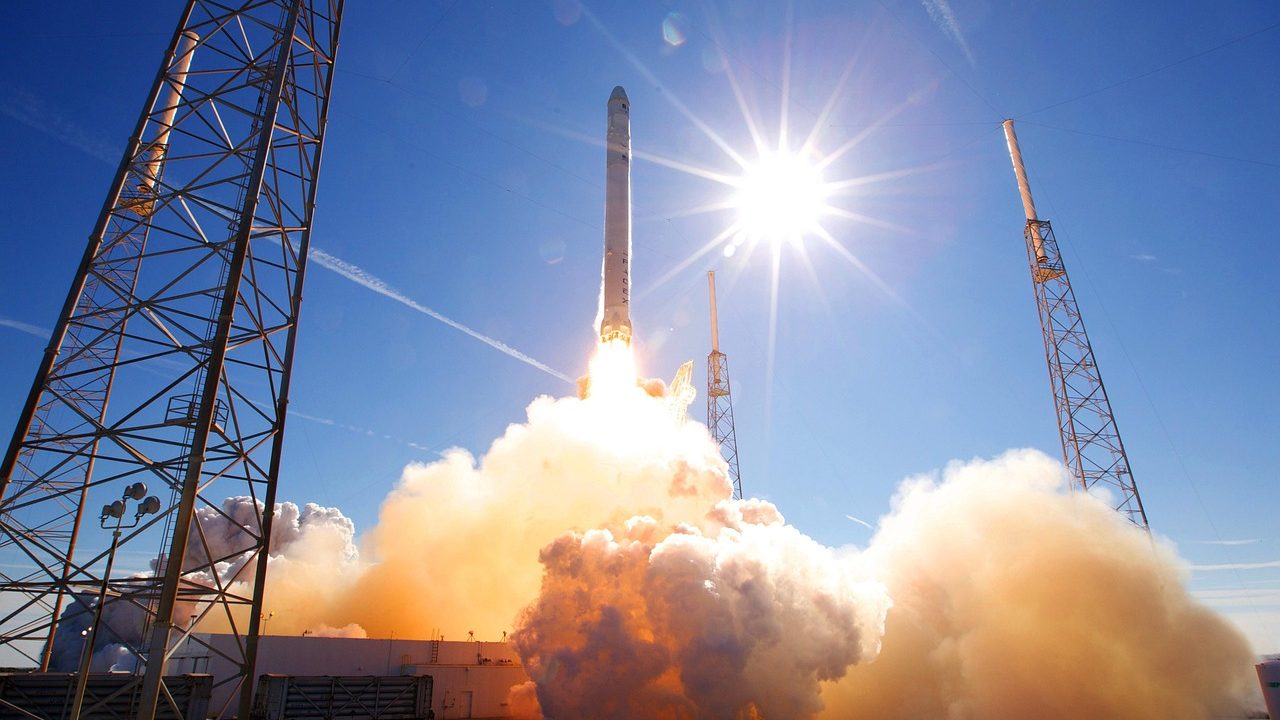
Elon Musk announced over the weekend on X that he will give one SpaceX share to every child born in the United States. The announcement arrived without accompanying legal documentation, a timeline, or an administrative mechanism. SpaceX is a private company with shares that cannot simply be distributed to the roughly 3.6 million children born in the United States each year without resolving securities law questions around beneficial ownership, custodianship for minors, and the valuation implications of creating millions of new small shareholders in a privately held aerospace company.
SpaceX's last known private valuation was approximately 350 billion dollars, placing a single share in the range of several hundred dollars depending on share class and dilution. Creating tens of millions of new minor shareholders over a decade would require amending SpaceX's shareholder agreements — a years-long corporate governance process requiring sign-off from existing investors, not a social media post. At its most charitable reading, the pledge represents a future wealth transfer contingent on SpaceX's continued success. At its most skeptical, it is a marketing announcement with no binding legal commitment.
The conceptual ambition, if genuine, does have precedent: Norway's sovereign wealth fund provides every Norwegian citizen an indirect stake in natural resource revenues. Musk's proposal is vaguely analogous but privately administered by a single founder rather than through democratic governance — a distinction that matters enormously for accountability.
The contrast with Warren Buffett's philanthropic architecture is instructive. Buffett's three adult children — Susie, Howard, and Peter — face a 2034 deadline to distribute his remaining Berkshire Hathaway shares, valued at roughly 150 billion dollars at current prices, and reportedly cannot agree on whether to pool efforts into a single foundation or split the endowment into three separate operations. The disagreement illustrates a rarely discussed reality of extreme philanthropy: at that scale, the absorptive capacity of most institutional causes is insufficient, and the governance structure chosen to distribute the money may matter as much as the causes it ultimately funds.
Helium Rationing, Gas Price Defenses, and a Nor'easter Compounding the Pain

S&P futures were trading up approximately half a percent Monday morning, around 7,746, suggesting markets are taking a measured view of the Hormuz situation rather than pricing in a panic. Traders appear to have already built a persistent Iran-conflict premium into crude, or are remaining cautious about overreacting to IRGC press releases lacking independent confirmation — a notably different response than the sharp immediate spike seen after the 2019 Abqaiq drone strikes temporarily took five percent of global oil supply offline.
The conflict's most counterintuitive economic footprint is in helium. Critical for semiconductor fabrication, MRI machines, fiber optic manufacturing, and aerospace testing, helium is produced primarily in the United States from natural gas extraction in Kansas, Oklahoma, and Texas — but Qatar and Iran hold enormous reserves, and the conflict has disrupted supply chains enough to force rationing at American research institutions and chip plants. Intel's new fabs, TSMC's Arizona facilities, and Samsung's Texas plant all require helium at various production stages; rationing does not halt production immediately but slows throughput and raises unit costs in an industry where margins are already compressed.
University physics and chemistry departments, national laboratories, and medical research centers are absorbing the shortage differently, deferring maintenance on superconducting magnets and interrupting long-running experiments. The scientific cost is less dramatic than chipmaker delays but, by accounts in the reporting, real.
The administration has responded to elevated gas prices not by attacking them but by defending them as an acceptable cost of strategic confrontation with Iran — a position that is defensible as policy but historically risky as politics. The Carter administration's attempt to frame high energy prices as the cost of a correct foreign policy in 1979 and 1980 offers cautionary electoral precedent. The administration's apparent bet is that the conflict de-escalates before November normalizes prices. A slow-moving nor'easter forming off the Outer Banks of North Carolina, threatening several days of coastal flooding from Virginia through New England, adds another layer of economic stress to supply chains already strained by energy costs and helium rationing.
The Judiciary Holds — but the Pressure Is Structural, Not Episodic
The pattern of judicial resistance to executive pressure that Judge Reyes's golf course ruling represents is broader than any single case. Throughout 2025 and 2026, district courts have issued injunctions against executive orders, circuit courts have upheld them, and the Supreme Court — despite a 6-3 conservative majority — has been less uniformly deferential to the executive than the administration reportedly expected, reflecting what observers describe as genuine institutionalist instincts among some of the conservative justices.
The Reyes ruling is a near-perfect illustration of how judicial independence is maintained at the ground level. A district judge evaluates a government recusal motion on its legal merits, finds it baseless, says so publicly, and stays on the case. The DOJ's only recourse is an emergency application to the circuit court, which has its own timeline and its own judges. The system's built-in friction, in other words, is working as designed — but it requires individual judges willing to name what they are seeing.
Wall Street Journal reporting that the president's physician travels no more than three minutes away at all times presents its own interpretive ambiguity: reassuring evidence of medical contingency planning, or an implicit acknowledgment of specific health considerations. The framing lands during a midterm season where the presidency's stability is itself a political variable. Presidents have always traveled with physicians, but the specificity of the 'three minutes' detail is not standard in how such arrangements are typically characterized publicly.
Taken together — the recusal motion, the DOJ election-rule clarification, the staffers retaining lawyers, the Henderson investigation — these stories form a coherent portrait of an executive branch simultaneously testing the outer limits of current authority and preparing for a potential loss of congressional power. The institutions are holding, but sustained pressure at this volume has structural effects even when individual confrontations are won.
Baron Cohen's Method, a Razzie's Real Damage, and the Stanford Prison Experiment Returns
Sacha Baron Cohen appeared on 60 Minutes to discuss the creative methodology behind Ali G — the fictional British rapper whose interviews with politicians, business leaders, and public figures in the late 1990s worked by exploiting a specific social dynamic: powerful people unwilling to correct or contradict someone who appears beneath them, for fear of seeming condescending. The condescension, Baron Cohen explained, was the trap. His targets talked themselves into embarrassing positions not out of stupidity but out of a performed tolerance that revealed its own failure mode.
Jesse Eisenberg offered a quieter, more damaging entertainment story: he says that winning a Razzie Award for Worst Actor genuinely cost him studio film roles. The Razzies were conceived as satirical counterparts to the Oscars, designed as a lighthearted skewering of bad films. Eisenberg's account suggests studios factored the award into casting decisions, treating a satirical prize as a reputational marker — a reminder that ironic awards carry real career consequences when the industry declines to read them as irony.
Netflix's Stanford Prison Experiment remake premieres Wednesday, placing 30 volunteers in a Georgia jail as either guards or prisoners, with what the production describes as modern safeguards including institutional review board oversight. Preview material suggests conditions deteriorated significantly by day six — echoing the timeline of Philip Zimbardo's original 1971 study, which was halted after six days when guards began psychologically abusing prisoners. Zimbardo's original study has been substantially criticized in recent decades: its methodology was flawed, Zimbardo himself took on an administrative role rather than remaining a neutral observer, and some participants have said the behavior was encouraged rather than spontaneous.
The ethical question the remake cannot fully resolve is whether deteriorating conditions under controlled modern oversight would constitute meaningful scientific replication — or whether television producers have sufficient incentive to keep cameras rolling when things turn disturbing that the outcomes tell us more about reality television than about human nature. The midterm forecasting question is similarly worth examining: the widespread assumption that Democrats will flip the House rests on historical pattern, gas-price headwinds, and swing-district polling, but polling systematically undercounted Republican turnout in 2016 and 2020, voters may evaluate government competence rather than price levels in isolation, and a slim Democratic majority may have limited appetite for the aggressive oversight posture its most vocal members are promising. Early vote patterns in Georgia and Arizona, expected within ten days, will provide the first substantive read on whether the wave scenario is real.