AI's Hidden Costs, a Mars Mission Lost, and the Tools Reshaping How Developers Think
From a Tokyo schoolyard's tally marks to sealed sample tubes sitting on the Martian surface, Tuesday's Hacker News conversation ranged across the cognitive costs of AI assistance, crumbling space-science ambitions, and the infrastructure quietly bending under the weight of machine-speed coding.

How this was made Verified AI
Every Intellegix briefing is generated from that day's broadcast and run through automated checks before it publishes — with a human paged on any flag. Here is the trail for this edition.
A Tokyo Schoolyard's Tally Marks Frame the Day's Deepest Questions
In 1965, teachers at a Tokyo school began recording each morning that Mount Fuji was visible on the horizon — 22 times that year. By 2023, the same tradition yielded 170 tally marks, a nearly eightfold increase driven by Japan's decades-long improvement in air quality after industrial pollution peaked in the 1960s and 1970s. Nobody designed it as a scientific study. It was simply a school tradition that, maintained across generations, produced exactly the kind of long-term observational record researchers now find invaluable.
That image — what can be seen clearly versus what has been obscured, and what emerges as noise clears away — ran as a quiet undercurrent through Tuesday's most engaged discussions on Hacker News, a community that the Intellegix HN Daily podcast described as unusually rigorous at distinguishing between a thing working and a thing working for the reason its builders think it does.
The Attention Tax: What AI Coding Tools May Be Quietly Costing Developers

A post titled 'Attention Is All You Have' — a deliberate riff on the 2017 transformer paper — was generating serious debate Tuesday, sitting at 841 points with 249 comments. Author Alice Gg argues that outsourcing cognitive work to AI systems doesn't merely change how developers work; it changes which mental muscles they exercise, and atrophy is real. The mechanical work of programming, the argument goes, was never purely mechanical — it was where engineers encountered edge cases, built intuition, and discovered that high-level designs were actually wrong because they couldn't be implemented as imagined. Removing that friction removes a feedback loop.
The thread was notable for not splitting along expected lines. Some of the most engaged responses came from enthusiastic AI users who nonetheless reported feeling genuinely slower when working without their tools after a week of heavy use — anecdotal, but resonant enough that many participants said they had been experiencing it privately. A related post, 'I Don't Want to Read What You Didn't Write,' from author Colin Breck, drew 734 points and 298 comments with a complementary argument: AI-generated prose doesn't provide access to a human mind working through a problem but rather a statistical reconstruction of what such thinking looks like, stripping out the signal about a writer's actual beliefs, reasoning process, and uncertainties.
The strongest counter-argument in the threads held that what's being lost — slow, effortful reconstruction of boilerplate — was never where developer value resided. The value was always in design decisions, architectural thinking, and problem formulation; if AI handles translation from intent to code, the developer specializes upward rather than atrophying. A stress test of that claim surfaced a useful distinction: 'slower without AI' compared to one's own past performance is a very different measurement than slower compared to a hypothetical self who never used the tools at all, and if AI raises the ceiling of what a developer can tackle, the relevant metric is what they're building now versus what they could build before.
The question remains empirically open. If the atrophy argument is correct, a cohort of developers who entered the field after AI coding tools became ubiquitous should, within three to five years, show specific struggles: debugging novel failures, working in languages underrepresented in training data, designing systems without obvious precedent. If the specialization argument holds, that cohort should perform equivalently or better on complex problems while routine-task gaps prove irrelevant because those tasks are AI-handled anyway.
A 2011 essay resurfaced in the thread — 'Socrates vs. the Written Word' — noting that Socrates made almost the same argument about writing itself, fearing it would substitute the appearance of knowledge for actual knowledge. He was not entirely wrong about the mechanism: writing did change memory practice. The tradeoffs, however, turned out to be worth it in ways he could not fully anticipate, and the HN community is genuinely uncertain whether the current tradeoff is similarly net positive or whether something qualitatively different is underway.
MiMo, an AI Math Advisory Group, and the Benchmarks That May Not Mean What We Think

Xiaomi's MiMo v2.6 model release was the top post of the day at 933 points, with analysis from Artificial Analysis showing a price-to-performance ratio among the best currently available and benchmark scores competitive with systems substantially larger in parameter count. The HN community's response was characteristically skeptical not of the numbers themselves but of their meaning: the benchmarks were largely designed before models existed specifically to be optimized against them, raising the question of what 'performance' actually measures.
A post about an advisory group examining how AI interacts with mathematical reasoning drew attention alongside the MiMo discussion. According to the podcast hosts, the group — chaired by Fields Medal winner Terry Tao — is concerned not that AI will replace mathematicians but with something subtler: what happens when AI assistance becomes good enough that researchers stop constructing proofs from first principles, and whether that changes the nature of what is collectively understood versus what can merely be generated on demand.
A visual explainer for transformers from the Polo Club at Georgia Tech, drawing 444 points, was being shared well beyond the usual machine-learning circles. The interactive visualization lets users watch attention weights shift in real time as a transformer processes text; people who had read the original 2017 paper multiple times reported finally having a visceral understanding of what multi-head attention actually does. Separately, a paper asking whether gzip — the lossless compression algorithm from 1992 — can behave like a language model answered: kind of, yes, in a narrow sense, since compression and prediction are mathematically related. The practical benchmark numbers were uncompetitive with modern LLMs, but the conceptual demonstration clarified what it means to say a system 'understands' language.
The Machinery of Modern Development Is Bending Under AI Speed
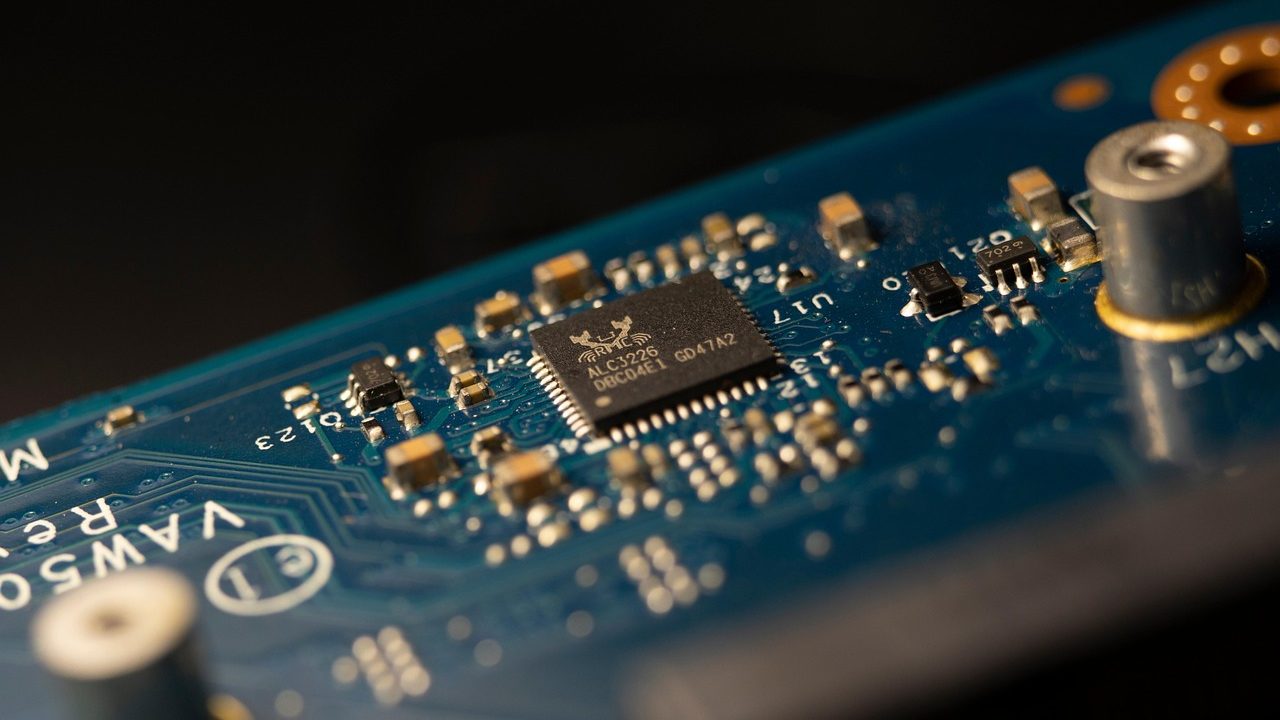
Linear, the project management tool used by many engineering teams, published a post about rearchitecting its continuous integration pipeline after AI coding tools caused pull request volume to increase substantially — enough that a CI system designed for human-speed code submission became a genuine bottleneck. The 285-comment thread revealed the problem is structural and widespread: CI pipelines assume a developer submits code a few times a day; AI-assisted coding can mean ten, fifteen, or twenty submissions daily, requiring fundamentally different queuing, test-selection, and parallelization models. Linear's solution involved smarter identification of which tests are actually relevant to a given change.
Cloudflare announced Python Workers reaching general availability on its edge network, a meaningful step for data science teams that live in Python and want to deploy processing logic close to users geographically. Python has historically been difficult to deploy at the edge because of startup latency; Cloudflare's compiled approach brings startup times down to levels competitive with JavaScript workers. Meanwhile, a Git 2.56 post was generating anticipation aimed primarily at what Git 3.0 might contain — proposals on the table include a cleaner internal object format, better handling of large repositories, and improvements to the conflict resolution interface, though the community noted that 'we'll fix this in the next major version' is a promise Git has made before.
JetBrains Air, positioning itself as an agentic development environment where multiple AI agents can collaborate on a codebase under developer supervision, drew modest initial engagement at 14 points and 6 comments — but JetBrains has a history of shipping developer tooling that takes time to gain adoption before becoming deeply embedded, and its IntelliJ ecosystem reaches a large share of Java and Kotlin developers.
The most technically alarming infrastructure story was an investigation into AMD's hardware random number generator and whether it can produce a zero. After significant community investigation, the answer appears to be no — or at least not in certain configurations — because of a bias that makes zero vanishingly rare rather than statistically impossible. In cryptographic applications, 'vanishingly rare' is meaningfully different from 'impossible': a systematic bias in an RNG shrinks the statistical space of possible outputs, giving an attacker who knows about the bias a measurable advantage. Whether this specific AMD behavior crosses any security threshold remains debated, but the category of problem is serious.
Spymarks, Apple, and the Widening Gap Between Consent and Reality

A piece on 'Spymarks' drew 120 comments for raising concerns that go well beyond traditional digital watermarking. Where conventional watermarks allow an organization to forensically identify a leak after the fact, Spymarks as defined by the brand.io article are designed to report back in real time to whoever placed them — transmitting IP address, device fingerprint, and access time — without any indication to the person who opened the document. The 120-comment thread worked through the distinction between legitimate use cases, such as corporate data-loss prevention or tracking leaks of classified material, and more troubling ones, noting that a system designed to catch journalists leaking government documents is functionally identical to one designed to monitor employees talking to union organizers.
A separate post — 'I Said No and Apple Said Yes,' from author David Bushell, drawing 262 points and 189 comments — described Apple Intelligence activating and processing content in ways that contradicted explicitly configured privacy settings. Apple has staked a significant part of its AI strategy on the claim that on-device processing and user control differentiate it from competitors; if that claim is eroding in practice, the reputational cost is higher for a company that made privacy central to its brand than it would be for one that never made the promise.
The regulatory landscape complicates accountability. The United States has no comprehensive federal privacy law, and the FTC's authority under Section 5 of the FTC Act — prohibiting unfair or deceptive practices — sets a high bar when behavior is disclosed somewhere in a lengthy privacy policy. The EU's Digital Markets Act is more directly applicable: Apple is already fighting multiple DMA compliance battles in Brussels, and the kind of data-use behavior Bushell documented is precisely what EU investigators have found actionable, particularly if processing creates advantages for Apple's own services that competitors' apps cannot access.
A lighter but genuinely inventive piece, 'SemFont' by Rohan Adwankar, described a font that renders differently depending on the semantic content of what was typed — certain words or phrases trigger different visual treatments. Framed more as art project than product, it prompted an HN discussion about whether the display layer could become a site of meaning-making rather than a neutral carrier of text.
Sun's Missed Chances, Mars's Sealed Tubes, and Shortwave's Quiet Comeback
Bryan Cantrill's 'What Sun Got Wrong' post reached 602 points and 350 comments, with the systems programming community working through a retrospective on Sun Microsystems written by someone who was inside it. Cantrill identifies several strategic errors that are not unique to Sun: a belief that technical superiority would translate automatically into market success without serious sales and distribution investment; a culture that valued engineering elegance over pragmatic compatibility, leading to dismissiveness toward the PC architecture even as it ate the workstation market from below; and a complicated relationship with open source — Sun eventually open-sourced Java and Solaris, but too late and with too much ambivalence to build the kind of community that Linux cultivated. The 350-comment thread drew in people who were present, adding texture and in some cases correction; the emerging consensus was that the hardware margin problem may have been unsolvable, but that Sun could have survived as a software company had it been willing to make that identity transition earlier.
The cancellation of NASA's Mars Sample Return mission, drawing 401 points and 334 comments, was described as a genuine scientific loss. Perseverance collected samples over years of careful rover operations; those samples are currently sitting in sealed tubes on the Martian surface. Laboratory analysis of Mars material would address questions about ancient Martian habitability — whether life ever existed there — that cannot be answered remotely, because the required measurements cannot fit on a rover. The mission's estimated cost grew from roughly four billion dollars to somewhere between eight and eleven billion depending on the accounting, and NASA's planetary science budget could not absorb the overrun. A Science article quoted researchers who spent years on the mission and described the outcome as devastating. The HN thread also raised harder structural questions: large NASA missions have a recurring pattern of cost overruns that function as predictable institutional features rather than anomalies, with the James Webb Space Telescope cited as a mission that survived that dynamic and delivered extraordinary science, while Mars Sample Return may not get a second chance.
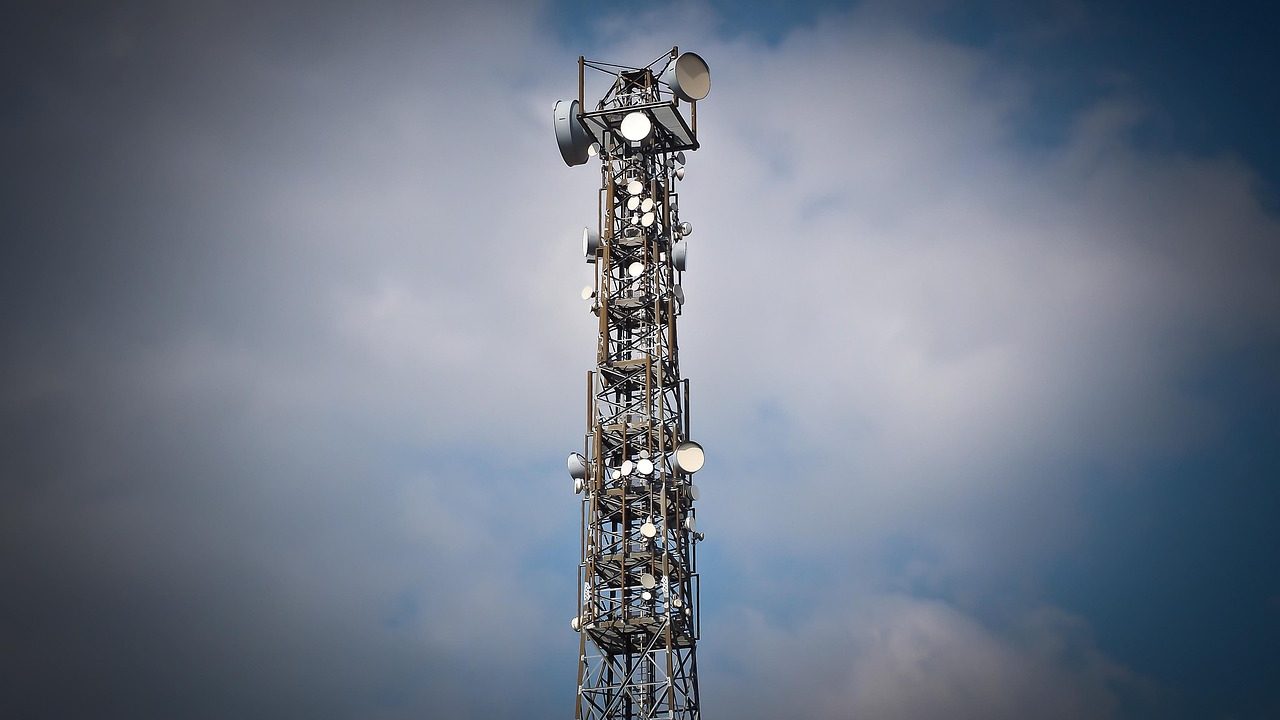
The HERMES shortwave radio project, covered in an IEEE Spectrum piece, offered a counterpoint about what's possible with constrained resources. HERMES is a digital shortwave system providing voice and data communication over thousands of kilometers by exploiting the same ionospheric bounce that underpinned international broadcasting for decades, now combined with sophisticated signal processing to extract reliable data from an inherently noisy, variable channel. For disaster response, remote scientific stations, or scenarios where satellite uplinks are unavailable or compromised, the capability has real strategic value — a century-old physical phenomenon made newly useful by modern processing.
Nine Ads Per Minute, a Finnish Climate Raise, and a Claude Outage With Irony

Research from Bristol University on FIFA World Cup 26 advertising found an average of nine advertisements per minute of viewing time when accounting for all forms — in-broadcast graphics, sponsored replays, pitch-side boards, and traditional commercial breaks — or roughly one ad every six and a half seconds. Focus groups in the study reportedly showed fatigue and irritation correlating with ad density rather than match quality. The 45-comment HN thread debated whether viewers have adapted by developing filtering mechanisms that process ads without conscious registration, or whether this density is measurably degrading the viewing experience; the economic logic driving it is straightforward, with broadcasters under pressure to maximize ad inventory against rising rights fees, and streaming platforms increasingly moving toward advertising tiers rather than away from them.
Finnish climate tech company Verda raised 189 million dollars in a Series B — a substantial round in a funding environment more selective than the 2021 and 2022 peak. The company's announcement was noted for being unusually specific about where the capital would go, a transparency uncommon in venture-backed announcements. Finland has been described as punching above its weight in climate tech for several years, partly because of its engineering culture and partly because Nordic energy policy creates a more hospitable regulatory environment for new approaches to grid storage and renewable integration.
A Claude outage — 121 points, 88 comments — carried particular irony given the day's central debate. Anthropic's status page showed elevated errors across multiple Claude models, and buried beneath the workaround-sharing and frustration in the thread was a meta-conversation about the risks of deep dependency on AI services that can go offline. The question it raised was precisely the one 'Attention Is All You Have' had posed hours earlier: when your AI coding assistant is unavailable, do you still know how to work without it? In a separate closing note, the show corrected an error from a May episode in which hosts incorrectly stated that Ukraine was hitting Russian ships in the Caspian Sea — the Caspian Sea is landlocked and hundreds of kilometers from any Ukrainian-controlled territory, and no such attacks occurred.