Sun's Missed Chances, Mars's Sealed Tubes, and Shortwave's Quiet Comeback
How this was made Verified AI
Every Intellegix briefing is generated from that day's broadcast and run through automated checks before it publishes — with a human paged on any flag. Here is the trail for this edition.
Bryan Cantrill's 'What Sun Got Wrong' post reached 602 points and 350 comments, with the systems programming community working through a retrospective on Sun Microsystems written by someone who was inside it. Cantrill identifies several strategic errors that are not unique to Sun: a belief that technical superiority would translate automatically into market success without serious sales and distribution investment; a culture that valued engineering elegance over pragmatic compatibility, leading to dismissiveness toward the PC architecture even as it ate the workstation market from below; and a complicated relationship with open source — Sun eventually open-sourced Java and Solaris, but too late and with too much ambivalence to build the kind of community that Linux cultivated. The 350-comment thread drew in people who were present, adding texture and in some cases correction; the emerging consensus was that the hardware margin problem may have been unsolvable, but that Sun could have survived as a software company had it been willing to make that identity transition earlier.
The cancellation of NASA's Mars Sample Return mission, drawing 401 points and 334 comments, was described as a genuine scientific loss. Perseverance collected samples over years of careful rover operations; those samples are currently sitting in sealed tubes on the Martian surface. Laboratory analysis of Mars material would address questions about ancient Martian habitability — whether life ever existed there — that cannot be answered remotely, because the required measurements cannot fit on a rover. The mission's estimated cost grew from roughly four billion dollars to somewhere between eight and eleven billion depending on the accounting, and NASA's planetary science budget could not absorb the overrun. A Science article quoted researchers who spent years on the mission and described the outcome as devastating. The HN thread also raised harder structural questions: large NASA missions have a recurring pattern of cost overruns that function as predictable institutional features rather than anomalies, with the James Webb Space Telescope cited as a mission that survived that dynamic and delivered extraordinary science, while Mars Sample Return may not get a second chance.
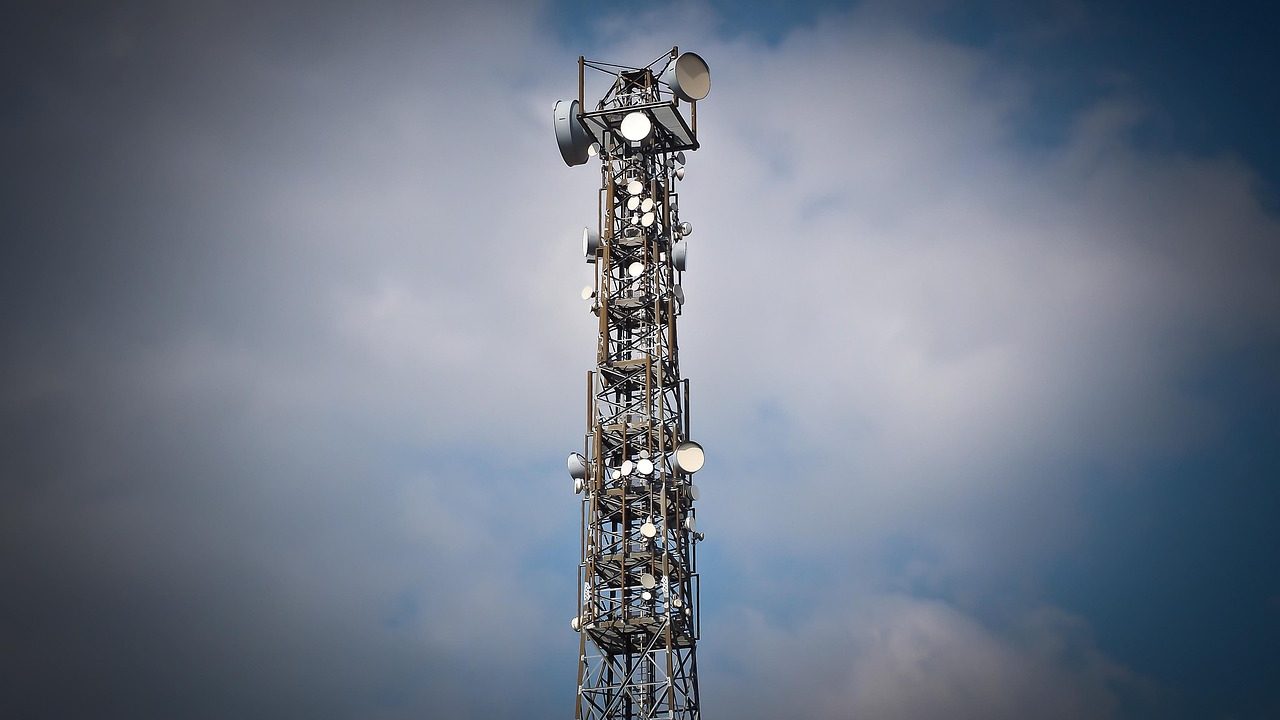
The HERMES shortwave radio project, covered in an IEEE Spectrum piece, offered a counterpoint about what's possible with constrained resources. HERMES is a digital shortwave system providing voice and data communication over thousands of kilometers by exploiting the same ionospheric bounce that underpinned international broadcasting for decades, now combined with sophisticated signal processing to extract reliable data from an inherently noisy, variable channel. For disaster response, remote scientific stations, or scenarios where satellite uplinks are unavailable or compromised, the capability has real strategic value — a century-old physical phenomenon made newly useful by modern processing.