The Case Against Speed: What the Transit Optimists Could Get Wrong
How this was made Verified AI
Every Intellegix briefing is generated from that day's broadcast and run through automated checks before it publishes — with a human paged on any flag. Here is the trail for this edition.
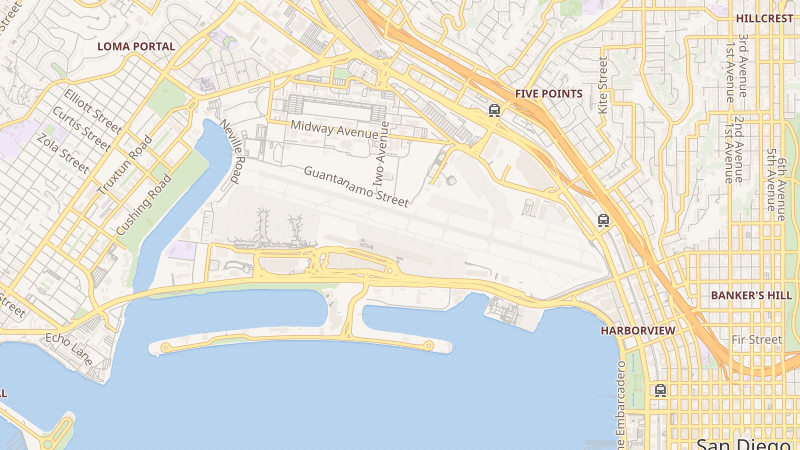
The SANDAG committee's 6-to-2 vote to pursue a dual request-for-information and request-for-proposals approach on the airport transit connection has been framed broadly in local coverage as a long-overdue acceleration of a project that has stalled for nearly two decades. The implied logic is that faster is better, and that protecting the $350 million funding allocation by targeting a 2029 construction-ready deadline justifies the compressed timeline. But the strongest version of the counterargument is worth taking seriously.
Rushing a project of this scale through environmental review to meet a funding window is, historically, how regions end up with transit infrastructure that underperforms. Environmental review is not procedural obstruction — it is the process through which design flaws, community impacts, and engineering constraints are identified before concrete is poured. SANDAG CEO Mario Orso's expressed caution about litigation risk was a professional assessment, not political hedging: California courts have repeatedly delayed major transit projects when review was compressed or inadequate, sometimes costing more time than a slower initial process would have required.
The cost estimates for the five surviving concepts span from $1.2 billion to $2.8 billion — a range wide enough to suggest that the precision needed for sound decision-making does not yet exist. If the region commits to a concept under political pressure to reach 2029 and the cost estimate proves significantly understated — a pattern that has characterized virtually every major transit project in California over the past two decades — the $350 million federal contribution will look like a small down payment on an expensive mistake.
There is also a harder structural question: whether any of the five selected concepts is actually the right one for San Diego's geography and travel patterns. Automated people movers can be built faster but serve a narrower corridor. Trolley extensions integrate with the existing transit network but involve greater complexity and longer timelines. If the concept chosen is the one most likely to survive a compressed review rather than the one best suited to long-term demand, the 2029 deadline will have driven a multi-billion-dollar infrastructure decision in the wrong direction.
Two signals would indicate the optimists are right: first, whether the dual RFI-RFP process attracts credible private-sector bids with realistic timelines that acknowledge environmental review requirements; and second, whether the selected concept survives that review without material modification. If the shortlisted option changes significantly during review, it would be evidence that front-end acceleration did not save time — it merely moved the complications downstream. The two dissenting committee votes are also worth watching: if their objections are technical rather than political, they may be identifying precisely those failure modes.