Airport Chaos, a $350 Million Transit Deadline, and Nearly $200 Million in City Spending: San Diego at a Infrastructure Crossroads
A technical meltdown at San Diego International Airport on Tuesday collided with a pivotal regional transit vote, throwing into sharp relief how the nation's busiest single-runway airport remains cut off from the rail network after nearly two decades of planning. Meanwhile, city committees readied nearly $200 million in utility and technology spending, coastal risk warnings intensified ahead of El Niño season, and families braced for federal policy changes to food and early-childhood education programs.

“analysis without action becomes its own form of economic drag”
How this was made Verified AI
Every Intellegix briefing is generated from that day's broadcast and run through automated checks before it publishes — with a human paged on any flag. Here is the trail for this edition.
System Down, Bags in Hand: Airport Chaos Meets a Transit Vote Nineteen Years in the Making

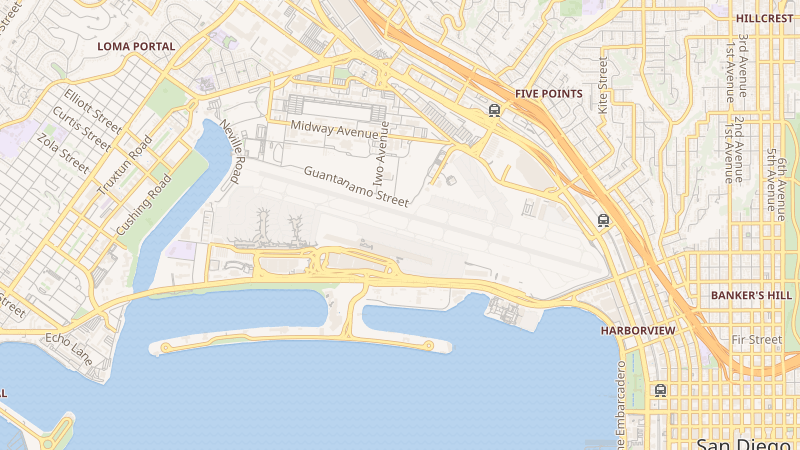
A technical failure struck San Diego International Airport on Tuesday, forcing airline staff to revert to manual check-in processing as lines snaked through terminals and passengers scrambled for information. Flight operations themselves were not affected — runways and air traffic control continued normally — but the check-in disruption was, by any measure, genuinely disruptive. As of early Wednesday, residual arrival and departure delays appeared modest, running roughly 15 minutes or less, though travelers were advised to check airline status apps and arrive with extra buffer time.
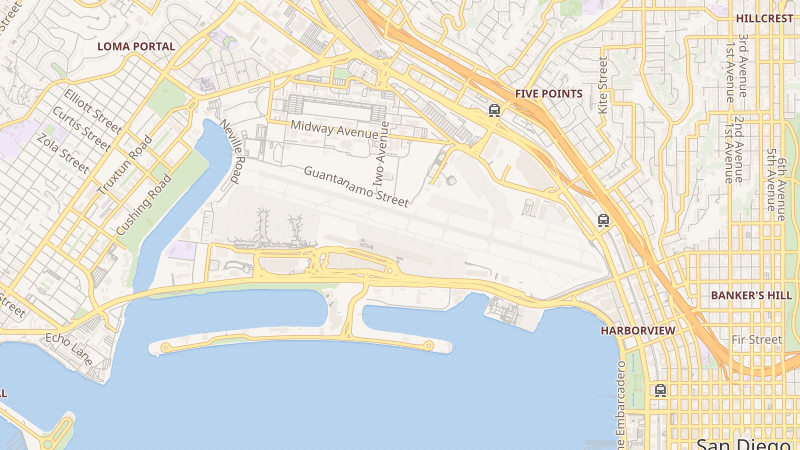
The timing sharpened an already pressing regional debate. On the same day travelers lined up inside a stalled terminal, the San Diego Association of Governments moved its airport transit connection project into what officials described as a more decisive phase. San Diego has no direct rail connection to its primary airport — travelers rely almost entirely on congested surface streets and personal vehicles — and the region has been studying how to fix that since 2007.
After nineteen years of analysis, SANDAG has narrowed 17 concept options to five finalists: three automated people movers running on elevated, dedicated guideways, and two trolley extensions linking the airport to either downtown's Santa Fe Depot, the Convention Center, or the 12th Avenue and Imperial Transit Center. The cost range is wide and sobering. Trolley extensions are estimated at $1.2 billion to $1.9 billion; the least expensive people-mover concept runs $1.8 billion to $2.8 billion — meaning even the cheapest automated option costs more than the priciest rail alternative.
County Supervisor Joel Anderson and City Councilmember Sean Elo-Rivera pushed the committee to pursue not merely a request for information from potential builders, but a concurrent request for proposals — actual construction bids. The committee approved the dual approach by a 6-to-2 vote. The urgency is specific: a $350 million airport transit allocation exists, and that money is reportedly at risk if the region cannot present a project ready to build by 2029. SANDAG CEO Mario Orso cautioned that environmental review alone takes years and that litigation risk around major California transit projects is real — characterizing a three-year runway to a shovel-ready project as, at best, aggressive.
The economic stakes extend well beyond commuter convenience. The airport serves as the primary gateway for San Diego's tourism industry, convention economy, and business travel sector. Every year of continued delay is generally a year of higher construction costs, and the five surviving concepts represent the beginning of a harder conversation about which one to build — and how to finance the several billion dollars that $350 million alone cannot cover.
Two Hundred Million Dollars Before Noon: City Hall's Packed Utility Agenda

San Diego's Budget and Government Efficiency Committee convened Wednesday morning with a 9 a.m. start and nearly $200 million in proposed spending authorizations covering virtually every core utility function the city provides. The single largest item is roughly $50 million in drinking-water financing for the El Monte Pipeline No. 2 project, a major piece of the city's water transmission infrastructure. A separate item proposes up to $50 million for Pump Station 2 wastewater modernization, addressing aging infrastructure that handles sewage treatment and transmission.
Rounding out the morning agenda: a three-year Microsoft software and services agreement capped at $24.928 million, and a master lease of up to $25 million for solid-waste vehicles and equipment. The Microsoft contract drew particular attention given that the city's own airport had just experienced a system-wide IT failure affecting thousands of travelers — though whether this enterprise-software agreement addresses any such vulnerabilities, or covers primarily existing government operations, was expected to become clearer when the committee published its action report.
The committee also took up proposed labor-standards enforcement fees, running in parallel with the county's broader wage-theft enforcement package from the prior week. At 2 p.m., the Community and Neighborhood Services Committee was set to consider a citywide outdoor dining smoking and vaping ordinance, which would prohibit tobacco and vaping emissions in outdoor restaurant seating areas — a measure with direct implications for the restaurant economy and neighboring diners who currently have no recourse when someone lights up at an adjacent table.
Looking to Thursday, the Active Transportation and Infrastructure Committee is scheduled to consider permitting in-house city crews to handle up to $11 million in FY2027 street resurfacing work — a potential shift away from outside contractors with budget and labor-relations implications. The committee will also take up the city's formal response to the grand jury's bicycle-mobility report, which identified significant gaps in how San Diego plans, funds, and prioritizes bike infrastructure. The city's response will constitute the first public accounting of which findings it accepts and what corrective actions it intends to take.
In North Park, a man was killed by police on Tuesday after reportedly setting a fire, according to NBC 7's coverage. As of early Wednesday, the victim's name, the precise address, the sequence of force used, and any investigative findings from the department or the District Attorney's office had not been made public. The incident is under investigation, and community members and oversight bodies are expected to monitor how quickly and fully information is released.
San Diego's Labor Market: Stronger Than the Headline Suggests, but Cracks Are Visible

San Diego County's unemployment rate edged up to 4.9% in August from a revised 4.7% in July — but the underlying dynamic tells a more nuanced story. The rate remains below where the region stood a year ago, when August 2025 registered 5.1%, and it continues to run below California's statewide rate of 5.4%. Critically, the labor force itself grew: when more people enter the market seeking work, the measured unemployment rate can rise even as employers actively hire, because the denominator expands. The region also added jobs year-over-year when comparing August 2026 to August 2025.
The picture is not uniformly positive, however. Stone Brewing has filed WARN notices covering 220 positions effective in October, and ServiceNow has cut 133 San Diego jobs concentrated at director and senior levels. Both losses are sector-specific — craft beverage and technology — but the question is whether the 4.9% rate stabilizes or continues climbing as those cuts take effect and broader tech-sector caution filters through the local economy.
San Diego County's August median home price came in at $1.09 million, down roughly $9,500 month-over-month from July but still up 6.3% from the August 2025 figure of $1.025 million. Sales volume dropped 11.1% year-over-year, while inventory edged up to a 2.9-month supply from 2.7 months a year ago. The combination of falling sales volume and rising inventory alongside stable prices suggests a market cooling without collapsing — a transition that often precedes a more decisive directional move in either prices or volume. The condo and attached-home market faces particular headwinds from elevated HOA fees and deferred-maintenance special assessments, pressures that do not show up cleanly in median price data but are acutely felt by buyers and current owners in older buildings.
The airport transit debate, covered in depth in the opening segment, is fundamentally an economic development story as much as a transportation one. A region that cannot move workers and visitors efficiently to and from its primary airport is, by most economic analyses, leaving value unrealized. SANDAG's own work going back to 2007 has recognized the connection. The current race for a $350 million federal allocation is happening precisely because nearly two decades of study have not produced a commitment to construction — and, as some planners have noted, analysis without action becomes its own form of economic drag.
Santee Council Tonight: Receivership, Rent Control, Cannabis, and a Murder Charge

Santee's City Council convenes at 6:30 p.m. Wednesday at City Hall, 10601 Magnolia Avenue, with a heavier-than-usual closed-session agenda and a hard public-comment deadline of 3 p.m. for written submissions to publiccomment@cityofsanteeca.gov. In-person speakers must submit a slip before their agenda item is called; the meeting will stream live via SanteeTV.
The closed-session docket is what makes the meeting notable. Councilmembers are scheduled to discuss a potential receivership at 9245 Heatherdale Street — a legal mechanism through which a court appoints an administrator to manage a property when an owner is failing to maintain it, typically invoked in cases of serious code violations or habitability concerns. Additional closed-session items include potential litigation tied to Town Center Community Park bleachers, mobilehome rent control disputes, a Better Buzz location on Cuyamaca Street, and cannabis regulations. For a city of Santee's size, that is a dense litigation agenda.
The Sheriff's Department has formally identified the suspect and victim in the Grand Fork Drive homicide investigated earlier this month. Derek Spratley, 25, of Santee, is charged with murdering his grandfather, Gregory Roundy. Deputies responded to an assault call on September 14th at a residence in the 10800 block of Grand Fork Drive. Spratley is being held without bail, with his next court appearance scheduled for December 4th. Authorities continue to characterize the incident as an isolated family matter presenting no continuing threat to the broader community, though motive and full circumstances remain under investigation.
On the legislative front, Governor Newsom has signed a bill expanding mental-health options for veterans, with State Senator Brian Jones — whose district includes Santee — credited in local coverage as the measure's legislative champion after a reported three-year effort to reach enactment. Specific provisions of the new law were not available in reporting reviewed Wednesday morning, but the signing represents a concrete policy outcome for East County's substantial veteran community. Implementation details are expected to emerge as the rollout proceeds.
Community activity in Santee this week includes the 10th annual Ladies at the Lake Fall Market at Santee Lakes Recreation Preserve, featuring more than 130 vendors, and the launch of a new Wink2Link women's business-networking chapter at Jimmy's of Santee on Wednesday afternoon. Ongoing construction notices include weekday and overnight work on a new right-turn lane from Cuyamaca Street to Mission Gorge Road, and continued activity on the county animal shelter project at Magnolia and Riverview Parkway.
Head Start, CalFresh, and the Policy Deadlines That Will Shape Family Life This Fall

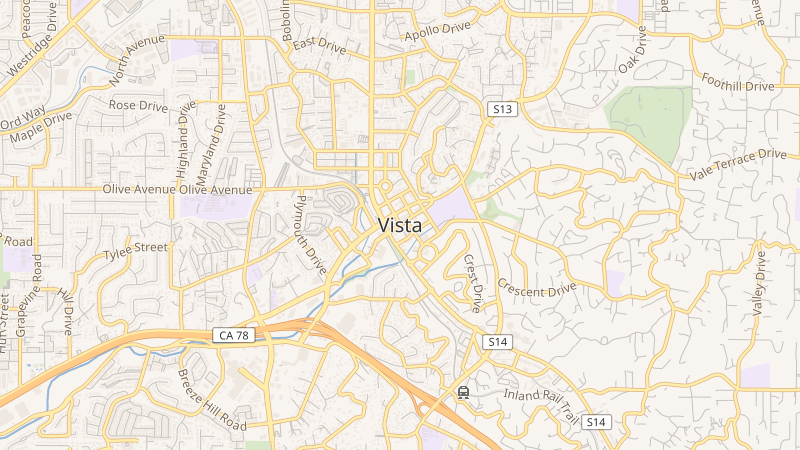
A proposed federal rule that would move Head Start programs toward English-only instruction is drawing concern from educators in San Diego County. Staff at a Vista-area program told KPBS that bilingual English-Spanish teaching is not a pedagogical preference but a foundational tool: when a three-year-old arrives in a classroom where the only language of instruction is one they do not yet speak fluently, the impact is not merely academic — it affects emotional security and the developmental foundation for everything that follows. San Diego County's early-childhood demographic includes a large Spanish-speaking population, and Head Start specifically serves families at or below the federal poverty line.
The rule has not been finalized. Current drafts still contemplate some transition support for English learners, but the direction of movement is toward English-only instruction as the default. That proposed trajectory, if enacted, could materially affect programs like the one in Vista. Families, educators, and advocacy groups in the county who wish to influence the outcome retain a narrow opportunity to submit public comments before the rule is finalized.
A separate and more immediate deadline arrives October 1st — nine days away — when roughly 1,700 San Diego County residents may lose CalFresh food benefits unless qualifying adults demonstrate compliance with a new work, volunteer, or school participation requirement of at least 20 hours per week or 80 hours per month. The policy intent is to connect able-bodied adults to economic activity. The implementation risk, advocates note, is that people with legitimate barriers — irregular work schedules, transportation gaps, caregiving responsibilities — may lose food access not out of unwillingness but because the verification system fails to capture their actual circumstances.
On the education side, Stacy Williams — a San Diego Unified teacher recognized as Teacher of the Year before her position was eliminated from the district's TRACE transitional services program — has been offered a new district role focused on rethinking the TRACE program itself. The development, first reported by Voice of San Diego, represents a response to a situation that drew significant public attention, though whether the new role carries sufficient institutional backing to drive genuine program reform, or serves primarily to manage a public-relations challenge, is something the district's actions over coming months will clarify.
In prep football, the Grossmont Foothillers defeated Otay Ranch 54-45 in a high-scoring contest — 99 combined points — placing the team in solid standing as the East County fall schedule intensifies. The Padres, meanwhile, enter Wednesday at 87 wins and 69 losses with a five-game winning streak intact, nine games back in their division but with a tightening postseason picture. A road game at Dodger Stadium on Wednesday night carries weight for both the clubhouse and the fan base heading into the season's final stretch.
The Case Against Speed: What the Transit Optimists Could Get Wrong

The SANDAG committee's 6-to-2 vote to pursue a dual request-for-information and request-for-proposals approach on the airport transit connection has been framed broadly in local coverage as a long-overdue acceleration of a project that has stalled for nearly two decades. The implied logic is that faster is better, and that protecting the $350 million funding allocation by targeting a 2029 construction-ready deadline justifies the compressed timeline. But the strongest version of the counterargument is worth taking seriously.
Rushing a project of this scale through environmental review to meet a funding window is, historically, how regions end up with transit infrastructure that underperforms. Environmental review is not procedural obstruction — it is the process through which design flaws, community impacts, and engineering constraints are identified before concrete is poured. SANDAG CEO Mario Orso's expressed caution about litigation risk was a professional assessment, not political hedging: California courts have repeatedly delayed major transit projects when review was compressed or inadequate, sometimes costing more time than a slower initial process would have required.
The cost estimates for the five surviving concepts span from $1.2 billion to $2.8 billion — a range wide enough to suggest that the precision needed for sound decision-making does not yet exist. If the region commits to a concept under political pressure to reach 2029 and the cost estimate proves significantly understated — a pattern that has characterized virtually every major transit project in California over the past two decades — the $350 million federal contribution will look like a small down payment on an expensive mistake.
There is also a harder structural question: whether any of the five selected concepts is actually the right one for San Diego's geography and travel patterns. Automated people movers can be built faster but serve a narrower corridor. Trolley extensions integrate with the existing transit network but involve greater complexity and longer timelines. If the concept chosen is the one most likely to survive a compressed review rather than the one best suited to long-term demand, the 2029 deadline will have driven a multi-billion-dollar infrastructure decision in the wrong direction.
Two signals would indicate the optimists are right: first, whether the dual RFI-RFP process attracts credible private-sector bids with realistic timelines that acknowledge environmental review requirements; and second, whether the selected concept survives that review without material modification. If the shortlisted option changes significantly during review, it would be evidence that front-end acceleration did not save time — it merely moved the complications downstream. The two dissenting committee votes are also worth watching: if their objections are technical rather than political, they may be identifying precisely those failure modes.
El Niño on the Horizon, Coastal Warnings Up, and What the Next 48 Hours Look Like
Wednesday offers a reprieve from weather concerns: mostly sunny skies, a high near 73 degrees Fahrenheit (roughly 23 Celsius), and only a 10% chance of rain — effectively a dry day. Afternoon winds from the west-southwest could gust to around 19 miles per hour. Wednesday night into Thursday stays mild, with low clouds possible near the coast; the marine layer could contribute to localized visibility issues and minor airport congestion overnight into Thursday morning, but no significant weather warnings are in effect.
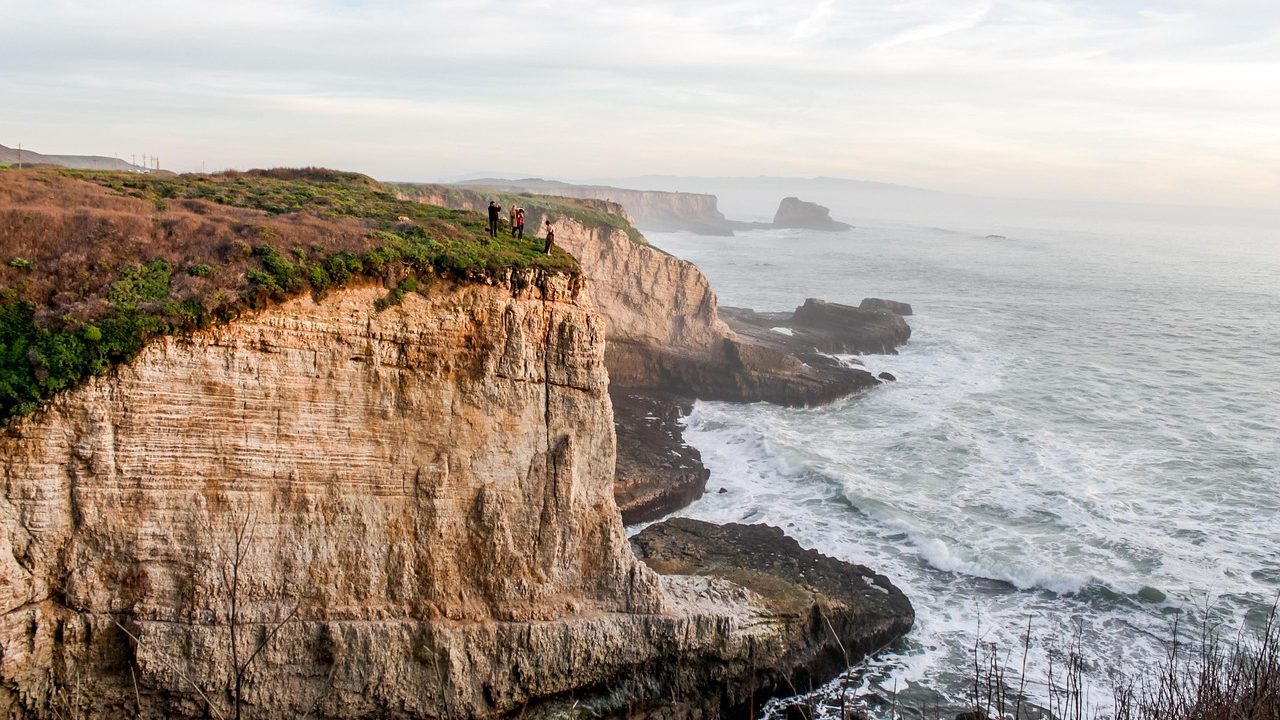
The longer-horizon picture is more cautious. Local coverage is flagging that a potentially strong El Niño pattern could heighten beach erosion, bluff failures, coastal flooding, and broader infrastructure risks across a wide swath of the county — from North County through La Jolla, Mission Beach, Ocean Beach, Coronado, Imperial Beach, and the South Bay. This is a preparedness concern rather than a confirmed storm event: the governor's emergency declaration was reportedly signed last month, and county Office of Emergency Services has already contacted roughly 7,000 vulnerable properties. The warning posture heading into fall is notably elevated.
For residents and property owners near any of those coastal corridors, officials and planners suggest now is the appropriate time to assess individual preparedness — reviewing insurance, understanding bluff and flood risk at specific addresses, and identifying what protective measures are available before storm season arrives in earnest. The structural risk is elevated; the timing of any specific storm event remains uncertain.