Mars Dust Is a Health Hazard — and It's Reshaping Mission Design
How this was made Verified AI
Every Intellegix briefing is generated from that day's broadcast and run through automated checks before it publishes — with a human paged on any flag. Here is the trail for this edition.
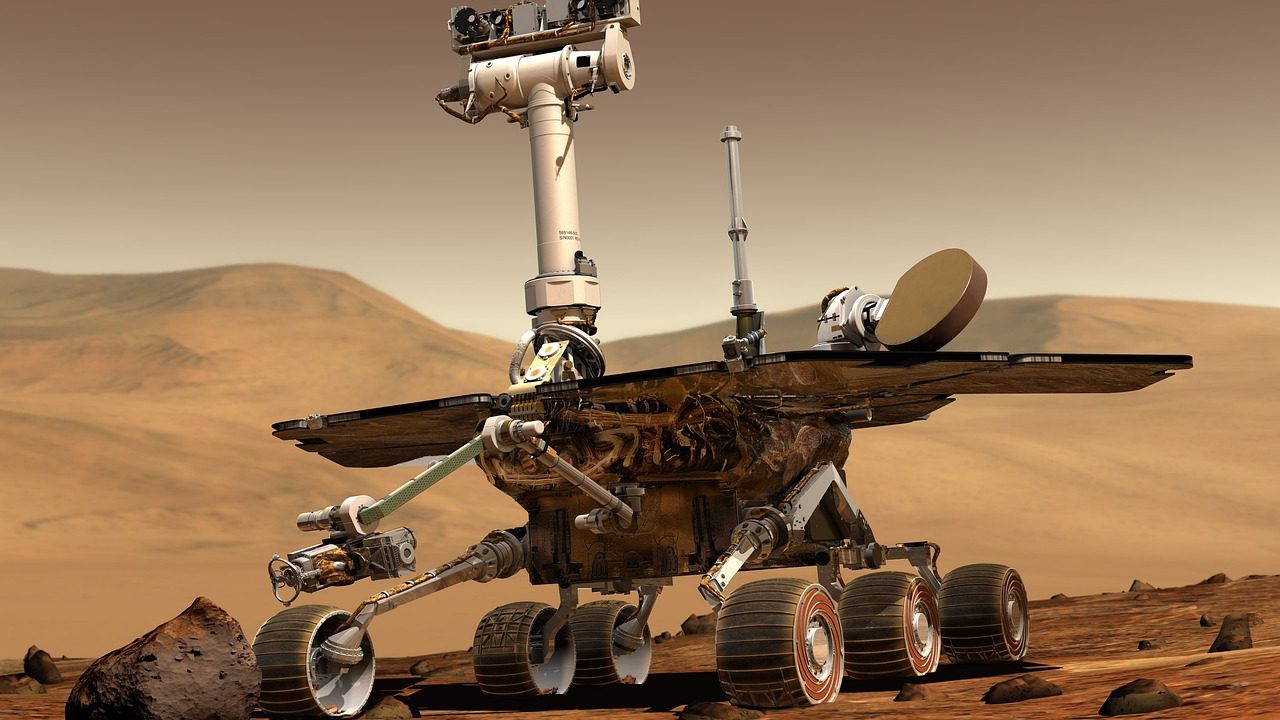
NASA published a study Tuesday in the Proceedings of the National Academy of Sciences reporting the first on-site direct measurements of ultrafine Martian dust particles — particles smaller than ten microns — from the Perseverance rover. The findings showed that these particles cling to materials with a persistence that exceeds models derived from Earth analog environments or orbital observation. The concern for human spaceflight is direct: dust carried on spacesuit exteriors during extravehicular activities would be brought inside airlocks, habitats, and ultimately breathing environments.
Martian dust contains perchlorate compounds, which interfere with thyroid function at elevated exposure levels, and silica particles capable of causing lung damage similar to silicosis at sufficient concentration. The ultrafine size of the measured particles is particularly significant: particles below a certain threshold bypass the upper respiratory tract and deposit directly in the deep lung, where the body's clearance mechanisms are far less effective. These are not theoretical risks — they are the kind of findings that directly re-specify engineering requirements for hardware currently in design phases.
The practical consequences cascade through mission architecture. More stringent crew health standards require more mass on any spacecraft — better filtration, more robust suit materials, decontamination systems, expanded medical monitoring equipment. More mass means more fuel, higher launch cost, or reduced crew and supply capacity for the same vehicle. SpaceX's Starship remains the only publicly presented vehicle architecture considered capable of the Mars transit mission profile, with serious internal timelines at the company treating human Mars missions as a 2030s proposition. The Perseverance dust findings are precisely the scientific input that, properly integrated, makes a later date in that range more realistic than an earlier one.