Bolsonaro Flees Brazil, AI Naming Wars Erupt, and Florida Tilts Republican: October 28, 2026
A packed Wednesday brought a Brazilian senator's midnight border crossing, a White House battle over the words 'artificial intelligence,' and a shifting Senate forecast one week before Election Day — a morning that would have read as satire a decade ago.

“advisories are not issued for fringe behaviors. People are giving banking passwords to AI assistants to check balances, pay bills, and analyze spending”
How this was made Verified AI
Every Intellegix briefing is generated from that day's broadcast and run through automated checks before it publishes — with a human paged on any flag. Here is the trail for this edition.
From Exile to Endorsements: The Week's Most Improbable Headlines

October 28, 2026 arrived with a density of news that strained credulity: a sitting U.S. senator from Alaska endorsing a Democratic gubernatorial candidate, a senator's son slipping across a South American border on a canceled passport, and the White House waging a bureaucratic campaign to expunge the phrase 'artificial intelligence' from official documents.
The day's agenda stretches further still — a deadlocked Israeli leadership vote, a Merck-Moderna cancer vaccine showing a 42% reduction in melanoma recurrence or death, record tidal flooding along the Southern California coast for a second consecutive day, and a $72.5 million defamation lawsuit from a political commentator against a CNN host. A NASA study published in a leading scientific journal found that ultrafine Martian dust clings to materials with consequences that could reshape crew health standards for any future human mission to Mars.
Domestically, FBI Director Kash Patel faces a pair of whistleblower allegations serious enough to raise questions about congressional oversight, while Bank of America issued a remarkable advisory urging customers not to hand their login credentials to AI agents — an implicit acknowledgment that significant numbers of people already are.
Bolsonaro's Midnight Run: Passport Canceled, Visas Granted
Flávio Bolsonaro, the eldest son of former Brazilian president Jair Bolsonaro, crossed into Argentina by land Tuesday night after Brazilian federal police canceled his passports. Argentina's migration authority confirmed the crossing, and by Wednesday morning the U.S. State Department announced it would grant him visas — a sequence of events that encapsulates the collision between democratic accountability and geopolitical alliance politics.
The legal backdrop is years in the making. Jair Bolsonaro has been under mounting legal jeopardy since the January 8, 2023 riots in Brasília — widely compared to the January 6, 2021 events in Washington — while Flávio faces separate scrutiny tied to a scandal known as 'rachadinha,' a practice of allegedly forcing public employees to kick back portions of their salaries to their employer. Prosecutors have built a documented evidentiary record; the passport cancellation was the judiciary's move to prevent flight through official channels, which is precisely why the land route through Argentina was used.
The crossing route carries its own significance. The Argentina-to-Ecuador path is a documented exit for individuals seeking to leave Brazil outside its direct judicial reach. President Milei's Argentina has cultivated warm ideological relations with Brazil's political right, raising questions Buenos Aires will need to answer about whether the crossing was facilitated or merely permitted. The speed of events — passport cancellation and land crossing apparently within hours of each other — suggests Flávio either had advance knowledge the revocation was coming or had already prepared to leave, with the U.S. visa assurance possibly factored into the decision well before the crossing occurred.
For Brazil's judiciary, the U.S. response amounts to a direct challenge to its authority. Relations between Brasília and Washington were already cool under the Lula government, and a visa grant to someone fleeing a Brazilian court order will be read in Brasília as an embarrassment at minimum and a provocation at maximum. For South American democracies more broadly, the message the episode sends about Washington's posture toward accountability proceedings is one that will not be quickly forgotten.
Netanyahu, Eisenkot, and the Fifty-First State That Wasn't
Israeli politics reached a new inflection point this week after a leadership vote concluded with both Benjamin Netanyahu and former IDF Chief of Staff Gadi Eisenkot simultaneously claiming a mandate to lead the country — a functional deadlock that analysts say reveals how structurally fragile the Knesset coalition environment has become. Eisenkot, one of Netanyahu's sharpest internal critics over the handling of the Gaza war and its aftermath, carries the particular moral weight of having lost a son in the conflict. A vote that both men can claim is a vote that resolved nothing.
Netanyahu has navigated indictment — on corruption, fraud, and breach of trust charges filed in 2019 — while remaining in power, a case study in how parliamentary coalition systems can allow incumbents to delay dissolution indefinitely. Eisenkot, meanwhile, faces the challenge common to figures whose authority derives from military credibility and moral standing: that capital does not automatically convert into the transactional dealmaking required to assemble a working parliamentary majority.
On a sharply different register, President Trump spoke in Texas this week and floated two ideas in close proximity: that the United States should access Venezuelan oil reserves, and that Venezuela might become the fifty-first U.S. state. The latter is almost certainly improvisational rhetoric — it fits a pattern that has included similar annexation language directed at Greenland and Canada — but the oil comment carries analytical weight. Venezuela holds approximately 303 billion barrels of proven reserves, the largest on Earth, and its government has been in sustained economic crisis. Whether Trump is signaling a genuine policy shift toward sanctions modification or performing energy dominance rhetoric for a Texas audience is a distinction with real market consequences; any formal change to Venezuelan oil sanctions would require action from the Treasury Department's Office of Foreign Assets Control and would move energy commodity prices immediately.
Florida Tilts, Murkowski Crosses, and Patel's Bureau Faces Whistleblowers

One week before the November 3rd elections, the Florida Senate race has moved from 'Toss-Up' to 'Likely Republican' in the University of Virginia Center for Politics' Crystal Ball forecasting model — a significant shift in professional forecasting language. Nearly 2.8 million Floridians had already cast ballots in early voting as of Wednesday, with one closely tracked analyst showing Republicans with a slight lead in that total. The Republican advantage reflects structural shifts built over the past four years: registration gains, a diminished Miami-Dade Democratic base following the region's substantial rightward swing in 2022 and 2024, and a Democratic candidate recruitment situation that has left the party without a compelling challenger for the open seat.
In Alaska, Senator Lisa Murkowski — a Republican who was one of seven GOP senators to vote to convict Trump in the second impeachment trial and who survived a 2022 primary challenge through ranked-choice voting — has endorsed the Democratic candidate for governor of her home state. The move is consistent with a political brand built on independence, and Murkowski has calculated before that her long-term survival depends on being seen as a genuine representative of Alaska's interests rather than a reliable party vote.
The FBI stories require careful handling. A whistleblower complaint from March 2025, made public this week, alleges that Director Kash Patel threatened to fire staff who missed what the complaint describes as a 'made up' redaction deadline tied to the review of Epstein documents. Separately, testimony from an FBI agent alleges that Patel ordered a formal investigation following a Trump campaign speech. Patel's office has disputed the characterizations — these remain allegations, not established facts — but the institutional implications are real regardless of how the specific facts resolve. The Epstein file angle is particularly volatile because it puts the director in a complicated position with the very political constituency that has most loudly demanded transparency about those documents. Congressional oversight hearings appear likely.
Also worth monitoring: Dan Bongino, in an advisory role bridging conservative media and government communications functions, urged Americans this week to stockpile supplies following what appears to be a partly leaked Pentagon contingency planning document. The specific nature of the scenario he referenced is not publicly known, but the fact that it is generating this kind of public advisory from someone with his administration proximity makes it worth watching.
The Administration Wants to Ban 'AI' — While Google Shows Off What It Can Do

President Trump posted on Truth Social this week reiterating his September executive order directing that the term 'artificial intelligence' be replaced with 'super intelligence' in all relevant government documents. The practical administrative burden is manageable — contractors and agencies will adopt new vocabulary — but the symbolic and interoperability consequences are more significant. 'Artificial intelligence' carries decades of history in international standards bodies, treaty frameworks under active negotiation, and regulatory regimes in the EU, UK, and Asia. A unilateral U.S. renaming creates immediate friction in any intergovernmental coordination context. The chosen replacement term also carries a specific meaning in AI safety research — referring to a hypothetical system that exceeds human intelligence across all domains — and using it as a generic substitute collapses that distinction in ways that some safety researchers find troubling and some technology accelerationists find welcome.
Meanwhile, Google gave a substantial public showcase of Gemini 4 Argon, its latest AI model, now available to paying app users, Cloud enterprise customers, and developers through the API. The demonstration featured a code-rendered interactive 3D library and an automated analysis of NASA Mars data that produced presentation-ready slides — capabilities that advance Google's position in what analysts describe as applied professional workflow tasks, not just text generation.
OpenAI, for its part, has reportedly been in talks to purchase Google's tensor processing unit chips outright rather than renting access to them. OpenAI's compute stack is currently heavily dependent on Nvidia hardware through its Microsoft relationship; owning Google TPUs would represent meaningful supply chain diversification and create an unusual commercial arrangement in which two of the most direct AI competitors would also have a hardware supply relationship.
Underlying all of it is a physical infrastructure problem that Ross Perot Jr. flagged publicly this week: the United States is running out of large-format warehouse space suitable for AI data center conversion. Optimized AI training clusters require not just square footage but specific power density, cooling infrastructure, fiber connectivity, and physical security — none of which standard commercial warehouses provide without major capital investment. The International Data Corporation estimated earlier this year that AI-optimized data center capacity needs to expand roughly 40% by 2028 to meet projected demand, and that kind of expansion scales on construction and utility permitting timelines measured in years, not software release cycles. Separately, Elon Musk pushed back on Verizon's public statements about SpaceX's terrestrial wireless network, saying a full consumer deployment is two to three years away — a more specific timeline than Musk typically offers, though one contingent on FCC spectrum allocation decisions still pending.
When AI Gives Bad Advice: Banks, Lawsuits, and Legal Frameworks That Haven't Caught Up

Bank of America issued a direct customer advisory this week telling people not to share login credentials with AI agents or third-party AI tools offering to access their accounts. The advisory's existence implicitly acknowledges that customers are doing this at meaningful scale — advisories are not issued for fringe behaviors. People are giving banking passwords to AI assistants to check balances, pay bills, and analyze spending, and the bank's concern spans both security and liability. Existing law governing unauthorized transactions was written with third-party bad actors in mind, not systems a customer deliberately handed credentials to; that legal ambiguity will take years to resolve, and Bank of America is trying to establish a user conduct norm before a major incident creates case law on unfavorable terms.
The ChatGPT medical advice lawsuit filed this week illustrates a more direct harm scenario. Parents allege that ChatGPT provided dangerous guidance regarding their child's epilepsy medication — advice that, if followed, they say could have caused serious injury or death. OpenAI's terms of service explicitly prohibit using ChatGPT as a substitute for professional medical advice, and that prohibition will be central to its defense. Legal observers note, however, that terms-of-service arguments have a limited shelf life when actual product behavior — demonstrated before a jury — shows a system confidently offering specific medication guidance. A successful plaintiff verdict would likely accelerate FDA and FTC regulatory action in the space significantly.
The broader question animating both stories is one that antitrust and liability law increasingly share: when a company's technology is so embedded in daily life that practical alternatives are scarce, what obligations does it carry? Under the Sherman Act of 1890, having a large market share is not itself illegal — what matters is how that position was achieved and maintained. Applied to AI, the concern is not that OpenAI's API is embedded in thousands of applications, but whether the behavioral norms companies set around access, on what terms and to whom, constitute the kind of exclusionary conduct that draws regulatory scrutiny. Three or four companies currently control the majority of frontier AI compute and model deployment. That concentration is not illegal on its face, but it is the starting point for every antitrust inquiry that will follow.
Tidal Flooding, a Cancer Breakthrough, and the Access Question That Follows

Southern California's coastline flooded for a second consecutive day Wednesday, with record tidal levels inundating communities from Ventura County through San Diego. These are not storm surge events; they are driven by an alignment of astronomical high tides with above-average sea surface temperatures that suppress the normal variability that buffers coastal areas from peak tidal events. Infrastructure designed for historical tide ranges — storm drains, coastal roads, low-lying properties — is simply being submerged. The 'king tide' phenomenon has occurred for centuries, but roughly eight to ten inches of sea level rise over the past century means communities that previously flooded once every twenty years now flood annually, and those that flooded annually now flood monthly.
The economic exposure is substantial. Orange County alone has coastal commercial, hospitality, and residential property assessed at hundreds of billions of dollars, and flood insurance penetration in California coastal zones has historically been low. Insurance markets have moved ahead of the politics: multiple major insurers have reduced or eliminated residential coverage offerings in California coastal areas over the past three years. Congress has no active federal climate adaptation legislation, meaning states are the primary unit of adaptation policy — an equity problem with no near-term federal solution.
In health news that arrived with considerably better news, a Merck and Moderna mRNA melanoma vaccine showed a 42% reduction in recurrence or death risk in trial data published this week. The platform is the same one that produced the COVID vaccines. Experts welcoming the result are simultaneously pressing a scientifically important follow-on question: the mechanism by which it works is not yet fully understood, which matters for predicting which patients will respond and for designing the next generation of cancer vaccines. The 'recurrence or death' combined endpoint also warrants unpacking — the relative contributions of each component to the overall 42% figure carry different implications for treatment planning. A separate and unavoidable concern is cost access: mRNA cancer vaccines are currently priced at levels that make them accessible primarily to patients in wealthy healthcare systems or with comprehensive insurance. For Merck and Moderna, a successful Phase 3 result opens the path to FDA approval conversations and, if the platform proves generalizable, potential application across multiple cancer types.
Mars Dust Is a Health Hazard — and It's Reshaping Mission Design

NASA published a study Tuesday in the Proceedings of the National Academy of Sciences reporting the first on-site direct measurements of ultrafine Martian dust particles — particles smaller than ten microns — from the Perseverance rover. The findings showed that these particles cling to materials with a persistence that exceeds models derived from Earth analog environments or orbital observation. The concern for human spaceflight is direct: dust carried on spacesuit exteriors during extravehicular activities would be brought inside airlocks, habitats, and ultimately breathing environments.
Martian dust contains perchlorate compounds, which interfere with thyroid function at elevated exposure levels, and silica particles capable of causing lung damage similar to silicosis at sufficient concentration. The ultrafine size of the measured particles is particularly significant: particles below a certain threshold bypass the upper respiratory tract and deposit directly in the deep lung, where the body's clearance mechanisms are far less effective. These are not theoretical risks — they are the kind of findings that directly re-specify engineering requirements for hardware currently in design phases.
The practical consequences cascade through mission architecture. More stringent crew health standards require more mass on any spacecraft — better filtration, more robust suit materials, decontamination systems, expanded medical monitoring equipment. More mass means more fuel, higher launch cost, or reduced crew and supply capacity for the same vehicle. SpaceX's Starship remains the only publicly presented vehicle architecture considered capable of the Mars transit mission profile, with serious internal timelines at the company treating human Mars missions as a 2030s proposition. The Perseverance dust findings are precisely the scientific input that, properly integrated, makes a later date in that range more realistic than an earlier one.
A $72.5 Million Defamation Suit, Florida's Hidden Variables, and What the Forecasters Might Be Missing
Hasan Piker, a Twitch and YouTube political commentator with a substantial audience, filed a $72.5 million defamation lawsuit against CNN commentator Scott Jennings this week, alleging that Jennings made a remark on CNN associating him with the concept of lynching in a defamatory context. The dollar figure is clearly strategic — defamation verdicts of that scale against individual political commentators are rare — but the suit's real leverage may lie in discovery, which would require Jennings to produce communications and internal discussions that could prove illuminating regardless of the eventual verdict. Defamation claims involving public figures in the United States require proving 'actual malice' under the New York Times v. Sullivan standard — that the defendant knew a statement was false or acted with reckless disregard for its truth — a high bar that will be the case's central legal question.
The suit lands in a landscape that has shifted since the Fox News Dominion settlement of $787.5 million in 2023, which established that substantial financial consequences are available in defamation cases that clear the evidentiary threshold. Jennings, as an individual commentator rather than an institutional defendant, faces a different exposure profile, though CNN may find itself in a complicated position regardless of whether it is formally named.
On the Florida Senate forecast, the 'Likely Republican' Crystal Ball rating rests on an assumption that current early-vote trends will hold through Election Day — an assumption worth stress-testing. Early vote composition in Florida is analyzed at the party registration level, which is a proxy for behavior, not a perfect predictor. Republicans have increasingly emphasized early voting over the past two cycles precisely to lock in base turnout early, meaning a strong Republican early number may reflect front-loaded enthusiasm rather than a net structural advantage. Roughly 2.8 million early ballots have been cast out of what is likely to be six or seven million total — meaning approximately 60% of the electorate has not yet voted. A three-to-five-point swing in a race carrying a narrow edge would be outcome-determining, and late-stage candidate-level events can produce movements of that size. The signal to watch on election night is the differential between Miami-Dade Election Day turnout and turnout in the I-4 corridor counties; in 2022, Miami-Dade underperformed Democratic expectations while Hillsborough and Orange Counties outperformed them, but not by enough to overcome the statewide shift. If Miami-Dade Election Day turnout surges past 2022 levels while the I-4 corridor holds flat, the 'Likely Republican' consensus deserves a second look within the first hour of reporting.
Six Days Out: What to Watch Before November 3rd
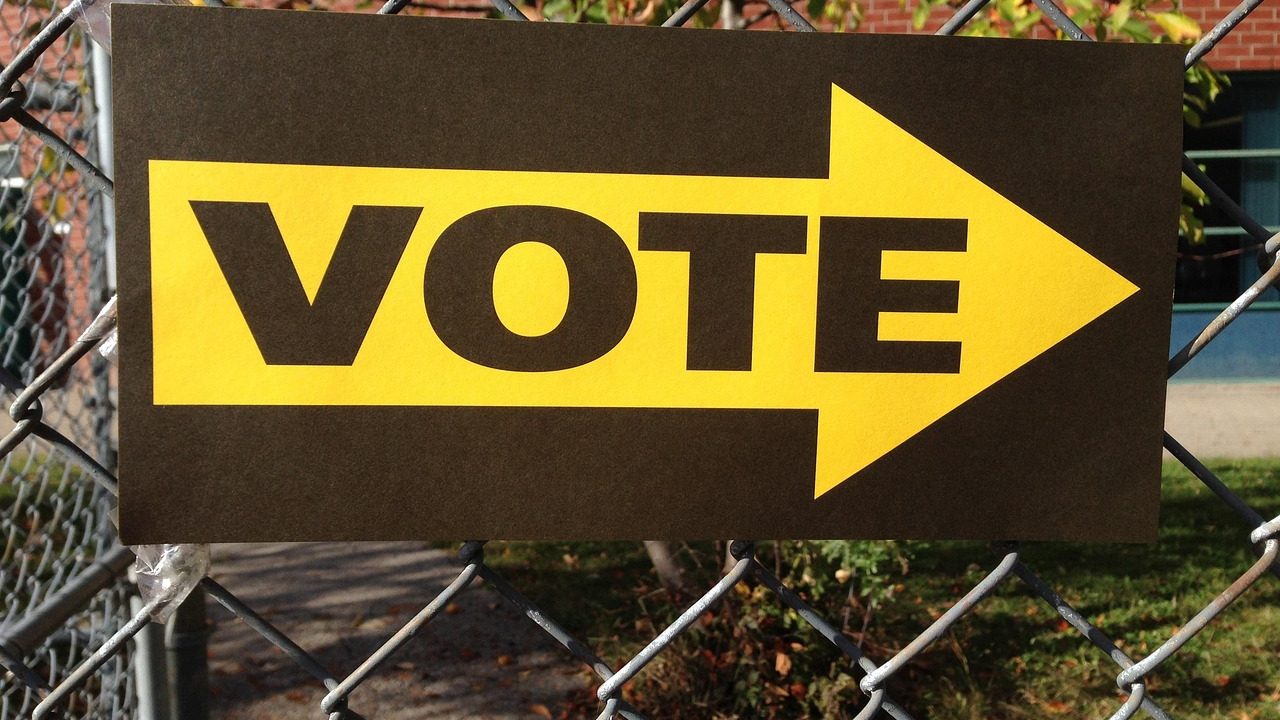
With six days until the November 3rd elections, the week ahead will be shaped by several parallel storylines. Florida's Senate race, the Alaska governor's contest where Murkowski's Democratic endorsement could matter at the margins, and a handful of House seats that will determine working majority composition all come to resolution. The Bolsonaro situation will develop rapidly depending on whether Flávio remains in Ecuador, attempts to reach the United States, and how Brazilian authorities respond diplomatically. Israel's leadership deadlock will either resolve or deepen, with consequences either way for U.S. Middle East policy positioning. The OpenAI-Google chip deal, if confirmed, will generate significant market and regulatory reaction.
The Merck-Moderna melanoma vaccine is heading toward FDA advisory committee review, the next major milestone for that treatment. Southern California's tidal flooding is expected to ease by Thursday as the astronomical alignment shifts, though the insurance and infrastructure questions the episode has raised will not ease on that timeline. The Patel whistleblower complaint is likely to generate formal congressional inquiry requests within the next week or two — letter traffic from the House and Senate Judiciary Committees will be the leading indicator.
The episode also closes with a production transparency note: the script generation and production automation behind the podcast run on Claude Code by Anthropic, with topic research and sourcing conducted through Perplexity — disclosed not as sponsorship, neither company providing payment, but as an acknowledgment that tools of this kind have changed what independent journalism can practically look like for a small team.