Webb Telescope Pins Record-Breaking Radio Burst to a Dwarf Galaxy 10.7 Billion Light-Years Away
How this was made Verified AI
Every Intellegix briefing is generated from that day's broadcast and run through automated checks before it publishes — with a human paged on any flag. Here is the trail for this edition.
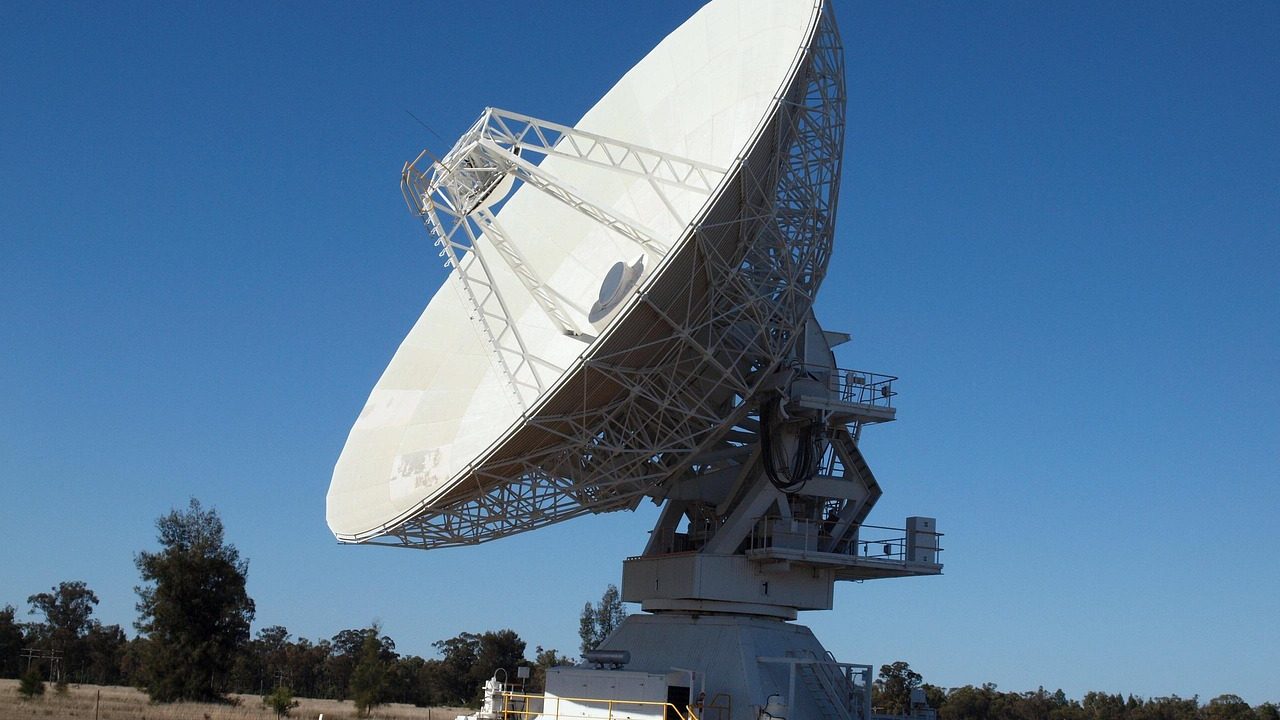
The James Webb Space Telescope has traced the most distant fast radio burst ever recorded to a tiny dwarf galaxy that existed roughly three billion years after the Big Bang — placing the event approximately 10.7 billion years in the past. The light from this millisecond flash of radio energy has been traveling toward Earth for longer than the solar system has existed.
Fast radio bursts were only discovered in 2007, and for years their origin remained unknown. A single burst can release as much energy as the sun emits over three days, compressed into a millisecond. The leading current theory, which this observation bolsters, is that they are produced by magnetars — neutron stars with extraordinarily powerful magnetic fields. The host galaxy finding adds a significant new data point: earlier localized bursts were traced to larger, more massive galaxies with active star-forming regions. That this burst originates from a sparse dwarf galaxy suggests magnetars capable of producing such events do not require rich stellar nursery environments, making the mechanism appear more universal.
Webb's combination of infrared sensitivity and spatial resolution made the identification possible at a distance no prior instrument could have managed. Earlier radio telescopes could detect the bursts but lacked the precision to pinpoint a host galaxy. The scientific payoff of accumulating such measurements extends beyond magnetar physics: fast radio bursts disperse as they travel through intergalactic matter, and tracking that dispersion across multiple distances allows researchers to survey where the universe's matter actually resides — a key question in cosmology concerning the so-called missing baryonic matter.
Meanwhile, a far more tangible piece of mid-century history is approaching its end. The SS United States — holder of the still-unbroken record for the fastest transatlantic crossing by an ocean liner, completed in three days, ten hours, and forty minutes in 1952 — is scheduled to be deliberately sunk off Destin, Florida in mid-November to become an artificial reef. After decades of deterioration while mothballed in Philadelphia, restoration costs estimated in the hundreds of millions of dollars proved prohibitive. Sinking the ship as a reef will support marine ecosystems and create a dive destination, offering the vessel a functional if elegiac final purpose.