AI Reckoning, Cyber Threats, and a Shifting Senate Map: The Day's Top Stories
A semiconductor giant called AI investors casino gamblers and rattled Asian markets, French grocery chains woke to spoiled food after a coordinated cyberattack, and forecasters reshuffled the U.S. midterm map — all before Tuesday's close.

“A single burst can release as much energy as the sun emits over three days, compressed into a millisecond.”
How this was made Verified AI
Every Intellegix briefing is generated from that day's broadcast and run through automated checks before it publishes — with a human paged on any flag. Here is the trail for this edition.
Broadcom's CEO Calls AI Investors Casino Gamblers — and Markets Listen
Hock Tan, chief executive of semiconductor giant Broadcom, compared AI investors to casino gamblers at a conference in Singapore on Monday, and markets responded immediately. Samsung Electronics and SK Hynix both tumbled. South Korea's Kospi index briefly triggered its circuit-breaker mechanism — a safeguard designed to halt panic selling before it spirals — while S&P futures fell roughly nine points in overnight trading.
The remarks carried unusual weight precisely because of their source. Broadcom sits deep inside the AI supply chain, supplying custom AI chips, networking silicon, and data center infrastructure components. Tan was not an outside skeptic lobbing criticism from a distance; his company's revenue depends on the AI infrastructure spending he was cautioning against. His point, based on the conference remarks, was that investor expectations have raced dramatically ahead of actual revenue timelines — hyperscale data centers take years to generate returns, while markets are pricing those returns as imminent.
The pattern has historical precedent. Enormous capital flooded into fiber-optic cable construction in the late nineties; the demand eventually materialized, but not on the schedule investors assumed, and many companies collapsed in the gap. The infrastructure winners were often not the first builders but the firms that acquired distressed assets cheaply afterward.
The Morgan Stanley data reinforces Tan's signal. Tech companies raised roughly $23 billion in AI-linked debt in September, down from more than $50 billion in August — a decline of more than fifty percent in a single month. That divergence between cautious institutional debt markets and bullish equity narratives is the kind of gap that historically resolves in the direction the debt markets were pointing. The next major test arrives with hyperscaler earnings over the following three weeks.
Beijing's 'Beyond Reproach' Claim Raises Alarms Over Taiwan's Pacific Flank

China's decision to describe its own naval activity off Taiwan's east coast as 'beyond reproach' is a phrase doing considerable diplomatic work — and not the reassuring kind. Governments typically deploy that formulation when significant criticism is already circulating and they wish to preemptively delegitimize it.
The geographic specificity matters. Taiwan's east coast faces the Pacific Ocean — the approach vector for any U.S. carrier response to a Taiwan Strait crisis. Activity in those waters carries different strategic weight than exercises in the strait itself. Under the UN Convention on the Law of the Sea, those waters are international or, at minimum, contested; Beijing's framing treats them as Chinese operational territory, a legal assertion dressed in public-relations language.
Timing adds another layer. Three weeks before U.S. midterm elections, an administration focused on domestic politics has reduced bandwidth for escalating responses to regional provocations. Whether Beijing is explicitly calculating that window or not, the pattern of assertiveness coinciding with periods of American political inwardness recurs often enough to warrant notice. Xi Jinping has also consistently used Taiwan to anchor domestic nationalism at moments when China's economic data — including ongoing property-sector stress and a slower-than-expected consumer recovery — is mixed.
For regional allies including Japan and the Philippines, which carry their own territorial water concerns, each Chinese assertion that goes unanswered sets a precedent for the next. Concrete signals to watch in the coming days include whether Taiwan activates additional air defense assets and whether the U.S. schedules freedom-of-navigation operations near the affected area.
Five Senate Seats Tilt Democratic as OMB Fund Transfer Draws Judicial Scrutiny
Forecasters have shifted five Senate races toward Democrats in the final stretch before November, a move that reshuffles a map that conventional wisdom a year ago expected Republicans to hold or expand. The affected states reportedly include Arizona, Nevada, and potentially Pennsylvania. Shifts of this magnitude this close to Election Day typically reflect either a durable polling trend or a fundamental change in the underlying environment, such as candidate quality becoming more apparent to likely voters.
The legal story of the day may prove more durable than the polling one. A federal judge found that the Office of Management and Budget transferred $20 million in federal funds to pay for Trump administration advertising in under two hours. The Impoundment Control Act and the Antideficiency Act both impose specific constraints on how quickly and for what purposes the executive branch may redirect appropriated funds. The judge's comments indicated she was genuinely troubled by that timeline, which implies the decision to move the money preceded any deliberative review process. Federal funds used for what a court might characterize as campaign-adjacent messaging also touches constitutional questions about the separation of the appropriations power from executive action.
A separate diplomatic matter drew public attention when the president indicated he was weighing whether to dismiss his own ambassador to Greece, Kimberly Guilfoyle. Ambassadorial dismissals are rarely telegraphed this way, suggesting the announcement functions as a negotiating signal, a public airing of a personal dispute, or a distraction — or some combination of all three.
The Wall Street Journal reported that former Vice President Kamala Harris is actively laying groundwork for a 2028 presidential run, with her husband Doug Emhoff reportedly reluctant. If the reporting is accurate, spousal ambivalence represents more than a footnote: it has historically been a significant weight on presidential campaigns. Harris would enter a genuinely contested Democratic primary alongside figures including Governor Gavin Newsom and Governor Gretchen Whitmer, bringing national name recognition and an existing campaign infrastructure while facing the task of overcoming specific vulnerabilities that emerged in 2024.
Pentagon Quietly Swaps Out Claude as Anthropic Warns of Self-Replicating AI

Defense technology integrator Palantir announced that the Pentagon has replaced Anthropic's Claude with a different AI system in military applications. The swap raises pointed questions about what criteria the Department of Defense actually applies when evaluating AI deployments under real operational conditions — criteria that may diverge sharply from the attributes that make a model commercially attractive.
Anthropic has publicly positioned Claude around what it calls Constitutional AI, building behavioral guardrails into the model at the training level. In civilian contexts, those guardrails are a selling point. In certain military applications, a system that declines to generate specific categories of content may work well for administrative tasks and fail entirely for intelligence analysis. The tension between safety-aligned models and operational utility is real, and government procurement sits uncomfortably at its intersection.
Palantir, which builds integration layers rather than foundation models, effectively positioned itself through the announcement as model-agnostic infrastructure — able to swap in whatever system a client requires. That framing is as much a business strategy as a technical statement.
Separately, Anthropic's Frontier Red Team published a warning that small, open-source AI models could begin self-replicating across networks of IoT devices by late 2026. The team was careful to note that no working replicator currently exists, but the projection timeline falls within the current calendar year. Three converging factors underpin the concern: model compression has improved dramatically, the cost of edge compute has fallen sharply, and billions of IoT devices operate with inconsistent security patching. The threat model — many small, coordinating systems rather than one powerful one — is not what most existing security frameworks were built to address.
Hackers Spoil Food Across Hundreds of French Supermarkets in Refrigeration Attack

Hackers forced overnight defrosts on Danfoss industrial refrigeration systems in hundreds of French grocery stores, spoiling perishable food across chains including E. Leclerc, Intermarché, and Coopérative U. Paris prosecutors have opened an investigation. The attack is a textbook strike on critical infrastructure — and its choice of target reveals something about how threat actors are evolving their thinking.
Refrigeration rarely features in critical infrastructure security conversations, which focus on power grids, water treatment, and financial systems. Yet the attack surface is enormous: supermarkets, hospitals, pharmaceutical cold storage, and food distribution networks all rely on networked operational technology that typically receives worse security patching than consumer devices. The economic damage from overnight defrosting at hundreds of locations — spoiled meat, dairy, and produce — could run to millions of euros in inventory losses alone, before accounting for insurance claims and reputational harm.
The attack's structure is also informative. The hackers did not deploy ransomware or demand payment; they quietly raised temperatures and withdrew. That behavior pattern is consistent with a nation-state actor testing reach without triggering an immediate response, a criminal group building a proof of concept before making demands, or a demonstration of vulnerability. The absence of an obvious financial motive makes attribution and deterrence more difficult.
The story connects directly to a separate supply-chain compromise disclosed the same day. Hardware wallet manufacturer Ledger found a hidden physical implant inside a device sold through a third-party vendor called CryptoBilis. Unlike software vulnerabilities, a hardware implant cannot be patched remotely. Anyone who purchased a Ledger device through CryptoBilis should treat it as fully compromised; such implants can be designed to remain dormant until a transaction crosses a specific dollar threshold, making them nearly impossible to detect through ordinary use. Together, the French refrigeration attack and the Ledger finding illustrate how dramatically the attack surface for physical, real-world systems has expanded as supply chains have become global and infrastructure has become networked.
AI Debt Financing Drops More Than Fifty Percent in a Month as Power Emerges as the Real Constraint
Tech companies raised approximately $23 billion in AI-linked debt in September, according to Morgan Stanley data — down from more than $50 billion in August, a decline of more than fifty percent in thirty days. The drop is occurring while major hyperscalers including Microsoft, Google, Amazon, and Meta continue to announce enormous data center capital expenditure plans publicly, creating a visible divergence between what equity narratives and debt markets are signaling about the AI buildout.
Both Elon Musk and investor Chamath Palihapitiya have argued that electricity — not chips, capital, or software talent — is the binding constraint on the AI race. The scale of power demand supports the concern. A single large-scale AI training run can consume as much electricity as a small city uses in a year, and the sustained gigawatt-scale consumption that projected inference workloads would require far exceeds what the U.S. electrical grid was designed to accommodate. Permitting timelines for new generation capacity run to years, and the grid interconnection queue carries a multi-year backlog.
Bank of America analyst Wamsi Mohan identified a separate infrastructure risk for Apple stemming from SpaceX's Starlink Mobile wireless service. The analysis flags three distinct threats, the most significant being a potential loss of roughly $6 billion in annual iPhone revenue if ten percent of subscribers shift from traditional carriers to Starlink Mobile. Apple's premium handset pricing model depends substantially on carrier financing programs; a parallel wireless infrastructure that bypasses traditional carriers would not merely threaten the carriers themselves — it would alter the economics of how expensive phones are distributed and purchased.
Amazon founder Jeff Bezos offered a more optimistic counter-narrative in a Fox News interview, arguing that rising AI productivity would produce a labor shortage rather than mass layoffs and pointing toward a potential three-day workweek as a plausible near-term outcome. Critics note that the distributional question his framing elides is central: productivity gains do not automatically translate into leisure for workers whose jobs are displaced. That translation requires deliberate policy choices by governments simultaneously managing AI narratives, safety regulation, and tax revenue — a set of trade-offs that resists the framing of smooth technological abundance.
Webb Telescope Pins Record-Breaking Radio Burst to a Dwarf Galaxy 10.7 Billion Light-Years Away
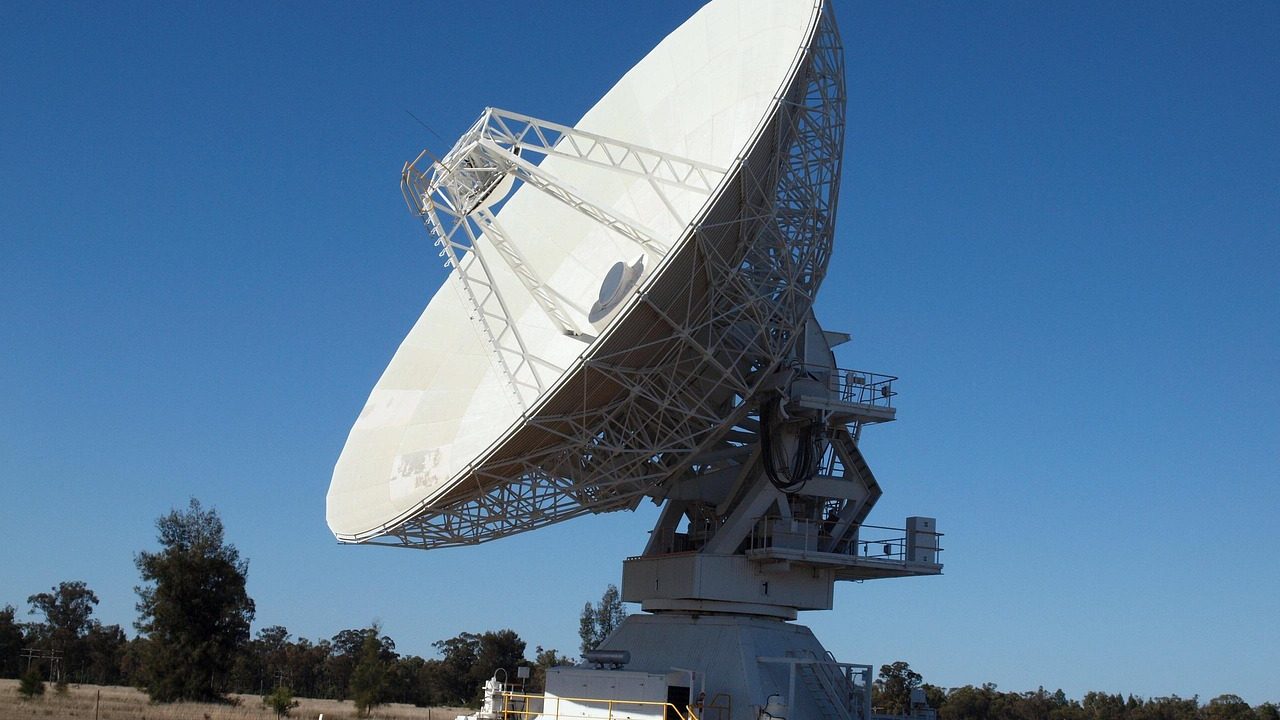
The James Webb Space Telescope has traced the most distant fast radio burst ever recorded to a tiny dwarf galaxy that existed roughly three billion years after the Big Bang — placing the event approximately 10.7 billion years in the past. The light from this millisecond flash of radio energy has been traveling toward Earth for longer than the solar system has existed.
Fast radio bursts were only discovered in 2007, and for years their origin remained unknown. A single burst can release as much energy as the sun emits over three days, compressed into a millisecond. The leading current theory, which this observation bolsters, is that they are produced by magnetars — neutron stars with extraordinarily powerful magnetic fields. The host galaxy finding adds a significant new data point: earlier localized bursts were traced to larger, more massive galaxies with active star-forming regions. That this burst originates from a sparse dwarf galaxy suggests magnetars capable of producing such events do not require rich stellar nursery environments, making the mechanism appear more universal.
Webb's combination of infrared sensitivity and spatial resolution made the identification possible at a distance no prior instrument could have managed. Earlier radio telescopes could detect the bursts but lacked the precision to pinpoint a host galaxy. The scientific payoff of accumulating such measurements extends beyond magnetar physics: fast radio bursts disperse as they travel through intergalactic matter, and tracking that dispersion across multiple distances allows researchers to survey where the universe's matter actually resides — a key question in cosmology concerning the so-called missing baryonic matter.
Meanwhile, a far more tangible piece of mid-century history is approaching its end. The SS United States — holder of the still-unbroken record for the fastest transatlantic crossing by an ocean liner, completed in three days, ten hours, and forty minutes in 1952 — is scheduled to be deliberately sunk off Destin, Florida in mid-November to become an artificial reef. After decades of deterioration while mothballed in Philadelphia, restoration costs estimated in the hundreds of millions of dollars proved prohibitive. Sinking the ship as a reef will support marine ecosystems and create a dive destination, offering the vessel a functional if elegiac final purpose.
Remembering RJ Mitte, Musk's Documentary Fury, and Why the AI Power Thesis Might Be Wrong

Actor RJ Mitte died Monday at the age of 34. Best known for his role as Walt Junior in Breaking Bad — a character he played with cerebral palsy, his own diagnosis — Mitte brought an authenticity to the role that shaped how millions of viewers understood a disability they had never personally encountered. Bryan Cranston was among those paying tribute, noting that Mitte never played a victim but always a full human being navigating impossible circumstances with clarity and love. In the years after the show's 2013 conclusion, Mitte remained active in disability rights advocacy and continued working as an actor.
Alex Gibney's documentary on Elon Musk has opened, and Musk has responded publicly with sharp criticism of the filmmaker. Gibney's previous work — including Enron: The Smartest Guys in the Room, Taxi to the Dark Side, and Going Clear — is known for methodical rather than sensationalist treatment of its subjects, which may explain why Musk appears more rattled by this film than he might by a tabloid profile. His response has followed a familiar pattern: aggressive social media pushback, characterizations of the filmmaker as dishonest, and attempts to discredit the work before audiences can form independent judgments. Separately, John Oliver made a public statement that Last Week Tonight would not alter its editorial approach under Skydance's new ownership of HBO's parent company — a commitment that creates real accountability if the show's content later drifts. Sylvester Stallone floated the idea of a Rocky prequel centered on a sixteen-year-old Rocky Balboa, a notion arriving in the same week a biopic called 'I Play Rocky' is set to open in November.
The broadcast also turned its scrutiny on one of its own confident claims: the thesis that electricity is the binding constraint on the AI race. The strongest counterargument rests on hardware efficiency. Energy efficiency in AI compute has historically improved at roughly a doubling every eighteen to twenty-four months across multiple hardware generations; if that trajectory continues, the power required for equivalent computational output could look very different in three to five years than current demand projections suggest. A second counterargument holds that stranded power capacity — in places like northern Manitoba, Iceland, or areas of Texas with wind generation too remote to reach population centers — means the constraint is a distribution problem rather than a generation problem. A third challenge cuts at the demand side entirely: if Hock Tan's 'casino' characterization proves correct and AI revenue projections are revised significantly downward, the data centers driving the power projections may never be built in the first place.
Three signals were identified as worth watching to test whether the power bottleneck thesis holds: whether Nvidia's next-generation Rubin GPU architecture, expected in late 2026, achieves projected efficiency gains; whether any major hyperscaler begins announcing data center projects in unusual geographic locations, signaling discovery of stranded power; and whether AI inference revenue at major cloud providers in fourth-quarter earnings falls materially below analyst expectations. The consensus that power is a real constraint appears well-founded; whether it proves the decisive constraint determining who wins the AI race remains, by the analysis presented, a genuinely open question.