'Easy Way or Hard Way': U.S. Moves Forces as Talks Stall
How this was made Verified AI
Every Intellegix briefing is generated from that day's broadcast and run through automated checks before it publishes — with a human paged on any flag. Here is the trail for this edition.
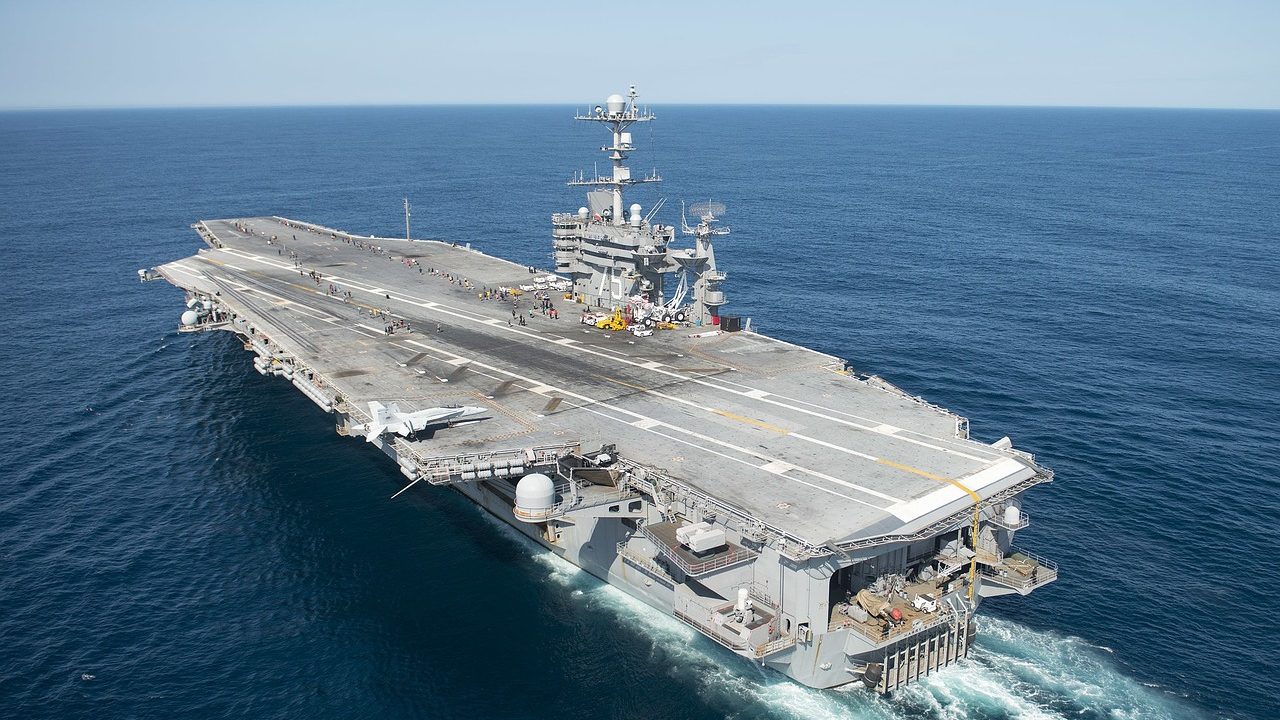
President Trump issued what amounted to a public ultimatum on Saturday, declaring the United States was giving Tehran a choice between the 'easy way or the hard way' — while a second carrier group was confirmed en route to the Middle East and thousands of additional U.S. troops were being repositioned to the region. Negotiations over a renewed nuclear framework have stalled, with no agreement close to being reached, and uranium enrichment activities have continued.
The naval deployment carries significant weight. Each carrier group represents roughly 7,500 personnel, dozens of aircraft, and an integrated network of surface combatants and submarines. The last time the U.S. maintained comparable Gulf presence was in the lead-up to the 2003 Iraq conflict and during Desert Storm. What the 'easy way' concretely demands of Tehran has not been publicly defined — an ambiguity that analysts characterized as a deliberate negotiating tactic intended to keep Tehran's leadership uncertain about what would satisfy Washington.
A separate development added texture to regional anxiety: Reuters reported fire and a large plume of smoke near an Aramco facility in Riyadh on Saturday. No attribution has been confirmed — an industrial accident remains possible — but intelligence communities are watching closely, given the demonstrated willingness of regional proxy forces to target Saudi energy infrastructure. The 2019 Abqaiq attack eliminated roughly five percent of global oil supply overnight, and markets retain a long memory for that kind of disruption.
The economic stakes extend well beyond energy prices. Brent crude has been sensitive to Gulf-related headlines for months, and any escalation to kinetic action would produce inflationary pass-through effects the Federal Reserve is already tracking nervously. The 10-year Treasury yield hitting its highest level since 2002 earlier in the week was partly attributed to geopolitical risk premiums building into bond pricing — a dynamic that would intensify sharply if the standoff deteriorates.
The domestic calculus in Tehran remains the most opaque variable. The Islamic Republic faces significant internal pressure from economic hardship and periodic protest movements, and its leadership has historically used external confrontation as a tool for internal consolidation. Whether hardliners in Tehran view a negotiated de-escalation as a survival mechanism or as a political humiliation they cannot afford is, by most accounts, genuinely unclear.