Two Carrier Groups, a Fractured Supreme Court Docket, and a Texas Political Earthquake: The Week Ahead
A presidential ultimatum to Tehran, a Supreme Court term opening with cases on guns, religion, and voting rights, and polls showing Democrats leading in Texas for the first time in a generation converged on a single Sunday morning — alongside an FBI data breach, a market paradox, and a Taylor Swift cameo.
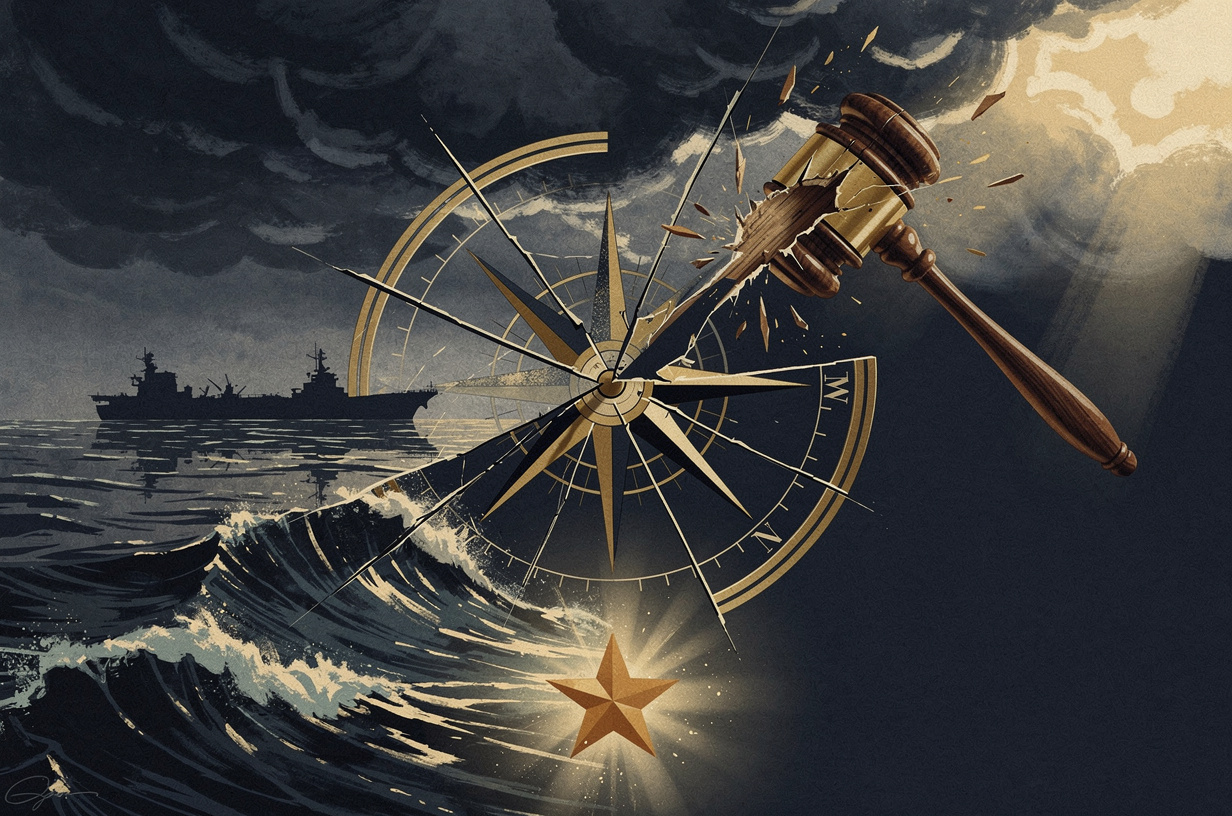
“Federal interest payments now reportedly exceed one trillion dollars annually, surpassing the defense budget.”
How this was made Verified AI
Every Intellegix briefing is generated from that day's broadcast and run through automated checks before it publishes — with a human paged on any flag. Here is the trail for this edition.
From Studio 8H to the Persian Gulf: A Sunday Morning Overture
Saturday night brought Taylor Swift onto the Studio 8H stage unannounced during Dakota Johnson's 'Saturday Night Live' monologue. Sunday morning brought rather heavier news: a second U.S. aircraft carrier group steaming toward the Middle East, the Wall Street Journal's editorial board urging the Trump family to retain legal counsel, and a Supreme Court docket opening Monday with cases poised to reshape voting rights, religious freedom, and assault rifle regulations.
Financial markets offered their own cognitive dissonance. S&P futures stood at 7,777 — up roughly 0.69 percent — even as economist Peter Schiff warned of what he called 'the mother of all bond bear markets,' a warning that arrived the same day a weak September jobs report somehow pushed Treasury yields higher rather than lower.
Texas, meanwhile, generated headlines that would have sounded like satire two years ago: a new survey showed Democrat Mirian Hinojosa leading Governor Greg Abbott, while Democrat James Talarico led Senator Ken Paxton — whose wife is airing ads for 'the Republican ticket' without ever saying her husband's name. Rounding out the morning: a Kelvin wave threatening to raise California's sea levels by up to a foot, an FBI breach exposing data on nearly the agency's entire staff, and a Mormon church leader branding prediction markets 'morally wrong.'
'Easy Way or Hard Way': U.S. Moves Forces as Talks Stall

President Trump issued what amounted to a public ultimatum on Saturday, declaring the United States was giving Tehran a choice between the 'easy way or the hard way' — while a second carrier group was confirmed en route to the Middle East and thousands of additional U.S. troops were being repositioned to the region. Negotiations over a renewed nuclear framework have stalled, with no agreement close to being reached, and uranium enrichment activities have continued.
The naval deployment carries significant weight. Each carrier group represents roughly 7,500 personnel, dozens of aircraft, and an integrated network of surface combatants and submarines. The last time the U.S. maintained comparable Gulf presence was in the lead-up to the 2003 Iraq conflict and during Desert Storm. What the 'easy way' concretely demands of Tehran has not been publicly defined — an ambiguity that analysts characterized as a deliberate negotiating tactic intended to keep Tehran's leadership uncertain about what would satisfy Washington.
A separate development added texture to regional anxiety: Reuters reported fire and a large plume of smoke near an Aramco facility in Riyadh on Saturday. No attribution has been confirmed — an industrial accident remains possible — but intelligence communities are watching closely, given the demonstrated willingness of regional proxy forces to target Saudi energy infrastructure. The 2019 Abqaiq attack eliminated roughly five percent of global oil supply overnight, and markets retain a long memory for that kind of disruption.
The economic stakes extend well beyond energy prices. Brent crude has been sensitive to Gulf-related headlines for months, and any escalation to kinetic action would produce inflationary pass-through effects the Federal Reserve is already tracking nervously. The 10-year Treasury yield hitting its highest level since 2002 earlier in the week was partly attributed to geopolitical risk premiums building into bond pricing — a dynamic that would intensify sharply if the standoff deteriorates.
The domestic calculus in Tehran remains the most opaque variable. The Islamic Republic faces significant internal pressure from economic hardship and periodic protest movements, and its leadership has historically used external confrontation as a tool for internal consolidation. Whether hardliners in Tehran view a negotiated de-escalation as a survival mechanism or as a political humiliation they cannot afford is, by most accounts, genuinely unclear.
The Supreme Court's Most Consequential Term in Years Begins Monday
The Supreme Court opens its new term Monday with a docket that legal observers describe as among the most consequential in years, featuring marquee cases on assault rifles, religious freedom in public contexts, and voting rights. With neither Justice Clarence Thomas nor Justice Samuel Alito showing any indication of retirement, the Court's six-three conservative majority appears intact for the foreseeable future.
The assault rifle case arrives against a backdrop of significant lower-court confusion. The Court's 2022 Bruen decision replaced the previous two-step interest-balancing test for gun regulations with a historical-tradition standard, requiring laws to find analogues in American history from around the time of the Second Amendment's ratification. The new case could clarify or deepen that uncertainty — and given where Thomas and Alito have stood ideologically on Second Amendment questions, the direction of travel appears, to many court-watchers, fairly predictable.
The religion case continues a multi-term trajectory of expanding religious accommodation claims against neutral laws of general applicability, with downstream effects on employment discrimination law, LGBTQ+ civil rights protections, and public school curriculum disputes. The voting rights case carries perhaps the broadest immediate political consequence: with redistricting maps and electoral rules for the 2028 cycle already being litigated, the Court's ruling will set the framework for resolving those disputes. The Shelby County decision in 2013 effectively gutted the Voting Rights Act's preclearance provision; subsequent decisions further narrowed Section 2 remedies.
The strategic retirement calculus has fully reversed under Trump's second term. Both Thomas and Alito are in their mid-to-late seventies, but under a Republican administration there is no urgency to step aside — their ideological legacy is secure regardless of when they leave the bench. Meanwhile, the Court's approval ratings have not recovered from the Dobbs fallout, with polling consistently placing the institution below fifty percent — a meaningful signal for a body that depends on legitimacy rather than enforcement power for its authority.
Trump's Week: Dividends Narrowed, a Senator's Number Shared, and Mail Voting Reversed
The White House generated significant policy signaling this past week across several fronts. Most consequentially, the previously floated $5,000 DOGE-dividend payment to Americans was quietly narrowed: only adults would qualify, children would not. The change was presented as a technical clarification, but it meaningfully alters the fiscal math — a payment covering minors would have been roughly twice as expensive as one limited to adults, making this a substantial fiscal retreat without being framed as one.
Trump also publicly posted Senator Tom Cotton's phone number on social media, urging Arkansans to call the Republican directly and blame him for blocking a House-passed bill that would make daylight saving time permanent. The bill has broad popular support — polls consistently show between sixty and seventy percent of Americans favoring an end to clock changes — but Cotton reportedly prefers permanent standard time, the position most sleep researchers and medical associations endorse. A sitting president crowdsourcing constituent pressure against a member of his own party via social media is, by any historical standard, a remarkable breach of intra-party protocol.
Perhaps the sharpest reversal came on mail-in voting. For years, Trump and much of the Republican political infrastructure argued that mail balloting was fundamentally unreliable and prone to fraud — that argument was central to post-2020 messaging. With the 2026 midterms approaching and Republican strategists recognizing that their voters, particularly older conservatives in Sun Belt states, vote by mail at high rates, Trump is now actively encouraging GOP voters to use it. The position has flipped, and the base appears to be following without significant pushback — a clear illustration of how policy preferences in partisan politics often track interest rather than principle.
Trump also urged Congress this week to mandate prison sentences for benefits fraud, fitting a broader messaging pattern around government waste and welfare accountability. The specifics of what would constitute prosecutable fraud and how such cases would be resourced were not publicly defined.
Gemini Gets Cheaper, a Privacy-First AI Launches, and PewDiePie Goes Rogue
Three stories in the artificial intelligence sector this week each illuminate a different pressure point in a rapidly consolidating industry. Effective October 9th — this coming Thursday — Google will restrict free-tier Gemini users to the Flash-Lite model rather than the more capable versions they have previously accessed. The move reflects the enormous infrastructure costs of the AI buildout: Google has been spending tens of billions annually on data center capacity, chip procurement, and model training, and the free-tier model must eventually convert some fraction of roughly a quarter-billion monthly users into paying subscribers.
The competitive risk is real. If the capability gap between Flash-Lite and the paid tier is significant, Google risks driving users toward Perplexity, Claude, or ChatGPT rather than converting them — and Gemini has not yet established the consumer brand recognition that OpenAI holds. The downgrade could cement a public perception of Gemini as the 'lesser' AI option even if the underlying technology remains competitive on benchmarks.
Those benchmark claims are themselves contested terrain. Sigil Wen's startup Conway Research, backed by Andreessen Horowitz, this week launched a product called Underdog — an on-device AI assistant running entirely on Macs that handles emails, calendars, and messages locally, without transmitting data to cloud servers. The company claims its 27-billion-parameter model beats Claude Opus 4.6 on their relevant benchmarks, a claim worth scrutinizing carefully: benchmark performance depends heavily on which specific tasks are measured, and a model optimized for calendar parsing may score well on certain metrics while performing poorly on others. The privacy-first positioning, however, addresses a genuine and underserved market need, particularly for professionals in law, finance, healthcare, and government for whom cloud-transiting communications represent a compliance concern.
Felix Kjellberg — known as PewDiePie, at various points the most-subscribed individual creator on YouTube — launched a product called Ajax AI alongside a claim that OpenAI had banned his accounts twice. He did not specify what triggered those bans. The product appears positioned as a less restrictive alternative, joining a growing 'uncensored AI' market segment targeting users who feel mainstream tools over-moderate outputs. Critics of that positioning note that the guardrails exist for reasons that are not arbitrary — liability exposure, regulatory risk, and genuine safety considerations — and that a permissive AI generating harmful content at scale carries real-world consequences beyond terms-of-service violations.
FBI Breach, Fabricated Flood Photos, and an Enterprise AI Adoption Claim

The FBI this week disclosed that a hack exposed data on nearly the agency's entire staff and approximately 8,000 law enforcement officers. Unlike a breach of consumer financial records, this exposure potentially includes home addresses, security clearance information, case assignments, and operational details — information that foreign intelligence services would find extraordinarily valuable for identifying recruitment targets or compromising ongoing investigations. Attribution has not been publicly announced, but the specific targeting of federal law enforcement personnel suggests nation-state interest rather than criminal ransomware.
The breach follows a pattern with historical precedent: the 2015 Office of Personnel Management hack exposed 21.5 million federal employee records including security clearance adjudication files. The consistent finding from these incidents is that federal cybersecurity posture has not kept pace with the sophistication of state-sponsored threat actors.
TypeSafe's CEO claimed this week that a quarter of Fortune 500 companies — 125 of the largest U.S. corporations — are already using a product called Jev, which builds typed query layers for AI-integrated enterprise applications. If accurate and verifiable, that would represent an extraordinary adoption rate for a tool most people outside enterprise software engineering have never encountered. The qualifier matters: adoption claims at product launches carry obvious incentives toward optimism, and 'use' can mean anything from a single-team pilot to full enterprise integration. Third-party validation would be required before reading significantly into the figure.
A story offering darker implications for evidence-based dispute resolution: an Airbnb host filed a claim for approximately $1,700 Australian dollars alleging guest-caused flooding damage, submitting as evidence what Reddit users identified as an AI-generated photograph of a flooded toilet — complete with what appeared to be a Google AI watermark in the image metadata. Airbnb ruled the claim ineligible; the guest's account was vindicated. The broader concern is structural: as AI image generation becomes more accessible and realistic, the ability to fabricate photographic documentation of damage or events becomes available to anyone with a smartphone. The watermark that exposed this particular fraud was essentially accidental — not designed as a detection mechanism — and platforms that rely on user-submitted imagery to adjudicate disputes will require dedicated forensic verification tools. The host faced no apparent consequence beyond the denied claim, suggesting current deterrence for AI-facilitated platform fraud is weak.
When Weak Jobs Data Sends Yields Up: The Bond Market's Ominous Logic
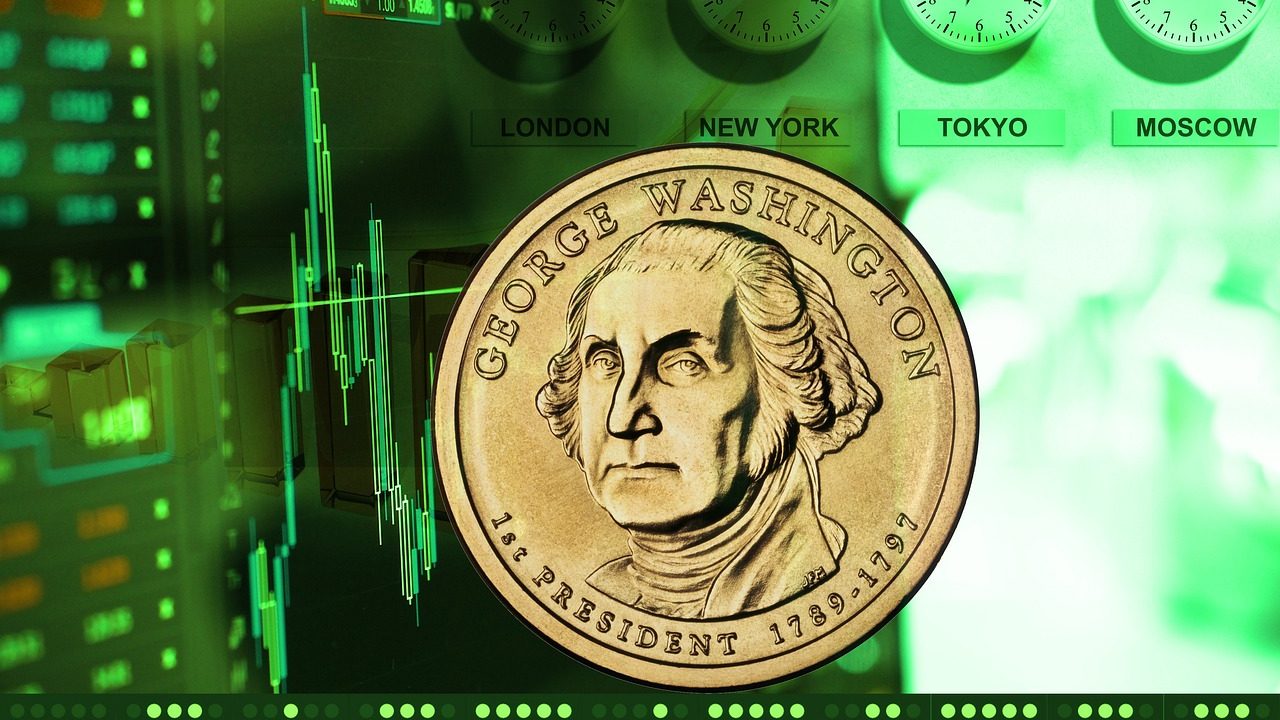
Friday's September jobs report was soft — the kind of weak labor market data that typically pushes bond yields lower by reducing inflation expectations and raising the probability of Federal Reserve rate cuts. Instead, Treasury yields rose. The 10-year yield had already reached its highest level since 2002 earlier in the week, and economist Peter Schiff — who has maintained a consistently bearish view on U.S. fiscal sustainability — described what he sees developing as 'the mother of all bond bear markets.'
The mechanism behind the inverted response points to something more troubling than near-term inflation. Analysts described a growing 'fiscal risk premium' building into long-dated bonds: investors are reportedly demanding higher yields not primarily because they expect prices to rise, but because they are less confident the United States can manage its debt load at lower interest rates. Federal deficits remain large, political appetite for additional spending commitments — including the $5,000 dividend pledge — has not diminished, and an enormous volume of Treasury debt must be refinanced at current elevated rates. Federal interest payments now reportedly exceed one trillion dollars annually, surpassing the defense budget.
Schiff's historical framing invokes the late 1970s and early 1980s, when sustained rising yields driven by fiscal and monetary concerns ultimately required the Volcker Fed to impose severely painful rate increases before stabilizing. The current federal debt, approaching $35 trillion, dwarfs the scale of that era's challenge.
Equity markets are not yet registering equivalent alarm — S&P futures sat at 7,777 Sunday morning, up roughly 53 points — creating a disconnect between bond market anxiety and equity complacency that analysts noted has historically resolved in the direction of the bond market's pessimism. Separately, the Mormon church's condemnation of prediction markets as 'morally wrong' touches on the same financial terrain: prediction markets have become significant mechanisms for pricing political and economic uncertainty, and an institution with roughly 17 million global members calling them the moral equivalent of gambling raises downstream questions about retail participation, even if it will not alter the markets' existence.
Texas Turns? Parsing Polls, Demographics, and a Divorce-Campaign Ad
Two polls this week placed Texas in territory it has not occupied since the early 2000s. Democrat Mirian Hinojosa leads Republican Governor Greg Abbott in one survey; Democrat James Talarico leads Republican Senator Ken Paxton in another. Paxton's own wife, state Senator Angela Paxton — who is divorcing him over alleged adultery — has been airing television ads backing 'the Republican ticket' without once saying his name. Republicans have held every Texas statewide office since 1994; if either Democratic lead holds through Election Day, it would represent the most significant Democratic breakthrough in the state in three decades.
Skepticism is warranted. Texas has a structural Democratic polling problem: Democratic-leaning demographic groups, including younger voters and Hispanic voters in South Texas, have historically turned out at rates far below their population share, causing polls of registered voters to overestimate Democratic performance relative to actual results. In 2018, Beto O'Rourke's nationally celebrated Senate campaign lost to Ted Cruz by 2.6 points despite tight polling; in 2022, Abbott won reelection by approximately 11 points despite significant Democratic investment. Moving from minus 11 to plus one in four years would require a genuinely massive structural shift.
For Democratic leads to hold, multiple conditions would need to be met simultaneously: turnout among young voters in Austin and Houston at or above 2020 levels; Hispanic participation in the Rio Grande Valley — which has been drifting Republican — reversing course or holding neutral; and Paxton's personal scandals proving disqualifying for enough suburban Republican women in the Dallas-Fort Worth corridor to either cross over or stay home. Republicans meanwhile dominate advertising spending, an asymmetry that historical research suggests can shape late-deciding voters even at high spending levels.
The clearest early signal will be early voting numbers in Travis, Bexar, and Harris counties relative to 2022. Democrats banking votes at significantly higher rates than their 2022 early-vote totals would constitute genuine evidence that the polls are capturing something real. If early vote patterns mirror 2022, the polling leads should be read with significant caution. A late indicator to watch: whether national Democrats begin pulling resources out of Texas to shore up more defensible battlegrounds — money following the probability models is often a more reliable signal than polling averages alone.
California's coastline added its own urgency to the week's environmental ledger. A Kelvin wave — an oceanic phenomenon where warming water is pushed eastward across the Pacific by shifting wind patterns — is currently affecting California's coast, with forecasters projecting a temporary sea level rise of up to a foot. A foot of additional water elevation above normal tide levels dramatically increases the reach and damage potential of storm surge. With California's rainy season approaching, atmospheric systems producing significant precipitation coinciding with the elevated baseline could produce compounding effects on coastal communities already contending with accelerated cliff erosion from earlier events.
SNL's Swift Cameo, Prediction Markets, and the Art of Stress-Testing Consensus

Taylor Swift walked onto the 'Saturday Night Live' stage unannounced during Dakota Johnson's monologue Saturday night, generating the predictable tidal wave of social media circulation that made the moment reach far more viewers than the original broadcast. From a media business perspective, the cameo was exactly the kind of play that keeps linear television relevant in an era of declining broadcast audiences — the 'spontaneous' moment carefully orchestrated for maximum clip-ability. A pop culture subplot involving prior romantic configurations between Johnson, Swift, and Chris Martin of Coldplay added the tabloid texture the internet reliably amplifies.
The SNL moment connected, unexpectedly, to the prediction markets story: platforms that allow wagering on celebrity appearances or announcements have themselves become a business category, and the Mormon church's condemnation of prediction markets as 'morally wrong' applies equally to financial instruments and celebrity-event wagering. The church, with roughly 17 million global members, frames these markets as gambling regardless of their informational function — a tension between traditional moral frameworks and financial innovation that the growth of prediction markets is forcing into sharper relief.
The week's most substantive analytic exercise was a self-imposed stress test of the Texas polling consensus. The confident interpretation of the Hinojosa and Talarico leads — that they represent a genuine Democratic surge capable of flipping statewide offices — rests on assumptions about sample methodology, likely-voter screen accuracy, and demographic turnout that have historically favored Republicans in Texas. The hosts of the broadcast acknowledged that the 2018 Beto O'Rourke experience — celebrated as a near-miss that actually wasn't particularly close given turnout-adjusted models — is the relevant cautionary precedent.
The broader discipline the exercise illustrated: when a story generates strong narrative consensus, the most valuable analytic move is to identify what would need to be true for that consensus to be wrong, and then watch for the earliest available data — in this case, early vote totals — to confirm or undercut it. Political journalism that skips that step risks amplifying polling snapshots as electoral destiny.
The Week Ahead: Iran, the Court, Early Votes, and a Gemini Downgrade
The convergence of high-stakes processes unfolding simultaneously — without the luxury of sequential resolution — defined an unusually dense news cycle. The situation with Tehran remains the most volatile: the 'easy way or hard way' framing leaves almost no diplomatic ladder for de-escalation without a public climb-down that neither Washington nor Tehran has shown appetite for. The Aramco facility fire in Riyadh, even if it proves accidental, is exactly the kind of ambiguous incident capable of being interpreted in multiple directions at once. Energy markets will be watching for any sign of escalation in the Gulf.
The Supreme Court opens Monday, and its first oral arguments will begin framing what kind of term this will be on guns, religion, and voting rights. Texas early voting numbers will offer the first ground-truth check on whether Democratic polling leads in the governor's and Senate races reflect genuine enthusiasm or a sampling artifact. Google's Gemini tier change lands Thursday, and the user reaction — particularly whether it produces measurable movement toward competitors — will be a significant data point for the broader question of how the AI industry's free-to-paid conversion strategy plays out.
The broadcast closed with a correction: months earlier, a claim had been made that Ukraine struck Russian ships in the Caspian Sea as evidence of Kyiv's expanding long-range strike capability. That was wrong, and significantly so — the Caspian Sea is landlocked hundreds of miles from any Ukrainian-controlled territory, and no such attacks occurred. The error was acknowledged plainly: it should not have aired without better sourcing.