Webb Finds the Smallest Brown Dwarfs Yet; Roman Telescope Launches With Double the Fuel
How this was made Verified AI
Every Intellegix briefing is generated from that day's broadcast and run through automated checks before it publishes — with a human paged on any flag. Here is the trail for this edition.
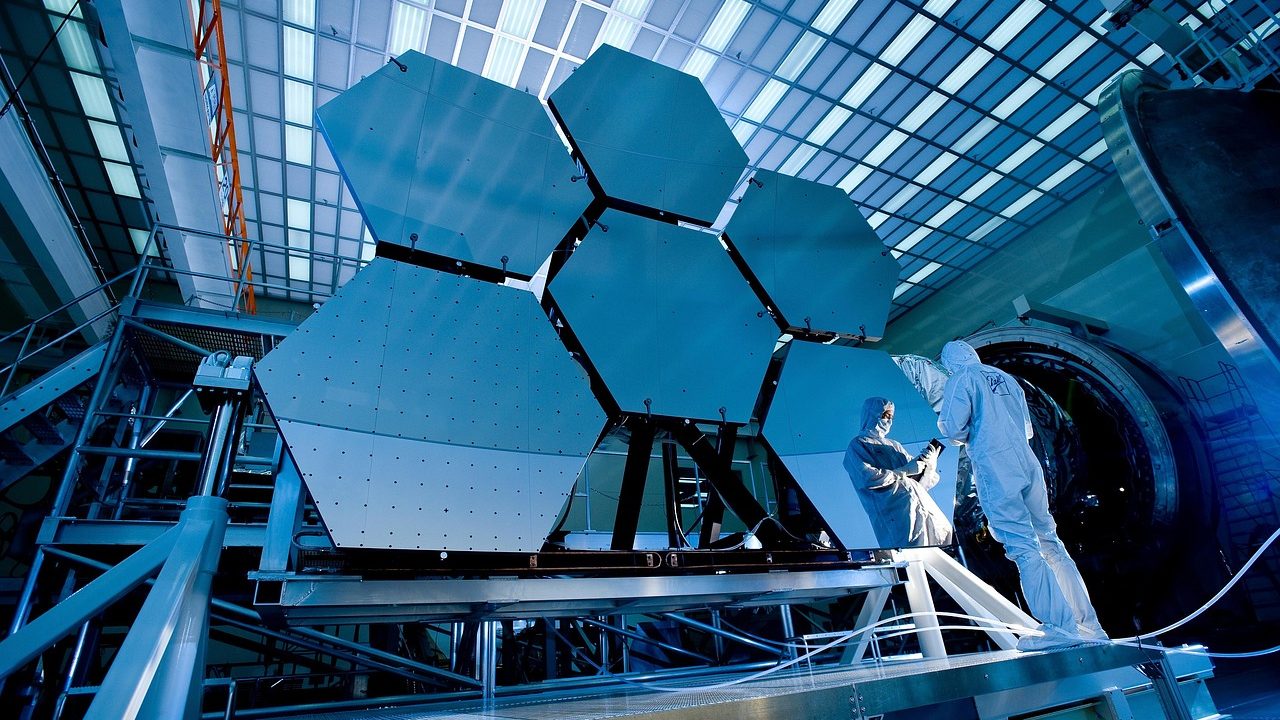
The James Webb Space Telescope has identified brown dwarfs with a mass just twice that of Jupiter — the least massive brown dwarfs ever detected in a star-forming region — approximately 1,000 light-years from Earth. NASA released what it described as one of Webb's largest composite images to date alongside the announcement. Brown dwarfs occupy a peculiar astronomical category: too massive to be called planets but not massive enough to sustain the hydrogen fusion that defines a star, with the traditional stellar ignition threshold at roughly 80 times Jupiter's mass. Finding objects at just twice Jupiter's mass pushes the lower boundary of this category significantly beyond what previous observations allowed.
The discovery carries implications beyond pure curiosity. If objects this small can form through stellar formation processes — the collapse of gas clouds — rather than only through planetary accretion around existing stars, planetary-mass objects may be far more abundant throughout the galaxy than current models assume. Webb's ability to detect objects this faint at 1,000 light-years also demonstrates resolving power directly relevant to the broader exoplanet science program: the same capabilities that resolve a twice-Jupiter-mass brown dwarf in a star-forming nursery will eventually characterize the atmospheres of Earth-sized planets around nearby stars.
The Nancy Grace Roman Space Telescope's main camera — the Wide Field Instrument — has been activated, with mission controllers reporting fuel reserves running at double pre-launch projections. That surplus opens the possibility of an extended mission genuinely not in the original planning envelope. Where Webb examines specific targets with extraordinary precision, Roman's Wide Field Instrument images enormous swaths of sky simultaneously — capable of observing a patch 100 times larger than Webb's main camera in a single exposure. Its planned missions include a dark energy survey, a microlensing search for exoplanets, and a general observer program. Having two advanced space observatories operating concurrently with overlapping but complementary capabilities represents something qualitatively different for astronomy than the single-major-observatory model that characterized most of space telescope history.