Bond Market Hits 19-Year High as AI Fault Lines Widen and Global Supply Disruptions Deepen
The 10-year Treasury yield climbed to its highest level since 2007, rattling equity markets and compounding inflationary pressure from a Hormuz supply crisis, while the AI industry fractured publicly over whether to slow development — and European regulators prepared to intervene.
How this was made Verified AI
Every Intellegix briefing is generated from that day's broadcast and run through automated checks before it publishes — with a human paged on any flag. Here is the trail for this edition.
A Dense Day: From Bond Yields to Brown Dwarfs

Wednesday, September 16, 2026 arrived with a 19-year peak in the 10-year Treasury yield, a Belarus prisoner exchange brokered through back-channel diplomacy, Rodrigo Duterte's first appearance before the International Criminal Court, and a widening philosophical rupture inside the artificial intelligence industry — all before markets opened.
Minnesota's Senate and governor races registered as statistical dead heats in new polling, the Department of Justice confirmed that Homeland Security used Social Security Administration records to search for voter fraud, and the Smithsonian found itself in the crosshairs of White House anger over a George Washington exhibit. Meanwhile, the James Webb Space Telescope delivered what NASA called one of its largest composite images to date, and the Nancy Grace Roman Space Telescope activated its main camera with fuel reserves running at double pre-launch projections.
Stephen Colbert shaved his beard on live television during a Jimmy Kimmel appearance following a Late Show Emmy sweep, Pierce Brosnan and Helen Mirren publicly defended Tom Hardy against set behavior rumors, and a prominent energy banker called the Trump administration's Venezuela oil deal 'smoke and mirrors.' The day's threads — institutional authority under pressure, the pace of technological change, and the limits of diplomatic optimism — ran through nearly every story.
The 19-Year Yield: What a 4.97 Percent Treasury Rate Means for Everyone
The number every portfolio manager woke up watching was approximately 4.97 percent — the 10-year Treasury yield at its highest since 2007, before quantitative easing reshaped the bond market and a generation of investors grew accustomed to cheap money. The Federal Reserve's policy meeting is underway this week, and markets are pricing in the real possibility that the central bank either holds rates higher for longer than previously expected or signals that intention clearly. S&P futures hovered around 7,673 in early pre-market trading, essentially flat after the previous session.
The 10-year yield is not simply a bond-market abstraction. It serves as the foundation for mortgage rates, corporate borrowing costs, and the discount rate used to value future earnings — meaning that when it rises, growth stocks whose valuations depend on profits years from now take the sharpest hit. For households, the practical consequence is direct: variable-rate mortgages, credit card debt, and new home purchases all become more expensive. Tens of millions of American households are exposed to monthly payment increases as a result.
From 2009 through roughly 2022, financial models, real estate valuations, and corporate capital structures were built on the assumption that borrowing was cheap and would remain so. The first wave of damage from rising rates hit regional banks and commercial real estate in 2022 and 2023. What markets may now be experiencing is a second wave — a forced repricing of assets still carrying assumptions from the old environment. The Treasury is simultaneously issuing debt at historically elevated volumes as pandemic-era short-term borrowing rolls over at higher rates, raising the possibility that some of the yield increase reflects a 'term premium' — the market demanding extra compensation for holding long-duration assets during a period of fiscal uncertainty.
The Fed decision expected later this week will be parsed line by line, but analysts argue the more consequential signal will be the dot plot and Chair Powell's language around the long-run neutral rate. If the committee signals that it has revised that estimate upward, it would indicate that a return to near-zero rate normalcy is off the table — possibly permanently.
Belarus, Duterte, and Hormuz: The Geopolitical Pressures Reshaping Markets and Law

Belarus freed 25 prisoners under a deal brokered by Trump envoy John Coale, a personal injury attorney and long-standing Trump family friend, with Washington lifting sanctions on two Belarusian companies in return. The White House is pressing Alexander Lukashenko — who has ruled Belarus since 1994 and whose political survival since the 2020 crackdowns on pro-democracy protesters has depended on Russian support — to release hundreds of political prisoners in exchange for sanctions relief and gradual international rehabilitation. Coale's selection signals that the administration is routing this diplomacy through personal relationship channels rather than State Department infrastructure, a pattern that has characterized the administration's foreign policy approach broadly. Analysts are divided on whether Putin has quietly sanctioned the outreach or whether Lukashenko is testing the limits of his Kremlin relationship.
From Minsk to The Hague: Rodrigo Duterte made his first in-person appearance before the International Criminal Court this week, a genuinely significant moment in international law. Duterte, who served as Philippine president from 2016 to 2022, was arrested in 2025 and transferred to ICC custody on charges related to his administration's anti-drug campaign, which human rights groups estimate resulted in between 12,000 and 30,000 deaths, many of them extrajudicial killings. The case is historically notable because Duterte is a former head of government of a middle-income Southeast Asian democracy — not a figure from a collapsed state or a regime of the kind the court has typically prosecuted. The current Philippine government under Ferdinand Marcos Jr. has navigated the process with political delicacy, given that large portions of the Filipino public still view the drug war favorably. Duterte's defenders are expected to argue at The Hague that the ICC selectively prosecutes while Western leaders who authorized questionable military operations face no similar scrutiny.
The Strait of Hormuz crisis continues to squeeze global oil supply, with UBS warning in a note this week that markets are being complacent about the disruption. Roughly 14 million barrels per day — nearly 14 percent of global consumption of approximately 102 million barrels per day — are not flowing through the strait as they normally would. China has re-entered global oil markets as a direct consequence, having drawn down strategic reserves to their limit and now bidding up available supply outside the Hormuz corridor. The disruption is feeding directly into the inflation data the Federal Reserve watches most closely, creating an energy-driven price pressure that monetary policy is poorly suited to address.
Minnesota in Play, SSA Data Sharing, and the Smithsonian Fight

A Co/efficient poll has Amy Klobuchar leading her Republican challenger Demuth by just two percentage points in Minnesota's Senate race, with Democratic gubernatorial candidate Flanagan ahead by one point. Both margins fall within statistical uncertainty. Minnesota has voted Democratic in every presidential election since 1964 — a 62-year streak — making the near-dead-heat results a meaningful signal about the erosion of traditional state-level partisan insulation. Klobuchar is one of the most recognizable Democratic senators in the country; a two-point lead in her home state reflects broader headwinds rather than a candidate-specific weakness. The governor's race is particularly notable because gubernatorial contests typically track less closely to national trends, with voters more willing to split tickets for state-level offices.
The Department of Justice has confirmed that the Department of Homeland Security used Social Security Administration database records to search for voter fraud. The SSA has historically maintained strict compartmentalization of its data, which includes earnings history, address history, disability status, and family relationships. The Privacy Act of 1974 places significant restrictions on inter-agency data sharing, with specific exceptions for law enforcement purposes — and whether a voter fraud investigation qualifies under that language is a legal question civil liberties organizations are almost certainly preparing to litigate. Beyond the immediate electoral application, the arrangement sets a precedent for what other investigations might justify similar access to SSA records, a question with implications well beyond elections.
A Fox News report about a Smithsonian museum exhibit drew Trump's public anger after the exhibit reportedly labeled George Washington with language referencing his role in conflicts with Native American tribes during the Revolutionary War period — including what is described as a translation of a name tribal groups gave Washington based on his military campaigns. Historians who study the era consider the underlying facts accurate; critics argue the framing strips away broader context about Washington's founding role. The political stakes are concrete: the Smithsonian is a federally funded institution, and White House anger about exhibit content is not merely rhetorical. Budget levers exist, and whether they are applied is something to watch in the coming weeks.
The AI Industry's Public Fracture: Slowdowns, Coups, and White House Meetings

The artificial intelligence industry is undergoing a visible philosophical rupture. European Commission President Ursula von der Leyen is reportedly preparing to invite major AI labs for 'slowdown talks' — a direct conversation about whether the pace of AI development should be moderated given uncertainty about capabilities and risks. The move represents a significant escalation beyond the EU AI Act's risk-based regulatory categories toward something more interventionist: a government conversation with industry about development velocity itself, not just deployment rules.
Mark Zuckerberg has publicly broken with that view, backing empowered evaluators — rigorous testers of what is already being built — while opposing a development slowdown. The distinction is substantive: one approach says slow down until safety is better understood; the other says keep building but test more rigorously. Zuckerberg's position is commercially aligned with Meta's open-source AI strategy, which is structurally incompatible with coordinated slowdown frameworks. OpenAI, Google DeepMind, and Anthropic have all, to varying degrees, engaged with the idea that some form of coordinated caution is appropriate at this stage.
Palantir CTO Shyam Sankar took the sharpest rhetorical position, calling the AI safety movement an 'attempted coup' and accusing the effective altruism community of driving 'unfounded panic.' Trump separately reportedly referred to AI risk warnings as a 'hoax.' Against that backdrop, Commerce Secretary Howard Lutnick and a White House official named Michael met with Anthropic — the lab most associated with rigorous safety research — this week to discuss AI safety. The meeting suggests that even within an administration dismissive of safety concerns rhetorically, some relationship with safety-focused labs is considered politically necessary or strategically useful.
Progressive critics meanwhile pushed back on Barack Obama, Nancy Pelosi, and Kamala Harris for endorsing a Silicon Valley AI initiative, arguing that prominent Democratic figures were providing political cover for an industry seeking to operate with minimal regulatory oversight at a moment when the safety debate is live. The specific initiative was not fully detailed in available reporting, but the political optics — three of the most recognizable Democratic names backing Silicon Valley's AI agenda — is the source of the friction.
Underlying all of these conflicts is an antitrust dimension that regulators at both the DOJ and FTC have been examining. The Sherman Act requires proof not merely of market dominance but of exclusionary conduct — winning by making it structurally impossible for competitors to participate, rather than by being superior. In the AI context, the concern regulators are circling is whether deals between major labs and cloud providers — Microsoft and OpenAI, Amazon and Anthropic, various Google arrangements — constitute exclusionary conduct that locks in current leaders regardless of new entrants' technological quality. The timing of Von der Leyen's slowdown talks and ongoing antitrust scrutiny may not be coincidental: a slowdown could paradoxically entrench current leaders, or alternatively give regulators time to establish market structure rules before one or two labs achieve commanding, practically unassailable positions.
Cloudflare's Publisher Shield and the AI Actress on Morning Television
Cloudflare, which provides internet infrastructure and security services to a substantial fraction of the entire web, has launched a tool allowing website owners to block AI training bots without sacrificing search engine visibility. The problem the tool addresses has been painful for publishers and independent creators: the standard robots.txt convention that governs web crawler access does not distinguish between AI training scrapers and legitimate search indexing bots. Blocking all crawlers to protect content from AI ingestion also blocks Google's search crawler, effectively removing the site from search results — an unacceptable trade-off for any commercially viable publisher. Cloudflare's solution creates a separate permission layer, allowing specific AI training scrapers to be blocked while search engine crawlers continue through.
The longer-term question the tool does not resolve is whether the content already ingested into existing large language models creates a permanent competitive disadvantage for creators regardless of future blocking decisions. That question underlies several ongoing lawsuits by publishers and authors against major AI labs. The Cloudflare tool gives creators a practical lever going forward; it does not address what has already been used.
NBC's TODAY show aired an interview with Tilly Norwood, described as an AI actress, drawing candid reactions from the program's hosts. Al Roker reportedly quipped, 'It'll be nice when AI comes in to kill us all; it'll have a nice face.' The moment captured something real about ambient unease with AI-generated human likenesses in mainstream media contexts. The appearance carries practical implications for the entertainment industry: SAG-AFTRA negotiated protections around AI likenesses in its 2023 contract, and an AI actress appearing not in a niche digital context but on a major morning broadcast represents a normalization of synthetic talent with wage and employment consequences for working actors.
'Smoke and Mirrors': The Venezuela Oil Deal's Credibility Problem
A prominent energy banker has publicly called the Trump administration's Venezuela oil deal 'smoke and mirrors' — a specific phrase, from a voice with standing in energy finance, that warrants examination. The deal's premise is that the U.S. would ease some sanctions on Venezuela's state oil company, PDVSA, in exchange for increased production and commitments around political reform or prisoner releases. Venezuela holds the world's largest proven oil reserves — approximately 304 billion barrels, larger than Saudi Arabia's — but production has collapsed from roughly 3.3 million barrels per day in the early 2000s to below 800,000 barrels per day today, a consequence of corruption, mismanagement, sanctions, and infrastructure deterioration.
The 'smoke and mirrors' critique targets several specific gaps. PDVSA's infrastructure is so degraded that meaningful production increases would require billions in capital investment that no serious Western energy company will commit while Nicolás Maduro remains in power and expropriation risk remains high. Political reform commitments have historically not materialized — Venezuela agreed to similar frameworks in 2019 and 2023 without delivering substantive democratic progress. And the timeline for any production increase, even under optimistic assumptions, is measured in years rather than months, making the deal largely irrelevant to the current Hormuz crisis.
The geopolitical irony is layered. The Hormuz disruption — partly driven by regional tensions that U.S. policy has influenced — is now incentivizing China to deepen energy relationships with precisely the suppliers the U.S. is attempting to isolate through sanctions, including Iran and Venezuela. China's state oil companies have historically been willing to purchase from sanctioned suppliers at discount prices. Meanwhile, the elevated 10-year Treasury yield is making the capital-intensive energy infrastructure investments that would genuinely expand global supply more expensive to finance. Supply disruption, diplomatic theater, and financial headwinds are all pushing in the same direction simultaneously.
Webb Finds the Smallest Brown Dwarfs Yet; Roman Telescope Launches With Double the Fuel
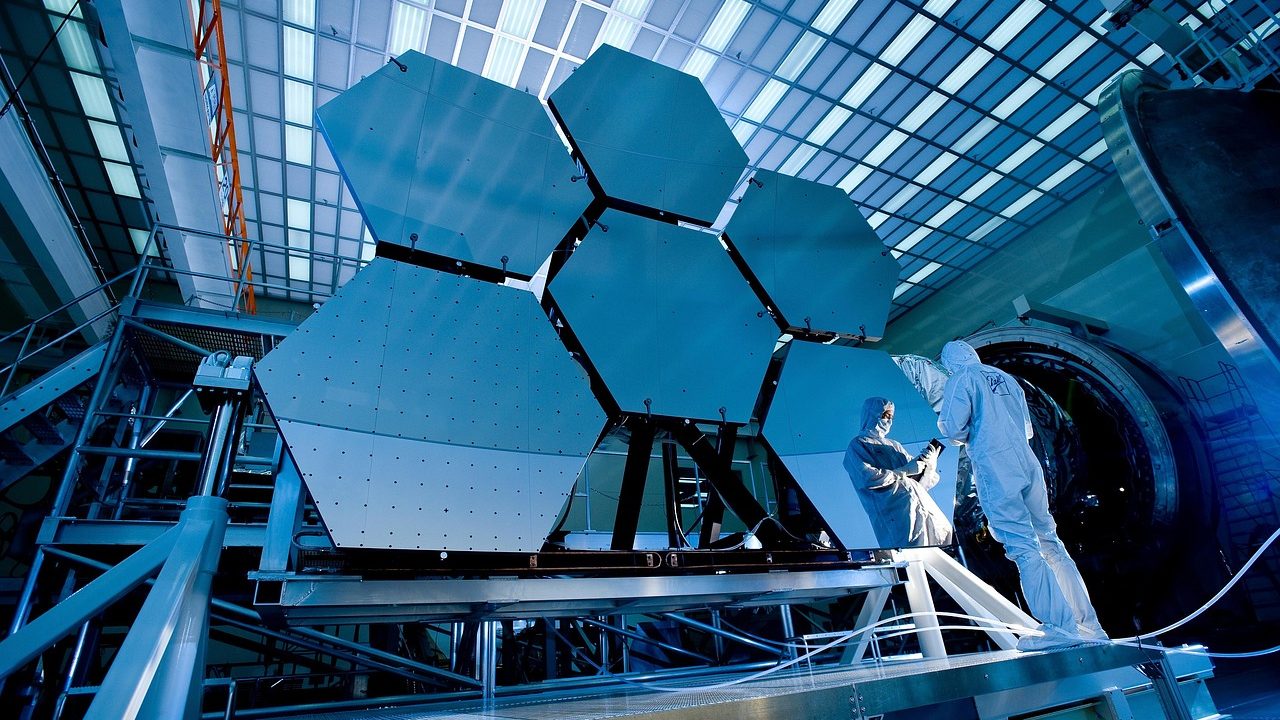
The James Webb Space Telescope has identified brown dwarfs with a mass just twice that of Jupiter — the least massive brown dwarfs ever detected in a star-forming region — approximately 1,000 light-years from Earth. NASA released what it described as one of Webb's largest composite images to date alongside the announcement. Brown dwarfs occupy a peculiar astronomical category: too massive to be called planets but not massive enough to sustain the hydrogen fusion that defines a star, with the traditional stellar ignition threshold at roughly 80 times Jupiter's mass. Finding objects at just twice Jupiter's mass pushes the lower boundary of this category significantly beyond what previous observations allowed.
The discovery carries implications beyond pure curiosity. If objects this small can form through stellar formation processes — the collapse of gas clouds — rather than only through planetary accretion around existing stars, planetary-mass objects may be far more abundant throughout the galaxy than current models assume. Webb's ability to detect objects this faint at 1,000 light-years also demonstrates resolving power directly relevant to the broader exoplanet science program: the same capabilities that resolve a twice-Jupiter-mass brown dwarf in a star-forming nursery will eventually characterize the atmospheres of Earth-sized planets around nearby stars.
The Nancy Grace Roman Space Telescope's main camera — the Wide Field Instrument — has been activated, with mission controllers reporting fuel reserves running at double pre-launch projections. That surplus opens the possibility of an extended mission genuinely not in the original planning envelope. Where Webb examines specific targets with extraordinary precision, Roman's Wide Field Instrument images enormous swaths of sky simultaneously — capable of observing a patch 100 times larger than Webb's main camera in a single exposure. Its planned missions include a dark energy survey, a microlensing search for exoplanets, and a general observer program. Having two advanced space observatories operating concurrently with overlapping but complementary capabilities represents something qualitatively different for astronomy than the single-major-observatory model that characterized most of space telescope history.
Colbert's Beard, MobLand's Defenders, and the Case Against the AI Slowdown
Stephen Colbert appeared on Jimmy Kimmel Live following an Emmy sweep for his now-canceled Late Show, receiving a standing ovation from the Kimmel audience before shaving his beard on live television — a piece of public closure that acknowledged the show's end while signaling that Colbert remains a figure audiences want to see. Colbert grew the beard after CBS announced the cancellation, and shaving it on a competitor's platform carried a subtext that his jokes about the network's decision landing flat for CBS made explicit. The late-night landscape he is now outside of has shifted substantially; streaming fragmentation, the YouTube clip economy, and social media redistribution of late-night content have changed the economics in ways that will shape whoever succeeds him differently.
In the MobLand orbit, Pierce Brosnan and Helen Mirren have publicly defended Tom Hardy against circulating set behavior rumors. Established co-stars vouching for a colleague serves a specific industry function — it provides professional currency that helps manage a narrative before it hardens, and Brosnan and Mirren's unimpeachable reputations make their attachment to a defense carry weight that a publicist's statement cannot.
The day's most consequential analytical exercise concerns the AI slowdown debate. The emerging consensus among safety researchers and, increasingly, European regulators is that AI development is moving faster than safety understanding can keep pace, and that deliberate moderation of that pace is prudent. The strongest counterargument deserves serious engagement: if AI systems in medicine, drug discovery, climate modeling, and logistics can deliver meaningful benefits in the near term, a slowdown delays not only risks but also those benefits — harms that are real even if less visible than the catastrophic AI scenarios safety advocates describe.
The counterargument goes further still. The assumption underlying slowdown advocacy is that safety understanding will advance in parallel with capability development and eventually catch up if given more time. There is no strong empirical evidence for that assumption. Safety research is funded largely by the labs themselves, and it is not obvious that reducing development velocity translates proportionally into accelerated safety understanding rather than simply producing less capable systems that remain equally difficult to align. The structural version of this challenge: if the controllability and alignment problems of advanced AI are not primarily velocity-dependent but are instead structural problems equally difficult to solve whether development takes 10 years or 20, then a slowdown imposes real economic and social costs while providing no meaningful safety benefit.
Two signals are worth watching. First, whether safety research productivity — measured in interpretability breakthroughs and alignment technique advances — tracks with or decouples from capability development, which would indicate whether frontier model builders or slowdown-friendly environments are generating actual safety progress. Second, whether Von der Leyen's slowdown talks produce any concrete mechanism, or remain a political gesture — because if European regulators cannot design a framework that does not simply advantage Chinese and American labs that ignore it, the practical case for slowdown collapses even for its advocates.
The Throughline: Institutions Under Pressure in a Period of Rapid Change
The thread running through Wednesday's news is a single question: who controls the rules during a period of rapid change, and whether existing institutions can keep pace with what they are supposed to govern. The Federal Reserve is managing inflation with tools designed for a different economic era. The ICC is testing whether international accountability mechanisms extend to leaders of middle-income democracies. European regulators are attempting to govern AI development through conversations with the labs they ostensibly oversee. The Smithsonian is navigating between historical accuracy and political pressure from the government that funds it. In each case, the institution is real but its authority is being contested.
Minnesota's polling numbers serve as a domestic political proxy for the same dynamic. A state reliably Democratic for 62 years is suddenly in play — not because of candidate failures but because the structural coalitions that made partisan identities durable have weakened. When Klobuchar leads by two points at home, the old stabilizing forces of political geography have eroded considerably.
Against the geopolitical and economic turbulence, the Webb and Roman telescope findings offer a genuine counterweight. The detection of brown dwarfs at twice Jupiter's mass, 1,000 light-years away, and Roman's fuel reserves running at double projections are the kind of results that patient scientific investment and good engineering occasionally deliver — equally real as the disruptions dominating every other segment of the day's news, and worth holding onto.