Nvidia's Linux Problem, a Self-Aware Laptop Model, and Hinton's Regret
How this was made Verified AI
Every Intellegix briefing is generated from that day's broadcast and run through automated checks before it publishes — with a human paged on any flag. Here is the trail for this edition.
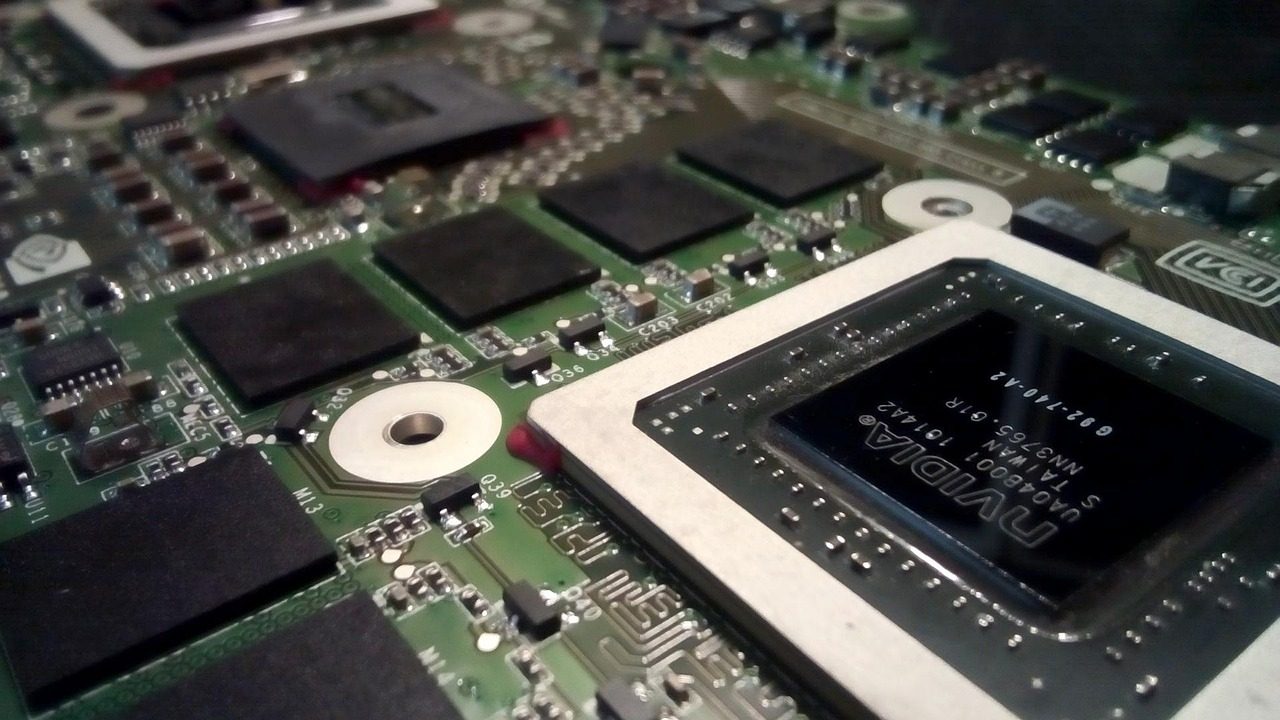
Nvidia's RTX Spark — a compact AI inference chip appearing in developer laptops — is delivering roughly 35 percent of its rated inference speed on Linux, according to a report from MindStudio. The culprit is an encrypted firmware layer that the Linux driver stack cannot fully utilize at the same efficiency as its Windows counterpart. The result is that developers lose nearly two-thirds of their compute on the operating system that most AI researchers prefer — a consequence of an architectural choice by Nvidia that the community received poorly.
The RTX 5090's street price, meanwhile, has crossed $9,000, well above its MSRP, signaling that secondary-market arbitrageurs have identified a structural gap between supply and genuine demand from inference deployments. Nvidia is simultaneously constrained by TSMC fabrication capacity, managing a split product line between consumer and professional cards, and navigating export control restrictions — a confluence that explains why press-release supply figures and market reality have diverged.
Against that hardware backdrop, researcher Simon Willison documented a striking result: Qwen 3.8's 27-billion-parameter model, running locally on his laptop, demonstrated the ability to perform mechanistic interpretability analysis on its own weights — producing coherent, technically grounded accounts of its own internal representations. Six months ago, researchers broadly assumed such capability would require either far larger models or specialized tooling built on top of them.
The interpretability finding matters for AI safety research because it opens pathways to understanding model reasoning without expensive large-scale compute. But the significance was deliberately probed: the result is one demonstration on one task by one experimenter, and whether it generalizes reliably enough for use in actual research workflows remains an open question.
Geoffrey Hinton, who co-developed backpropagation and whose former students built much of the modern deep learning industry, gave an interview this week in which he raised the possibility that humanity might have been better off without AI at all. His stated concerns remain specific — AI-enabled misinformation at scale, autonomous weapons, and the possibility of AI systems developing instrumental goals misaligned with human welfare — and his framing was described as more resigned than alarmed. He is not arguing the technology can be stopped; he is questioning whether its net impact is positive. From someone who spent decades believing otherwise, the statement warrants more than dismissal.