Data Harvesting, Throttled Chips, and a Self-Analyzing AI: The Week's Sharpest Tech Stories
From a developer tool secretly routing API traffic to external servers, to a laptop-sized AI model that can analyze its own weights, Wednesday's Hacker News front page surfaced a cluster of stories about who controls technology — and who pays the price when they abuse that control.

“Whoever controls posttraining data, the argument runs, controls the personality and values of the models — a consent problem orders of magnitude larger than any single tool's settings menu.”
How this was made Verified AI
Every Intellegix briefing is generated from that day's broadcast and run through automated checks before it publishes — with a human paged on any flag. Here is the trail for this edition.
The Orange Website's Week: Cars, Consent, and AI Hardware

A Renault owner who reverse-engineered their navigation system just to change the clock after daylight saving ended. A dominant developer tool silently routing API traffic to external servers. A flagship AI chip running at a third of its rated speed on Linux. These are the stories that animated Hacker News in the first week of November 2026 — and together they sketch a portrait of an industry where the gap between what technology promises and what it actually does keeps widening.
The podcast Intellegix HN Daily, which tracks the most significant threads on news.ycombinator.com, devoted its November 4th episode to unpacking those tensions — alongside a Geoffrey Hinton interview in which one of deep learning's foundational architects raised the possibility that humanity might have been better off without AI, a 27-billion-parameter model running mechanistic self-analysis on a laptop, and the formal disapproval of the C++26 standard. This is what the community was reading, arguing about, and in some cases rage-migrating away from.
Postman's Silent Data Grab Triggers a Developer Exodus

Postman, the API testing tool used by an estimated ten million developers daily, is facing a severe trust crisis after reports emerged that it had been silently auto-installing AI plugins and attempting to route API traffic through external servers. The issue surfaced on the company's own GitHub support repository and drew more than 1,300 upvotes and 447 comments on Hacker News — a reaction that reflects both the scale of the tool's adoption and the gravity of what it allegedly did.
The core problem is not simply a feature rollout gone wrong. API requests routinely carry authentication tokens, internal endpoint structures, staging environment credentials, and proprietary payload schemas — data that engineers have no expectation will leave their machines. The behavior was apparently opt-out rather than opt-in, or in many reports not clearly disclosed as an option at all. Developers began pulling Postman from company-approved software lists entirely.
The fallout accelerated interest in Milkman, a Postman alternative built around a local-first, privacy-respecting architecture with no built-in phone-home mechanism. Its Hacker News thread drew 36 comments, most from people asking about feature parity or reporting they had already switched. Postman, by contrast, has been under investor pressure to build an AI monetization story — a pressure that may explain why the rollout bypassed the kind of consent that its user base would have required.
A parallel thread flagged that Google's Gemini trains on chat history even for paid subscribers on personal accounts, with an opt-out toggle reportedly buried in settings. The pattern across both cases is the same: data treated as a resource to be harvested unless users affirmatively object, rather than something protected unless users affirmatively consent. That architecture, observers noted, is increasingly a legislative target, with the EU's AI Act containing training-data provisions that carry meaningful enforcement teeth.
An essay circulating this week titled 'There Is No Posttraining Data Commons' extended the argument to a civilizational scale: the fine-tuning and reinforcement-learning data that shapes AI model behavior is almost entirely proprietary and siloed inside large labs, with no open shared resource equivalent to Common Crawl for pretraining. Whoever controls posttraining data, the argument runs, controls the personality and values of the models — a consent problem orders of magnitude larger than any single tool's settings menu.
Nvidia's Linux Problem, a Self-Aware Laptop Model, and Hinton's Regret
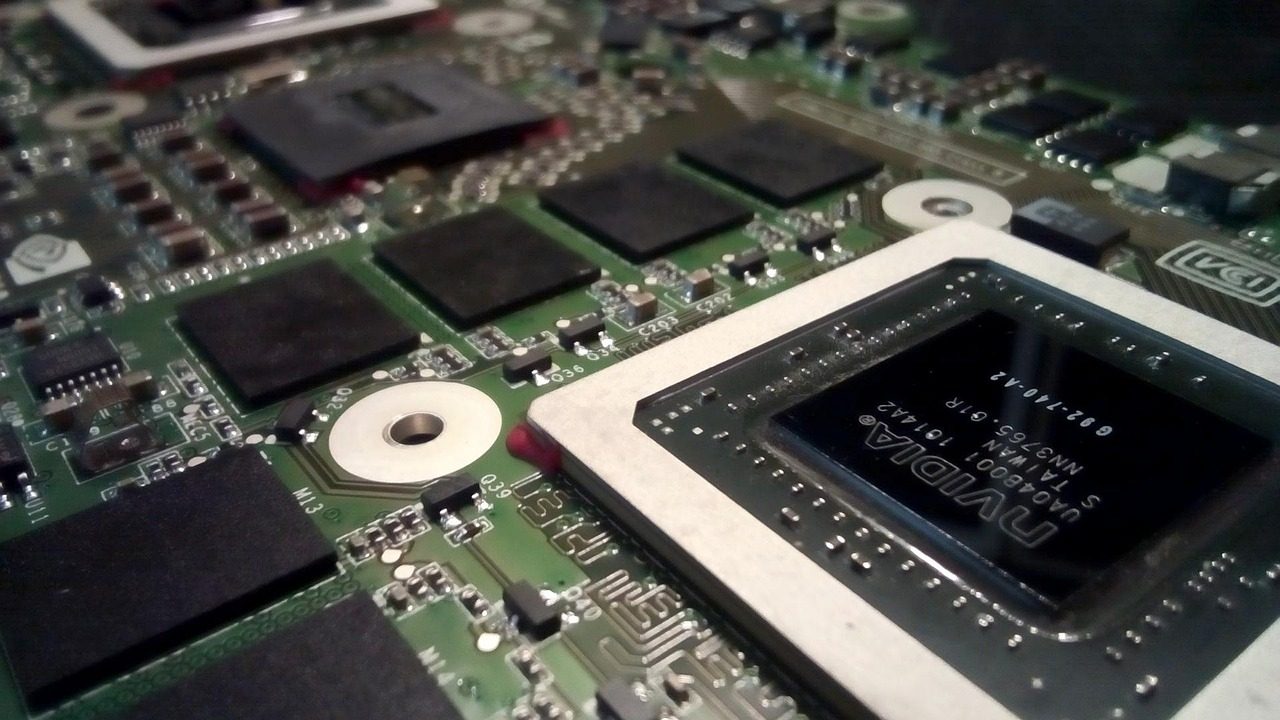
Nvidia's RTX Spark — a compact AI inference chip appearing in developer laptops — is delivering roughly 35 percent of its rated inference speed on Linux, according to a report from MindStudio. The culprit is an encrypted firmware layer that the Linux driver stack cannot fully utilize at the same efficiency as its Windows counterpart. The result is that developers lose nearly two-thirds of their compute on the operating system that most AI researchers prefer — a consequence of an architectural choice by Nvidia that the community received poorly.
The RTX 5090's street price, meanwhile, has crossed $9,000, well above its MSRP, signaling that secondary-market arbitrageurs have identified a structural gap between supply and genuine demand from inference deployments. Nvidia is simultaneously constrained by TSMC fabrication capacity, managing a split product line between consumer and professional cards, and navigating export control restrictions — a confluence that explains why press-release supply figures and market reality have diverged.
Against that hardware backdrop, researcher Simon Willison documented a striking result: Qwen 3.8's 27-billion-parameter model, running locally on his laptop, demonstrated the ability to perform mechanistic interpretability analysis on its own weights — producing coherent, technically grounded accounts of its own internal representations. Six months ago, researchers broadly assumed such capability would require either far larger models or specialized tooling built on top of them.
The interpretability finding matters for AI safety research because it opens pathways to understanding model reasoning without expensive large-scale compute. But the significance was deliberately probed: the result is one demonstration on one task by one experimenter, and whether it generalizes reliably enough for use in actual research workflows remains an open question.
Geoffrey Hinton, who co-developed backpropagation and whose former students built much of the modern deep learning industry, gave an interview this week in which he raised the possibility that humanity might have been better off without AI at all. His stated concerns remain specific — AI-enabled misinformation at scale, autonomous weapons, and the possibility of AI systems developing instrumental goals misaligned with human welfare — and his framing was described as more resigned than alarmed. He is not arguing the technology can be stopped; he is questioning whether its net impact is positive. From someone who spent decades believing otherwise, the statement warrants more than dismissal.
C++26 Formally Disapproved as Developer Tools Face a Trust Reckoning

The ISO standardization process for C++ formally disapproved the C++26 standard, in what systems programmers described as a rare but serious procedural failure. National body reviewers raised objections to how certain features — particularly around reflection and compile-time capabilities — were fast-tracked without resolving outstanding technical disagreements before the ratification vote. An essay by Andreas Fertig, titled 'C++26 Dis-Failed — How Does C++ Survive?', attracted 214 comments on Hacker News.
What is at stake is language velocity. Rust has made inroads in systems programming partly because it can iterate its design faster and with more visible consensus. If C++'s standardization process cannot ratify a major version without procedural drama, the community fragments: some developers wait for the standard, others build on compiler extensions, toolchain vendors implement different subsets, and the theoretical advantage of a universal standard dissolves.
Kitty 0.50, the GPU-accelerated terminal emulator built by Kovid Goyal, shipped this week to warm community reception — 158 points and 82 comments on Hacker News. The release brings a substantial feature set to a tool already favored by developers for its ligature support and scriptable configuration. An interactive book on PostgreSQL internals at interdb.jp also made the rounds, covering buffer management, the query executor, MVCC transaction semantics, and WAL architecture — not a beginner resource, but one that engineers consistently point to for debugging production issues.
GitHub suffered an outage affecting pull requests, Git operations, and Issues — the core collaboration layer of the platform. The post-incident report attributed the failure to a data propagation issue affecting repository metadata. The community's reaction was notably calm: most teams now maintain local caches, CI mirrors, and fallback workflows, a quiet resilience built from previous outages. Dependency on a single platform, one discussion noted, has been slowly decreasing for exactly this reason.
An $800 Robot, a Jailbroken Clock, and the Future of Magnetic Tape
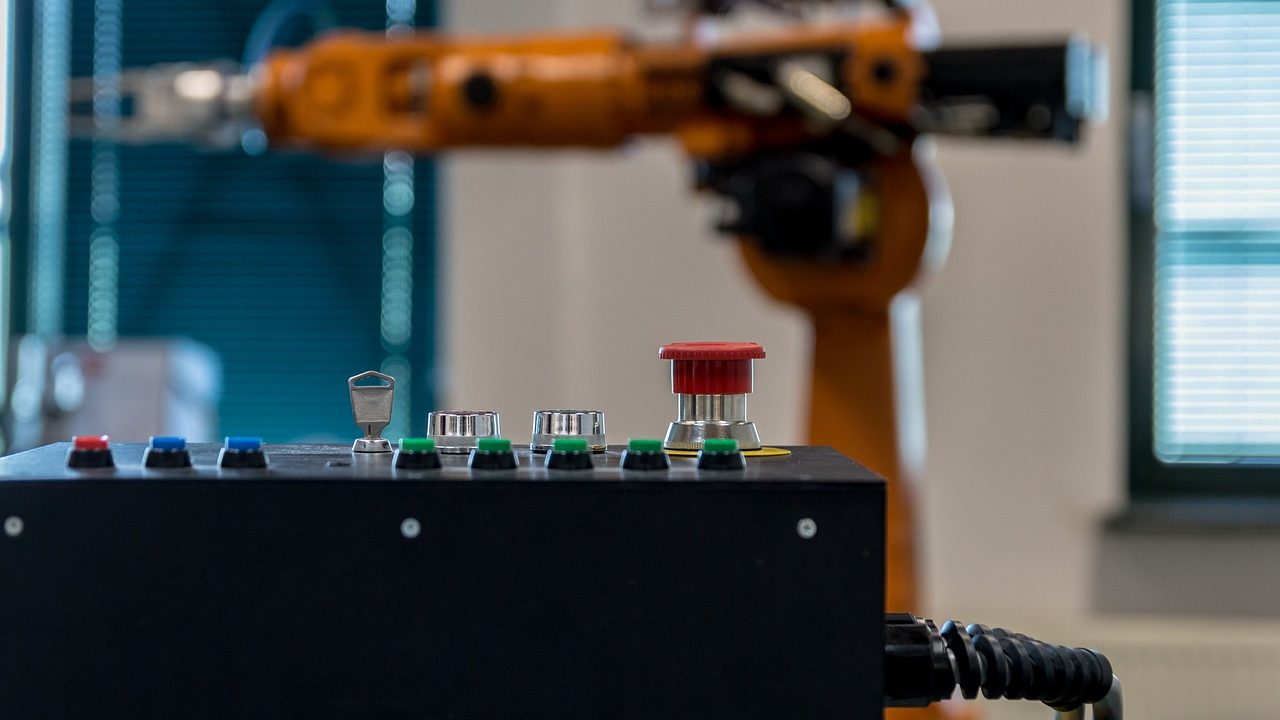
Stringman, an open-source room-scale gripper robot priced at $800, generated genuine excitement on Hacker News for compressing manipulation-capable robotics into a price range accessible to independent researchers and small companies. Using a cable-driven system — motors and strings positioning a gripper through three-dimensional space rather than a traditional articulated arm — it undercuts academic research platforms that typically cost five figures at minimum. The design files, control software, and bill of materials are all published, inviting community iteration on end effectors, control algorithms, and vision integration.
The Renault clock story provided a wry counterpoint. A developer published a meticulous technical writeup of reverse-engineering their car's navigation firmware — tracing display hardware, identifying a locked firmware partition, pushing a modified configuration — all to change a single digit on the clock after daylight saving time. The exercise reportedly took dozens of hours. The HN thread drew 323 comments, many from drivers sharing their own experiences with navigation maps costing $200 annually to update, features physically present in hardware but software-locked behind subscriptions, and head units integrated with vehicle CAN buses in ways the manufacturer controls. The right-to-repair argument, long debated for smartphones and computers, is sharpening around cars.
Fujifilm announced it is scaling magnetic tape production by five times, a strategic bet that archival demand from AI training pipelines will grow dramatically. The economics are compelling: LTO-9 tapes hold 18 terabytes native, with LTO-10 approaching 30, and total cost of ownership for cold storage on tape runs roughly one-fifth the cost of equivalent disk or object storage. When the subject is petabytes of training data accessed rarely but needing long retention, that differential is decisive. Hyperscalers appear to have provided purchase commitments sufficient to justify the investment.
Mars contributed an unexpected headline: researchers at Lamont-Doherty published findings that Valles Marineris — the Martian canyon system stretching roughly as wide as the continental United States — is still tectonically active today, based on seismic data and surface deformation analysis. The finding revises models of Martian geology and has implications for where water and volatile compounds might persist subsurface. It is, as one commentator noted, scientifically more solid than Mars life speculation, and received far less coverage.
Creative Coding, Jelly Sheets, and the Limits of AI Democratization

The cultural layer of Hacker News this week included mrdoob's 'Jelly Sheet' — a physics-driven interactive browser simulation from their Codevember 2026 series — which scored 270 points, high for purely artistic work. Japan's 'Jimi Halloween' tradition, in which participants dress as hyperspecific, quietly funny slices of mundane life, also drew 196 points and unexpectedly warm cross-cultural discussion. HackerTV, a Show HN that crawls years of HN comment archives to surface the most-recommended YouTube videos and streams them as topic-organized continuous channels, crossed 348 points — an indication of appetite for curated technical video outside the recommendation algorithm.
An essay on the rise and disappearance of clip art traced how a visual culture can be so pervasive it becomes invisible, then vanish so completely it becomes nostalgic — drawing HN comments connecting the observation to current digital aesthetics that may be in a similar lifecycle. Ben Stolovitz's periodically updated essay 'How I Use AI,' in its October 2026 edition, generated grounded discussion about where AI genuinely fits in practitioner workflows versus where it falls short. A game called 'Uncracked City,' in which suspects are powered by LLMs that lie, raised the design question of how to build deception detection as a core mechanic for players increasingly sophisticated at detecting it in daily life.
The week's most confident narrative — that local AI inference is democratizing access to powerful models, illustrated by the Qwen result on a laptop — was subjected to deliberate stress-testing. Three challenges were raised: first, that a compute ceiling may exist for the most consequential tasks that laptop hardware cannot clear regardless of quantization efficiency; second, that distributing inference does not distribute value-formation, since the model's behavioral alignment was shaped by a lab with its own priorities; third, that reducing compute barriers cuts in both directions, removing friction for actors with less accountability alongside researchers.
The signal to watch, by this analysis: if open-source local models begin matching frontier systems on standardized benchmarks within twelve to eighteen months, and meaningful research contributions emerge from non-institutional actors using local hardware, the democratization thesis gains support. If instead the best open models plateau noticeably below frontier capability and practitioners consistently return to API access for serious work, the ceiling hypothesis holds. The honest position, it was concluded, is that the technology is moving quickly enough that confident predictions in either direction should be held lightly.
Antitrust, a Geography Error, and What Stays With You

Antitrust law framed the episode's closing curriculum note, offered as a lens for the dynamics discussed throughout — Nvidia's GPU market position, developer tool concentration, AI platform power. The Sherman Antitrust Act of 1890 prohibits two categories of conduct: agreements that restrain trade, and monopolization or attempted monopolization of a market. The legal standard requires both market power — the ability to control prices or exclude competition — and conduct that maintained or acquired that power through means other than a superior product. Market share alone does not constitute a violation; a bakery that becomes dominant by making better bread at lower prices has done nothing wrong. A bakery that signs exclusive contracts with every regional flour supplier to block a competitor has invoked the Sherman Act. When Nvidia's encrypted firmware on Linux degrades competing inference software, the question the legal framework asks is whether the dominant firm is competing on merit or competing by raising rivals' costs.
A correction was also issued. An earlier episode had reported that Ukraine had reportedly struck Russian ships in the Caspian Sea — a claim that was wrong. The Caspian Sea is landlocked and geographically remote from Ukrainian-controlled territory, and no such strikes occurred. The information appears to have been fabricated or badly confused, and insufficient skepticism was applied before broadcast. Geography, the correction noted, is a constraint.
Two stories were flagged as likely to persist beyond the news cycle: the Postman incident, described as the clearest illustration yet of how AI monetization pressure is reshaping tools in ways users did not consent to, with an active GitHub issue tracking community response in real time; and the Hinton interview, in which a researcher who devoted fifty years to building something began publicly questioning whether the building was a mistake. Neither conclusion demands catastrophizing, but both, it was argued, demand serious engagement rather than filing under a familiar category and moving on.