Wafer-Scale Ambition, a Supply Chain Threat, and the Case for Unlocking Your GPU
How this was made Verified AI
Every Intellegix briefing is generated from that day's broadcast and run through automated checks before it publishes — with a human paged on any flag. Here is the trail for this edition.
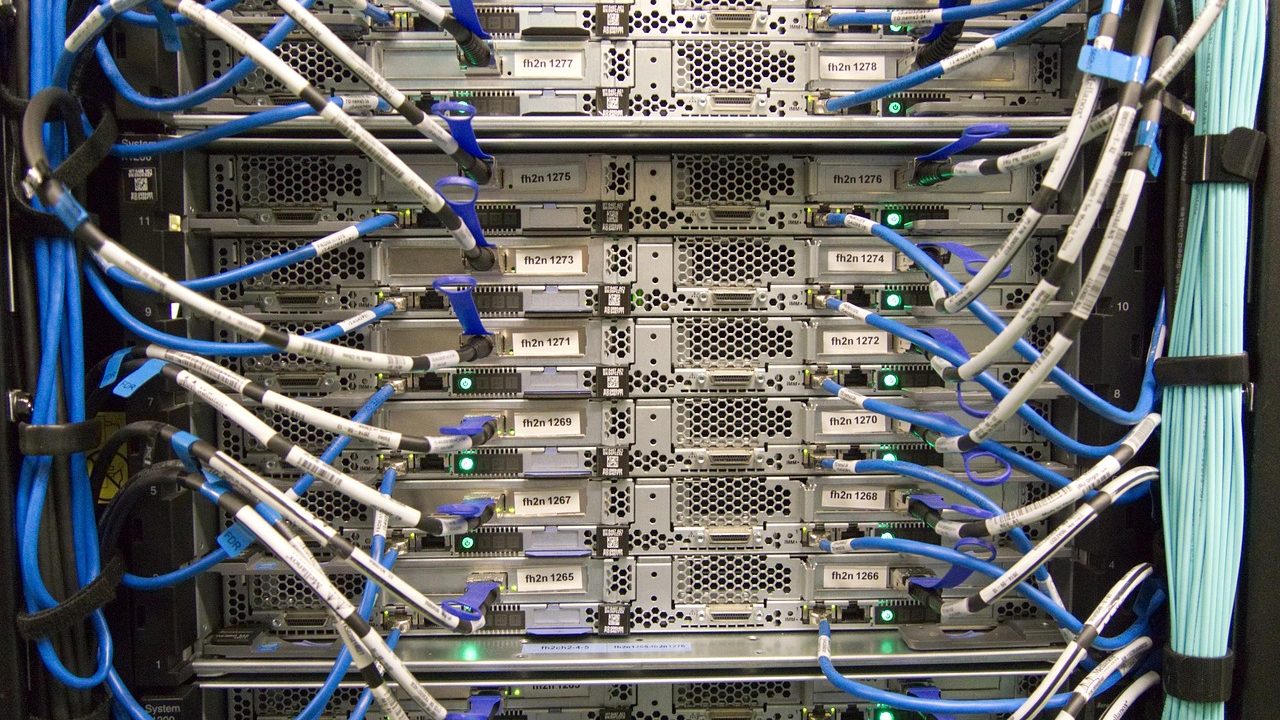
Cerebras published a detailed technical blog this week on deploying full trillion-parameter frontier models — not fine-tuned subsets, not quantized approximations — on its wafer-scale engine hardware, offering one of the clearest public articulations yet of a fundamentally different architectural bet than the GPU-cluster consensus.
The core argument rests on communication overhead. A standard GPU measures roughly 800 square millimeters; the Cerebras wafer-scale engine is around 46,000 square millimeters, treating the entire semiconductor wafer as a single chip rather than cutting it into many smaller dies and networking them together. For trillion-parameter models, moving data between compute and memory at every layer demands bandwidth that inter-chip networking struggles to supply at low latency. When memory and compute are co-located on one enormous die, that bottleneck largely disappears. Cerebras is positioning this as an inference advantage as much as a training one, arguing that serving real user requests at scale is even more latency-sensitive than training — and therefore where its architecture wins most decisively. Hacker News commenters with direct hardware experience pushed back on some specific benchmark claims, debating magnitude rather than direction.
A considerably more alarming infrastructure story also broke this week. The Aikido research blog published a detailed technical disclosure on the evolution of the Node2Shell supply chain attack into what researchers are calling HTTP2Shell — a variant that has migrated from npm packages into Python's HTTP/2 client library ecosystem. The attack mechanism places malicious code several layers deep in transitive dependencies, targeting applications that don't know they rely on the affected packages. The assigned CVE is CVE-2026-111497, and the disclosure notes that the affected surface area is significantly larger than initially estimated. Patches are moving, but any team running Python applications that make HTTP/2 requests and has not audited its full dependency tree recently has reason to do so promptly.
On a more optimistic note, a GitHub project from user Zagitta documented and enabled unlocked FP16 and BF16 floating-point instruction rates on Nvidia 3000-series consumer graphics cards. The project's finding is that certain throughput rates for those precision formats — the formats used most heavily in AI inference — are throttled at the firmware level on consumer cards, apparently to protect margins on professional and data center offerings that cost significantly more. Modifications the project documents can unlock substantially higher throughput on hardware researchers already own. With 73 comments on Hacker News running warm with excitement from people running local inference workloads on consumer cards, the story lands as a meaningful, if incremental, democratization of compute for hobbyist and academic AI work.