Platforms vs. Governments, Antimatter Records, and 200,000 Lost Creative Jobs: This Week in Technology and Science
From Meta openly defying a Brazilian court order to a single antimatter particle held captive for thirty days, the week ending October 25, 2026 produced a collision of governance crises, hardware breakthroughs, and uncomfortable economic reckonings. Hacker News surfaced the connective tissue between them.

How this was made Verified AI
Every Intellegix briefing is generated from that day's broadcast and run through automated checks before it publishes — with a human paged on any flag. Here is the trail for this edition.
Meta Defies Brazil, France Readies the Kill Switch: Platform Governance Reaches a Tipping Point
A Brazilian court order requiring Meta to end what the court determined was algorithmic favoritism toward Jair Bolsonaro's political content has gone unenforced — not because of a legal technicality, but because Meta, with roughly 140 million Brazilian users, has simply refused to comply. The standoff represents one of the starkest confrontations yet between a sovereign judiciary and an American platform operating at continental scale.
The context is years in the making. Brazil's Supreme Court, led in part by Justice Alexandre de Moraes, has been among the most aggressive judicial bodies in the world in attempting to compel compliance from platforms over political misinformation. Meta's continued defiance suggests either that the legal penalties remain insufficient at its scale, or that the company is making a calculated bet on shifting political winds in Brazil. Either way, the business logic is double-edged: Brazil is Meta's third or fourth largest market depending on the metric, making access genuinely valuable — but accepting algorithmic oversight would set a precedent the company is determined to prevent, because compliance in Brazil opens the door to the same argument everywhere.
That concern connects directly to events unfolding simultaneously in France. The French investigative outlet Blast reported that the Prime Minister's office instructed internet service providers to prepare temporary DNS block capability for major social platforms ahead of October 24th. The reporting describes this as a contingency measure rather than an executed order, but the preparation itself marks a significant threshold: a Western liberal democracy inside the European Union building DNS block infrastructure for social media — a tool previously associated almost exclusively with Iran, Russia, and China.
Technically, DNS blocking as described is relatively straightforward to circumvent. Any VPN, any alternative resolver, any DNS-over-HTTPS configuration routes around it within seconds for a technically literate user. That raises the question of whether such blocks are designed to be technically effective or symbolically effective — a meaningful distinction, since declaring a block is a political act regardless of whether it holds. Commenters on Hacker News split along predictable but not irreconcilable lines: civil liberties concerns about governments blocking communication infrastructure on one side, and acknowledgment that platforms have accumulated so much political power that governments feel they have no other lever to pull on the other.
Underlying Meta's legal resistance in Brazil is a layer of competitive exposure that goes beyond free speech. Antitrust law — the Sherman Act in the United States, analogous frameworks elsewhere — does not make market dominance illegal in itself. What it prohibits is maintaining dominance through anticompetitive conduct rather than genuine merit. The moment courts can audit ranking algorithms, they can potentially identify anticompetitive mechanics within them. Meta's refusal to disclose its algorithmic logic is therefore not purely a content moderation stance; significant competitive disclosure concerns are bundled into the same legal posture. Taken together, the Brazil and France stories suggest that regulatory fragmentation, which platforms have historically treated as a feature rather than a bug, may be reaching the limits of its usefulness as a strategy.
Wafer-Scale Ambition, a Supply Chain Threat, and the Case for Unlocking Your GPU

Cerebras published a detailed technical blog this week on deploying full trillion-parameter frontier models — not fine-tuned subsets, not quantized approximations — on its wafer-scale engine hardware, offering one of the clearest public articulations yet of a fundamentally different architectural bet than the GPU-cluster consensus.
The core argument rests on communication overhead. A standard GPU measures roughly 800 square millimeters; the Cerebras wafer-scale engine is around 46,000 square millimeters, treating the entire semiconductor wafer as a single chip rather than cutting it into many smaller dies and networking them together. For trillion-parameter models, moving data between compute and memory at every layer demands bandwidth that inter-chip networking struggles to supply at low latency. When memory and compute are co-located on one enormous die, that bottleneck largely disappears. Cerebras is positioning this as an inference advantage as much as a training one, arguing that serving real user requests at scale is even more latency-sensitive than training — and therefore where its architecture wins most decisively. Hacker News commenters with direct hardware experience pushed back on some specific benchmark claims, debating magnitude rather than direction.
A considerably more alarming infrastructure story also broke this week. The Aikido research blog published a detailed technical disclosure on the evolution of the Node2Shell supply chain attack into what researchers are calling HTTP2Shell — a variant that has migrated from npm packages into Python's HTTP/2 client library ecosystem. The attack mechanism places malicious code several layers deep in transitive dependencies, targeting applications that don't know they rely on the affected packages. The assigned CVE is CVE-2026-111497, and the disclosure notes that the affected surface area is significantly larger than initially estimated. Patches are moving, but any team running Python applications that make HTTP/2 requests and has not audited its full dependency tree recently has reason to do so promptly.
On a more optimistic note, a GitHub project from user Zagitta documented and enabled unlocked FP16 and BF16 floating-point instruction rates on Nvidia 3000-series consumer graphics cards. The project's finding is that certain throughput rates for those precision formats — the formats used most heavily in AI inference — are throttled at the firmware level on consumer cards, apparently to protect margins on professional and data center offerings that cost significantly more. Modifications the project documents can unlock substantially higher throughput on hardware researchers already own. With 73 comments on Hacker News running warm with excitement from people running local inference workloads on consumer cards, the story lands as a meaningful, if incremental, democratization of compute for hobbyist and academic AI work.
Two Hundred Thousand Jobs and No Clean Answer: The Creative Economy's Reckoning

An analysis published by Apricitas — from Adam Tooze's network of economic journalists — estimates that 200,000 jobs were lost in media, film, and the arts in the United States over the roughly two-year period through mid-2026. The methodology draws on sector-level employment data cross-referenced with entertainment industry surveys and attempts to isolate structural from cyclical causes. The piece's signal virtue is its refusal to attribute the entire figure to artificial intelligence.
The 2023 and 2024 writers' and actors' strikes interrupted production for months and led studios to cancel or delay projects that have not been revived. The broader advertising market contracted. Streaming platforms rationalized after pandemic-era subscriber growth stalled. Multiple causes are at work simultaneously. But the analysis does identify specific niches where AI's contribution is measurable and documented: visual effects studios have been among the hardest hit; stock photo agencies have seen demand collapse as AI image generation has become the default for editorial and commercial clients; voiceover work for commercial applications has declined steeply. These figures come from employment records and company earnings calls, not inference.
The Hacker News thread drew 385 comments, a volume suggesting the topic struck a particular nerve in a developer community that has been enthusiastically building the tools implicated in the displacement. Commenters pushing back on the framing argued, with historical precedent, that tools eliminating certain work categories also generate new ones. Others noted that the timeline for new job creation in AI-adjacent creative roles is substantially longer than the timeline for displacement — a distinction that matters enormously to the workers caught in the gap.
The structural argument that resists easy rebuttal concerns skill specificity. Creative work had long been considered automation-resistant precisely because it involves subjective judgment and aesthetic decision-making. What the past two years appear to have demonstrated is that this protection is more conditional than assumed. AI is not producing work equivalent to the best human creators — at least not across most forms. But it is producing work adequate for the majority of commercial applications, which is where most creative employment actually lives. The average motion graphics job, the average stock illustration commission, the average voiceover spot requires competent execution of a brief, not the highest expression of human creativity. That category is now largely automatable.
The policy response remains inadequate by the analysis's own measure. Retraining programs face the basic problem of destination: the industries growing — energy transition, healthcare services, skilled trades — lack obvious on-ramps for someone who spent a decade as a colorist or a motion graphics artist. And the cultural loss that doesn't appear in employment statistics may be more consequential over time: the independent comic artist, the mid-tier documentary filmmaker, the regional newspaper illustrator depend on being able to make a living to produce the marginal work that eventually influences the mainstream. An adjacent story documented platforms systematically suppressing independently produced webcomics through automated content moderation unable to distinguish adult content from queer coming-of-age narratives, or graphic violence from war journalism in comic form — suggesting that economic pressure and platform suppression are compounding simultaneously.
Small Languages, Ambitious Systems, and the Virtue of Knowing Your Entire Stack

Three distinct programming language threads dominated Hacker News's contemplative Sunday energy this week, each approaching the same underlying question — what should software be? — from a different angle. Together they form an argument worth following.
The highest-engagement programming story was the debut of Goose, a new systems language from Wouter van Oortmerssen, creator of Lobster and a veteran of significant language work at Google. Goose earned 430 points and 261 comments, strong numbers for a new language, driven largely by its design philosophy: a deliberate rejection of feature accumulation. The specification is remarkably short. Van Oortmerssen appears to have made a genuine bet that languages fail by trying to accommodate every use case rather than being precise about what they are for. The syntax is clean in a way that drew comparisons in the thread to Zig, early Go, and C — the canonical 'languages that got simple right' references that new systems languages reliably attract.
The Jai rewrite story presents a different kind of signal. The author of Polygon.js, a commercial node-based 3D graphics engine, rewrote it from scratch in Jai — Jonathan Blow's language, in development for over a decade and still in a closed beta requiring application to access. The blog post documents the tradeoff honestly: Jai has a tiny ecosystem, essentially no package management, and a single designer controlling access. The justification is performance and compile-time clarity. Jai was built specifically for game and engine development, with a metaprogramming model that moves to compile-time what other languages push to runtime — a meaningful frame-budget advantage for a 3D engine. The author reports real performance improvements while being candid about tooling and community limitations.
A ratfactor essay on small programs and languages offered a near-philosophical counterpoint: the impulse to build bigger, more capable, more featureful systems often undermines the goals that motivated the system in the first place. Constraint functions as a creative forcing function. This pairs with a separate ratfactor piece arguing that infinite resources and infinite options corrode deep understanding — a position illustrated unexpectedly by a 2026 post making the case for Gopher, the pre-web text document protocol with essentially no commercial adoption. Its author's argument: this is a technology comprehensible in its entirety, every layer of the stack, every protocol decision, held completely in one mind. A community of people finds genuine value in that.
The second-highest scoring story of the week — 461 points and 408 comments — was Dan Luu's essay arguing that software has become timid, that developers and organizations consistently fail to build systems that would be achievable with genuine commitment, illustrating the case with historical examples of software that seemed impossible until someone built it. The tension between Luu's ambition argument and the small-language advocates' constraint argument is productive rather than contradictory. Luu argues against learned helplessness, not against appropriate scope. The Gopher enthusiasts argue for knowing your problem space completely, not against ambition. SpeedCrunch 1.1 — a high-precision desktop calculator with scripting support, earning 161 points — embodies both positions simultaneously: genuinely ambitious within a constrained and well-defined problem.
Thirty Days of Antimatter, a Brain-Reading Chip, and What You Can Learn in a Half-Hour Walk
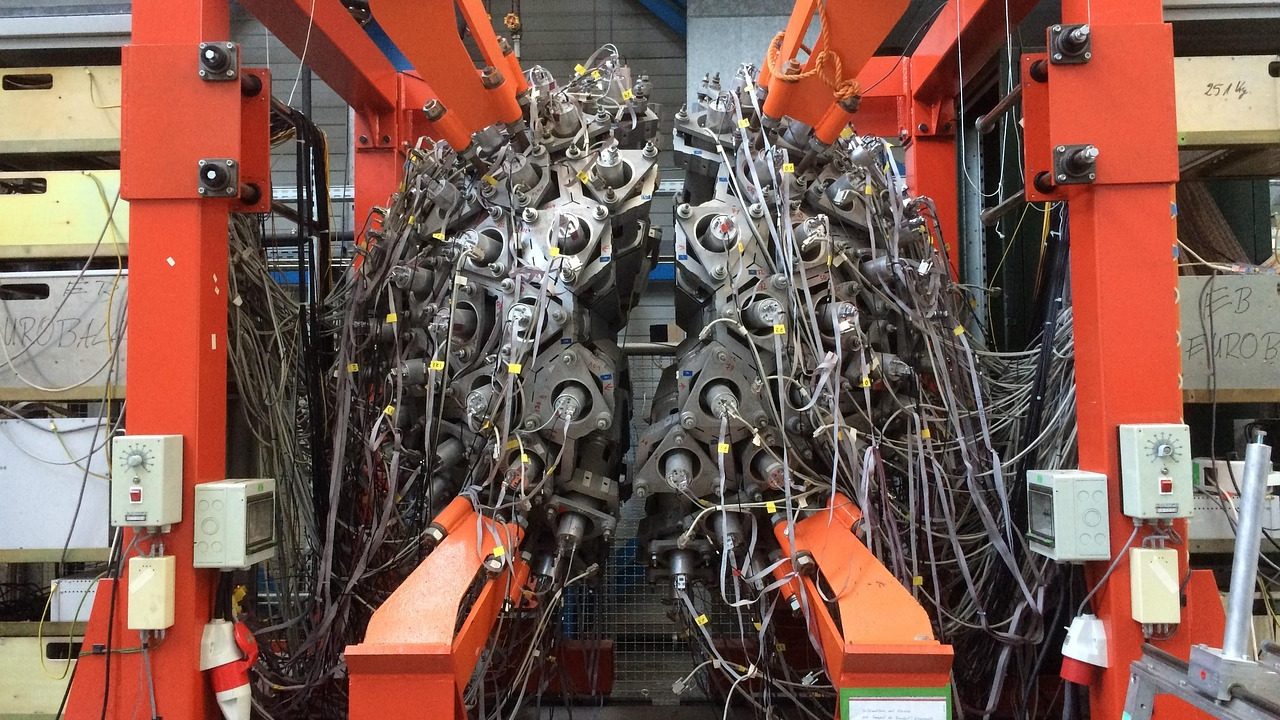
Physicists at CERN have confined a single antihydrogen atom for thirty days. The previous record for antimatter confinement was measured in minutes. The leap is not incremental — it represents a qualitative change in what experimental physics can do with antimatter, and the difference is meaningful: thirty days is long enough to perform real spectroscopy.
Antimatter annihilates instantly on contact with regular matter, so confinement requires magnetic field configurations that suspend the particle without touching the trap walls, maintained with extraordinary precision against every ambient disturbance — vibrations, temperature fluctuations, the Earth's own magnetic field variation. The scientific payoff is the ability to ask whether antihydrogen's energy levels match hydrogen's with very high precision. Any asymmetry, however small, would constitute evidence of CPT violation and require fundamental revisions to the Standard Model of particle physics. So far, measurements suggest symmetry. A counterargument raised in analysis of the results is worth noting: the magnetic confinement fields necessary to trap antimatter are themselves extremely carefully engineered electromagnetic environments, and it is at least worth asking whether the apparatus could be interacting with measurements in ways that mask asymmetries — measuring the success of the engineering rather than a fundamental symmetry. The CERN teams design multiple independent measurement approaches to catch apparatus-induced artifacts, but the epistemological caution stands. The useful thing to watch is whether different confinement geometries — the ALPHA and ALPHA-g experiments use slightly different trap designs — produce fully consistent CPT measurements.
Swiss researchers at EPFL have developed a neural chip capable of decoding communication patterns between different brain regions simultaneously, rather than recording activity within a single region. The distinction matters because coordinated cross-regional activity underlies most of what the brain does — perception, memory formation, and decision-making all involve signals traveling between areas. Recording from one area at a time misses most of that architecture. Named medical applications include epilepsy and Parkinson's disease, where understanding the cross-regional dynamics of a seizure or tremor in real time could enable more targeted intervention. The longer-range implication is for understanding cognition itself at the level of circuit-to-circuit communication.
The highest-scoring story of the week, with 1,602 points, was Local Wikipedia — a project generating a Wikipedia-style reference covering only things within a half-hour walk of the user's current location. It uses OpenStreetMap data combined with Wikipedia's geographic coordinates to identify relevant articles, presented in a format optimized for walking exploration. The Hacker News thread was notable for what commenters discussed: not the technical implementation, but specific things they had discovered about their own neighborhoods — historical events on their block, the etymology of street names, the architectural history of buildings passed daily. The Situationist concept of psychogeography — the study of how physical environments shape thought and behavior — describes what Local Wikipedia is accidentally doing, three decades after the internet was supposed to have made geography irrelevant.
Also surfaced this week: RootKit Labs published detailed documentation for a stereoscopic depth-sensing board designed for hardware hackers and robotics enthusiasts — an educational artifact making stereo depth sensing accessible from the circuit level up, not a commercial product. And a Twitter user documented Samsung running a TensorFlow Lite model on a continuous 960x540 image stream, apparently for on-device user behavior tracking rather than still image capture. The Hacker News thread drew only six comments, but the practice of running continuous on-device inference for behavioral tracking on consumer devices is one worth understanding as it normalizes.