Why Math Still Matters, Who Tried to Own 'Cyberspace,' and Whether Dogs Know Bouba from Kiki
How this was made Verified AI
Every Intellegix briefing is generated from that day's broadcast and run through automated checks before it publishes — with a human paged on any flag. Here is the trail for this edition.
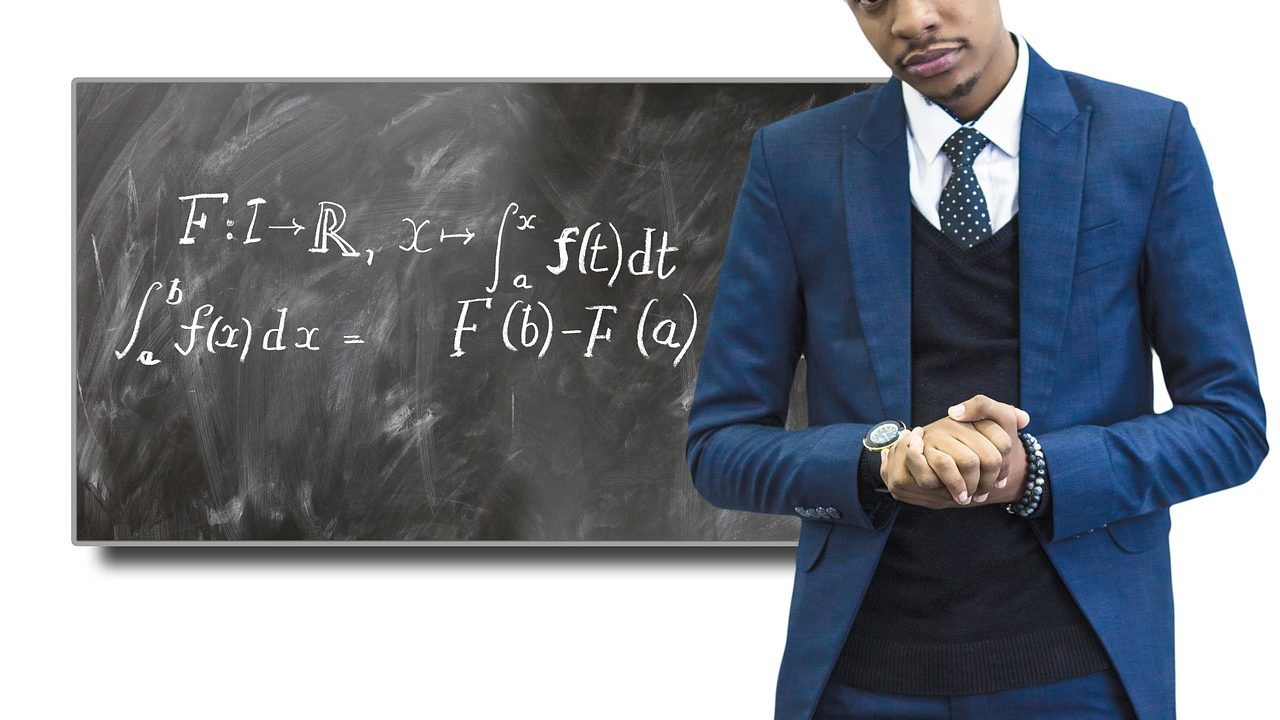
Grant Sanderson — creator of the 3Blue1Brown mathematics YouTube channel — posted a video arguing that 2026 is an unusually good time to pursue mathematics as a career or deep avocation. It collected 396 points and 483 comments, making it one of the most-discussed stories of the day. His argument rests on two pillars: AI tools remain systematically weak at the creative problem-finding and proof construction that define research mathematics, making strong mathematicians relatively more valuable compared to AI-assisted non-mathematicians than they were five years ago; and mathematical literacy is becoming a differentiating credential in technical fields precisely because so many practitioners are outsourcing quantitative reasoning to AI. The people who understand what the tools are doing — who can audit outputs and push methods into new territory — are rarer. A notable sub-thread in the 483-comment discussion debated whether the mathematical disciplines that matter most are shifting, away from rote computation and toward category theory, topology, and the structural reasoning that appears in type theory and formal verification.
The highest point total of the day — 464 points, 169 comments — went to 'Someone Behind the Software,' an essay by Karri Saarinen making a humanist argument for recognizing the individual humans who create software. The piece resists framing software as a commodity or team output, instead celebrating the specific choices, aesthetics, and care individual engineers and designers bring. The HN response was almost uniformly appreciative, suggesting the essay landed on a real anxiety: as AI generates more code and large organizations build software through process-driven pipelines, the individual human signature risks disappearing.
William Gibson coined the word 'cyberspace' in his 1982 short story 'Burning Chrome' and developed it fully in Neuromancer in 1984. An essay at colo.to, which drew 196 points and 75 comments, traces subsequent attempts by various parties to trademark the term as internet commerce exploded in the 1990s. The irony — that a word invented to describe a borderless, ungovernable information space became the subject of trademark battles — was not lost on the HN community.
The bouba-kiki effect is a well-established finding in psycholinguistics: across cultures, humans overwhelmingly assign the nonsense word 'bouba' to a rounded abstract shape and 'kiki' to a spiky one. New research showing that dogs demonstrate the same cross-modal mapping — tested in a controlled paradigm — drew 259 points and 155 comments. If dogs, which diverged from the human lineage roughly 60 to 80 million years ago, share this association, it suggests the mapping is not a learned cultural artifact but something rooted in more fundamental properties of how nervous systems cross-reference sensory information.
A CSIS analysis of the Defense Department's munitions industrial base — 77 points, 86 comments — rounded out the day's policy stories. The core finding: rebuilding production capacity for certain munition types stressed by Ukraine support operations, including Stinger missiles, 155mm artillery shells, and advanced anti-armor systems, takes five to seven years under optimistic assumptions. The bottleneck is not factory floor space but skilled labor, specialized machine tools, and chemical precursors with their own extended lead times. Commenters with apparent direct experience in defense manufacturing pushed back on World War II mobilization comparisons, arguing that the technical complexity of modern precision munitions — containing MEMS sensors, specialized propellants, and electronics — makes rapid scaling categorically harder than it was in the 1940s.