From Sub-Micrometer 3D Printers to Latent-Space AI: Hacker News Surfaces the Invisible Infrastructure Beneath Modern Technology
On a Monday defined by Linux's 32nd kernel evolution, Hacker News surfaced a remarkably coherent set of stories about the invisible architecture holding the internet together — and the small teams quietly pushing its boundaries. From hybrid AI reasoning that abandons human-readable thought to a functional laptop powered by a decades-old chip, the community's top stories illuminated how much of modern computing runs on meticulous, unheralded work.

“the people who will be most valuable in an AI-saturated environment are those who genuinely understand what the systems are doing”
How this was made Verified AI
Every Intellegix briefing is generated from that day's broadcast and run through automated checks before it publishes — with a human paged on any flag. Here is the trail for this edition.
Linux Turns 35 — and the Kernel Is Still Growing

Thirty-two years after Linus Torvalds posted his famous 'just a hobby' message, Linux hit version 7.3 this weekend, landing on Hacker News with 261 points and 114 comments. The LWN merge-window summary drew kernel contributors into the comment thread, where they detailed two headline changes: improved scheduler handling of heterogeneous core configurations — a feature with growing relevance as ARM big.LITTLE-style chips spread into server workloads — and continued expansion of Rust-based driver subsystems.
The Rust angle carries particular weight. After roughly two years of community debate over whether to admit the language at all, the compromise was to allow Rust only in bounded subsystems where memory-safety bugs have historically caused the most damage. The fact that 7.3 expands Rust into additional driver territory is being read by observers close to the code as a verdict that the experiment is working.
The nine-to-ten-week release cadence that has governed the kernel for years remains intact — a quiet demonstration, as the community noted, of distributed coordination at a scale that few open-source projects have matched or sustained.
Certificate Authorities, DNS History, and a Cross-OS WiFi Bug

Let's Encrypt announced it is adding two additional remote perspectives for domain validation — a low-profile update that carries meaningful security implications. The current system validates domain ownership from a single network vantage point; an attacker who can poison the DNS cache at that point can potentially obtain a fraudulent certificate. Multi-perspective validation, which runs checks simultaneously from multiple geographically distributed locations, forces any attacker to compromise all of those perspectives at once — a dramatically harder task. The addition of two more perspectives tightens the attack window further, though the story collected only five points on Hacker News, reflecting how quietly consequential certificate infrastructure tends to be.
On a lighter note, the DNS Museum — dns.museum — surfaced with 84 points as an archival project documenting the history of the Domain Name System, which turns 43 this year. Paul Mockapetris published RFC 882 and 883 in November 1983, and the comment thread drew a mix of networking veterans sharing war stories and younger engineers encountering this history for the first time.
The Broadcom WiFi parser bug, reported by researcher Quentin Kaiser, struck a more urgent register. Two bugs in a single proprietary parser affect routers running both eCos and Linux simultaneously — because the wireless firmware is proprietary and shared across operating systems. Under specific conditions, the bugs allow remote code execution, and the cross-OS nature undermines the usual assumption that the host operating system's security apparatus protects the device. The story gathered 86 points and 22 comments, with the HN community digging into a responsible disclosure timeline that reportedly stretched over several months. For anyone running consumer routers with Broadcom chipsets, the practical advice is to monitor vendor security advisories — a 2024 study found that fewer than 30 percent of home routers had received a firmware update within the preceding 18 months, meaning patch propagation through the supply chain can leave attack windows open for six months to a year.
AI That Thinks Without Words — and a Language Built to Defeat It

The most technically dense story on Hacker News today — 422 points, 205 comments — is a paper from arXiv titled 'Hybrid Reasoning Agents: LLM agents that think in latent space, act through text.' The architecture represents a significant conceptual departure from current agent frameworks such as ReAct or chain-of-thought with tool use, which force all intermediate reasoning steps into human-readable text tokens fed back through the context window. The hybrid approach instead lets a model maintain a continuous internal state for reasoning, generating text only at the action boundary — a tool call, an API request, a response. The paper reports substantial efficiency gains on multi-step reasoning benchmarks.
The interpretability concern this raises is immediate: one of the few safeguards in current LLM agent deployments is that chain-of-thought reasoning is nominally inspectable. Latent-space reasoning closes that window. Several commenters argue the loss is less severe than it appears, citing mechanistic interpretability research from Anthropic and DeepMind suggesting that chain-of-thought text is often post-hoc rationalization rather than a reliable trace of the model's actual computations. That argument is uncomfortable but, by the community's assessment, hard to dismiss.
A companion story — 'If you don't run your own LLM proxy, how do you know what's going on?' — gathered 192 points and 138 comments by raising the operational dimension of this opacity. Without a proxy logging all inputs and outputs, teams making API calls to external LLM providers have little visibility into latencies, prompt consistency, or the audit trail that regulated industries increasingly require. LiteLLM and OpenTelemetry-based tracing approaches came up repeatedly in the thread as practical answers.
The adversarial frontier extends further still. Developer Dominic Picheta published a post about Killswitch, a programming language explicitly designed so that LLMs cannot use it effectively — drawing 210 points and 161 comments. Killswitch uses syntax and semantics absent from LLM training data, unusual operator precedence, and deliberately counterintuitive scoping rules. When prompted to write Killswitch code, models reportedly produce plausible-looking nonsense. The HN comment thread split almost evenly between those who see the project as a serious educational tool — forcing genuine understanding because the AI crutch is unavailable — and those who consider it temporary security theater, noting that any widely adopted language would eventually appear in training data.
Mistral's Timestral, a time-series foundation model, landed quietly this weekend with only six points, possibly because it dropped without fanfare. It places Mistral in direct competition with Amazon's Chronos, Google's TimesFM, and the Nixtla models in a domain — financial forecasting, demand planning, anomaly detection — where foundation model approaches have clear commercial precedent. DeepSeek V4.1 Flash 1017 also appeared on the AI benchmarking site Artificial Analysis with 159 points and 58 comments; the new variant appears to emphasize inference speed over raw capability, outperforming comparable-size models on latency while maintaining competitive accuracy on standard evaluations.
Taming AI Agents: Proxies, Specs, and WhatsApp in the Cloud
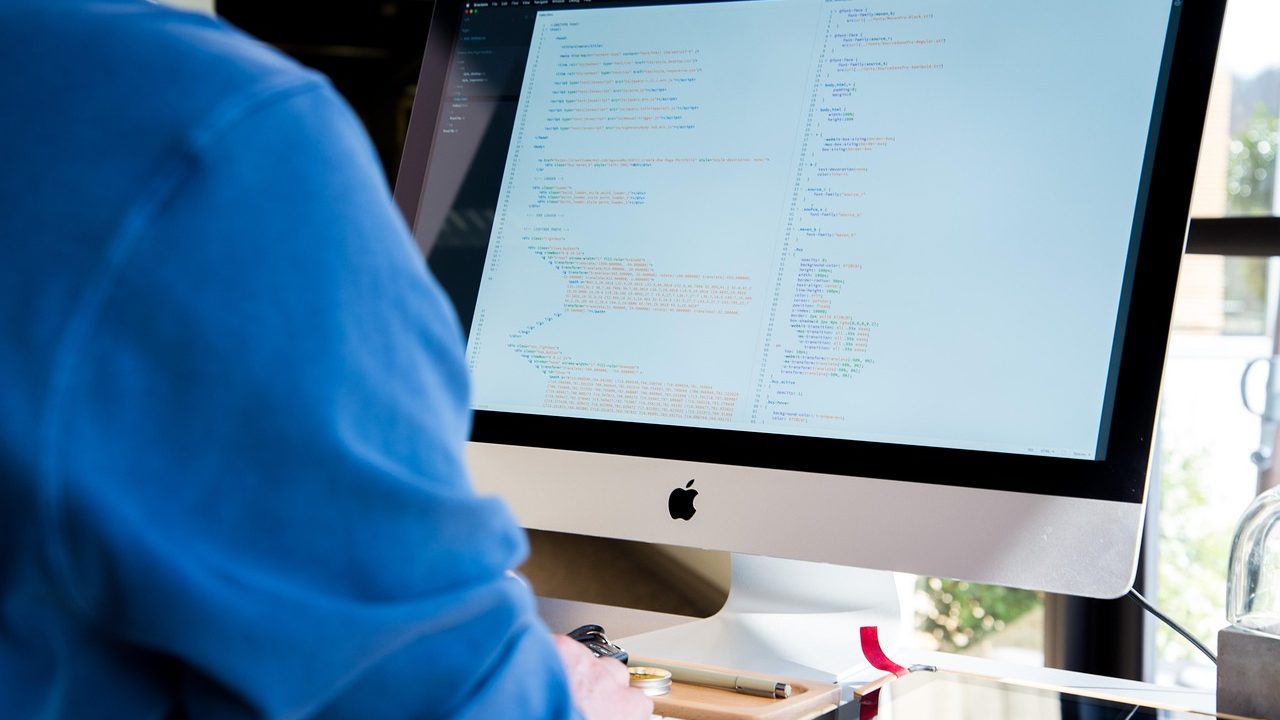
Three stories today map the rapidly maturing tooling layer around LLM agents. A practitioner post on running Claude Code inside tmux sessions — 52 points, 26 comments — addresses a fragility that many agent setups share at the process management layer: session state lost when a terminal closes, no reliable mechanism to multiplex multiple agent instances, and no clean way to send commands to a running agent from an external script. The author's solution uses tmux's `send-keys` to create a more robust orchestration layer, with a notable section on what the post calls 'the ceiling' — the class of problems that emerge when agents spawn their own subprocesses or must interact with interactive terminal programs.
The Superlite framework — 103 points, 41 comments — addresses agent input rather than agent process management. Positioned as a lighter alternative to the Superpowers framework, Superlite hands agents a structured specification document instead of a loose natural language prompt, with dedicated sections for constraints, success criteria, available tools, and failure modes. The author argues that well-structured specs dramatically reduce variance in agent output — a framing closer to briefing a human contractor than to the way most practitioners currently use LLMs.
A Show HN for a WhatsApp MCP integration running on Cloudflare gathered 114 points and 65 comments. The Model Context Protocol, Anthropic's open standard for connecting AI models to external data sources, here exposes a user's WhatsApp message history and contacts as a queryable MCP server, hosted serverlessly on Cloudflare Workers with state persisted through Durable Objects. A significant fraction of the 65 comments raised the obvious concern: the setup routes private message history through a third-party infrastructure chain. The author made the code fully open-source to allow inspection, but the trust chain still runs through Cloudflare and whatever AI provider is connected at the other end.
Sub-Micrometer Printers, a 6502 Laptop, and the Democratization of Precision
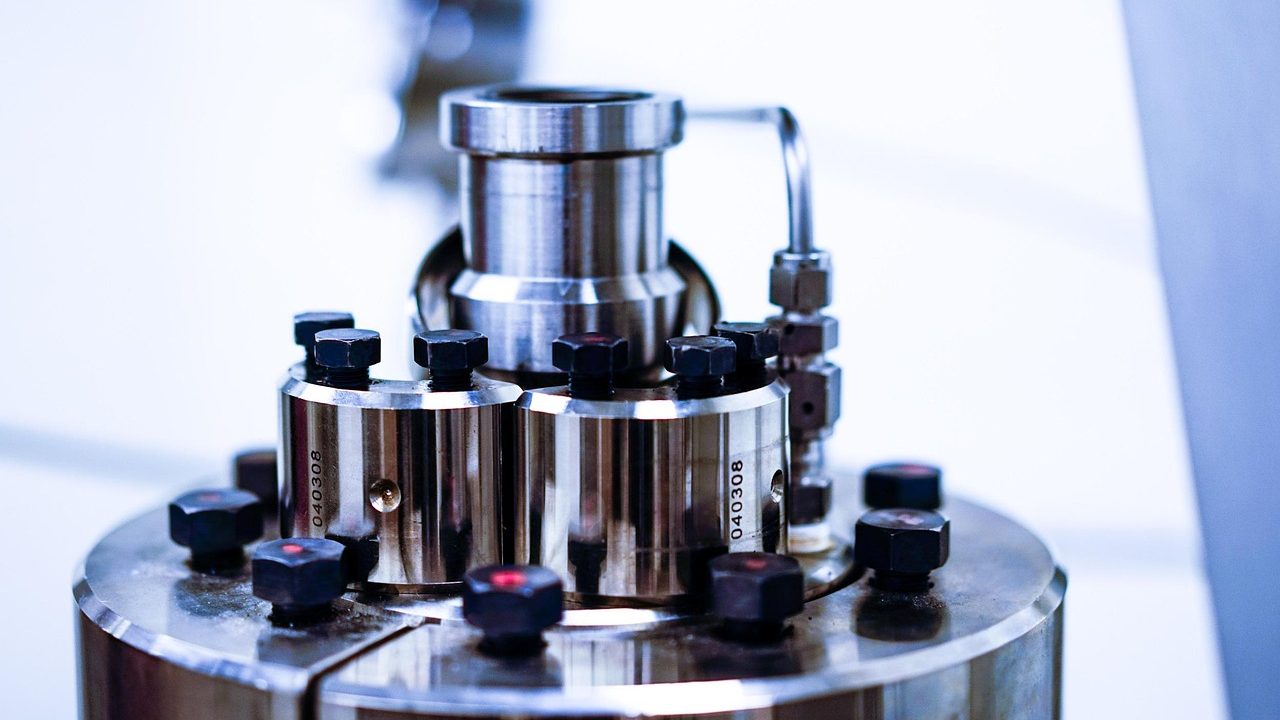
A through-line runs through today's hardware stories: projects where individuals or small teams have built things at levels of precision or ambition that previously required institutional resources. RepRapMicron, a GitHub project from Vik Olliver, is the most striking example. It gathered 401 points and 64 comments, and it extends the original RepRap democratization-of-manufacturing ethos into genuinely new territory — a motion platform operating at sub-micrometer accuracy, achieved by adapting the RepRap system with specialized lead screws, vibration isolation, and a thermal-drift-compensating control loop, rather than purchasing a commercial micro-positioning stage that might cost $10,000 to $100,000. The HN comment thread explored where the fundamental limits lie: eventually, the fight is against Brownian motion and thermal expansion in the structural members themselves.
The Open MicroManipulator project — 205 points, 16 comments — targets the same precision regime but for biological applications. Sub-micrometer 3D motion control underlies patch-clamp electrophysiology, microinjection, and in vitro fertilization procedures; commercial micromanipulators for these applications typically cost $50,000 to $200,000. The open-source version appears to bring that cost down dramatically. The low comment count likely reflects that the researchers who most need this tool — wet-lab biologists — are not the most active HN commenters, but the practical implications for research groups in lower-income countries are concrete.
A functional laptop built around the MOS 6502 CPU — the chip that powered the Apple II, Commodore 64, Atari 400 and 800, BBC Micro, and original Nintendo Entertainment System — drew 145 points and 67 comments. Running at roughly one megahertz, the machine actually executes programs, and the HN thread became a serious conversation about what 'useful' means for a computer: several commenters argued that for text editing, serial communication, and simple data logging, a 1 MHz 6502 with adequate RAM is not meaningfully limited compared to a modern machine.
The PalmOS Lemmings port — 134 points, 32 comments — rounded out the retrocomputing cluster. The original Lemmings was released in 1991 by DMA Design, the studio that later became Rockstar North. The GitHub repository of the PalmOS port now functions as a historical artifact, with the comment thread evoking the extraordinary engineering constraints Palm developers worked under. Free Pascal's new dynamic packages feature — 166 points, 39 comments — also fits this tradition: the compiler that kept Pascal alive through the decades when major companies abandoned it can now load components at runtime rather than requiring static linking, enabling hot-reloading and modular application distribution.
Why Math Still Matters, Who Tried to Own 'Cyberspace,' and Whether Dogs Know Bouba from Kiki

Grant Sanderson — creator of the 3Blue1Brown mathematics YouTube channel — posted a video arguing that 2026 is an unusually good time to pursue mathematics as a career or deep avocation. It collected 396 points and 483 comments, making it one of the most-discussed stories of the day. His argument rests on two pillars: AI tools remain systematically weak at the creative problem-finding and proof construction that define research mathematics, making strong mathematicians relatively more valuable compared to AI-assisted non-mathematicians than they were five years ago; and mathematical literacy is becoming a differentiating credential in technical fields precisely because so many practitioners are outsourcing quantitative reasoning to AI. The people who understand what the tools are doing — who can audit outputs and push methods into new territory — are rarer. A notable sub-thread in the 483-comment discussion debated whether the mathematical disciplines that matter most are shifting, away from rote computation and toward category theory, topology, and the structural reasoning that appears in type theory and formal verification.
The highest point total of the day — 464 points, 169 comments — went to 'Someone Behind the Software,' an essay by Karri Saarinen making a humanist argument for recognizing the individual humans who create software. The piece resists framing software as a commodity or team output, instead celebrating the specific choices, aesthetics, and care individual engineers and designers bring. The HN response was almost uniformly appreciative, suggesting the essay landed on a real anxiety: as AI generates more code and large organizations build software through process-driven pipelines, the individual human signature risks disappearing.
William Gibson coined the word 'cyberspace' in his 1982 short story 'Burning Chrome' and developed it fully in Neuromancer in 1984. An essay at colo.to, which drew 196 points and 75 comments, traces subsequent attempts by various parties to trademark the term as internet commerce exploded in the 1990s. The irony — that a word invented to describe a borderless, ungovernable information space became the subject of trademark battles — was not lost on the HN community.
The bouba-kiki effect is a well-established finding in psycholinguistics: across cultures, humans overwhelmingly assign the nonsense word 'bouba' to a rounded abstract shape and 'kiki' to a spiky one. New research showing that dogs demonstrate the same cross-modal mapping — tested in a controlled paradigm — drew 259 points and 155 comments. If dogs, which diverged from the human lineage roughly 60 to 80 million years ago, share this association, it suggests the mapping is not a learned cultural artifact but something rooted in more fundamental properties of how nervous systems cross-reference sensory information.
A CSIS analysis of the Defense Department's munitions industrial base — 77 points, 86 comments — rounded out the day's policy stories. The core finding: rebuilding production capacity for certain munition types stressed by Ukraine support operations, including Stinger missiles, 155mm artillery shells, and advanced anti-armor systems, takes five to seven years under optimistic assumptions. The bottleneck is not factory floor space but skilled labor, specialized machine tools, and chemical precursors with their own extended lead times. Commenters with apparent direct experience in defense manufacturing pushed back on World War II mobilization comparisons, arguing that the technical complexity of modern precision munitions — containing MEMS sensors, specialized propellants, and electronics — makes rapid scaling categorically harder than it was in the 1940s.
A Correction, a Theme, and What the Day's Stories Share

Before closing, the podcast acknowledged a past error: a claim made in May that Ukraine had struck Russian ships in the Caspian Sea. The Caspian Sea is landlocked, hundreds of kilometers from Ukrainian-controlled territory, and Ukraine has no established power projection capability there. The claim appears to have been fabricated, and it was repeated without scrutiny. The lesson offered: when a claim sounds dramatic and aligns with a larger narrative, the temptation to accept it without scrutiny is real. Basic geographic and logistical checks — if it cannot physically happen, it did not happen — are necessary.
The thread connecting today's disparate stories is meticulous work done under constraint. Linux 7.3 reflects 35 years of disciplined, nine-to-ten-week release cycles. RepRapMicron extracts sub-micrometer precision from consumer-grade hardware. Killswitch is a language deliberately engineered to be un-learnable by the tools that now write most code. The kernel developers quietly expanding Rust into new driver subsystems, the researchers documenting DNS history, the biologists who will gain access to a $200,000 micromanipulator at open-source cost — all of them doing careful, bounded work that the broader technology ecosystem depends on without noticing.
The observation from Grant Sanderson's video serves as a fitting coda: the people who will be most valuable in an AI-saturated environment are those who genuinely understand what the systems are doing. That holds whether the domain is mathematics, kernel development, security research, or auditing a Broadcom parser that turns out to run identically across two different operating systems.