Platform Power, AI-Assisted Code Review, and the Limits of Scaling
How this was made Verified AI
Every Intellegix briefing is generated from that day's broadcast and run through automated checks before it publishes — with a human paged on any flag. Here is the trail for this edition.
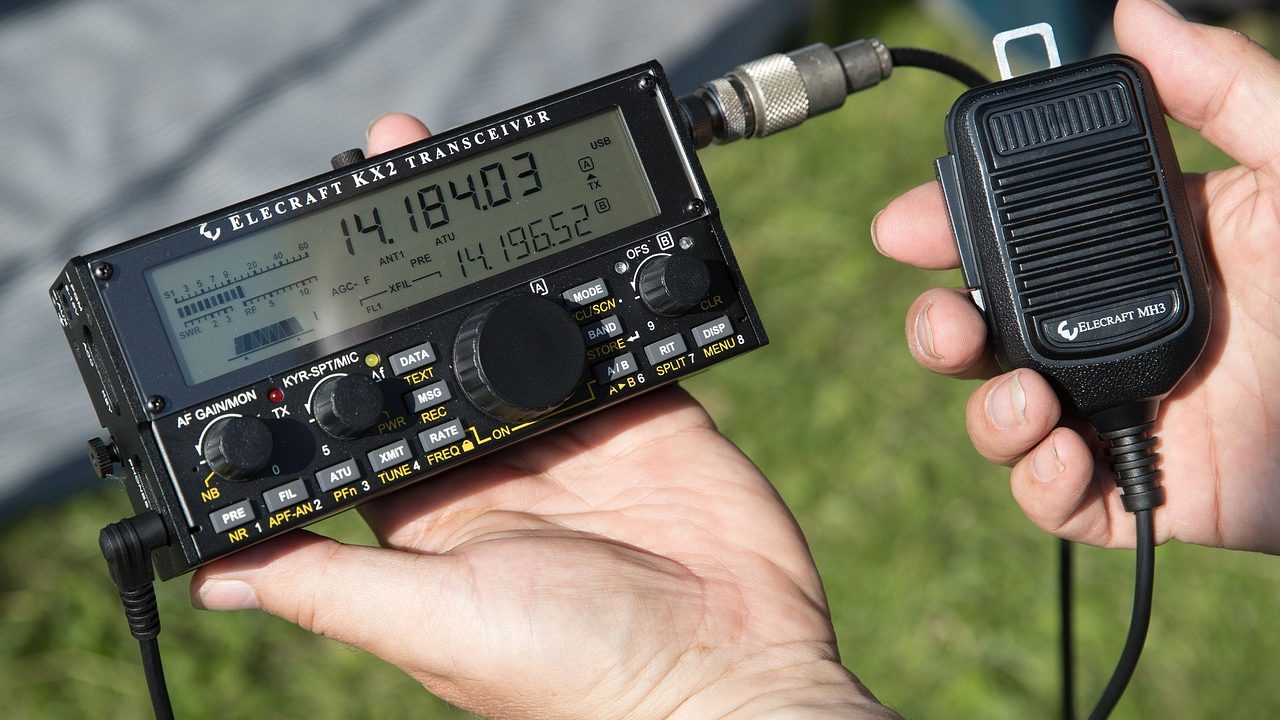
eBay announced restrictions on listings for radio frequency equipment, citing FCC regulatory concerns about unlicensed transmitters. The exemption carved out for ham-band-only gear — covered by the American Radio Relay League and earning 229 points and 200 comments on HN — was won through organized advocacy by the amateur radio community. Ham radio operators made a coherent argument that their equipment is FCC-licensed, their operators are licensed, and the regulatory risk profile is categorically different from unlicensed consumer RF equipment. The HN thread is partly celebration of that win and partly discussion of what it means for other technical hobbyist communities that lack organized advocacy structures capable of making the same case to a platform's policy team.
The Claude Code team's code review piece drew 361 points and 333 comments by being specific enough to be genuinely useful. The post describes how Anthropic's internal team approaches code review when much of the code being reviewed is AI-generated. Traditional heuristics — understand what the code does before approving it — get complicated when code is generated at a speed and volume that exceeds human review bandwidth. The process changes described include shifting review focus from implementation details toward intent verification: does this code do what the author intended, and is the intent itself correct? Automated checking handles mechanically verifiable properties; human attention is reserved for architectural and semantic questions. Multiple commenters reported independently arriving at similar adaptations, suggesting the evolution is somewhat convergent across teams.
Google's Gemini 4 Argon playing StarCraft on the Starskirmish benchmark — 226 points, 101 comments — loops back to the week's recurring theme about what capability measurements actually mean. Unlike DeepMind's AlphaStar, which was a purpose-built game-playing system, the benchmark here is measuring a general-purpose AI assistant playing StarCraft through some combination of vision, natural language reasoning, and action generation. The community debate is whether StarCraft performance by a general-purpose model tells you something meaningful about general reasoning capability, or whether it is simply a new kind of benchmark susceptible to the same coverage problems as the others.
Which surfaces the week's sharpest 'what if we're wrong' challenge: the assumption that scaling compute and data will continue to produce proportional capability improvements in language models. The confident version of this claim holds that the trajectory of model improvement over the last four years has been consistent enough to support extrapolation. The counterargument is that capability gains from scaling may have been partially tracking an easier-to-measure proxy. Models improved on benchmark tasks as they scaled partly because training data contained benchmark-adjacent content — math problems, code, structured reasoning examples. The Mercor research is evidence for this concern: if ninety percent of economically relevant tasks are poorly covered by benchmarks, and benchmarks have been driving evaluation of what 'better' means, then the capability improvements celebrated across the industry may be concentrated in a narrower domain than assumed. Concrete indicators that would challenge this skepticism would include organizations reporting measurable productivity gains from AI deployment in domains beyond code and writing — healthcare coordination, logistics planning, complex customer service. If those reports accumulate with rigorous measurement, the scaling-delivers-general-capability argument strengthens. If impressive benchmark performance continues without those real-world deployment stories, the concern is warranted.
Finally, a self-correction worth noting: an earlier episode of the show claimed Ukraine was striking Russian ships in the Caspian Sea as evidence of long-range strike capability. Listeners flagged the error. The Caspian Sea is landlocked, deep inside Russian territory, and completely outside any plausible Ukrainian operational reach. The claim was passed along without the geographic sanity check it required — a reminder, from the hosts themselves, that accountability in factual claims matters regardless of the medium.