From Jailbroken PS5s to Cracked Cryptographic History: The Week That Challenged Tech's Biggest Assumptions
A week of stunning capability demonstrations and uncomfortable reckonings unfolded across the Hacker News community, as debates over Tesla's long-delayed Roadster, AI benchmark validity, and the hidden origins of internet security collided with a flurry of quiet but consequential model releases.

How this was made Verified AI
Every Intellegix briefing is generated from that day's broadcast and run through automated checks before it publishes — with a human paged on any flag. Here is the trail for this edition.
This Week on Hacker News: Speed, Skepticism, and Cryptographic Secrets

A jailbroken PlayStation 5 running a large language model in someone's living room. A Claude-assisted research paper rewriting what the security community thought it knew about cryptographic history. Tesla's long-delayed Roadster returning to the internet with 2,571 comments in its wake. The Hacker News community arrived at the weekend of October 17, 2026 with no shortage of material to argue about.
The week's stories clustered around a single uncomfortable theme: the gap between what technologists claim and what they can actually demonstrate. AI benchmarks may be measuring the wrong things entirely. A new DeepSeek flash model dropped quietly and immediately drew serious scrutiny. Apple's research team open-sourced distributed inference on Apple Silicon, millirobots navigated beating hearts, and an image format war showed no signs of resolution. And somewhere in Florida, nine-inch snails continued their invasion.
Tesla's Roadster Returns — and So Does the Skepticism

The Tesla Roadster post pulled 1,457 upvotes and 2,571 comments — by a significant margin the most engaged story on Hacker News this week, a comment count that placed it among the top discussions on the platform for the entire year. The car, originally promised for delivery in 2020, has since dissolved in and out of public view while Cybertruck drama absorbed the company's narrative oxygen. Now it has returned to Tesla's website with what appears to be production-intent specifications, and the community's reaction is a cross-section of genuine excitement, deep skepticism, and technically sophisticated analysis.
The performance claims are staggering: sub-second zero-to-sixty times, a claimed top speed north of 250 miles per hour, and the SpaceX package with cold-gas thrusters that Tesla has been teasing since 2017. Commenters with aerospace backgrounds pointed out that integrating compressed air or cold-gas propulsion into a road vehicle creates novel regulatory and safety questions — NHTSA has no established frameworks for this kind of vehicle — and that the thrust-to-vehicle-weight ratio Tesla is implying would require a pressure vessel that complicates passenger safety certification substantially.
Several threads noted that the Roadster serves a marketing function even if it never ships in significant volume. Tesla's stock has had a difficult eighteen months relative to competitors, particularly as BYD's premium segment has expanded into European markets more aggressively than most analysts projected. A flagship halo car at this performance tier costs Tesla almost nothing in production complexity if it remains low-volume, but it anchors brand perception. The question the community is genuinely arguing about is whether this announcement represents real engineering progress or another iteration of the announcement cycle.
A separate but equally contested story — the Mercor research on AI benchmarks — generated 513 upvotes and 440 comments, and its headline explains why: ninety percent of US working hours are spent on tasks not well-covered by AI benchmarks. Ninety percent. The research mapped actual job tasks as reported by workers across a wide range of industries against what standard benchmarks measure, and found a profound mismatch. Benchmarks heavily test code generation, factual recall, and logical reasoning over structured problems. But the majority of actual working hours involve relationship management, contextual judgment in ambiguous situations, physical-world coordination, and iterative creative problem-solving without clean evaluation criteria.
A nurse's workday, a construction supervisor's decisions, a social worker's case management — none map cleanly onto benchmark tasks. The HN comment thread featured a strain of response arguing that benchmarks were never meant to measure general real-world performance, which is technically true, but the community pushed back by pointing out how frequently benchmark scores have been used in product marketing and investment narratives as proxies for economic impact. Even skeptics of the specific ninety-percent figure generally conceded the directional finding: the gap between benchmark performance and economically relevant task coverage is large.
Quiet Drops, Open Weights, and the Inevitability of Attention
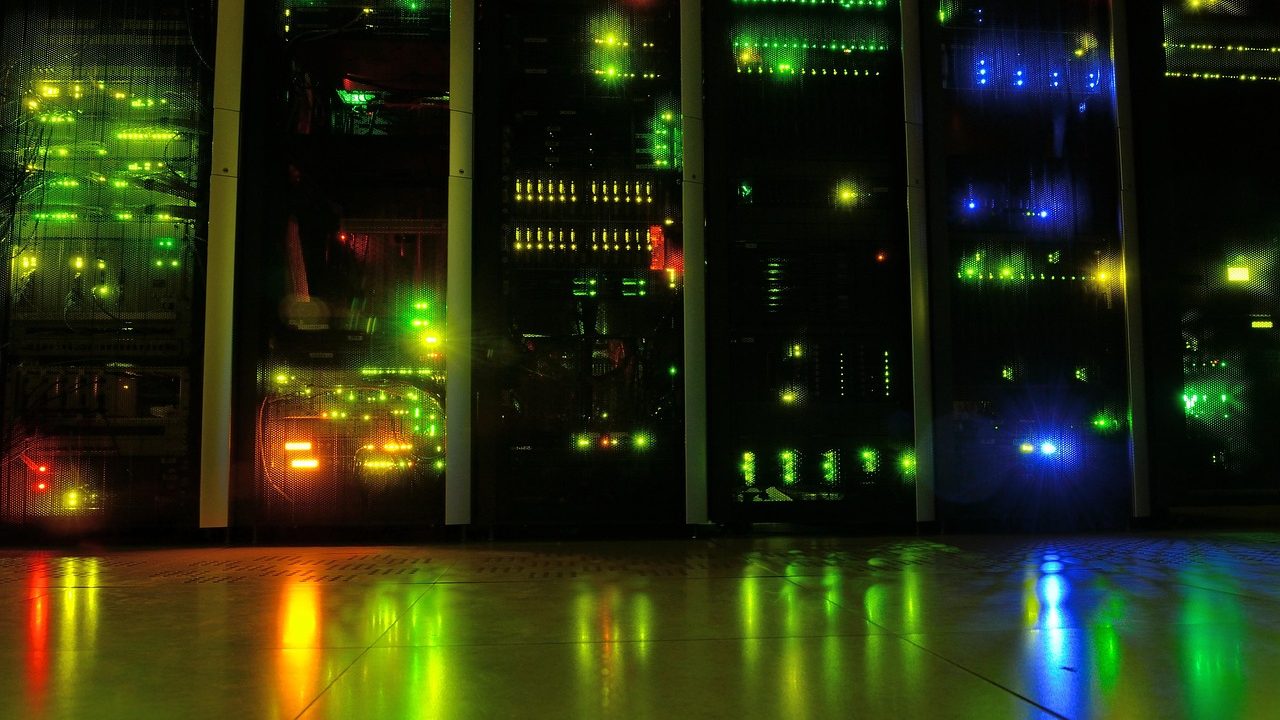
DeepSeek released version 4.1 Flash 1017 this week — the name itself signaling a dated checkpoint release rather than a major version — and it landed on Hacker News twice within hours, once via OpenRouter and once via the Hugging Face model page, with combined engagement of roughly 400 points and 130 comments. Flash models in the DeepSeek nomenclature represent the efficiency tier, optimized for speed and cost rather than maximum capability. The community's main question was whether the release represented a meaningful capability step or primarily a serving-efficiency improvement. From the Hugging Face discussion, the consensus leaned toward genuine reasoning improvements in code and structured output, with the bigger story being latency — several users reported notably faster time-to-first-token at comparable quality on their test cases.
Apple ML Research published work on Muse Spark, an open model running distributed inference via MLX on Mac Studio hardware, earning 324 upvotes and 162 comments. The significance is layered: Apple releasing research-quality models as open weights remains unusual for the company, and MLX as a distributed inference framework represents a serious engineering investment. Apple Silicon's unified memory architecture allows the CPU and GPU to share memory without copying, which changes the economics of running large models on-device. The distributed inference work means a model too large for a single Mac Studio's memory can now be distributed across multiple machines over a local network, with MLX handling coordination. Commenters who tested it reported surprisingly competitive throughput for consumer hardware — not data-center competitive, but legitimately useful for research workloads and small-team production use cases, particularly in healthcare, legal, and finance organizations where sending data to external inference APIs creates compliance complexity.
FLUX 3 Image Klein from Black Forest Labs landed with 174 points. The release appears to make significant strides on compositional accuracy — the longstanding weakness of diffusion models where requests for specific spatial relationships between objects yield interpretively adjacent but imprecise results. The HN thread featured side-by-side comparisons that made the improvements visible to a non-specialist eye, with active debate about whether this release begins displacing Midjourney from creative professional workflows.
An essay titled 'You Could Have Invented Transformers From Memory,' by Alex Wang, drew 318 points and 74 comments by reframing the transformer architecture through associative memory theory. The argument holds that the attention mechanism is essentially a continuous relaxation of a Hopfield network retrieval operation, and that starting from first principles on associative memory would yield something structurally equivalent to the transformer. The comment thread included sharp pushback noting that theoretical inevitability in hindsight is not the same as practical discoverability, but the essay's value as a teaching tool — offering one of the clearest explanatory structures available for why attention works — was broadly acknowledged.
Claude Cracks a Cryptographic Mystery, and a PS5 Runs an LLM
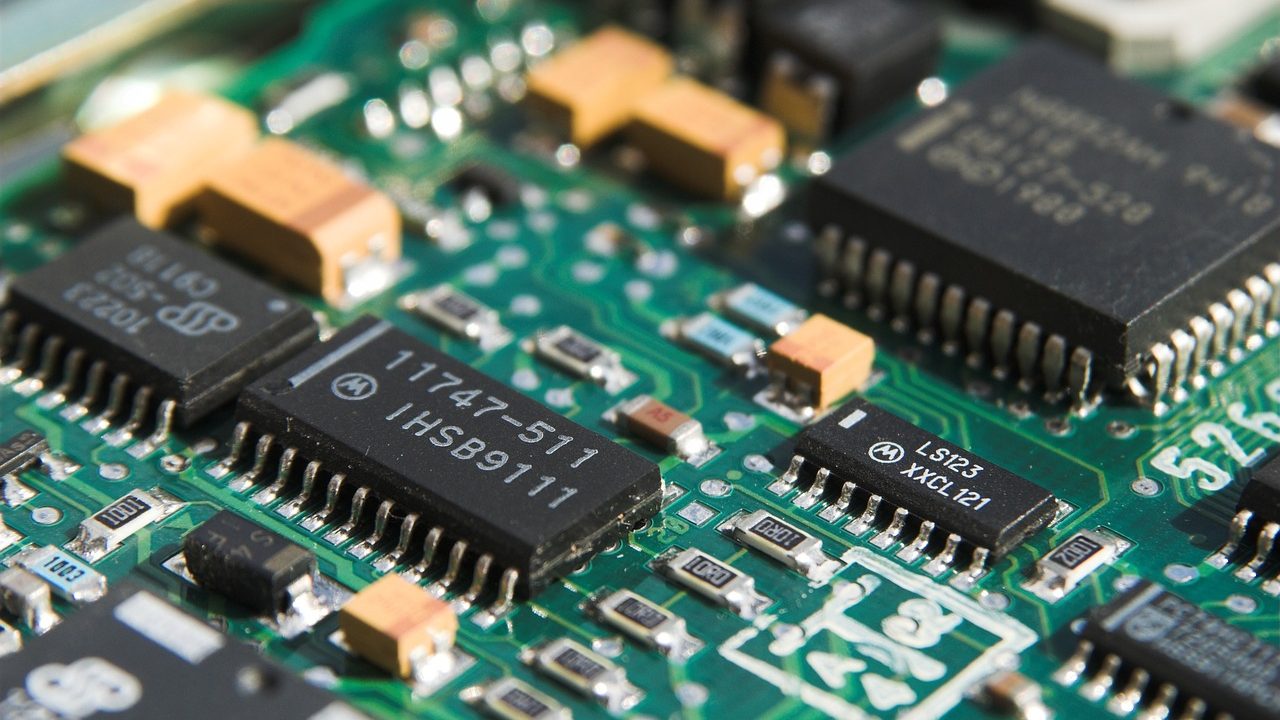
The Claude ECDSA origins story generated 892 upvotes and 333 comments — among the highest-engagement research posts on Hacker News this week. Anthropic published research in which Claude helped reconstruct the historical origins of the elliptic curve parameters used in ECDSA, the Elliptic Curve Digital Signature Algorithm underlying a substantial fraction of internet security, including Bitcoin, TLS connections, and SSH authentication. The worry that has persisted in the security community for decades is what cryptographers call the 'nothing-up-my-sleeve' problem: if the parameters defining these curves were chosen through a process that could have been manipulated by someone with knowledge of a backdoor, the security guarantees of the entire system could be undermined.
The NSA's involvement in standardizing some of these curves in the early 2000s has kept that concern alive, particularly after the DUAL_EC_DRBG backdoor — a different but related standard — demonstrated the concern was not purely theoretical. Anthropic's research apparently used Claude to systematically analyze historical documents, papers, and correspondence related to the curve parameter selection process, looking for evidence of the actual mathematical rationale used by the original designers. The security community has generally operated under the assumption that the most widely deployed curves — P-256, P-384, secp256k1 — are probably fine, but 'probably fine' in cryptography is not a comfortable position. Any evidence illuminating the selection rationale, even historically, improves the foundation.
Multiple HN commenters flagged the meta-story: using a language model to synthesize evidence across a large corpus of historical technical documents and identify patterns across material that would be impractical for a single researcher to work through is exactly the kind of task where current models have genuine leverage. It requires reading comprehension at scale and cross-referencing across documents — not novel mathematics. Anthropic also published related research on using Claude to design more efficient quantum circuits, a domain where the optimization landscape is notoriously difficult, earning 147 points and 32 comments.
The PS5 llama.cpp story — 299 points, 74 comments — is the kind of post HN rewards for the spirit of the endeavor. A developer published a GitHub project called PS5LM enabling GGUF-format quantized models to run natively on a jailbroken PlayStation 5. The PS5's custom AMD architecture includes a reasonably capable GPU, and with a jailbreak allowing unsigned code, it becomes an accessible inference platform. Performance is modest — smaller models in the 3 to 7 billion parameter range run with acceptable latency — but the community discussion is partly about what this implies for the broader 'run models anywhere' movement. A related Show HN entry, the llmspeed tool, lets users simulate inference speed on specific hardware configurations before committing to a purchase, earning 97 points by solving a practical problem: the difference between 5 tokens per second and 50 is the difference between a tool someone will actually use and one they will abandon.
Super Ice, Beating-Heart Robots, and the War Over Image Formats
The image format debate between JPEG XL and AVIF for web use cases drew 270 points and 185 comments. Jake Archibald's piece compares the two formats across web-relevant scenarios — photographic content, illustrations, screenshots with text, progressive loading, and constrained bandwidth — and arrives at a conclusion that frustrates anyone seeking a simple answer: AVIF has broader current browser support and somewhat better performance on photographic content at aggressive compression ratios, while JPEG XL has architectural advantages for progressive disclosure and handles high dynamic range content more elegantly. AVIF emerged from the AV1 video codec ecosystem with backing from Google, Netflix, and the Alliance for Open Media, giving it a faster standardization and browser adoption path. JPEG XL arrived from a more traditional image compression lineage with technically impressive design choices but slower adoption — Chrome removed JPEG XL support in 2022 before re-adding it, creating real uncertainty for developers who might have committed to it. A revealing subthread argued that technical merit is often secondary to ecosystem momentum, and that the JPEG format's own history — technically inferior to mid-1990s alternatives but dominant through early hardware acceleration and tooling support — casts a long shadow over any 'the better format will win' argument.
Materials science produced one of the week's more surprising findings: a form of ice created under specific high-pressure conditions achieves compressive strength roughly ten times that of ordinary ice, approaching the strength of concrete at around 40 megapascals. The story drew 104 points and 80 comments, with practical applications discussion ranging from cryogenic engineering for space habitats to the scientific relevance of high-pressure ice phases for icy moons like Europa and Enceladus.
Researchers at Johns Hopkins demonstrated millimeter-scale robots that can navigate to specific locations within a beating heart under wireless magnetic guidance and deliver therapeutic agents or perform localized interventions, earning 101 points and 18 comments. The technical challenge is extraordinary: maneuvering a device in an environment moving rhythmically 60 to 100 times per minute, with varying fluid dynamics, while maintaining precise positional control through an external magnetic field. Targeted clinical applications include treating arrhythmias and delivering localized drug doses to cardiac tissue without systemic circulation. Commenters with medical device backgrounds noted the regulatory path — likely a decade or more from research demonstration to clinical approval — but affirmed the underlying physics as real.
Giant African Land Snails, officially among the most damaging invasive species globally, are invading Florida again, earning 74 points under the headline 'Nine-Inch Snails.' The species, Achatina fulica, consumes over 500 plant species, can damage stucco structures by eating calcium carbonate, and carries a parasitic rat lungworm capable of causing meningitis in humans. Florida's previous eradication effort in the 2000s took a decade and $23 million to complete. The HN thread extended into a discussion of the limits of eradication efforts against highly adaptable invasive species, with several commenters noting that climate change is expanding viable habitat for tropical species into previously inhospitable latitudes. A smaller but notable post — an essay titled 'We Still Use Paper' — made the case that paper as an information medium retains specific properties digital systems don't replicate, including annotation without modes, physical sharing without network dependency, and tactile spatial memory cues that many people find genuinely useful for retention.
Platform Power, AI-Assisted Code Review, and the Limits of Scaling
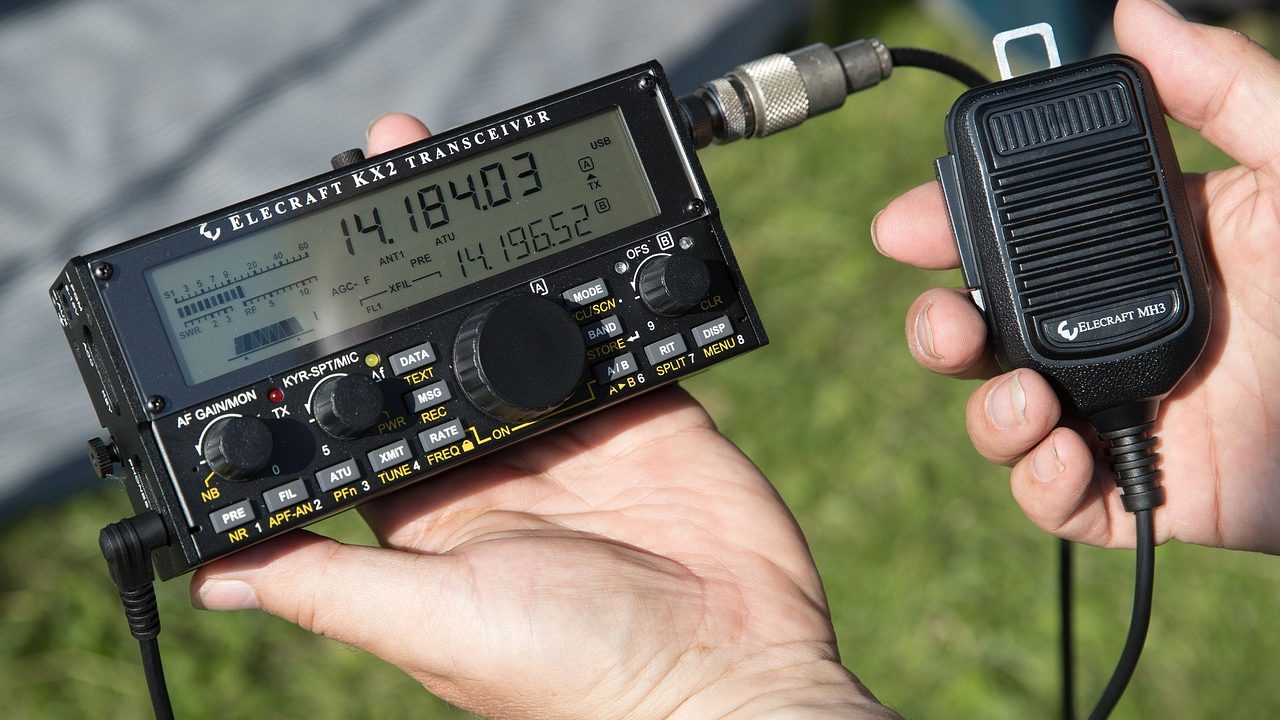
eBay announced restrictions on listings for radio frequency equipment, citing FCC regulatory concerns about unlicensed transmitters. The exemption carved out for ham-band-only gear — covered by the American Radio Relay League and earning 229 points and 200 comments on HN — was won through organized advocacy by the amateur radio community. Ham radio operators made a coherent argument that their equipment is FCC-licensed, their operators are licensed, and the regulatory risk profile is categorically different from unlicensed consumer RF equipment. The HN thread is partly celebration of that win and partly discussion of what it means for other technical hobbyist communities that lack organized advocacy structures capable of making the same case to a platform's policy team.
The Claude Code team's code review piece drew 361 points and 333 comments by being specific enough to be genuinely useful. The post describes how Anthropic's internal team approaches code review when much of the code being reviewed is AI-generated. Traditional heuristics — understand what the code does before approving it — get complicated when code is generated at a speed and volume that exceeds human review bandwidth. The process changes described include shifting review focus from implementation details toward intent verification: does this code do what the author intended, and is the intent itself correct? Automated checking handles mechanically verifiable properties; human attention is reserved for architectural and semantic questions. Multiple commenters reported independently arriving at similar adaptations, suggesting the evolution is somewhat convergent across teams.
Google's Gemini 4 Argon playing StarCraft on the Starskirmish benchmark — 226 points, 101 comments — loops back to the week's recurring theme about what capability measurements actually mean. Unlike DeepMind's AlphaStar, which was a purpose-built game-playing system, the benchmark here is measuring a general-purpose AI assistant playing StarCraft through some combination of vision, natural language reasoning, and action generation. The community debate is whether StarCraft performance by a general-purpose model tells you something meaningful about general reasoning capability, or whether it is simply a new kind of benchmark susceptible to the same coverage problems as the others.
Which surfaces the week's sharpest 'what if we're wrong' challenge: the assumption that scaling compute and data will continue to produce proportional capability improvements in language models. The confident version of this claim holds that the trajectory of model improvement over the last four years has been consistent enough to support extrapolation. The counterargument is that capability gains from scaling may have been partially tracking an easier-to-measure proxy. Models improved on benchmark tasks as they scaled partly because training data contained benchmark-adjacent content — math problems, code, structured reasoning examples. The Mercor research is evidence for this concern: if ninety percent of economically relevant tasks are poorly covered by benchmarks, and benchmarks have been driving evaluation of what 'better' means, then the capability improvements celebrated across the industry may be concentrated in a narrower domain than assumed. Concrete indicators that would challenge this skepticism would include organizations reporting measurable productivity gains from AI deployment in domains beyond code and writing — healthcare coordination, logistics planning, complex customer service. If those reports accumulate with rigorous measurement, the scaling-delivers-general-capability argument strengthens. If impressive benchmark performance continues without those real-world deployment stories, the concern is warranted.
Finally, a self-correction worth noting: an earlier episode of the show claimed Ukraine was striking Russian ships in the Caspian Sea as evidence of long-range strike capability. Listeners flagged the error. The Caspian Sea is landlocked, deep inside Russian territory, and completely outside any plausible Ukrainian operational reach. The claim was passed along without the geographic sanity check it required — a reminder, from the hosts themselves, that accountability in factual claims matters regardless of the medium.