Performance Without Understanding: The Theme Connecting Thursday's News
How this was made Verified AI
Every Intellegix briefing is generated from that day's broadcast and run through automated checks before it publishes — with a human paged on any flag. Here is the trail for this edition.
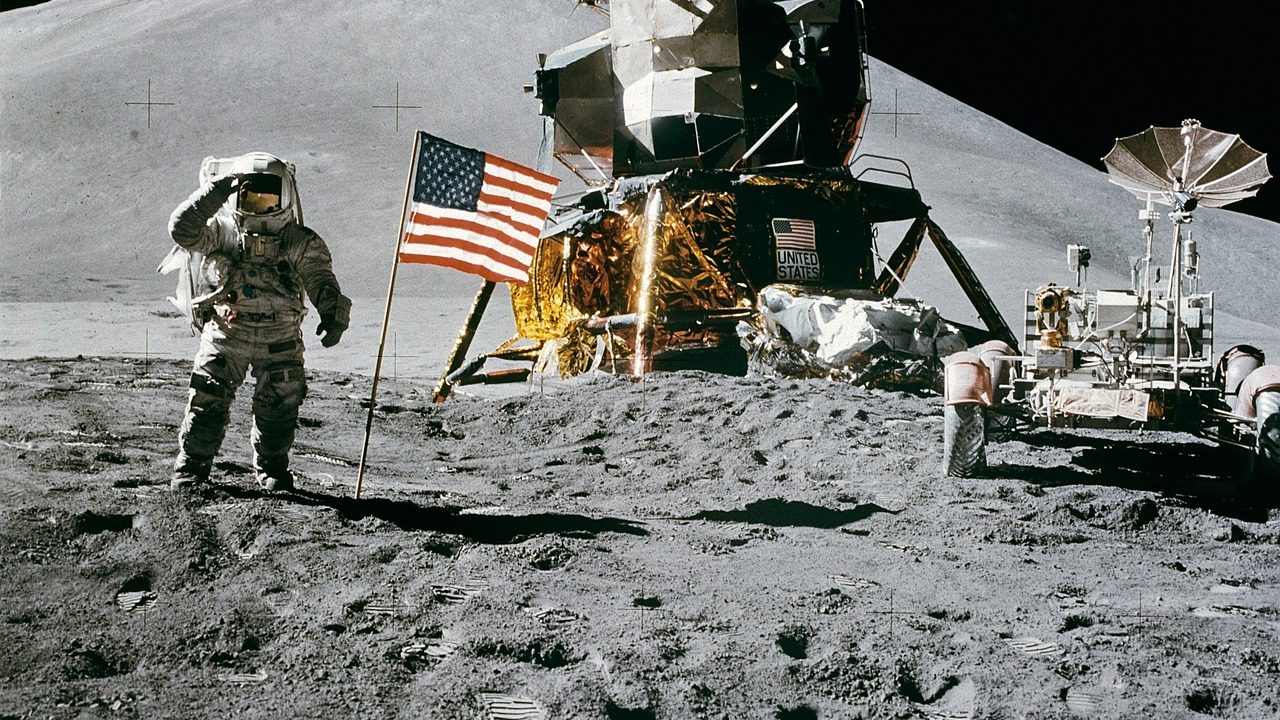
The single thread connecting the most important stories of the day, looking back across them, is the gap between performance and understanding. Margaret Hamilton's software had to be completely understood to be trusted — the Apollo Guidance Computer's behavior under the 1202 alarm was explicable in full. Rosalind Franklin understood her data deeply enough to know what it showed, even when others received credit for the conclusion. The mathematics AI debate, at its core, is a question of whether correct output without transparent process constitutes the same kind of knowledge.
The strongest version of the skeptical case against current AI mathematics claims runs as follows: mathematical benchmarks, however difficult, are drawn from a finite corpus of problems solved and published by humans. A sufficiently capable pattern-matching system trained on that corpus might achieve high scores on held-out problems from the same distribution without anything resembling mathematical understanding. The benchmark measures the system's relationship to the benchmark, not necessarily its relationship to mathematics as a domain of inquiry. The Cleo parallel is instructive: Cleo's integral evaluations were correct, but the mathematical community's discomfort was not primarily about correctness — it was about the absence of derivation, the inability to learn from the method used.
What to watch for, if the skeptical claim is right: AI-assisted proofs that verify formally but fail to transfer to adjacent problems the way a genuine conceptual advance would. What to watch for, if the optimistic claim is right: AI systems producing results in areas cleanly out of distribution — novel conjectures, not merely solutions to known open problems. OpenAI's claims in that direction, over the next eighteen months, are the ones worth tracking most carefully.
A correction also warrants space here. On May 18th, a prior episode reported that Ukraine had struck its fourth Russian ship in the Caspian Sea. A listener wrote in to point out that the Caspian Sea is landlocked and entirely surrounded by Russia, Kazakhstan, Azerbaijan, Iran, and Turkmenistan — Ukraine has no access to it. The story appears to have been fabricated, and it was repeated without sufficient verification. When something sounds dramatic and convenient, that is precisely when sourcing discipline matters most. The bigwords.page tool — which turns any URL into a large-text sign and scored 530 with 142 comments — and a fifteen-year community search to identify a band from a single obscure chart entry, scoring 151 with 61 comments, closed out the day as reminders that elegant simplicity and collective obsessive curiosity still generate real enthusiasm on Hacker News, in an episode otherwise dominated by frontier AI and millennium prize mathematics.