AI, Mathematics, and the Limits of Correct Answers: Hacker News Grapples With What Machines Really Know
A 1,457-comment Hacker News thread about AI progress in mathematics anchored a remarkable Thursday on the platform, as the community wrestled with questions of understanding versus performance — and paused to mourn the woman whose code landed humans on the moon.
“The benchmark measures the system's relationship to the benchmark, not necessarily its relationship to mathematics as a domain of inquiry.”
How this was made Verified AI
Every Intellegix briefing is generated from that day's broadcast and run through automated checks before it publishes — with a human paged on any flag. Here is the trail for this edition.
A Community on Edge: Today's Biggest Questions

A single Hacker News post about artificial intelligence and mathematics drew 1,457 comments and a score of 1,285 on Thursday, October 8, 2026 — a volume of engagement that signals genuine intellectual friction rather than routine tech news. The question animating the thread is neither new nor settled: when an AI system produces a correct mathematical proof, does that constitute mathematical understanding, or something that merely resembles it from a distance?
Threading through that debate are four interconnected stories — OpenAI's claims about AI-assisted mathematics, a pointed intervention from Fields Medal winner Terence Tao, a characteristically sharp essay from Scott Aaronson, and a historical mystery about a pseudonymous figure who posted correct but unexplained mathematical answers a decade ago. Together they form an argument about what mathematical knowledge actually is, and whether the tools now being built can possess it.
Alongside those debates, the community processed the death of Margaret Hamilton, whose software navigated Apollo 11 to the lunar surface, celebrated and scrutinized new model releases from Anthropic and OpenAI, and found time for a 193-year-old tortoise, a house with fifteen meters of secret tunnels, and a band that took fifteen years to identify.
The Mathematics Debate: Performance Is Not the Same as Understanding
OpenAI's post titled 'Sharing AI Progress in Mathematics' — a carefully hedged phrase that leaves substantial interpretive room — claimed that its systems are achieving results on mathematical benchmarks and research-adjacent problems at a level suggesting genuine progress beyond pattern matching. The Hacker News thread, running to 1,457 comments, became an arena for working mathematicians, engineers, and researchers to test that claim against their own knowledge of the field.
Terence Tao's post on Mathstodon, which scored 344 with 323 comments, offered the most precise framing of what is at stake. Tao argued that the metrics used to measure mathematical progress — solutions to competition problems, proofs of specific conjectures, publication counts — are too narrow to capture what he called 'Math 2.0.' Mathematical value, he contended, comes from conceptual illumination, unexpected connections between fields, and the reorganization of understanding that makes future problems tractable. Those qualities are extremely hard to benchmark, and a system trained on competition mathematics may simply be getting better at competition mathematics rather than at mathematics as such.
Scott Aaronson's essay, titled 'The Mathocalypse' and scoring 271 with 287 comments, pressed a related concern: that even if AI systems generate formally correct proofs, a literature flooded with machine-generated results that are verified but incomprehensible represents a real epistemic cost. Knowing that something is true without knowing why it is true limits the ability to generate intuitions about adjacent problems.
A quieter but illuminating historical counterpoint surfaced in a Wikipedia article about 'Cleo,' a pseudonymous figure who posted extraordinarily difficult integral evaluations on math Stack Exchange between 2013 and 2014 — correct answers, with no derivation, whose source was never fully resolved. The HN community surfaced the story alongside the AI mathematics coverage for obvious reasons: the parallel between an unknown entity producing correct but unexplained results and what current AI systems are doing is uncomfortable. OpenAI's simultaneous withdrawal of three papers from its own mathematics research repository, noted in a post that scored only 7, added a data point about internal quality control that the community did not miss.
A paper on arXiv titled 'Navier-Stokes Lost in Translation,' scoring 315 with 188 comments, rounded out the cluster. The Navier-Stokes equations describe fluid dynamics, and proving the existence and smoothness of solutions in three dimensions remains an unsolved Millennium Prize Problem worth one million dollars. The paper's argument — that formalizing the problem precisely enough for a proof assistant or AI system distorts something in the mathematical meaning — connected directly to Tao's critique of narrow benchmarking. Even critics of the stronger AI claims generally acknowledged that AI tools are already useful for finding errors in long proofs and searching existing literature, with Tao himself having written elsewhere about using AI as a tireless checker of reasoning steps rather than a generator of insight.
Margaret Hamilton: The Engineer Who Made the Moon Landing Possible
Margaret Hamilton died on October 7, 2026, at the age of 79. The Hacker News post announcing her death scored 1,638 — the highest score of any story on Thursday — with 177 comments that the platform's community described as among the most moving threads in recent memory.
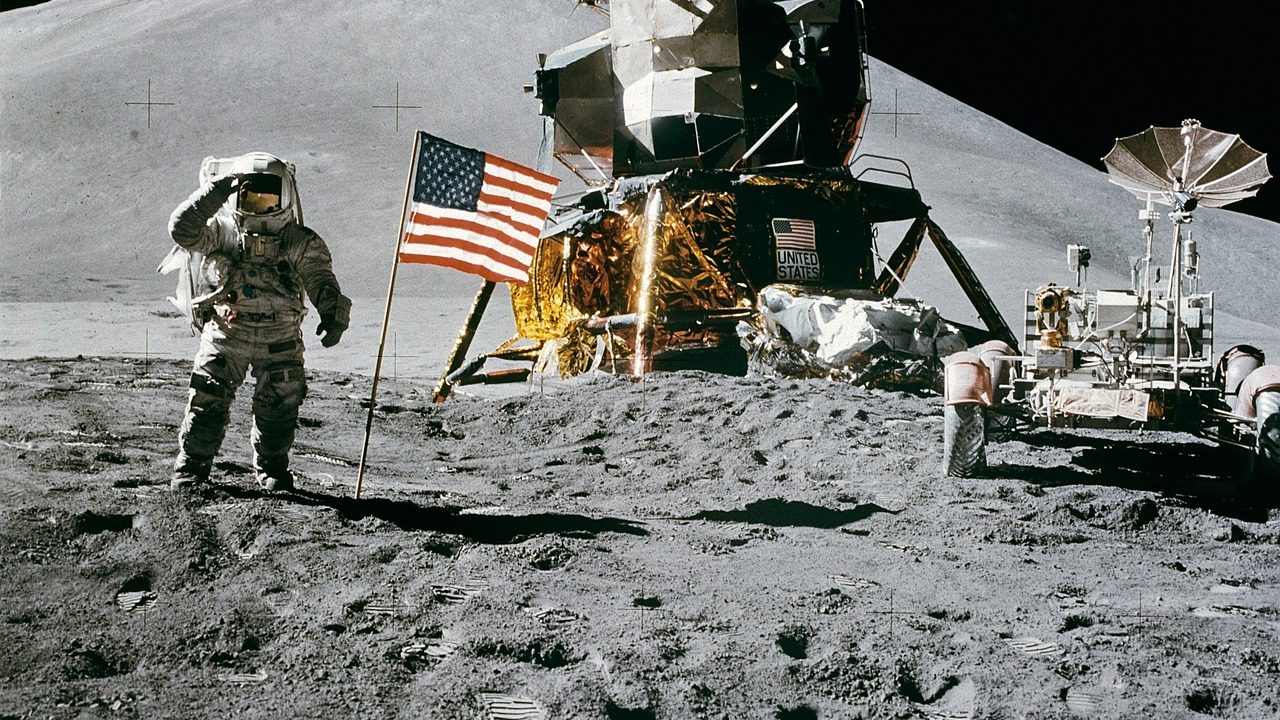
Hamilton served as director of Software Engineering at MIT's Instrumentation Laboratory, where her team wrote the software that ran the Apollo Guidance Computer — the onboard system that navigated Apollo 11 to the lunar surface and back. She is also widely credited with coining the term 'software engineering' as a discipline, arguing deliberately that software development deserved the same systematic rigor as other engineering fields, a claim that was considered radical in an era when programming was frequently treated as a secondary technical skill.
The specific episode most associated with her legacy is the 1202 alarm during Apollo 11's final descent. Mission Control nearly aborted the landing when the guidance computer began throwing error codes. The computer recovered and the mission proceeded because Hamilton's team had designed an asynchronous executive system capable of recognizing when it was overloaded and shedding lower-priority tasks to protect critical functions. The alarm was the system working correctly under conditions that had not appeared in the formal test plan — Hamilton had anticipated the class of failure even without knowing the specific instance.
The technical achievement was all the more remarkable given the constraints. The Apollo Guidance Computer operated with approximately four kilobytes of RAM, and writing software robust enough to self-prioritize under novel failure conditions in that environment required design discipline that engineers today would recognize as sophisticated systems architecture. Hamilton received the Presidential Medal of Freedom in 2016. Several HN commenters noted that she had to fight for the word 'engineering' to be applied to software at all, and that the community seemed both pleased she lived to receive proper recognition and conscious of how late that recognition came.
Claude Haiku 5.5 and GPT-6: Two Bets on the Next Frontier
Anthropic's Claude Haiku 5.5 scored 913 with 436 comments, and OpenAI's GPT-6 scored 660 with 368 comments — substantial engagement for model release announcements, reflecting how much the community's professional stakes are tied to the trajectory of these systems.
Haiku 5.5 is Anthropic's efficiency-optimized tier, designed for speed and low cost at high volume. The HN thread focused on benchmark positioning: Haiku 5.5 appears competitive with or better than GPT-4-class models from roughly eighteen months ago, at a fraction of the cost. That trajectory carries real consequences for the economics of AI-powered products. Capability levels that once required frontier models are now achievable at the efficiency tier, expanding which applications are financially viable to run at scale.
GPT-6's 'Intelligent UI' claim is more contested. OpenAI described the model as capable of generating adaptive interfaces — context-appropriate UI components based on what a user is trying to accomplish — rather than simply answering prompts. The HN thread divided between those who found this genuinely promising for applications like customer service, data exploration, and onboarding flows, and skeptics who noted that generated UIs are non-deterministic, making them difficult to test, debug, and reason about from a user experience standpoint. Neither announcement, the community observed, came with independent evaluation that would allow outside researchers to fully verify the capability claims.
Docker Agent, which landed on GitHub and scored 248 with 114 comments, extended the theme: AI capabilities are increasingly being built into developer infrastructure at the tooling layer rather than confined to chat interfaces. Docker Agent embeds agentic AI into container configuration, image management, and deployment orchestration. The HN thread was cautiously positive, with standard concerns about agentic AI holding write access to infrastructure.
Developer Tools: Compiler Ports, Craft Writing, and the Case for Durability
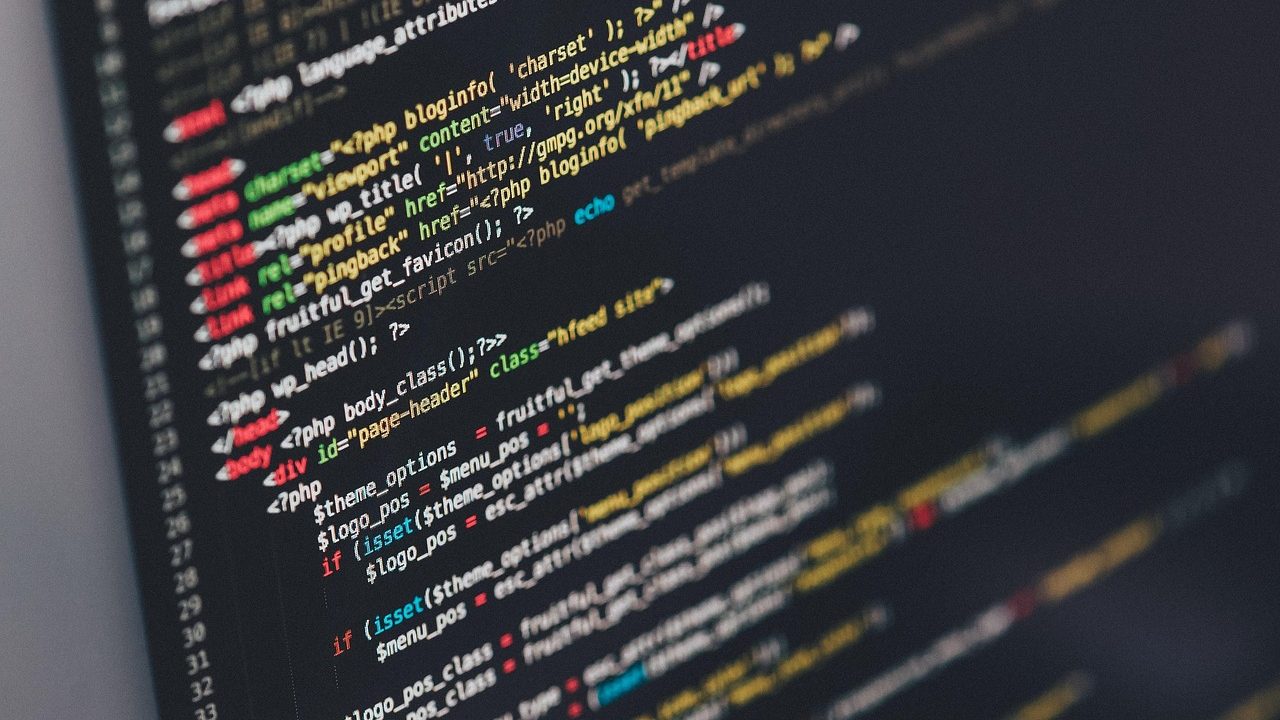
The TypeScript-to-Rust compiler port was the most contentious developer tools story of the day. A repository called ts-rust, hosted by pingdotgg, claims to have used large language models to port the TypeScript compiler — including its checker and language server protocol implementation — from TypeScript into Rust. Scoring 71 with 113 heated comments, it provoked three distinct camps: those impressed that the port exists at all, those skeptical about semantic correctness given the fundamental differences between TypeScript's and Rust's ownership and borrowing models, and those troubled by the implications for compiler engineering as a technical discipline.
That third concern centers on labor: compiler work is among the most demanding software engineering specializations, and if it becomes automatable, the implications for technical career paths are significant. The counterargument in the thread held that human expertise does not disappear but shifts — someone deeply fluent in both the TypeScript specification and Rust semantics is still needed to verify that the output is correct. The port generates the code; the expertise moves to review.
A piece titled 'Push ifs up and fors down,' scoring 156 with 71 comments, exemplified the kind of craft writing HN handles particularly well — a deep exploration of a programming idiom about structuring conditionals and loops for readability and composability, framed algebraically. The 'Slow Formation of Durable Software' piece, which scored only 3 with no comments, barely registered on HN, but its thesis carries weight in the current moment: software that lasts tends to accumulate durability through decisions that prioritize stability over expressiveness at each small step. In an era when AI tools make large-scale refactoring faster than ever, the question of when to preserve versus when to rebuild has new urgency.
On the lighter side, a browser port of classic PC demoscene productions via WebAssembly scored 86 with 66 comments and generated considerable warmth, with community members sharing favorites from the 1990s and noting what the port implies about WebAssembly's maturity as an execution environment. The animated ASCII art site ascii.rest scored 374 with 66 comments — unusually high for a creative web tool — reflecting the community's long-standing affection for ASCII art as a cultural medium.
Science and History: Correcting the Record on Franklin, Clocks, and an Immortal Tortoise

A Science magazine piece scoring 193 with 68 comments addressed a specific and durable misconception about Rosalind Franklin: that she failed to recognize the helical structure of DNA in her famous Photo 51. A careful re-examination of her notebooks and the historical record found that she had, in fact, identified the helical form. The narrative that she 'missed' the helix, the piece argues, was a post-hoc framing that shifted responsibility onto Franklin for a situation that was fundamentally about access and credit. Photo 51, the X-ray diffraction image Watson and Crick used, was shared with them by her colleague Maurice Wilkins without her knowledge or permission. Franklin received no Nobel Prize; Watson, Crick, and Wilkins received one in 1962. She died in 1958, and Nobel Prizes are not awarded posthumously.
The thorium nuclear clock story generated genuine scientific excitement. In Vienna and Beijing, the first operational nuclear clocks based on thorium-229 have reportedly begun running — scoring 114 with 31 comments. Conventional atomic clocks measure electron energy level transitions in cesium; nuclear clocks measure transitions in atomic nuclei, which are far less sensitive to external electromagnetic fields and are therefore potentially orders of magnitude more precise. Applications include more precise GPS positioning, sharper tests of whether the constants of nature actually remain constant, and potentially new cryptographic protocols. The Vienna-Beijing pairing was noted as geopolitically interesting: joint fundamental physics research between European and Chinese institutions continues even as other areas of technical cooperation have narrowed.
Jonathan the tortoise — a Seychelles giant tortoise living on the island of Saint Helena — has been authenticated as the oldest living land animal on Earth at 193 years old, with photographic evidence from the 1880s showing him already fully adult. The HN post scored 175 with 91 comments. Jonathan is reportedly blind and has lost his sense of smell but continues to eat when food is placed near his mouth. He was alive during the U.S. Civil War, both World Wars, and the entire history of powered flight and computing. The thread, by community consensus, was exactly what it needed to be.
A house in Reading, UK, selling for three hundred thousand pounds and featuring fifteen meters of underground tunnels scored 212 with 199 comments — a thread that ranged from practical due diligence questions about subsidence and water infiltration to elaborate speculation about the tunnels' origins. Several commenters noted that three hundred thousand pounds is genuinely inexpensive for the Reading area even without secret tunnels. A Works in Progress essay arguing that Victorian-era elites were disproportionately effective producers of lasting cultural and scientific output scored 177 with 291 comments; the HN discussion pushed back substantively on survivorship bias and the unacknowledged labor that supported elite productivity, producing one of the day's better argument threads.
Performance Without Understanding: The Theme Connecting Thursday's News
The single thread connecting the most important stories of the day, looking back across them, is the gap between performance and understanding. Margaret Hamilton's software had to be completely understood to be trusted — the Apollo Guidance Computer's behavior under the 1202 alarm was explicable in full. Rosalind Franklin understood her data deeply enough to know what it showed, even when others received credit for the conclusion. The mathematics AI debate, at its core, is a question of whether correct output without transparent process constitutes the same kind of knowledge.
The strongest version of the skeptical case against current AI mathematics claims runs as follows: mathematical benchmarks, however difficult, are drawn from a finite corpus of problems solved and published by humans. A sufficiently capable pattern-matching system trained on that corpus might achieve high scores on held-out problems from the same distribution without anything resembling mathematical understanding. The benchmark measures the system's relationship to the benchmark, not necessarily its relationship to mathematics as a domain of inquiry. The Cleo parallel is instructive: Cleo's integral evaluations were correct, but the mathematical community's discomfort was not primarily about correctness — it was about the absence of derivation, the inability to learn from the method used.
What to watch for, if the skeptical claim is right: AI-assisted proofs that verify formally but fail to transfer to adjacent problems the way a genuine conceptual advance would. What to watch for, if the optimistic claim is right: AI systems producing results in areas cleanly out of distribution — novel conjectures, not merely solutions to known open problems. OpenAI's claims in that direction, over the next eighteen months, are the ones worth tracking most carefully.
A correction also warrants space here. On May 18th, a prior episode reported that Ukraine had struck its fourth Russian ship in the Caspian Sea. A listener wrote in to point out that the Caspian Sea is landlocked and entirely surrounded by Russia, Kazakhstan, Azerbaijan, Iran, and Turkmenistan — Ukraine has no access to it. The story appears to have been fabricated, and it was repeated without sufficient verification. When something sounds dramatic and convenient, that is precisely when sourcing discipline matters most. The bigwords.page tool — which turns any URL into a large-text sign and scored 530 with 142 comments — and a fifteen-year community search to identify a band from a single obscure chart entry, scoring 151 with 61 comments, closed out the day as reminders that elegant simplicity and collective obsessive curiosity still generate real enthusiasm on Hacker News, in an episode otherwise dominated by frontier AI and millennium prize mathematics.