From Antarctic Ice to Stockholm: Francis Halzen Wins the Physics Nobel
How this was made Verified AI
Every Intellegix briefing is generated from that day's broadcast and run through automated checks before it publishes — with a human paged on any flag. Here is the trail for this edition.
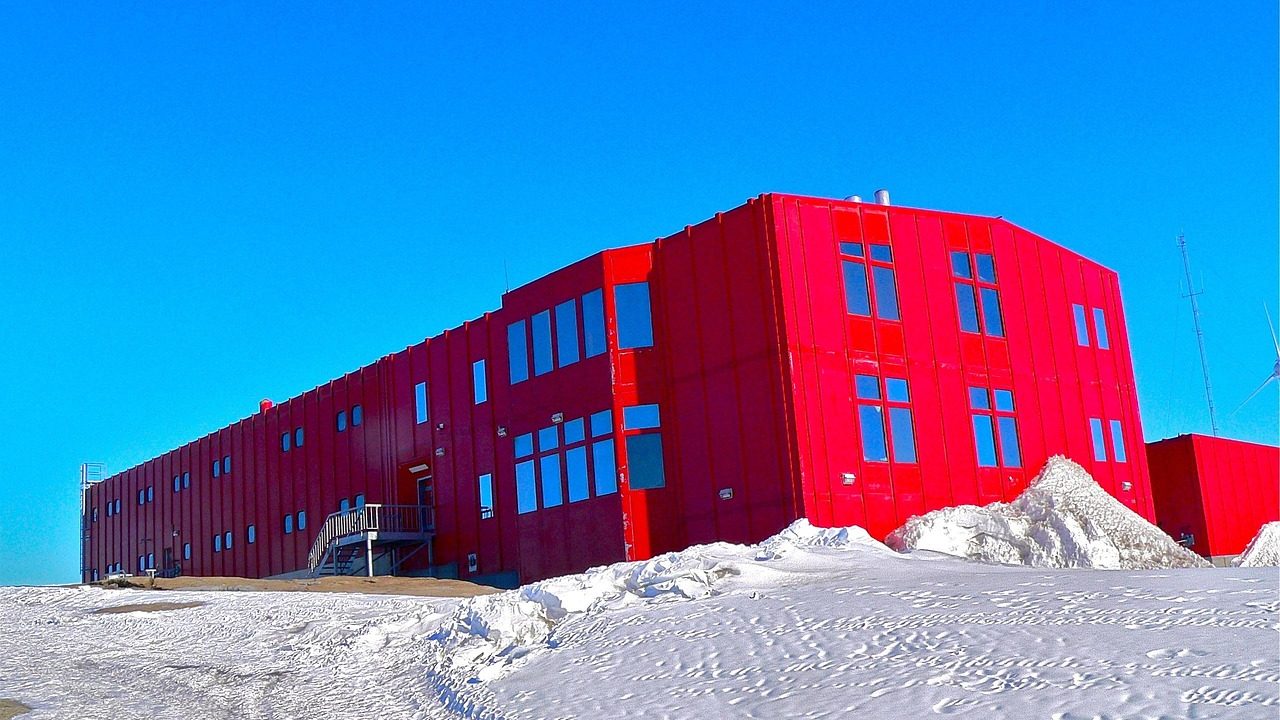
Francis Halzen, founder of the IceCube Neutrino Observatory at the South Pole, has won the 2026 Nobel Prize in Physics — a recognition that much of the physics community considers decades overdue. IceCube is embedded in a cubic kilometer of Antarctic ice, instrumented with five thousand digital optical modules capable of detecting high-energy neutrinos arriving from astrophysical sources including supernovae, gamma-ray bursts, and active galactic nuclei.
The landmark detection of a high-energy cosmic neutrino source — the blazar TXS 0506+056 in 2018 — was widely viewed as comparable in significance to the LIGO gravitational wave detection of 2015, which itself won the Nobel in 2017. That the IceCube recognition arrived eight years later is characteristic of the Nobel Committee's cautious pace.
Built at a cost of roughly three hundred million dollars over approximately a decade as a National Science Foundation project, IceCube offers something no conventional telescope can: the ability to observe astrophysical events through matter that would block photons entirely. Halzen grasped in the 1990s that neutrinos could serve as a fourth distinct observational channel alongside electromagnetic radiation, cosmic rays, and gravitational waves — a multi-messenger approach to astronomy that is now a cornerstone of the field. Correlating signals across all four channels for a single event yields a depth of information unavailable to any one instrument alone.