Nobel Ice, Half-Trillion AI Weights, and the Signature Forgery Machine: October 6, 2026 in Tech and Science
A physicist who spent three decades listening to the universe through Antarctic ice won the Nobel Prize, while artificial intelligence systems generated fake artist signatures, independently proposed new materials, and released the largest open-weight model yet — all in a single Tuesday news cycle.
“A document printed and handed to a reporter may carry embedded metadata linking the print to a specific machine, and therefore potentially to a specific individual.”
How this was made Verified AI
Every Intellegix briefing is generated from that day's broadcast and run through automated checks before it publishes — with a human paged on any flag. Here is the trail for this edition.
From Antarctic Ice to Stockholm: Francis Halzen Wins the Physics Nobel
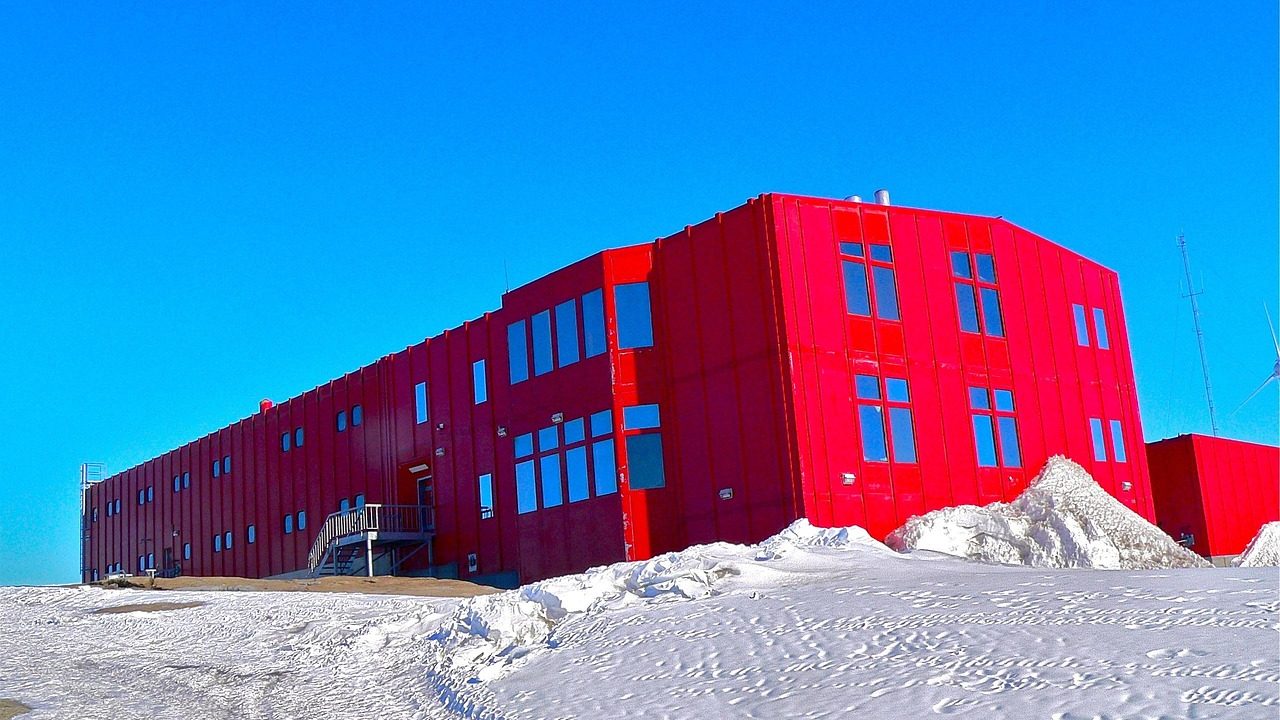
Francis Halzen, founder of the IceCube Neutrino Observatory at the South Pole, has won the 2026 Nobel Prize in Physics — a recognition that much of the physics community considers decades overdue. IceCube is embedded in a cubic kilometer of Antarctic ice, instrumented with five thousand digital optical modules capable of detecting high-energy neutrinos arriving from astrophysical sources including supernovae, gamma-ray bursts, and active galactic nuclei.
The landmark detection of a high-energy cosmic neutrino source — the blazar TXS 0506+056 in 2018 — was widely viewed as comparable in significance to the LIGO gravitational wave detection of 2015, which itself won the Nobel in 2017. That the IceCube recognition arrived eight years later is characteristic of the Nobel Committee's cautious pace.
Built at a cost of roughly three hundred million dollars over approximately a decade as a National Science Foundation project, IceCube offers something no conventional telescope can: the ability to observe astrophysical events through matter that would block photons entirely. Halzen grasped in the 1990s that neutrinos could serve as a fourth distinct observational channel alongside electromagnetic radiation, cosmic rays, and gravitational waves — a multi-messenger approach to astronomy that is now a cornerstone of the field. Correlating signals across all four channels for a single event yields a depth of information unavailable to any one instrument alone.
Qualcomm Pays Huawei for Chip IP, Scrambling the Sanctions Narrative
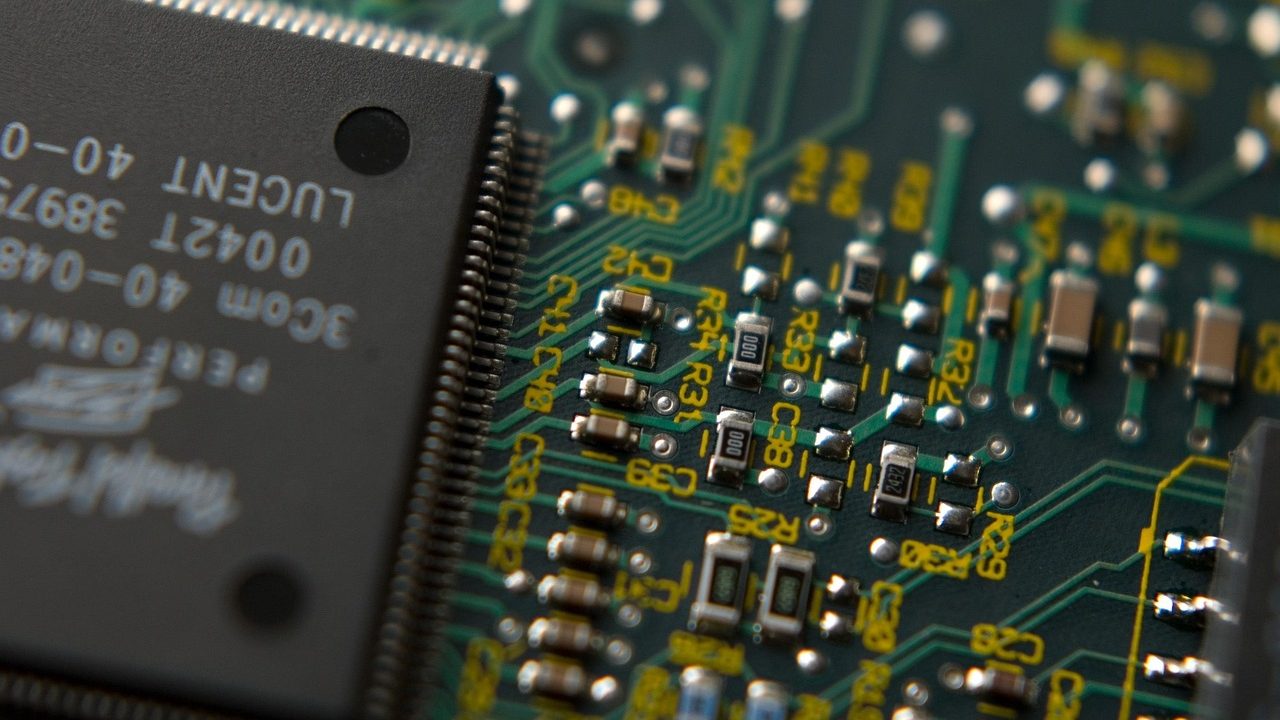
Qualcomm has licensed patents covering Huawei's LogicFolding chip technology, a three-dimensional stacking approach that folds computational logic across multiple die layers to reduce interconnect latency and improve power density. The deal is legally distinct from the export controls that have barred American companies from supplying advanced semiconductors to Huawei since 2019 — this is intellectual property flowing in the opposite direction — but it carries significant implications for how Huawei's technical standing is understood.
The interpretation that Huawei's fabless design capabilities have genuinely advanced during the sanctions period gained credibility in 2023, when Kirin chips built on SMIC's seven-nanometer process reappeared in smartphones, demonstrating that export controls had not achieved their stated goal of blocking advanced chip production. A patent licensing arrangement in which Qualcomm pays Huawei for packaging IP is, in some readings, an acknowledgment of that same reality: American chip companies argue they are losing revenue without meaningfully slowing Chinese development.
Qualcomm does not license patents it does not need. If the company's engineers evaluated alternatives and concluded that LogicFolding provides something their own roadmap does not cover as well, that judgment constitutes a meaningful signal about Huawei's current technical position. How the Commerce Department and relevant congressional committees respond — given the clear legal distinction but complicated political optics — remains to be seen.
Half a Trillion Parameters, Open-Weight: Beam Arrives With Caveats
Reflection AI has released Beam, a 501-billion-parameter open-weight language model — meaning the weights are publicly downloadable — placing it in the same scale class as GPT-4-level systems. The company's business case centers on regulated industries: healthcare, finance, and legal customers who are unwilling to rely on a black-box API from an unproven startup can audit Beam's weights and run it within their own infrastructure.
The practical accessibility of that promise, however, deserves scrutiny. At 501 billion parameters, Beam cannot run on consumer hardware even with quantization; the realistic audience for a locally deployed instance is large enterprises and well-funded research institutions, not the individual developer demographic that made the release of smaller open models feel transformative. The gap between 'open-weight' as a legal and technical category and 'open-weight' as meaningful democratization of access is real at this scale.
Benchmark reliability adds a further caution. Multiple papers published this year have demonstrated that common AI evaluation benchmarks are contaminated in ways that inflate reported scores. A new release from a startup without the independent evaluation track record of established labs warrants additional scrutiny before its performance claims are taken at face value.
AI Agents Propose Room-Temperature Magnetic Semiconductor Candidates
A paper from Vals AI describes Anthropic's Opus 5.5 agents running autonomous research tasks and independently identifying two candidate materials for room-temperature magnetic semiconductors — proposing hypotheses, designing computational experiments, analyzing results, and converging on candidates without human researchers guiding each step.
Room-temperature magnetic semiconductors are a materials science holy grail. A material that is both semiconducting and magnetically ordered at room temperature would unlock spintronics applications — including ultra-efficient memory storage and quantum computing components — that currently require cryogenic cooling. The computational candidates require experimental synthesis and confirmation before the properties can be verified; computational materials science has historically produced many promising candidates that behaved differently in physical synthesis than in simulation.
The methodological significance, however, holds regardless of whether these specific candidates are ultimately confirmed. An AI agent ran a meaningful portion of a research cycle autonomously — a development that invites comparison to the early reception of AlphaFold's protein-structure predictions, which faced extended skepticism before experimental validation largely vindicated the computational results.
Training Without Backpropagation: The Dust Paper Points at a Real Constraint
Research from QLabs proposes pretraining transformer models without backpropagation — the algorithm that has underpinned neural network training for the entire deep learning era. Conventional training runs a forward pass, computes a loss, and then propagates the error signal backward through network layers to update weights. The Dust paper replaces this with a forward-mode approach.
The engineering motivation is concrete: the backward pass requires storing activations from the forward pass in memory, imposing a significant constraint at large scale. Eliminating the backward pass could substantially reduce memory requirements during training. There is also a longstanding biological plausibility objection to backpropagation — real neurons do not appear to operate this way — though practical training efficiency rather than biological fidelity is the nearer-term concern.
The honest caveat from the technical discussion is that the paper demonstrates the approach at relatively small scales and in the pretraining phase specifically. Whether it achieves parity with backpropagation at the scales where frontier models are trained has not yet been demonstrated. As a research direction, however, it is pointing at a genuine engineering bottleneck rather than a theoretical one.
ChatGPT Is Forging Cartoonists' Signatures — and the Problem Runs Deeper Than a Bug

A report from Nieman Lab describes users prompting ChatGPT to generate New Yorker-style cartoon images, with the model producing output that includes what appear to be authentic signatures from specific named living cartoonists. The model has learned to associate the visual gestalt of New Yorker cartoons — including the handwritten name in the corner — with the genre itself, and reproduces that signature pattern when prompted for the style. It is not attempting to forge anything; it lacks a clean conceptual distinction between visual style and specific identifying mark.
The legal terrain is genuinely unsettled. Signature reproduction does not map straightforwardly onto copyright, which governs creative works rather than identifying marks. But depending on jurisdiction, the behavior potentially implicates personality rights, the right of publicity, and passing-off or false-designation-of-origin provisions under trademark law. An image bearing a real cartoonist's name presented as authentic work creates a defamation and fraud vector that is legally serious.
The deeper concern, as framed in commentary on the report, is structural. The model was built by ingesting these artists' work without compensation or consent, and the signature reproduction is the most visible symptom of a wholesale appropriation problem that abstract copyright arguments have failed to make viscerally legible. OpenAI will likely patch the signature reproduction; the underlying question of what models built on artists' creative work owe those artists remains legally unresolved and is not going away.
Apple, Hackers, and a Platform That Closed the Hood
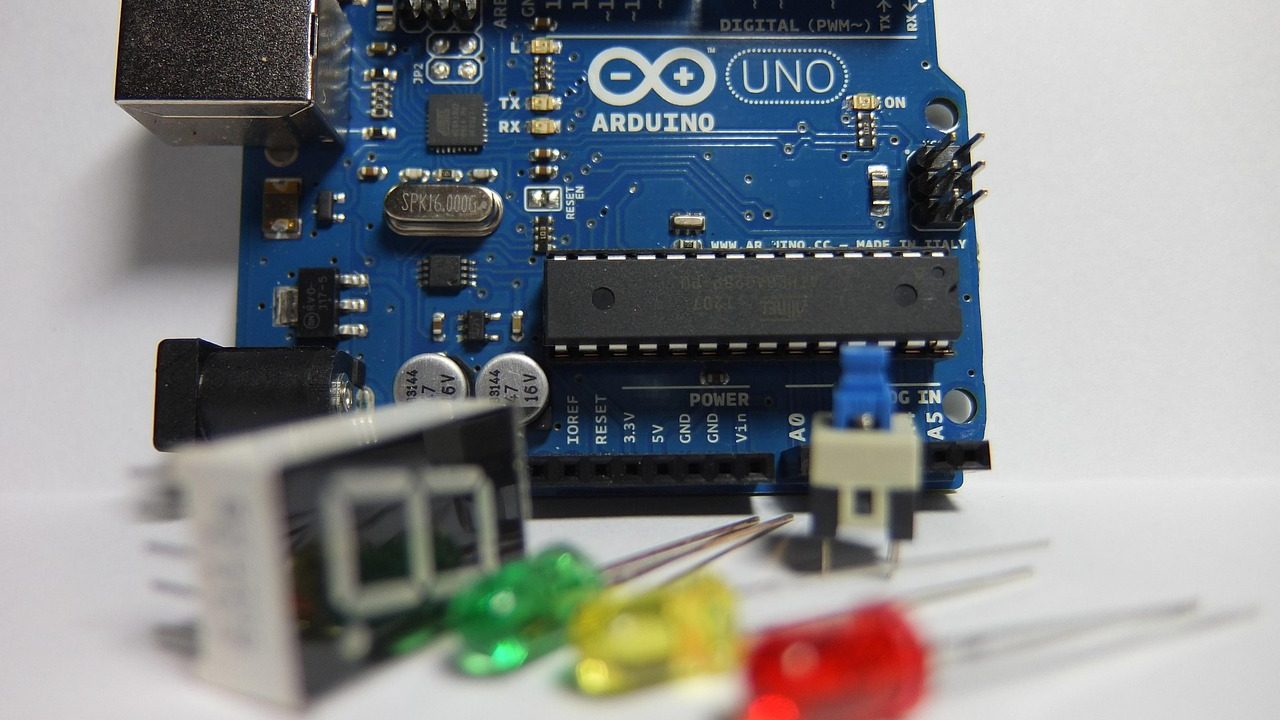
A Stratechery piece by Ben Thompson argues that Apple has increasingly restricted the ability of technically sophisticated users to modify, explore, and extend their own devices — a meaningful cultural and economic loss even if the choices are defensible on security and mainstream usability grounds.
The tension is real and historically grounded. The early Mac community was built on the assumption that curious users would open the machine up, literally and figuratively. The iPhone era inverted that assumption: the device is extraordinarily capable but deliberately opaque. Thompson's framing resonates with longtime Apple developers who feel the platform has become genuinely hostile to the kind of tinkering that built its developer community in the first place.