Nvidia Opens GPU Programming to Rust — and the Safety Revolution Comes for the Last Holdout
How this was made Verified AI
Every Intellegix briefing is generated from that day's broadcast and run through automated checks before it publishes — with a human paged on any flag. Here is the trail for this edition.
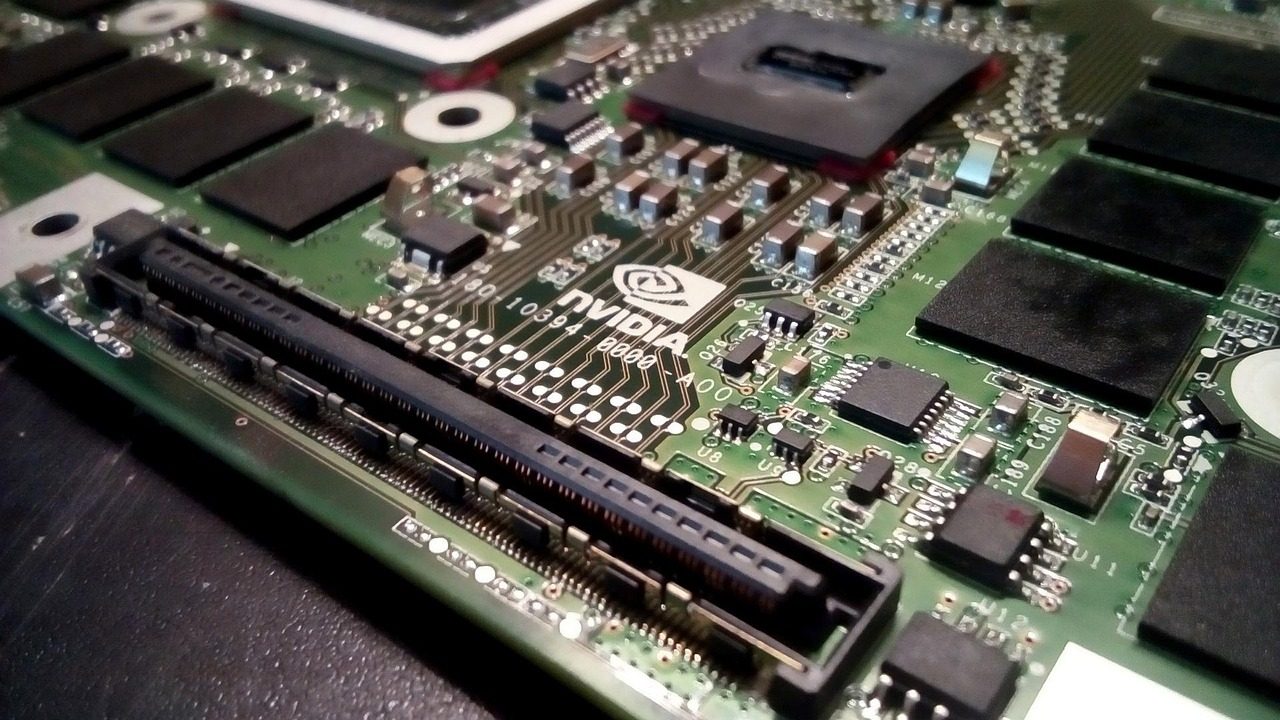
Nvidia's announcement of native GPU programming in Rust — earning 733 points and 300 comments, the second-highest score of the day — marks a significant architectural shift in high-performance computing. CUDA has been Nvidia's GPU programming model since 2007 and has always been C and C++ only; virtually the entire machine learning and scientific computing stack, from PyTorch to TensorFlow, is built on CUDA kernels written in C++. Nvidia is offering what it calls CUDA Rust in two tracks: a high-level safe API and a lower-level unsafe track for kernel developers who require raw control.
The two-track approach resolves a genuine tension. Rust's ownership model delivers memory safety through compile-time checks rather than runtime overhead, which suits GPU kernels where eliminating unnecessary instructions is paramount. The high-level track provides Rust's safety guarantees with Nvidia-managed abstractions; the low-level track is essentially Rust syntax with unsafe blocks that communicate directly with CUDA primitives, preserving tooling and type-system benefits while leaving the memory model to the developer. If CUDA Rust achieves performance parity with CUDA C++, it opens GPU programming to a substantially larger developer pool — systems programmers who are more fluent in Rust than in C++ and who have largely been excluded from GPU development until now.
Community discussion identified a non-trivial technical challenge: GPU memory has its own consistency model — shared memory, global memory, texture memory each carry different access patterns and latencies — that does not map cleanly onto the CPU memory semantics Rust's borrow checker was designed to model. Getting that correspondence right is described as non-trivial.
A companion story from Amazon Science describes Verus, a verification framework that allows developers to write formal specifications alongside Rust code and prove that the implementation satisfies those specifications. Verus received 121 points and 21 comments, and its relevance to the Nvidia announcement is direct: the natural question after 'can we write GPU kernels in Rust?' is 'can we prove those kernels do what we believe they do?' Amazon Science describes using Verus for storage system components where correctness is non-negotiable, including RAID algorithms and distributed consensus code, where a formal proof of correctness is worth more than any quantity of testing — tests can only cover what was tested for.
Taken together, the Nvidia and Verus stories reflect a structural change rather than a trend. Regulatory pressure — CISA guidance in the United States, the EU Cyber Resilience Act — is moving toward memory-safe languages as a baseline requirement for safety-critical software. Rust is the primary beneficiary. GPU programming has been the last major domain where that shift had not arrived; if CUDA Rust succeeds, the safety argument becomes significantly harder to dismiss across the entire infrastructure stack.