Cloud Infrastructure Assumptions Shattered as AWS Confirms Unrecoverable Data Loss in Middle East Strike
An Iranian missile strike on cloud infrastructure in the Middle East has forced a reckoning with assumptions baked into enterprise cloud architecture, while a record-scoring e-ink bird frame and Nvidia's embrace of Rust signal where the tech world's ambitions and affections lie.

“the mere existence of substantial funds has been known to generate more internal conflict in open-source communities than the absence of funding ever did.”
How this was made Verified AI
Every Intellegix briefing is generated from that day's broadcast and run through automated checks before it publishes — with a human paged on any flag. Here is the trail for this edition.
From Bird Frames to Data Loss: A Day That Tested Tech's Limits

Thursday's technology news cycle spanned the spectrum from the sobering to the delightful — an AWS data-loss incident that has cloud architects rethinking foundational assumptions sitting alongside an e-ink bird frame that topped community rankings with 2,181 points, the highest score of the day by a wide margin.
Also commanding attention: Nvidia's announcement of native Rust support for GPU programming, a 4-billion parameter AI model reportedly producing query plans 81% faster than PostgreSQL's native planner, a 32-year-old bug finally unearthed in a Telnet server, and the peculiar discovery that the Neovim text editor is sitting on roughly $800,000 in untouched Bitcoin donated in 2023.
Rounding out the day were stories on GLM building custom inference infrastructure, Xiaomi's live post-training dashboard for its Mimo 2.6 model, OpenAI's model misalignment reporting framework, and Japan's accelerating bookstore crisis — a dense slate that reflects the breadth of concerns occupying engineers, researchers, and founders in the community.
AWS Says It Cannot Restore Data Destroyed in Middle East Strike — and the Industry Is Paying Attention

A Wall Street Journal report that AWS has told customers it cannot restore some data from Middle East facilities struck by Iran is generating urgent discussion among cloud professionals. The word used, notably, is 'can't' — not 'working on recovery' — and the response on the Hacker News forum reflects how seriously practitioners are treating the development, with the thread accumulating 425 points and 353 comments.
The incident is stress-testing a core marketing premise of cloud infrastructure. AWS has long promoted its availability zones as architecturally isolated fault domains, with standard guidance urging critical workloads to replicate across multiple regions. A kinetic strike capable of destroying facilities across a geographic region is a failure mode most cloud architects have not been required to design against — and a scenario that exposes the gap between what multi-region replication promises and how many organizations actually implement it. Running a truly multi-region active-active architecture is expensive, and many enterprises made the practical decision to remain single-region.
Most enterprise cloud contracts include service-level agreements citing data durability to eleven nines — 99.999999999% — but those agreements almost universally contain force majeure clauses that likely cover armed conflict, potentially leaving customers without legal recourse. Adding complexity is the regulatory architecture of the Middle East cloud market itself: local data-sovereignty laws in Gulf states require that data remain in-region, which means customers cannot simply spin workloads up in a geographically distant fallback. Regulations designed to protect sovereignty have, in this case, created concentration risk.
The policy dilemma this surfaces is genuine. Governments mandate data localization to protect national interests, but localization concentrates infrastructure in regions that may become geographically unstable. Potential responses — hardened underground facilities, cross-border backup treaties, or simply accepting that some data categories cannot be reliably hosted in active conflict zones — are neither cheap nor straightforward. Data protection regulations in Europe and increasingly in the United States attach liability to data loss, and the question of who bears that liability when a cloud provider's facility is struck in an unforeseeable conflict is expected to be litigated, with outcomes likely to reshape how cloud contracts are written.
A companion piece circulating in the same community — a post titled 'Backups Aren't Simple,' which received 256 points and 155 comments — reads almost as a technical companion to the AWS incident. Its core argument: the complexity of backup systems lies not in writing data but in validating that it can be read back under the exact conditions that prevail when recovery is needed. Tested and untested backups look identical until the moment they do not.
AI Labs Race for Efficiency: Live Training Dashboards, Custom Inference Stacks, and the Push Past 1.58 Bits
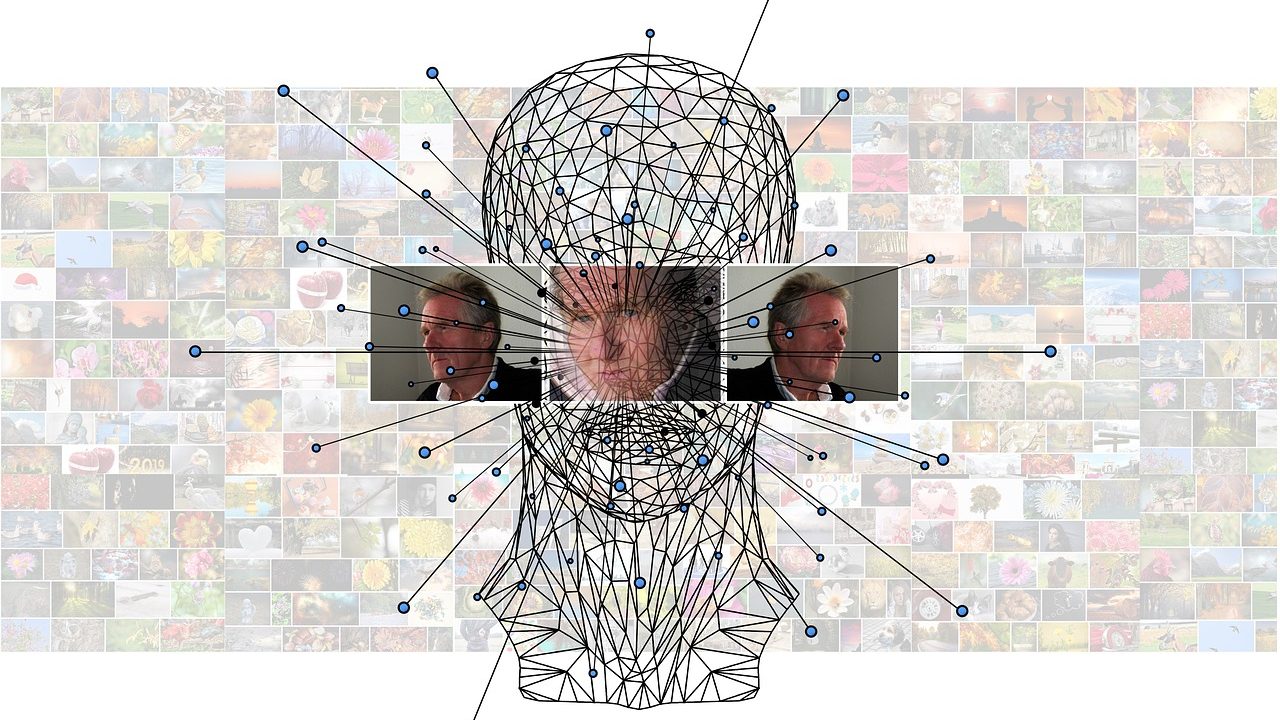
Three AI stories this week converge on a single pressure point: as model capabilities plateau in public perception, the competitive battlefield has shifted decisively toward inference efficiency and operational transparency. Xiaomi's decision to publish a live post-training dashboard for its Mimo 2.6 model — updated in real time at mimo.xiaomi.com, showing reward curves, KL divergence metrics, and benchmark trajectories — drew 450 points and 122 comments, with the community split between praising the transparency and marveling that it is unusual enough to be noteworthy at all.
The standard industry playbook calls for training quietly, evaluating internally, and announcing results. Xiaomi is running something closer to open-source continuous integration — here is the process as it happens, not merely the artifact when it is finished. Researchers noted that the live data offers genuinely useful visibility into what post-training reinforcement learning dynamics actually look like, information that is typically proprietary.
GLM, the model series from Zhipu AI, took the opposite approach to transparency but made its own statement about efficiency. The team published a detailed account of why they built custom inference infrastructure from scratch rather than using existing frameworks such as vLLM, arguing that general-purpose inference stacks could not efficiently handle their specific attention patterns and quantization schemes, and that the efficiency loss from off-the-shelf tooling justified a substantial engineering investment in custom CUDA kernels, batching strategies, and memory management. The pattern is becoming common among serious AI labs: inference optimization has become as commercially important as training quality, since a competitor who can serve a slightly weaker model at one-fifth the cost per token holds a meaningful market advantage.
A research paper titled 'Breaking the 1.58-bit Barrier,' which received 213 points, claims a new quantization scheme that pushes past the BitNet architecture's representation of model weights as negative one, zero, or positive one — effectively 1.58 bits per weight — while maintaining accuracy and further reducing memory footprint. The memory wall is one of the binding constraints on local model inference: most consumer hardware cannot hold a full-precision 70-billion parameter model in memory, and every bit shaved from weight representation doubles the model size that fits in a given memory budget. Community researchers cautioned that benchmark choices matter considerably here, noting that reasoning chains and long-form generation tend to degrade faster under aggressive quantization than simpler classification tasks.
OpenAI's quieter release — a framework for reporting model misalignment incidents, scoring 55 points and 27 comments — drew pointed commentary for a specific reason: the taxonomy of misalignment categories, which includes deceptive compliance, goal misgeneralization, and instrumental convergence behaviors observed in deployment, currently contains no published incident reports. Several commenters observed that a misalignment reporting framework with no published reports resembles a bug tracker with no bugs — technically present, but raising questions about whether it will be actively used.
Nvidia Opens GPU Programming to Rust — and the Safety Revolution Comes for the Last Holdout
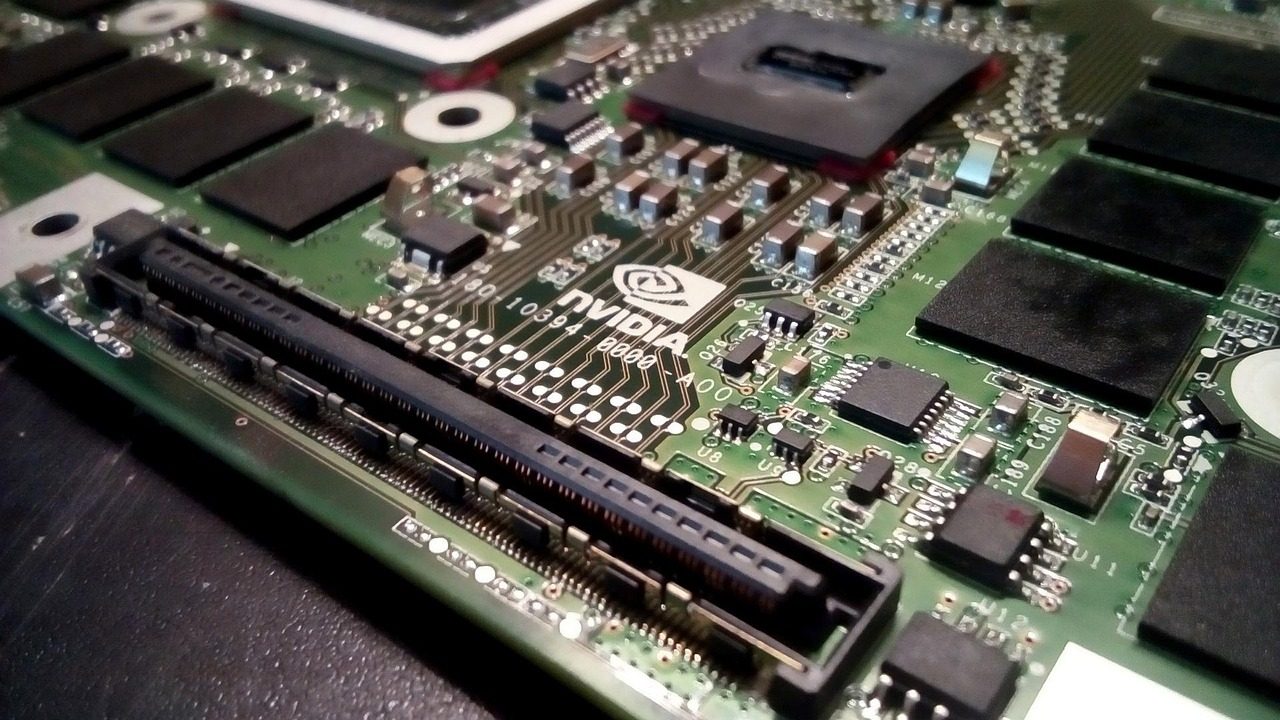
Nvidia's announcement of native GPU programming in Rust — earning 733 points and 300 comments, the second-highest score of the day — marks a significant architectural shift in high-performance computing. CUDA has been Nvidia's GPU programming model since 2007 and has always been C and C++ only; virtually the entire machine learning and scientific computing stack, from PyTorch to TensorFlow, is built on CUDA kernels written in C++. Nvidia is offering what it calls CUDA Rust in two tracks: a high-level safe API and a lower-level unsafe track for kernel developers who require raw control.
The two-track approach resolves a genuine tension. Rust's ownership model delivers memory safety through compile-time checks rather than runtime overhead, which suits GPU kernels where eliminating unnecessary instructions is paramount. The high-level track provides Rust's safety guarantees with Nvidia-managed abstractions; the low-level track is essentially Rust syntax with unsafe blocks that communicate directly with CUDA primitives, preserving tooling and type-system benefits while leaving the memory model to the developer. If CUDA Rust achieves performance parity with CUDA C++, it opens GPU programming to a substantially larger developer pool — systems programmers who are more fluent in Rust than in C++ and who have largely been excluded from GPU development until now.
Community discussion identified a non-trivial technical challenge: GPU memory has its own consistency model — shared memory, global memory, texture memory each carry different access patterns and latencies — that does not map cleanly onto the CPU memory semantics Rust's borrow checker was designed to model. Getting that correspondence right is described as non-trivial.
A companion story from Amazon Science describes Verus, a verification framework that allows developers to write formal specifications alongside Rust code and prove that the implementation satisfies those specifications. Verus received 121 points and 21 comments, and its relevance to the Nvidia announcement is direct: the natural question after 'can we write GPU kernels in Rust?' is 'can we prove those kernels do what we believe they do?' Amazon Science describes using Verus for storage system components where correctness is non-negotiable, including RAID algorithms and distributed consensus code, where a formal proof of correctness is worth more than any quantity of testing — tests can only cover what was tested for.
Taken together, the Nvidia and Verus stories reflect a structural change rather than a trend. Regulatory pressure — CISA guidance in the United States, the EU Cyber Resilience Act — is moving toward memory-safe languages as a baseline requirement for safety-critical software. Rust is the primary beneficiary. GPU programming has been the last major domain where that shift had not arrived; if CUDA Rust succeeds, the safety argument becomes significantly harder to dismiss across the entire infrastructure stack.
Ancient Bugs, Forged IDs, and the AI Model Taking On PostgreSQL's Query Planner

A 32-year-old memory corruption bug discovered in the GNU inetutils Telnet server — CVE-2026-32746 — drew 68 points and 28 comments. WatchTowr Labs was not auditing Telnet specifically; the server surfaced during a broader review of network daemons, a reminder that Telnet persists in industrial control systems, legacy network equipment, and embedded devices where 'we'll replace it eventually' became 'we replaced everything around it but not this.' The bug involves a memory corruption issue in how the server handles option negotiation during the Telnet handshake, and predates modern memory safety conventions by a wide margin.
A related finding about US driver's license barcodes received 192 points and 70 comments. A researcher's post titled 'Keys Not Included' describes recovering the signing keys used in the PDF417 barcodes on the back of state-issued licenses. The finding is that many states implemented the AAMVA standard in ways that made signing keys recoverable — through weak key derivation, keys shared across large populations of licenses, or in some cases keys derivable from information printed on the card itself. A recoverable signing key means a barcode can be crafted that passes verification, which is relevant for age-verification and identity-check systems that rely on barcode scanning. The researcher disclosed responsibly and worked with affected states before publishing; the structural problem — that the AAMVA standard is voluntary, implementation is handled by individual state DMVs with varying technical sophistication, and no central authority conducts security audits — is not resolved by individual disclosure.
The database story attracting the most attention — 567 points, 120 comments, third-highest of the day — involves a researcher who trained a 4-billion parameter model specifically to produce SQL query execution plans and benchmarked it against PostgreSQL's native planner, reporting an 81% improvement on the TPC-H benchmark suite. PostgreSQL's query planner, built over three decades, selects indexes, join order, join algorithms, and filter sequencing to determine whether a query takes 10 milliseconds or 10 seconds; the researcher's argument is that a learned model can internalize those patterns more accurately than hand-crafted statistical heuristics.
Community scrutiny was appropriately rigorous. TPC-H is a standardized analytical benchmark with well-understood statistical properties, and PostgreSQL's planner has known weaknesses on that benchmark that the database community has debated for years. A model trained specifically on TPC-H-like queries performing well on TPC-H says limited about generalization to arbitrary workloads, schema changes, skewed data distributions, or the irregular queries that production databases routinely encounter. Skeptics noted that PostgreSQL's planner also optimizes for planning speed, predictability, and resilience on tail cases — a plan that is 20% slower on average but never catastrophically fails is often preferable to one that is 81% faster on average but occasionally produces a 100-second query. The signal worth watching: whether the research spawns a PostgreSQL extension reporting performance numbers on real production workloads.
A quieter post comparing memory allocators — arena-based allocators, glibc ptmalloc, jemalloc, and mimalloc — across fragmentation, allocation latency, thread contention, and memory overhead drew 81 points and 14 comments. The practical takeaway for systems programmers: the optimal allocator depends heavily on allocation pattern, with high-churn short-lived allocations favoring arena allocators and mixed lifetimes with frequent frees benefiting more from implementations such as mimalloc.
Bitcoin Windfalls, Deprecated Libraries, and the E-Ink Bird Frame That Won the Internet

Several stories this week circle a common question: how does technical infrastructure — and the people who build it — sustain itself over time? The Servo browser rendering engine's one-year sponsorship anniversary offers one answer. Servo, which Mozilla originally developed and then effectively depooled, has had a second life under the Igalia open-source consultancy. A milestone blog post, which received 117 points and 49 comments, describes re-enabled CSS support for a significant portion of the specification, improved layout correctness, and the engine running real web content with credible performance. Igalia's model — funded development in which clients commission specific features — is one of the few arrangements that has worked at the infrastructure layer of the web platform, where no direct revenue is attached to the software itself.
Neovim's situation is the opposite problem. The popular terminal text editor reportedly holds approximately $800,000 in Bitcoin donated in 2023 that has gone untouched since. The thread was small — 37 points, 4 comments — but the governance question it surfaces is real: Neovim has no central authority, and the arrival of significant funds without a clear decision-making process for spending them creates organizational tensions that pure volunteer projects are not structured to resolve. The mere existence of substantial funds has been known to generate more internal conflict in open-source communities than the absence of funding ever did.
A developer named Jake Smith wrote about the experience of deprecating a PHP library he published in 2014 as an afternoon fix — http_build_url — that has since accumulated nearly 20 million installs. PHP has evolved enough that the fix is no longer necessary, but deprecating something at that scale is its own undertaking. His post addresses how to deprecate responsibly: clear messaging, long deprecation windows, documented alternatives. The underlying dynamic — a temporary fix that became load-bearing infrastructure for millions of other projects, with no mechanism for the author to understand what they had implicitly taken on — is a familiar experience for open-source maintainers.
A hardware engineer's decision to embed a sponsorship message from the Fable 5 game into the silkscreen layer of a printed circuit board drew 116 points and 53 comments. PCB silkscreen layers are a canvas almost never seen outside the engineering team that designed the board — which made the choice an unusually targeted piece of developer marketing, reaching an audience that skews heavily toward hobbyist and professional hardware engineers.
The day's highest-scoring story — 2,181 points, the widest margin — was a developer's e-ink bird frame: a picture frame using an e-ink display that listens for bird sounds, identifies the species using an audio machine-learning model running on what appears to be a Raspberry Pi-class device, and generates an illustration of that bird in the style of 1800s naturalist prints, updating whenever a new species is detected. The technical stack — edge audio classification, generative image synthesis, e-ink refresh management — is genuinely interesting. But the score reflects something beyond technical achievement: a beautiful, purposeful, slightly whimsical object that makes the world better in a very specific way, built by someone who cared about that specific thing.
Stories Worth Your Time — and a Correction on the Record
Several stories that did not receive full treatment warrant attention for readers in relevant fields. A deep dive into the Strategic Petroleum Reserve's cavern storage systems — carved into salt domes along the Gulf Coast — received 215 points and 86 comments and is described as excellent reading for those interested in energy infrastructure. Japan's ongoing shift from bookstores to libraries, which drew 200 points and 82 comments, traces what happens to physical retail when digital alternatives and economic pressure combine; comments from readers with direct experience of Japan's book culture are noted as particularly valuable.
The return of wind power for cargo shipping — 102 points, 71 comments — is characterized as technically sophisticated rather than nostalgic, covering Flettner rotors, wing sails, and routing optimization for wind-assisted shipping as a genuine re-evaluation of hybrid propulsion economics at current fuel prices. Microsoft's .NET 11 performance post, drawing 303 points and 73 comments, represents years of unglamorous optimization work in JIT improvements, vectorization, and allocation reduction, with maintainers of large .NET codebases sharing specific benchmarks from their own systems in the comments.
A correction: a May episode reportedly described Ukraine striking Russian ships in the Caspian Sea. That claim was wrong. The Caspian Sea is landlocked and nowhere near Ukrainian-controlled territory, and no such strikes occurred. The sourcing failure that allowed the claim into the script is under review. A second May item — a general observation that companies ignoring trends face unexpected competition — was not factually wrong but was too generic to constitute meaningful prediction. Going forward, forward-looking analysis will be held to a higher standard: specific claims, specific timeframes, and specific indicators against which to measure accuracy, in the manner of the query-planner discussion earlier in today's coverage.