Rain, Redevelopment, and Reckoning: San Diego Faces a Packed Halloween Weekend
A storm system threatening to drench Halloween celebrations across San Diego County arrived alongside a cascade of consequential local stories — from a congressional battle over a 70-acre Navy site to a damning lead-pollution investigation near dozens of schools.

How this was made Verified AI
Every Intellegix briefing is generated from that day's broadcast and run through automated checks before it publishes — with a human paged on any flag. Here is the trail for this edition.
Halloween Storm Looms as San Diego Braces for a Busy Weekend
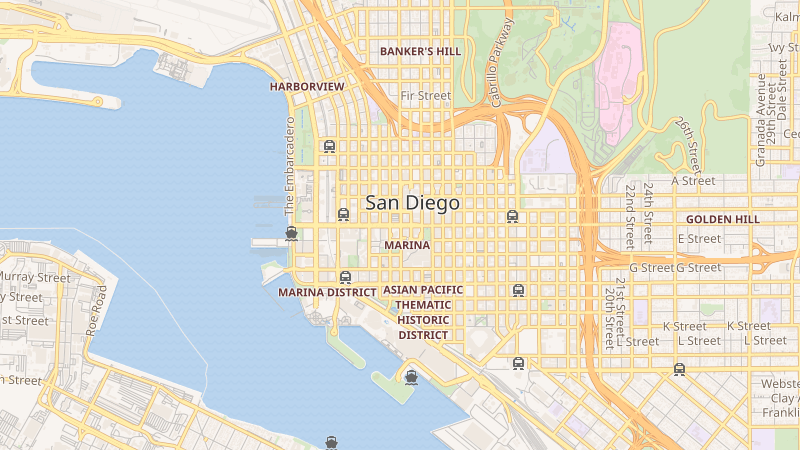
The National Weather Service updated its regional forecast Friday evening, painting a two-phase picture for Halloween weekend. Cloudy skies and isolated to scattered light showers are possible through Saturday morning, leaving daytime trick-or-treating and afternoon events in manageable — if damp — conditions.
The more significant concern arrives later: a heavier precipitation period is expected to roll in late Saturday night and extend through Sunday. Families planning evening outings are advised to aim for earlier departures, carry rain gear, and remain flexible about cutting the night short. Sunday outdoor plans should be treated as rain-likely.
The weather's reach was already felt Friday afternoon, when the More Than Pink Walk was canceled due to rain, according to FOX 5. No replacement date has been announced. Despite the forecast, the weekend remains rich with community events, including Día de los Muertos celebrations running through November 2nd across Old Town, Downtown Chula Vista, Lincoln Acres, and Sherman Heights.
Congress Moves to Block Data Center on Navy's 70-Acre Old Town Site

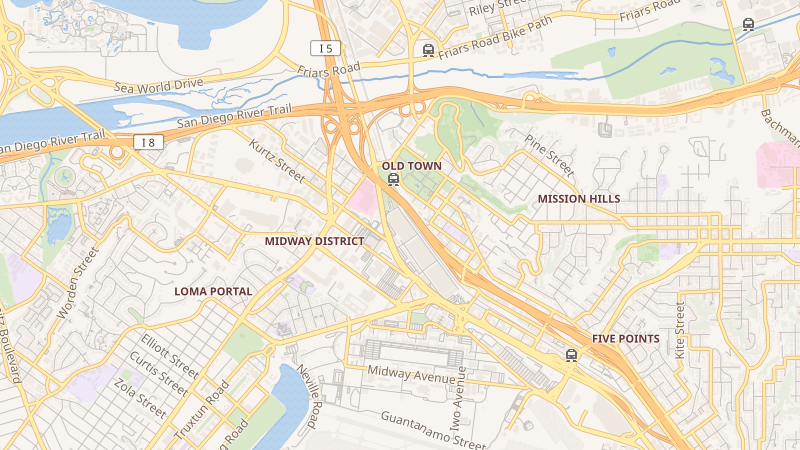
The battle over San Diego's NAVWAR redevelopment site escalated sharply this week, drawing in both city hall and the region's congressional delegation in a coordinated display of opposition to a proposed 400-megawatt data center on the 70-acre Navy installation in Old Town.
On October 27th, the City Council unanimously adopted a 45-day moratorium — ordinance O-22152 — pausing new data-center development, establishment, intensification, or expansion across the city. The measure is temporary, not a permanent ban, but it signals the city's intent to establish actual land-use rules around the industry before development outpaces regulation. Mayor Todd Gloria has aligned with the council in opposing the data-center proposal for the NAVWAR site.
Then, on October 29th, four of San Diego's congressional representatives — Sara Jacobs, Mike Levin, Scott Peters, and Juan Vargas — announced their opposition and pledged to introduce legislation that would require local government consultation before any development could proceed on the site. That remains a legislative pledge, not an enacted restriction. Congressmember Jacobs has argued the NAVWAR site was always intended to return housing and public space to the community, and that a data center would fail that promise while potentially raising electricity rates and affecting air and water quality — concerns stated by opponents and not independently established by the underlying reporting.
At 400 megawatts, the proposed facility represents a significant draw on the regional electrical grid, and that power consumption sits at the heart of opponents' objections. Advocates for data-center development argue the infrastructure is necessary to support the broader economy, but critics counter that prime infill land adjacent to transit is simply the wrong location. The city's 45-day moratorium buys time to develop a framework that could distinguish between those contexts. The concrete indicators to watch: whether the congressional legislation is formally introduced, and whether the moratorium produces a draft land-use framework before it expires.
Transparency Battles, a Detention Death, and a Major Drug Indictment

Three distinct public safety and civic stories dominated the latter half of the week, each touching the same underlying question: how much transparency does the public get when federal authority operates inside San Diego's borders?
Councilmember Sean Elo-Rivera said Thursday that SDPD is not meeting its obligations under municipal code for reporting interactions with federal law enforcement during immigration operations — a claim SDPD disputes, saying it notifies all councilmembers and the mayor's office and maintains procedures to comply. No confirmed violation finding has been issued; the dispute remains unresolved. Separately, the Union-Tribune reported October 29th that both San Diego and Imperial county officials declined to comply with Justice Department demands for voter data. Earlier reporting had described a letter from U.S. Attorney Adam Gordon raising the possibility of criminal charges against county officials who refused. The standoff is active and unresolved.
The most serious story involves Guillermo Pascual Vergansa, an immigrant from Guatemala who died in a cell at the Otay Mesa Detention Center last weekend. Organizers from the American Friends Service Committee held a Día de los Muertos vigil this week to honor his memory. ICE says the death is under investigation; county officials are calling for an outside probe rather than an internal one. A supervisors' demand letter to DHS set a November 10th deadline for a federal response.
On the criminal justice front, federal prosecutors Friday unsealed four grand jury indictments charging 42 alleged gang members and associates with methamphetamine and fentanyl trafficking. By Friday afternoon, 35 defendants were in custody and seven remained at large. Prosecutors identified John 'Guero' Marquez, 49, of Poway, as the alleged leader of the distribution network. These remain allegations — no convictions have been entered. Also this week, the Sheriff's Office notified Borrego Springs residents of the planned placement of John Carey Phillips, 70, classified as a sexually violent predator, at a Zuni Trail residence under California's Conditional Release Program — a court and state decision the Sheriff's Office is required by law to disclose publicly.
Mass Timber, Zoo Parking, and the Mechanics of Affordable Housing

Father Joe's Villages broke ground Thursday on an eight-story, 124-unit affordable housing development at 16th and Island in East Village — and the story is as much about method as it is about units. The project, scheduled for completion in March 2028, would be San Diego's first affordable housing development built with mass timber: engineered wood components fabricated off-site and assembled into structural panels and beams.
Developer Jodi Rothery made the case that off-site fabrication allows work to proceed on- and off-site simultaneously, compressing the construction timeline and reducing costs. In affordable housing, where every dollar of construction cost translates directly into how many units can be built and how deeply affordable they can be, a method that demonstrably lowers per-unit costs could carry significant implications well beyond this single project.
The San Diego Zoo announced a parking decision Friday that will affect every visitor starting January 1st: paid parking will remain permanent at the zoo even as the city eliminates paid parking elsewhere in Balboa Park. Beginning January 1, 2027, city of San Diego residents will qualify for free zoo parking, and members receive complimentary parking regardless of residence. All other visitors — including county residents outside city limits and out-of-towners — face charges of sixteen dollars for a standard vehicle and forty-four dollars for oversized vehicles. For families in East County cities such as Santee, La Mesa, or El Cajon — county residents who fall outside city limits — that means no resident exemption applies.
Elsewhere in city finances, the council voted six to two Tuesday to restructure residential water rates, replacing tiered rates with a uniform volumetric rate as required by the settlement in the Patz v. City of San Diego case, effective January 1st. How individual households' bills change will depend on usage patterns. The city is also planning to structurally lower Hodges Dam by 35 feet to address flood risk, at an estimated cost of thirty to fifty million dollars over seven years — a project still in planning and approval phases with no construction contract awarded and no confirmed start date.
Santee Heads to the Polls Tuesday with Sales Tax and Council Seats at Stake

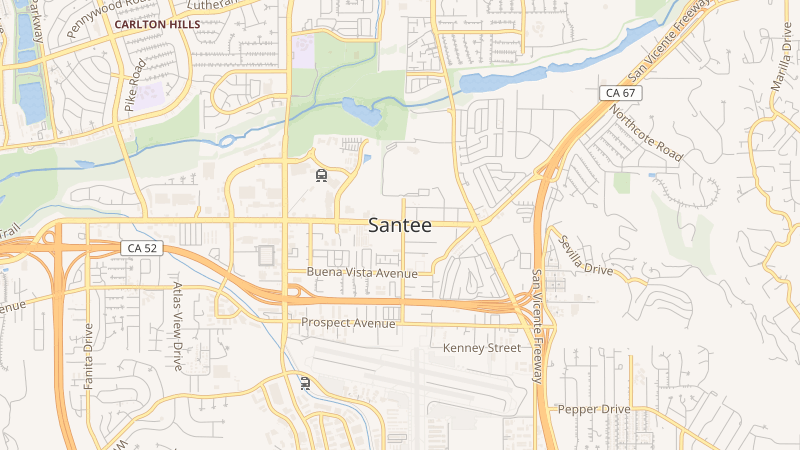
Santee voters face three contested races Tuesday, and the headliner is Measure Y — a proposed one-percent general sales tax the city projects would generate approximately fourteen million dollars annually. The measure would add one dollar to every hundred dollars of taxable purchases, expire after ten years, and be subject to annual independent audits and a citizens' oversight committee. Passage requires a simple majority.
The ballot language identifies streets, storm drains, parks, traffic management, fire protection, paramedics, and emergency response as intended uses — but because Measure Y is structured as a general-purpose tax rather than a restricted one, the city council retains discretion over exactly how the revenue is allocated. That distinction is a real policy difference: proponents argue it provides flexibility to respond to changing needs; opponents of general taxes typically argue the structure lacks the binding accountability of a specifically dedicated fund.
Two council races also appear on the ballot. In District 1, incumbent Rob McNelis faces challenger Matthew Rascon. In District 2, incumbent Ronn Hall faces Eddie Vandiver. Only residents within each district vote in their respective race. Vote centers in Santee include Cajon Park School, Pride Academy at Prospect Avenue, Summit Unitarian Universalist Fellowship, and Sycamore Canyon School — though voters should confirm operating hours through the county's official election website before heading out, as hours were not independently verified in the available reporting.
Out at Santee Lakes, a staff report from October 28th detailed the status of the Lake 5 renovation: staff are finalizing designs and specifications for West Lake 5 shoreline restoration with a goal of putting the project out to bid in November — making that bidding process imminent. The more extensive North Lake 5 renovation calls for replacing the existing amphitheater and bridge and adding ADA-accessible pathways. The same meeting packet outlined proposed 2027 fee increases for parking at Santee Lakes, tied to asphalt repairs and maintenance; weekday parking hasn't increased in ten years and weekend parking hasn't increased in three. The fee increases were presented as an informational agenda item and have not yet been formally adopted.
Lead Clouds Schoolyards, a Record Bond Request, and an Aztec Comeback

An inewsource investigation follow-up published October 29th identified the city-owned Montgomery-Gibbs Executive Airport as the highest lead-polluting general-aviation airport in the country. The numbers are stark: since an unleaded fuel program began two years ago, the airport has sold 168 gallons of UL94 unleaded fuel — against nearly 1.5 million gallons of leaded fuel sold in the same period. Flight training patterns at the airport pass over more than thirty nearby schools.
County Public Health Officer Dr. Sayone Thihalolipavan has already alerted nearby pediatricians to factor airport exposure into childhood lead screenings. Targeted neighborhood testing has not yet been conducted, and affected campuses have not implemented new operating restrictions. Lead exposure in children — even at low levels — is associated with cognitive development impacts that are largely irreversible, and the gap between what the investigation documents and what remedial action has actually been taken represents a pressure point advocates and regulators will be expected to address.
On the ballot, San Diego Unified's proposed 3.5-billion-dollar school bond — Measure E — is the largest district bond request anywhere in California this election cycle, in a statewide field of 82 districts seeking a combined 12.6 billion dollars. For SDUSD, it would be the fifth bond since 2008. Board President Richard Barrera, who is also running for state superintendent, describes the approach as a deliberate long-term financing strategy: propose new bonds as older ones are paid off, maintaining a continuous capital program. Critics argue the model insulates the district from the prioritization discipline that comes with constrained capital. The evidence that would resolve that dispute — cost and timeline performance across the four prior bonds — is available in public audit records that any voter or journalist can review.
Friday night brought welcome news on the sports front. SDSU's women's soccer team trailed Gonzaga before rallying at the SDSU Sports Deck, with KK Chowana-Bandhu tying the match in the 82nd minute and Victoria Miller scoring the winner in the 88th for a 2–1 final. The Aztecs improved to 10-3-3 overall and 4-1-2 in Pac-12 play. The San Diego Wave FC secured a home NWSL playoff match at Snapdragon Stadium — exact date and kickoff time were not confirmed in available reporting. And Padres bullpen coach Ben Fritz is reportedly set to become the Arizona Diamondbacks' next pitching coach, replacing Brian Kaplan, with final details still being worked out as of Friday.
Padres Face Stacked Rotation Decisions as Halloween Weekend Closes

The Padres entered the weekend facing two significant rotation decisions converging simultaneously. Michael King officially declined his player option Friday, accepted the five-million-dollar buyout, and is now a free agent. There is reportedly interest on his part in returning to San Diego, but no agreement is in place. At the same time, the club faces a November 2nd deadline to exercise, negotiate, or walk away from a fourteen-million-dollar option on Nick Pivetta, with elbow-health concerns flagged in the reporting. The front office must navigate both decisions in the same window — a compressed offseason opening for a team pursuing championship contention.
As the region heads into Election Day weekend, county vote centers are open today and through Tuesday across more than 200 locations. Major countywide questions include Measure B — a proposed half-cent sales tax for health care, public safety, and Tijuana River needs — alongside the Santee measures. Mail ballots must be postmarked by Tuesday. Also Friday, Marine Corps Air Station Miramar welcomed a new commanding officer: Colonel Charles Dudik assumed command in a morning ceremony, succeeding Colonel Erik Herrmann. And for those who spent Halloween making it official, the county Assessor/Recorder/County Clerk's office hosted its annual 'Halloweddings' — Halloween-themed civil ceremonies for couples marking the occasion in distinctly San Diego fashion.