Sheriff Defies Board, Sewage Crisis Forces County's Hand, and San Diego's Economy Splits in Two
A constitutional standoff between San Diego County's elected sheriff and its Board of Supervisors deepened this week as enforcement surges, a coastal sewage crisis, and a bifurcating economy tested the region's institutions from multiple directions at once.

“The fight to inspect, observers noted, is nearly as significant as what the inspection uncovered.”
How this was made Verified AI
Every Intellegix briefing is generated from that day's broadcast and run through automated checks before it publishes — with a human paged on any flag. Here is the trail for this edition.
What's at Stake This Saturday Morning

San Diego County enters the weekend carrying a week's worth of unresolved tensions: a sheriff openly defying a Board vote, a decades-long sewage disaster prompting a dramatic policy shift, and a school district whose headline enrollment numbers face their first real accountability test this fall.
The stories shaping this Saturday range from high-stakes governance conflicts at the county level to neighborhood-level concerns about flooding, mold in schools, and beaches that have remained closed for months. Several of the region's longest-running threads — immigration enforcement, police accountability, and housing affordability — also moved in significant ways over the past seven days.
Sheriff vs. Board, Sewage Reckoning, and the ICE Surge Reshaping Communities
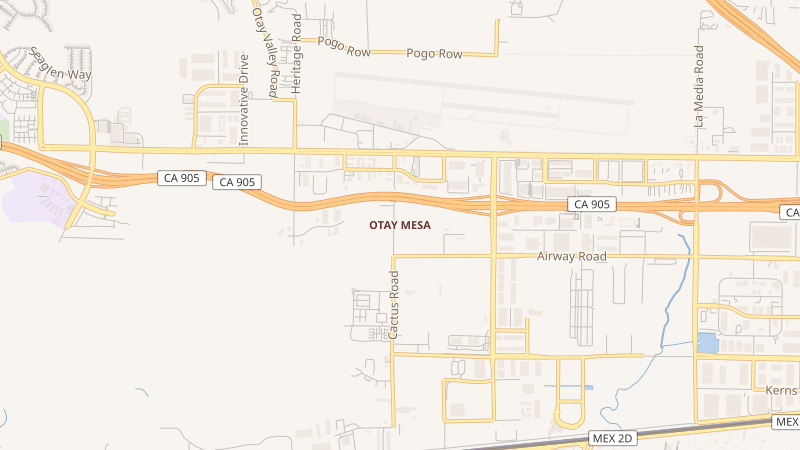
The most consequential governance conflict in San Diego County right now is the open rupture between Sheriff Kelly Martinez and the Board of Supervisors. On August 18th, the Board voted three to two to terminate ICE and CBP training access at Otay Mesa and Camp Elliott. Sheriff Martinez then unilaterally restored CBP access, citing officer recertification requirements and her independent executive authority as an elected sheriff. The Board has not yet taken legal action to compel compliance — leaving the county in an unusual institutional limbo in which an elected official has openly reversed a democratic vote and her colleagues have not yet decided whether to force the issue.
The confrontation is set against a dramatic surge in immigration enforcement across the region. ICE arrests rose nearly fifty percent across San Diego and Imperial counties in July, reaching roughly two thousand arrests in that month alone. Approximately sixty percent of those arrested had no criminal conviction and no pending criminal charge — a figure that has become a fault line in the debate, with law enforcement officials pointing to immigration status as the operative criteria and civil liberties organizations arguing the numbers reveal enforcement well beyond any public-safety rationale. An ICE arrest near San Diego City College — where a student was taken near 16th and C Streets and a second fled onto campus — made the stakes visceral for the college community.
On the Tijuana River, the Board of Supervisors' September 1st vote to build a county-owned sewage-treatment system represents a declaration of political exhaustion after years of waiting for federal or binational intervention. The decision commits the county to a path — permitting, environmental review, and construction timelines measured in years — rather than an immediate fix. For communities along the coast who have endured repeated beach closures and documented respiratory conditions near the river valley, the direction of travel matters even before any ground is broken.
An uncomfortable timing gap looms over that commitment. Forecasters are describing a potentially challenging El Niño fall and winter, and a significant rain event would push far greater sewage volumes through the Tijuana River system at the exact moment the county's new treatment infrastructure does not yet exist. The county's Office of Emergency Services has separately reached out to roughly seven thousand properties identified as vulnerable in flood-prone or steep-slope areas, flagging storm-drain maintenance priorities for fiscal year 2027 — a quiet but significant signal of how seriously officials are taking the seasonal risk ahead.
Accountability Gaps: A Paralysis Case Closed, Golf Course Rents, and a Detention Center Fight

The Citizens' Law Enforcement Review Board voted seven to two on September 9th not to reopen the Randal Tanner case — a decision that closes the chapter officially, though not without dissent. Tanner was beaten and paralyzed by San Diego County Sheriff's deputies during a 2019 traffic stop for an expired vehicle registration; he died in 2023. The CLERB's executive officer cited no new evidence as the basis for declining to reopen the matter. The two members who voted against that conclusion represent a real disagreement about what the review board's function should be, even if they were outvoted.
At the city level, an August 27th report identified police litigation as the primary driver of rising legal payouts, prompting the City Council to mandate that the Risk Management Department produce a full accounting of SDPD litigation costs before the next budget cycle. The mandate sounds procedural but could carry real fiscal consequences depending on what granular accounting reveals — the city is essentially requiring itself to look closely at a number it may not have been tracking at the level of detail the Council now wants.
A city audit of its eight golf courses — covering more than eight hundred acres of public land — found that private operators generated thirty-four million dollars in gross revenue in fiscal year 2025 while the city collected three-and-a-half million dollars in rent for all of calendar year 2024, roughly ninety cents of every revenue dollar remaining with private operators on taxpayer-owned land. The Council has seen the audit; what it does next is the open question.
The county also passed an ethics package establishing a two-year cooling-off period for former officials seeking to lobby their former government, along with restrictions on officials trading on prediction-market platforms while holding relevant non-public information. Ironwood Public Affairs faces a September deadline to report its revenue-planning work under a three-hundred-and-twenty-thousand-dollar contract. Separately, county officials had to fight in federal court simply to gain inspection access to the Otay Mesa Detention Center, where inspectors subsequently found shortcomings in how the facility notifies authorities about contagious illness, including tuberculosis. The fight to inspect, observers noted, is nearly as significant as what the inspection uncovered.
A Tale of Two Economies: Biotech Holds as Craft Beer and Tech Cut Jobs

San Diego's labor market is sending contradictory signals simultaneously. The unadjusted unemployment rate held at four-point-seven percent in July — tied for the year's high — while the seasonally adjusted figure of four-point-three percent trails Orange County at four-point-two and San Francisco at three-point-nine. More striking is the contraction of the labor force itself: at one-point-six-three million people in July, it represents the lowest count in three years and sits roughly forty-nine thousand below the March 2025 peak. A shrinking labor force can signal retirements, outmigration, or workers giving up on job searches — none of them positive developments.
Recent WARN notices sharpen the picture. ServiceNow is cutting one hundred and thirty-three San Diego positions by September 28th, concentrated at senior and director levels. Stone Brewing's two hundred and twenty layoffs beginning October 19th are attributed to a national decline in craft beer consumption as consumers shift to ready-to-drink products — a category-wide contraction, not a company-specific failure, with significant implications for a city that built a meaningful part of its hospitality identity around its craft beer industry over the past two decades.
Against that backdrop, the region's life sciences and defense anchors are holding. Khartis Therapeutics closed a fifty-million-dollar Series B. Japan-based Craif established a thirty-three-million-dollar R&D fund for pancreatic cancer diagnostics. General Atomics received a twenty-million-dollar California Competes tax credit tied to the DIII-D fusion facility expansion, and Northrop Grumman's three-billion-dollar DoD agreement provides meaningful insulation for defense-sector workers. UC San Diego also received an eighteen-million-dollar NSF grant for a quantum materials research center, part of a six-center, one-hundred-and-eight-million-dollar national initiative, with Professor Michael Sailor at the Jacobs School of Engineering leading the local component.
Real estate has split sharply along property type. The single-family median in San Diego County reached one-point-zero-nine-nine million dollars in July, up five-point-seven percent year over year, though sales volume fell six-point-seven percent month over month against a thirty-year fixed rate of six-point-six-nine percent — prices holding near records while the market thins. The condo picture looks almost inverse: older condos and townhomes in some submarkets are down ten to fifteen percent from 2022 peaks, HOA fees have surged sixty to seventy percent in some buildings over that same period, and special assessments as high as one hundred thousand dollars per unit have been reported in buildings with deferred maintenance. Realtor.com data showed San Diego posting a two-point-seven percent year-over-year decline in listing price per square foot in August, outpacing the national average decline of one-point-eight percent. On the commercial side, industrial vacancy reached seven-point-zero-six percent in Q2 2026, with net absorption flipping to negative two hundred and thirty-six thousand square feet after being positive one-point-one million square feet the previous quarter — a significant directional reversal in a sector spanning defense manufacturing, biotech lab space, and cross-border logistics.
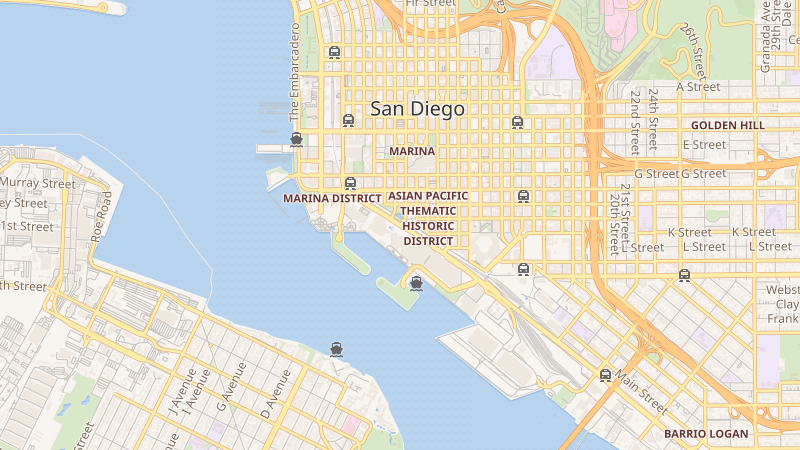
Two notable development proposals are moving through the pipeline. Cresleigh Homes is proposing a thirty-seven-story residential tower in downtown San Diego, with no confirmed unit count or timeline yet, that would rank among the tallest structures in the city. Live Nation wants to convert the one-hundred-and-two-year-old Wonder Bread building into a music venue seating between one thousand and three thousand people — a mid-tier capacity that would fill a specific gap in San Diego's live music infrastructure. Neither project has a confirmed construction timeline.
Santee and East County: Nothing New to Report

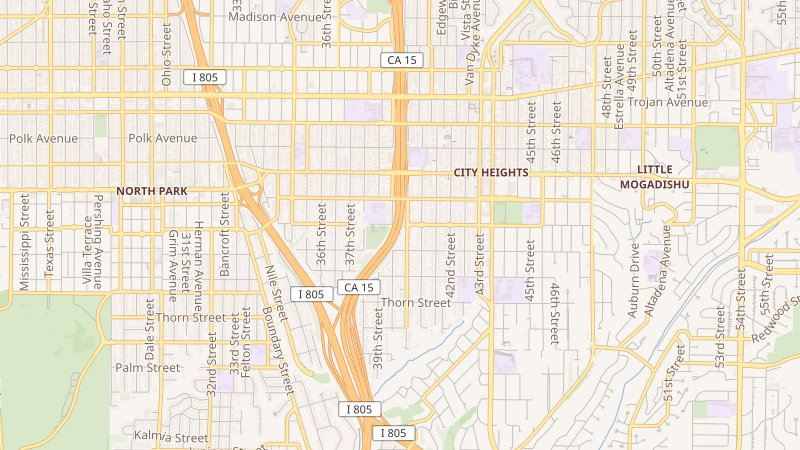
No new public-record developments emerged from Santee or East County in the most recent news cycle.
Padres' Narrow Window, School Mold Crises, and the Enrollment Number That Needs a Second Look

The Padres stand three and a half games back from the final NL wild-card spot with twenty-two games remaining, sitting at seventy-eight wins and sixty-eight losses. A sweep of Washington last week — capped by a game in which Jackson Merrill posted a career-high six RBIs and two home runs — injected confidence into an ownership-transition season under José Feliciano and Kwanza Jones. The math is uncomfortable but not yet prohibitive: Arizona must stumble, and San Diego must handle its own schedule. The San Diego Wave, meanwhile, kept NWSL postseason hopes alive with a four-to-two win over Utah, with Trinity Byars scoring twice and Melanie Barcenas also on the score sheet.
San Diego Unified School District's headline enrollment figure from the summer — three thousand and thirty-three new students against a district target of one thousand three hundred and nine — has been widely celebrated as proof that aggressive outreach, executed through fifty-two in-person enrollment hubs across the county, changes outcomes. Superintendent Fabiola Bagula has pointed to the result as validation of the strategy, and the district also reported that more than seventy-one percent of 2026 graduates were deemed college- or career-ready. SDSU separately recorded a record of more than one hundred and twenty-four thousand applications for its incoming class, driven partly by improving research rankings and partly by students being priced out of UC campuses.
But the enrollment headline may be obscuring a harder accountability test. The October Average Daily Attendance report — which locks in the attendance figures that drive state funding formulas — is the number that matters for district finances, and it is not the same as enrollment. Aggressive outreach campaigns in urban districts have a documented tendency to bring in students who were already nominally enrolled somewhere in the region but had become functionally disconnected: families who delayed re-enrollment after moving, students who had drifted from prior placements, children without clear school assignments. These students appear in enrollment counts but often show lower sustained attendance rates than genuinely new families, particularly when the underlying causes of their disengagement — unstable housing, transportation barriers, family stress — remain unresolved.
If the October ADA figure comes in at roughly two thousand seven hundred or above from the three thousand thirty-three enrolled, it would be a strong signal that the district's hubs were reaching new, stable families. A figure below two thousand four hundred would suggest a meaningful fraction of those students were not yet ready to stabilize — and would require a hard look at budget assumptions built on the enrollment surge. The Del Sur Elementary mold situation adds another layer of fragility: students displaced to Stone Ranch Elementary will remain there until at least January 2027, and the district is also managing mold concerns at Black Mountain Middle School. Families sent to a different school in a different neighborhood for months do not always return. The October ADA report, expected in late October, is the accountability check the enrollment headline cannot provide on its own.
The Week's Threads and a Mild Weekend Ahead

Three stories will define how this particular moment in San Diego County is remembered. The Sheriff-Board confrontation over CBP training access is not a procedural dispute — it is a live test of who actually governs this county on law enforcement policy, and its resolution will shape the relationship between elected sheriffs and elected supervisors for years. The economic bifurcation — labor force contracting, craft beer and tech cutting jobs, industrial vacancy turning negative on one track; biotech attracting serious capital and defense anchored by federal billions on the other — represents a widening gap between San Diego's two economies that is harder to bridge than in recent cycles. And the San Diego Unified enrollment story will either be validated or complicated by a single number arriving in late October.
Weekend weather offers a gentler backdrop to those ongoing tensions. Coastal communities can expect mild temperatures in the low-to-mid seventies Saturday, with a marine layer that may produce morning clouds before clearing by mid-morning. Inland valleys and East County communities are looking at highs in the high eighties to low nineties — warmer than coastal but well below the triple-digit readings from midweek earlier this month. Sunday looks similar, with a slight cooling trend possible as a weak trough approaches from the north. No significant fire weather concerns are forecast for the weekend, though the county's interior fire risk remains elevated for the season overall. No precipitation is expected through at least Monday. Balboa Park's cultural institutions return to normal weekend programming, and neighborhood farmers markets — including the Santee market, which canceled a recent Wednesday due to extreme heat — are back on regular schedules.