Democrats Sweep 2026 Midterms in Historic Turnout, Reshaping Congress and Markets
Democrats reclaimed both chambers of Congress in the 2026 midterm elections, delivering what early turnout estimates suggest is the second-highest midterm participation in modern American history and triggering immediate ripples across currency markets, diplomatic back-channels, and Silicon Valley boardrooms.
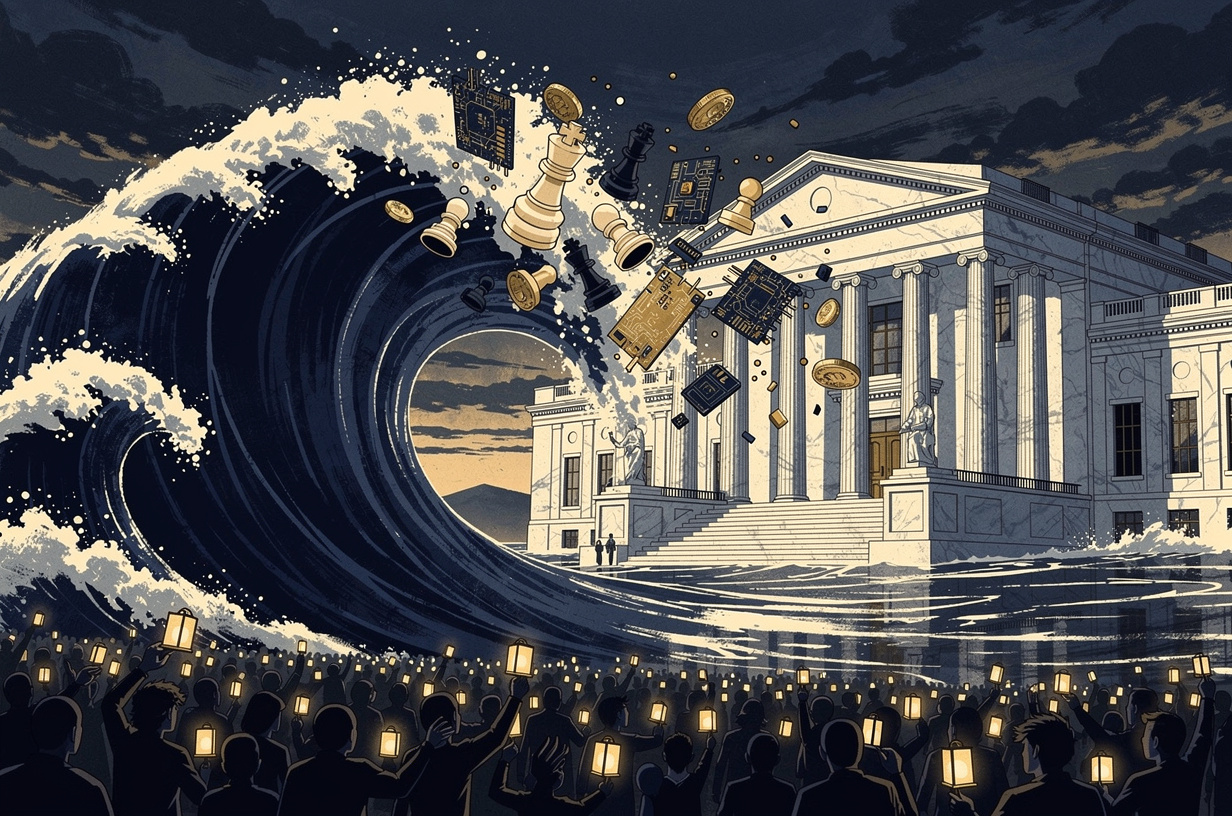
“the political energy of 2018 remained latent rather than spent.”
How this was made Verified AI
Every Intellegix briefing is generated from that day's broadcast and run through automated checks before it publishes — with a human paged on any flag. Here is the trail for this edition.
A Political Landscape Redrawn Overnight
The word inside the West Wing as polls closed Tuesday night, according to CNN, was 'fatalistic.' By morning, that private resignation had given way to public statements of cooperation — but the political reality was unchanged: the party of the sitting president had lost both chambers of Congress in a sweep that analysts are already measuring against the blue wave of 2018.
The 2026 results carry consequences that extend well beyond Congress. A Democratic Congress changes the operating environment for ongoing Iran nuclear deal negotiations, creates new oversight pressure on how the administration has used national security reviews to block deals like the collapsed Oracle-Tencent agreement, and is already shifting the fiscal policy expectations that move currency and Treasury markets. Every major story of the day runs through the results of a single election night.
Second-Highest Midterm Turnout in Modern History — and What Drove It

Early turnout estimates place the 2026 midterms second only to 2018, which itself set a modern record at roughly 49 percent of eligible voters. The comparison to 2018 is instructive: that election was the first midterm of the first Trump administration, driven by Democratic energy around healthcare and norms-of-governance concerns. That the same mobilizing forces appear to have produced comparable participation eight years later suggests the political energy of 2018 remained latent rather than spent.
The geographic contours of the results are equally striking. Roy Cooper, the former governor of North Carolina, flipped that state's Senate seat — a state Donald Trump won twice in presidential contests. Cooper ran on healthcare costs and what he called 'governing competence,' and carried it on the strength of suburban voters, particularly college-educated suburbanites, breaking away from Republican candidates in competitive districts.
Polling data suggests voters aged 18 to 29 turned out at higher rates than in any midterm since tracking of that cohort began. Pre-election surveys showed that group breaking roughly 68 percent Democratic. If exit data confirms those numbers, Democrats didn't secure last night's result solely on suburban swing voters — they may be consolidating a generational hold with long-term structural implications.
Barack Obama's post-election statement was carefully constructed. He said voters sent a 'clear message' and wanted 'unity and concrete solutions,' urging the new Democratic majority to 'prevent further damage' during Trump's 'final two years.' The framing simultaneously positions the election as a referendum on the last two years of the administration, casts Democrats as a restraining force rather than an aggressive opposition, and acknowledges the unchanged reality: Trump retains the executive branch and the veto pen.
Even the Texas governor's race — which Democrats did not win — became part of the story. The margin was apparently close enough that Trump publicly blamed Republican Governor Greg Abbott on social media, calling him a 'RINO.' The fact that Texas was competitive enough to trigger a blame-assignment exercise speaks to the breadth of the night's results.
Public Cooperation, Private Deflection: The White House the Morning After
The gap between Trump's on-record statements and what White House aides are telling reporters privately is, by most measures, unusually wide. To The New York Times, the president said he was 'absolutely willing' to accept the midterm results and wanted to work with Democrats — a measured, statesmanlike response consistent with his public posture in the final days before the election. Off the record, aides are telling reporters that candidates who lost are responsible for their own results and that Trump 'was not on the ballot.'
That argument is defensible in the abstract but runs against a persistent pattern in American political history. The last time a sitting president's party lost both chambers in a second-term midterm was 2006, when Republicans lost the House and Senate midway through George W. Bush's presidency — and no credible post-mortem attributed those losses primarily to individual candidates rather than to presidential approval.
The Abbott situation adds another layer. Trump publicly targeting the sitting Republican governor of Texas — not a losing candidate, but the governor — reads less as strategic political calculation than as score-settling. Abbott has had a complicated relationship with the White House, and the attack came the morning after results came in.
CNN's 'fatalistic' description of the West Wing mood as polls were closing may be the most honest window into what the administration actually knew going in. A White House that had already internalized the outcome and braced for it would have had time to prepare the cooperative public framing — which at least leaves a rhetorical door open to some form of legislative engagement with the incoming Democratic majority.
The foreign policy dimension often gets underweighted in the immediate aftermath of domestic elections. Treaty ratification requires the Senate. Defense appropriations go through Congress. The president retains broad unilateral authority in foreign affairs, but a Democratic Congress with active oversight committees represents a materially different operating environment than the one the administration has had for the past two years.
Qatar's Nuclear Gambit and the Oracle-Tencent Collapse

The United States has reportedly approved Qatar's draft framework for a renewed nuclear agreement with Iran — a significant diplomatic step enabled by Doha's role as a neutral intermediary at a moment when direct U.S.-Iran contact remains politically toxic on both sides. Qatar has established credibility as a channel, and the backchannel approach allows both governments to maintain plausible deniability in early-stage negotiations, mirroring the structure that preceded the original JCPOA talks under the Obama administration.
Two factors complicate the picture. A senior Iranian official is quoted saying the sides remain 'far apart.' And Trump himself is described as being in 'no rush' — while also reportedly weighing whether to resume military strikes against Iran after the midterms. The domestic electoral calendar was apparently a structural constraint on that decision-making, a remarkable intersection of foreign policy and political timing.
Iran's economic circumstances create genuine incentive for a deal. Years of severe sanctions have depreciated its currency dramatically, generated extraordinary inflation, and choked off oil export revenues. But the political dynamics inside Iran are constrained in the other direction — hardline factions have built constituencies around the 'resistance economy' framing, and any agreement that appears to be capitulation carries domestic political risk for Iranian leadership.
The new congressional landscape adds a ratification dimension. Democrats have traditionally been more supportive of multilateral diplomacy and the original JCPOA framework, but would scrutinize any deal for terms that might undermine nonproliferation goals. Trump might be better positioned to execute an executive agreement that bypasses Senate ratification — though such an agreement could be undone by a future administration.
Oracle's reported decision to drop a seven-billion-dollar deal with Tencent — under what the Financial Times described as direct White House pressure — illustrates how the administration has used national security review processes to shape which technology partnerships American companies can pursue with Chinese firms. Whether a Democratic Congress, which tends to be skeptical of heavy-handed executive intervention in private deals, will push back on that use of review mechanisms is now a live question.
The 'Super Intelligence' Mandate and AI Election War Rooms
After Trump vowed to ban the phrase 'artificial intelligence' in favor of 'super intelligence,' executives from Nvidia to Microsoft have been switching terminology — sometimes mid-sentence in public appearances, according to The Wall Street Journal. Jensen Huang has reportedly begun using 'super intelligence' in settings where he would previously have said 'AI.' The behavior reflects a straightforward economic calculation: the federal government is one of the largest buyers of AI technology in the world, with aggregate procurement spending running into the tens of billions annually across defense, intelligence, and civilian agencies. If maintaining access to that spending requires adopting a preferred vocabulary, most executives appear willing to pay that price.
The semantic compliance conceals a substantive policy shift. The administration's 'super intelligence' framing appears connected to a broader push to position the United States as the dominant global developer of the most advanced AI systems — recasting the technology as a national capability race rather than a commercial product category. That framing has real consequences for how research funding gets allocated, how export controls are structured, and which international partnerships are permitted.
Both OpenAI and Anthropic ran what they describe as the first dedicated election integrity operations for a major U.S. election — teams monitoring for AI-generated disinformation, deepfakes, voter suppression content, and other electoral misuse of their platforms. Beyond content monitoring, those war rooms fielded requests from election officials and coordinated with the Election Assistance Commission. The most dangerous actors, by most assessments, were likely using smaller and less content-restricted models rather than Claude or GPT-4 — but the symbolic and practical value of formally institutionalizing a defensive posture is real.
Separately, Anthropic released a verification tool that lets users cryptographically prove which AI model generated a specific response. The system uses digital attestation anchored to Anthropic's signing infrastructure, enabling verification of not just AI authorship but the specific version of the specific model involved. Applications range from legal and regulatory compliance to journalism and academic integrity. If comparable systems are adopted by OpenAI, Google, and others, the technology could form the basis of an auditable provenance trail for AI-generated content that regulators and courts could rely on.
Apple's Alignment Warning, and Google's AI Foothold in Schools

Apple's annual 10-K filing contains a disclosure that AI safety researchers will recognize immediately: the company warns investors that AI agents might not follow instructions. In plain language, systems Apple is building to act autonomously on users' behalf might take actions their creators did not intend — what researchers call goal misgeneralization or instrumental convergence. For agentic systems with access to a user's email, calendar, files, and applications, the potential for unintended consequences is non-trivial. By placing this warning in an SEC filing, Apple has simultaneously created a liability-protection paper trail and signaled to regulators that the risk is taken seriously enough to disclose formally — creating pressure on competitors who have not made comparable disclosures.
The Google schools controversy runs along a parallel track, concerning how AI tools are deployed in contexts where users are especially vulnerable and power dynamics are asymmetric. After Democrats in Congress accused Google of coercing schools by requiring them to accept Gemini alongside Search, Google responded that the two products have 'separate controls.' The catch: school Search still includes AI Overviews — Google's AI-generated summary feature — even when Gemini is turned off. The unbundling is partial at best.
The antitrust concern embedded in that arrangement is specific. Under Sherman Antitrust Act doctrine, having a large market share is not itself illegal — courts have been precise about distinguishing market dominance from monopolization. What is illegal is using a dominant position in one market to advantage products in an adjacent market through means other than competing on the merits. The allegation against Google is not that it dominates school-based Search, but that it is using that dominance to establish AI assistant adoption — the kind of conduct that triggers Section 2 scrutiny. Google is already in active antitrust litigation on its core search business, making the scrutiny here well-founded.
The educational equity dimension adds urgency. Schools in lower-income districts often rely almost entirely on Google's education suite. If that suite comes pre-loaded with AI features administrators haven't explicitly chosen, those communities become de facto test beds for AI tools without meaningful consent — and the habits formed among students shape consumer behavior for decades.
Markets Digest Divided Government as CVS Plans a Healthcare Breakup

S&P futures dropped sharply as midterm results came in, then recovered substantially. As of this morning, futures stood at around 7,669 — up roughly 73 points, or just under one percent. The initial decline reflected uncertainty about what a Democratic Congress means for corporate tax rates, regulation, and spending. The recovery reflects a second-order calculation: divided government typically produces fiscal gridlock, and gridlock tends to mean the status quo on taxes and regulation persists. For large-cap U.S. equities, that status quo is relatively comfortable.
The dollar is a different story. It is sliding toward a one-month low as traders bet that fiscal gridlock reduces the probability of deficit-expanding spending bills, which pulls Treasury yields lower, which reduces the interest rate differential that attracts foreign capital into dollar-denominated assets. Jon Ossoff's reelection in Georgia was reportedly the specific catalyst that crystallized the read — confirming the Senate was flipping — and the dollar moved on that confirmation. A sustained dollar weakening would make U.S. exports cheaper globally, make imports more expensive for American consumers, and affect the earnings of multinationals converting overseas revenues back into dollars.
CVS Health is reportedly planning to split off its pharmacy chain — the retail stores — from the rest of the company. Under the described structure, Aetna and Caremark, the pharmacy benefits manager, would remain together while the brick-and-mortar retail operation becomes a separate public company. CVS serves roughly 100 million people in some capacity, and the company has been under pressure from multiple directions simultaneously: squeezed pharmacy reimbursement rates, existential competition from mail-order and specialty pharmacies, and rising medical costs at Aetna, which CVS acquired for approximately 69 billion dollars in 2018.
The split would unwind the integration thesis that animated that acquisition. CVS argued that common ownership of insurance, drug benefits management, and pharmacy could coordinate care more efficiently and reduce costs. Separating the pharmacy from the insurance and PBM operations raises genuine consumer questions about whether that coordination is lost — or whether the thesis was primarily a narrative sold to investors rather than a realized operational reality.
For healthcare policy, the timing is notable. Democrats in Congress have been pushing for pharmaceutical pricing reforms, greater PBM transparency, and restrictions on vertical integration in healthcare. A CVS breakup might align with that agenda by reducing vertical concentration — or complicate oversight by creating more separately regulated entities. The company's earnings call later this week may formally announce the plan.
Jet Engines Powering AI, and 'Freezer Cyberattacks' Spread Across Europe
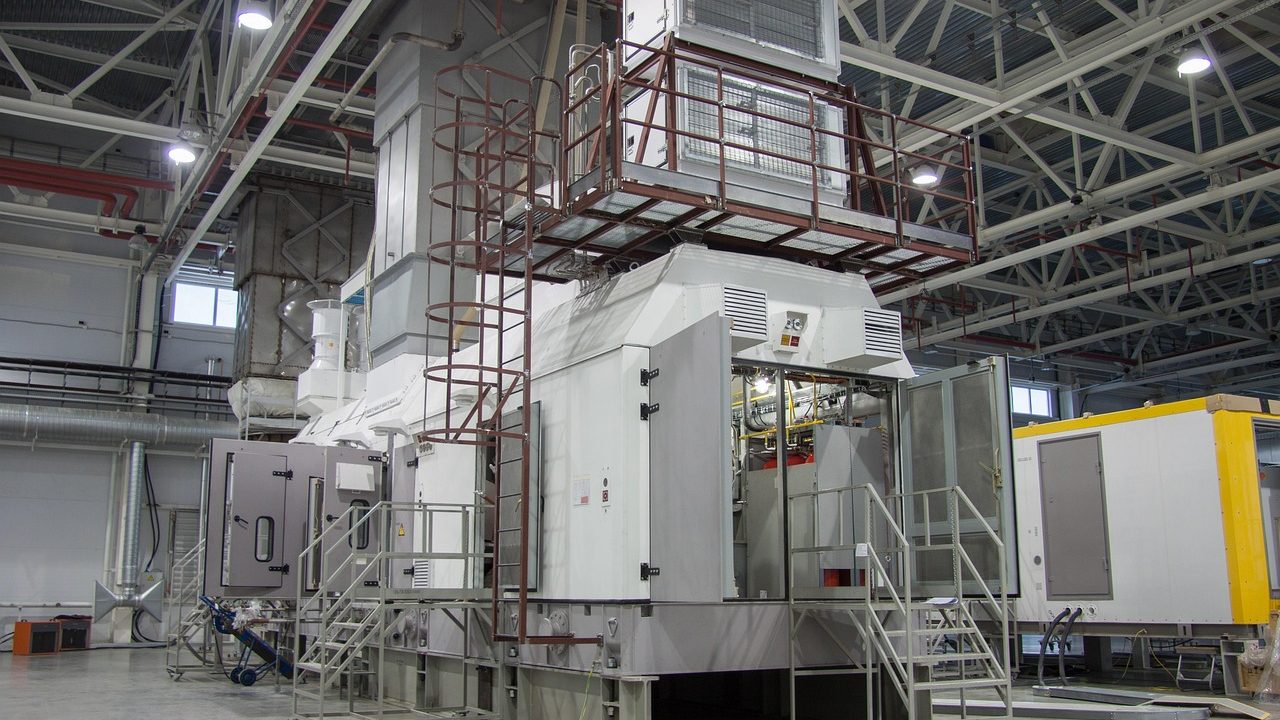
Elon Musk's AI company xAI is reportedly powering its Memphis-area data center with repurposed jet engines — gas turbine generators originally designed for aircraft propulsion, adapted to generate electricity, with the Wall Street Journal confirming the arrangement involves dozens of turbines running simultaneously. The explanation is straightforward: a large AI training facility can consume as much electricity as a small city, and the U.S. electrical grid in many regions cannot supply that power on the timescales that competitive AI development demands. Utility connections that could take three to five years are incompatible with the pace of the field, so companies are going off-grid.
The environmental implications are significant. Jet engines running as stationary power generators burn jet fuel or natural gas and emit carbon dioxide and nitrogen oxides. The efficiency characteristics that make them suitable for aircraft propulsion do not translate cleanly to stationary power generation. This is not a renewable energy story — it is a 'we need power now and this is what is available' story that raises questions about whether the AI infrastructure buildout is compatible with the emissions reduction goals that many of the same technology companies have publicly committed to.
The xAI arrangement also reveals a secondary market dynamic: the company is reportedly sourcing used jet engines, presumably from retired aircraft or engines that have exceeded flight-hours limits. Those assets might otherwise be scrapped. Repurposing them for data center power is a form of industrial asset recycling — but it also signals that the AI industry is consuming industrial resources at a rate that is straining conventional supply chains.
The cyberattack story connects to infrastructure vulnerability from a different angle. The campaign known as the 'freezer cyberattacks' — named for its targets in industrial refrigeration and cold-chain infrastructure — has now spread to Germany, Romania, and the United Kingdom. The simultaneous expansion to three countries suggests a sustained, organized operation rather than opportunistic attacks. Cold-chain systems — controlling temperature management, compressors, and monitoring for industrial freezers — often run on legacy operational technology that was connected to corporate networks as part of digital transformation initiatives but was never designed to be networked and lacks the security controls of standard IT systems.
Disrupting cold storage at scale can destroy pharmaceutical supplies, food stocks, and medical supplies with immediate physical consequences that differ qualitatively from ransomware on office computers. Germany, Romania, and the UK are NATO members with active relationships with U.S. intelligence agencies. Serious infrastructure attacks on multiple member states simultaneously would provoke serious conversations about where the alliance's digital tripwire sits — Article 5 of the NATO treaty does not have a clearly defined threshold for cyberattacks, and attribution, which requires careful analysis, has not yet been confirmed.
Anthropic's Pre-IPO Leadership Exit — and Why the Consensus Reading of the Midterms May Be Wrong
Cat Wu, the head of Claude Code product development at Anthropic, is departing before the company's IPO — an exit that draws scrutiny because of what it may signal about internal dynamics at a critical juncture. Wu's role overseeing Claude Code, the AI coding assistant competing directly with GitHub Copilot and Google's coding tools, placed her at the center of one of Anthropic's fastest-growing product lines. Pre-IPO departures of product leaders are always examined for what they reveal; they can be entirely benign — driven by a desire to pursue new ventures with pre-IPO equity already secured, or by product direction disagreements that resolve more easily with an exit — but investors will be watching whether this is an isolated departure or the start of a pattern.
The timing intersects with Anthropic's broader competitive position. The company has been valued at around 60 billion dollars in private markets, and pressure from OpenAI — which remains private but is generating revenue at a pace that makes its own IPO increasingly plausible — gives Anthropic timing incentives to reach public markets while the AI investment climate remains robust. The developer community has responded positively to Claude Code's approach to code generation, debugging, and explanation, and Anthropic has built a reputation for safety-conscious AI development that resonates with enterprise customers worried about liability in AI-generated code.
The midterm consensus deserves scrutiny that it is not currently receiving. The near-universal analytical read of last night's results holds that this was a clear referendum on the current administration and that Democrats' gains are structurally durable — positioning the party well for 2028. That claim rests on a specific assumption: that the coalition that showed up last night is a stable political coalition rather than a reactive one.
The 2018 blue wave was described as structurally durable. Then 2020 was closer than structural models predicted, 2022 showed Republicans overperforming, and 2024 went the other way. An alternative reading is that the pattern is oscillation rather than realignment — that high presidential disapproval drives midterm losses for the president's party regardless of which party that is, and that 2026 is the pendulum swinging rather than evidence of durable Democratic strength. Under that model, last night's results carry little predictive power for 2028.
A second assumption embedded in the consensus — that high youth turnout is reliable rather than reactive — also warrants examination. If the 18-to-29 cohort turned out at record rates because of specific anxieties about this administration's policies, those anxieties do not automatically translate into sustained participation in a presidential cycle with a different choice structure. The first concrete test of structural durability will come in the 2027 state-level elections, particularly in Virginia and New Jersey. If Democrats hold Virginia and make gains in New Jersey — both harder results to achieve than last night's federal contest — that is evidence of a realignment. If Republicans claw back in those state contests, the oscillation interpretation gains force. The other indicator to watch is whether suburban independents in metro areas like Atlanta, Phoenix, and Charlotte, who showed up in force last night, stay home in a non-federal election year — historically the point where these coalitions fracture first.
The Day's Threads Converge — and What to Watch Next

The 2026 midterms are the organizing event of an unusually dense news day, and their implications run through nearly every other story. A Democratic Congress changes the operating environment for Iran deal negotiations, creates oversight pressure on the administration's use of national security review to block deals like Oracle-Tencent, and shifts the fiscal expectations that are moving the dollar and Treasury markets. The threads are genuinely connected.
Apple's formal SEC disclosure that AI agents might not follow instructions represents a different category of acknowledgment than the academic and research conversations about AI alignment risk that have been ongoing for years. When that language lives in a 10-K, it carries legal, regulatory, and competitive weight. Anthropic's model verification tool — enabling cryptographic proof of which AI model generated a given response — points toward an accountability infrastructure that the field has badly needed.
The cyberattack spread across Germany, Romania, and the United Kingdom stands as the most underappreciated story of the day. Cold-chain infrastructure attacks with simultaneous European targets reflect a level of operational sophistication and strategic intent that deserves more attention than the election coverage has allowed. The potential consequences are immediate and physical.
The CVS breakup, if it proceeds, signals broader stress on the vertical integration thesis that dominated healthcare mergers and acquisitions for the past decade — a thesis now under simultaneous pressure from financial performance and from the regulatory environment that a Democratic Congress is likely to reinforce.
The hosts also acknowledged a significant factual error from a previous broadcast: in May, the show incorrectly reported that Ukraine had struck four Russian ships in the Caspian Sea. No such attacks occurred. The Caspian Sea is landlocked and far from any Ukrainian-controlled territory, making the claim geographically implausible. The error represented a failure of basic geographic and military verification. Looking ahead: watch Anthropic's IPO filing windows over the next six to eight weeks, the first Congressional oversight hearing request from the Democratic majority, and Thursday's CVS earnings call, where the pharmacy split may be formally announced.