Midterm Eve Crisis: Fake Nuclear Alerts, Iran Strike Fears, and a Senate Stroke Roil Election Eve
The United States entered Election Day eve Monday engulfed in simultaneous crises: a cyberattack pushing fake nuclear alerts to civilians on both sides of the Ukraine-Russia war, escalating pressure on President Trump to strike Iran, and a Democratic senator hospitalized with a stroke hours before polls open.
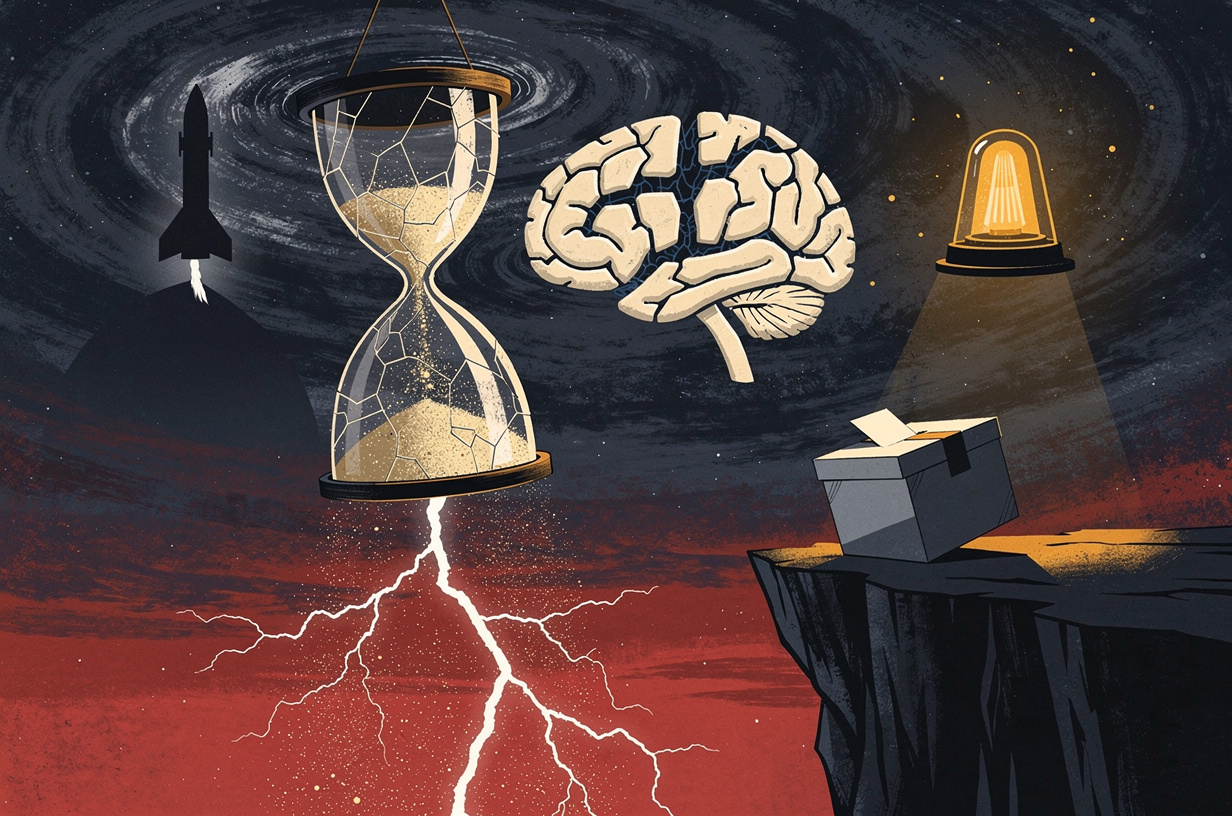
“The threat is therefore more valuable to Iran as a threat than as an action — the moment it is executed, the leverage disappears.”
How this was made Verified AI
Every Intellegix briefing is generated from that day's broadcast and run through automated checks before it publishes — with a human paged on any flag. Here is the trail for this edition.
A Day Too Dense to Summarize — But We'll Try

Monday, November 2nd, 2026 arrived with foreign policy crises converging on domestic political crises converging on a cyberattack that struck both Ukraine and Russia simultaneously — an unusual sentence that nonetheless accurately describes the morning's news landscape.
The day's major threads include fake nuclear alerts hacked into civilian emergency apps on both sides of the war in Ukraine, Tucker Carlson's claim that President Trump is actively weighing a nuclear strike on Iran, and a warning from U.S. diplomat Donald Blome that Tehran cannot hold the global economy hostage over the Strait of Hormuz. On the domestic side: the Republican National Committee admitting a turnout problem flagged weeks ago by Senator Ted Cruz, Joe Rogan — who endorsed Trump in 2024 — publicly criticizing ICE agents for reportedly detaining American citizens, and Senator Chris Murphy of Connecticut hospitalized after suffering a stroke the night before the midterms.
The Michigan Senate race is absorbing a dual fact-check storm after 60 Minutes scrutinized both Democrat Abdul El-Sayed and Republican Mike Rogers, while Nancy Pelosi issued a direct election-eve declaration that El-Sayed 'must win.' In Kansas, Senator Roger Marshall defied his own advisers by releasing a campaign video defending his decision to sue more than seven hundred patients for medical debt — days before his race against Adam Hamilton. In South Carolina, Nikki Haley insists the seat stays red even as polls show Democrat Annie Andrews and Republican Darline Graham in a near-tie.
On the technology front, Elon Musk acknowledged that the Grok AI agent is too expensive to run at consumer scale, while separately disputing a reported estimate that SpaceX is spending $470 billion on orbital AI compute and predicting that orbital computing will surpass Earth-based data centers by late 2028. Meta's Muse advertising agent is reportedly threatening Amazon's core ad revenue, according to the Wall Street Journal. And a Learjet departing Austin for the Bahamas crashed in a residential area near Military Trail in Palm Beach County, killing all nine people aboard.
Hacked Alerts, Collapsing Ceasefire: Cyberattack Targets Both Sides' Civilian Warning Apps

Overnight, the air raid alert applications used by both Ukrainian and Russian civilians were simultaneously compromised, with fake nuclear warnings pushed to users on both sides of the front. Both governments moved quickly to assert that their core warning infrastructure — the systems driving sirens and official government channels — continued to function normally. But the civilian-facing apps that millions check daily were, for a window of time, broadcasting false alarms about nuclear events.
The timing was not incidental. The attack coincided with the collapse of the longest truce of the war, centered around the Oleshky region in Kherson Oblast, where the city sits directly across the Dnipro River from Kherson and has been among the most contested positions since the early stages of the conflict. Whether the simultaneous cyberattack and ceasefire breakdown represent coordination or opportunism — a third-party actor watching for a moment of elevated tension and choosing to amplify it — remains unclear. Both governments blamed each other; multiple intelligence services have been documented operating in that information space.
Emergency management professionals warn of what they call 'alert fatigue': when a warning system is used to push false alarms, it trains populations to ignore future alerts. If Ukrainian civilians stop trusting their air raid apps after being burned by false notifications, the downstream casualty count from a real strike could be significantly higher. The damage, in other words, compounds over time.
The attack also raises a doctrinal question that international law has not fully resolved. Targeting civilian warning applications — rather than military communications infrastructure — is a deliberate choice to destabilize a population's confidence in its own government rather than to blind an opponent's military. The laws of armed conflict, largely written in the mid-twentieth century, have not kept pace with cyberattacks on civilian warning systems as a distinct category of warfare.
Tucker Carlson, Netanyahu, and the Hormuz Warning: Mapping the Iran Decision Tree
Tucker Carlson published a claim over the weekend that Donald Trump is actively weighing a nuclear strike against Iran. The claim is not an official White House statement, not an NSC leak, and Carlson has historically operated as a voice for a specific faction within MAGA politics rather than as a neutral intelligence channel. But it cannot simply be dismissed: Carlson has demonstrated access to Trump and has floated serious policy ideas in that orbit before.
Separately, Netanyahu has reportedly urged Trump to strike Iran — with the framing explicitly tied to timing 'after the midterms.' That sequencing suggests an active internal conversation about coordinating potential military action with the domestic political calendar. Against that backdrop, U.S. diplomat Donald Blome issued a blunt public warning this weekend: Iran cannot hold the global economy hostage over Hormuz shipping access, and Washington is prepared to 'change course' if shipping is not restored.
The economic stakes of a Hormuz closure are concrete. Roughly twenty-one percent of global oil trade — approximately seventeen million barrels per day — passes through the strait. Energy analysts have estimated that a serious disruption could spike oil prices by between thirty and sixty dollars per barrel, translating to a jump of between seventy-five cents and a dollar-twenty per gallon at American gas pumps within weeks. The exposure is asymmetric globally: European nations more dependent on Middle Eastern oil imports face a more acute short-term crisis than the United States, a disparity that affects how much pressure U.S. allies are willing to apply to hold Washington back from escalation.
The nuclear strike claim specifically sits at the extreme end of the credibility spectrum: a nuclear strike on Iran would immediately and permanently rupture every U.S. alliance relationship. What analysts consider more plausible is that 'nuclear' is being used loosely to describe an overwhelming conventional strike on Iranian nuclear facilities — a very different thing militarily, though still enormously consequential. Natanz and Fordow have been on military planners' target lists for years, and the deep-penetrating munitions developed for exactly that scenario exist in the U.S. arsenal.
Tehran's leverage, meanwhile, is real but self-limiting. Closing the Strait of Hormuz would devastate the Iranian economy at least as much as it would damage the global economy, since Iranian oil exports also flow through that corridor. The threat is therefore more valuable to Iran as a threat than as an action — the moment it is executed, the leverage disappears. Iran's enrichment capacity has expanded to the point where the timeline to weapons-grade material, if pursued, is now measured in months rather than years according to public assessments from the IAEA and independent analysts. That timeline compression is what drives Israeli urgency and, to a lesser extent, American urgency.
Stroke, Rogan's Reversal, and a Rogue Campaign Video: The Midterm Eve Landscape

Senator Chris Murphy of Connecticut, 53, suffered a stroke and was hospitalized over the weekend. Murphy is among the most visible Democratic senators on gun safety legislation and foreign policy oversight, and his absence — even temporarily — removes a key closing-argument voice the night before midterm elections. His office confirmed the hospitalization; detailed information on severity or expected recovery timeline was not yet available.
The Republican National Committee's turnout admission landed as an additional complication for the party. The RNC chair publicly acknowledged what Senator Ted Cruz had reportedly flagged weeks earlier internally: an enthusiasm gap, particularly in suburban districts. The math is straightforward — Republicans need to defend seats won in 2024 while competing in states where the political environment has shifted. Joe Rogan, whose three-hour Trump interview in 2024 was one of the most-watched political podcast appearances in the platform's history, compounded that picture by publicly criticizing ICE agents for what he described as detaining American citizens — masked agents operating without clear identification. Polling heading into Tuesday shows young male voters, a demographic Rogan helped steer toward Trump in 2024, drifting toward Democrats.
In Michigan, both Senate candidates are absorbing fact-check fallout. After 60 Minutes scrutinized claims from Democrat Abdul El-Sayed and Republican Mike Rogers and found significant problems with both, Nancy Pelosi issued an unusually direct statement: El-Sayed 'must win.' Gavin Newsom separately criticized Representative Hakim Stevens, a Democrat, over a move that Newsom described as damaging to the party's position in the race, while invoking the possibility of a Democratic 'tsunami' as a closing-argument framing. Nikki Haley, meanwhile, declared South Carolina would stay Republican, pointing to Lindsey Graham's 2020 margin as her benchmark even as polls show Democrat Annie Andrews and Republican Darline Graham in a near-tie.
Senator Roger Marshall of Kansas produced perhaps the cycle's most counterintuitive closing argument, releasing a campaign video defending his decision to sue more than seven hundred patients for medical debt — a move the New York Times reported he made against his own advisers' counsel. The Kaiser Family Foundation has tracked medical debt as a top financial concern for American families for years, with roughly forty-one percent of adults carrying some form of it. His opponent, Adam Hamilton, received a ready-made contrast frame. The only coherent interpretation is that Marshall believes his base rewards directness over political polish — a theory of the electorate that may hold in a Republican primary but carries substantial risk in a general election environment. By Wednesday morning, the results will render a verdict.
AI's Uncomfortable Economics: Grok Hits a Wall, 'Vibe Manufacturing' Takes Off, and Meta Threatens Amazon
Elon Musk acknowledged publicly this weekend that the Grok AI agent is too costly to run at scale, with users hitting usage caps and the current economics of a fully capable consumer AI agent not working at xAI's current pricing. The admission is notable because the AI industry has broadly operated on the assumption that compute costs would decline fast enough to make consumer agents economically viable before capital ran out. If even a well-funded operation like xAI is hitting cost walls, it raises real questions about which AI agent products can survive to profitability.
A parallel story from the hobbyist manufacturing world captures both AI's genuine power and its current limits. Builders are reportedly using GPT-6 Astra to do CAD design work through what they are calling 'vibe manufacturing' — describing desired parts to a chatbot, iterating conversationally on the design, and getting workable output without knowing CAD software. The workflow lowers a historically significant barrier to physical making. But the same users are describing design errors that require multiple physical iterations to correct. The AI handles conceptual approximation; the physics does not accommodate the AI's confidence level. The error cost that is manageable for a hobbyist — a failed 3D print — becomes catastrophic in medical devices or structural applications, which defines the path any serious industrial application must first clear.
Meta's Muse advertising agent, according to a Wall Street Journal report, is posing a genuine competitive threat to Amazon's advertising revenue. The mechanism is that Muse reportedly helps advertisers generate and optimize ad creative directly within Meta's platforms, reducing the need to route spending through Amazon's ad infrastructure. Amazon's advertising segment generated roughly sixty-nine billion dollars in 2025, making it one of the company's highest-margin businesses; even a few diverted percentage points represents a material threat. Muse's competitive edge is not only price — it is friction reduction, combining creative production and targeting optimization in a single interface.
Whether that constitutes an antitrust concern depends on conduct rather than market share. Under Section Two of the Sherman Antitrust Act, having a dominant market position is not itself illegal — regulators must show that a company acquired or maintained monopoly power through exclusionary conduct rather than through genuinely superior products or legitimate business growth. If Meta wins advertising share because Muse is genuinely more useful, that is competition working. If Meta uses its platform access to structurally disadvantage competing tools — degrading performance data for non-Meta creative, for instance — the FTC would have grounds for interest. The central challenge is defining the relevant market: 'digital advertising broadly,' 'social media advertising specifically,' or 'AI-generated ad creative' produce very different assessments of dominance.
SpaceX's $470 Billion Dispute, Michael Dell's $302 Billion Philosophy, and Nine Dead in Palm Beach

Elon Musk pushed back this weekend on a reported estimate that SpaceX is spending $470 billion on AI compute infrastructure, arguing that the efficiency of orbital computing architecture is being systematically underestimated and that each dollar spent goes further than in Earth-based data centers. He also restated a prediction made previously: that orbital AI computing will surpass Earth-based data centers in total capacity by late 2028. Musk's pushback is plausible in principle — satellite compute infrastructure amortizes differently than terrestrial data centers, and SpaceX's launch economics give it cost advantages no other operator currently has — but 'our efficiency is being undercounted' is also a convenient response to a very large spending figure, and without independent verification of actual capital deployment, the claim is difficult to evaluate.
The 2028 orbital compute claim rests on the premise that Starlink's expanding satellite constellation can be upgraded to carry meaningful processing capacity — distributed computing nodes in low Earth orbit. Latency advantages for certain applications and the physical security advantages of orbital infrastructure are genuine. But bandwidth constraints, even at Starlink's scale, impose real limits on what orbital compute can handle for most workloads. The international governance question is also unresolved: the International Telecommunication Union has jurisdiction over radio frequency allocation and orbital slots, but no mandate covers the computing payloads those satellites might carry. If orbital compute capacity of the scale Musk envisions becomes commercially available by 2028, it would represent infrastructure sitting entirely outside existing treaty frameworks.
Michael Dell, in an interview this weekend, traced the current $302 billion valuation of Dell Technologies to a founding philosophy of calculated risk-taking — from a $1,000 start in a University of Texas dorm room in 1984 to a company that has repeatedly pivoted through hardware commoditization, cloud disruption, and enterprise infrastructure transitions that conventional wisdom predicted would make it irrelevant. Dell's consistent willingness to take on structural risk at moments of predicted consolidation, and his consistent accuracy in those bets, is the analytical through-line of that valuation.
Nine people died Monday after a private Learjet departed Austin bound for the Bahamas and went down in a residential area in Palm Beach County, near Military Trail, erupting in a fireball on impact. Investigators from the National Transportation Safety Board are on scene; the cause remains under investigation. Whether there were ground casualties in the residential neighborhood where the jet came down had not yet been confirmed. Early NTSB findings in private aviation accidents typically emerge within sixty to ninety days. The full investigation will take longer, but nine families are grieving a loss that is real and immediate regardless of what it eventually reveals.
The Iran Decision Tree Has Very Few Good Branches
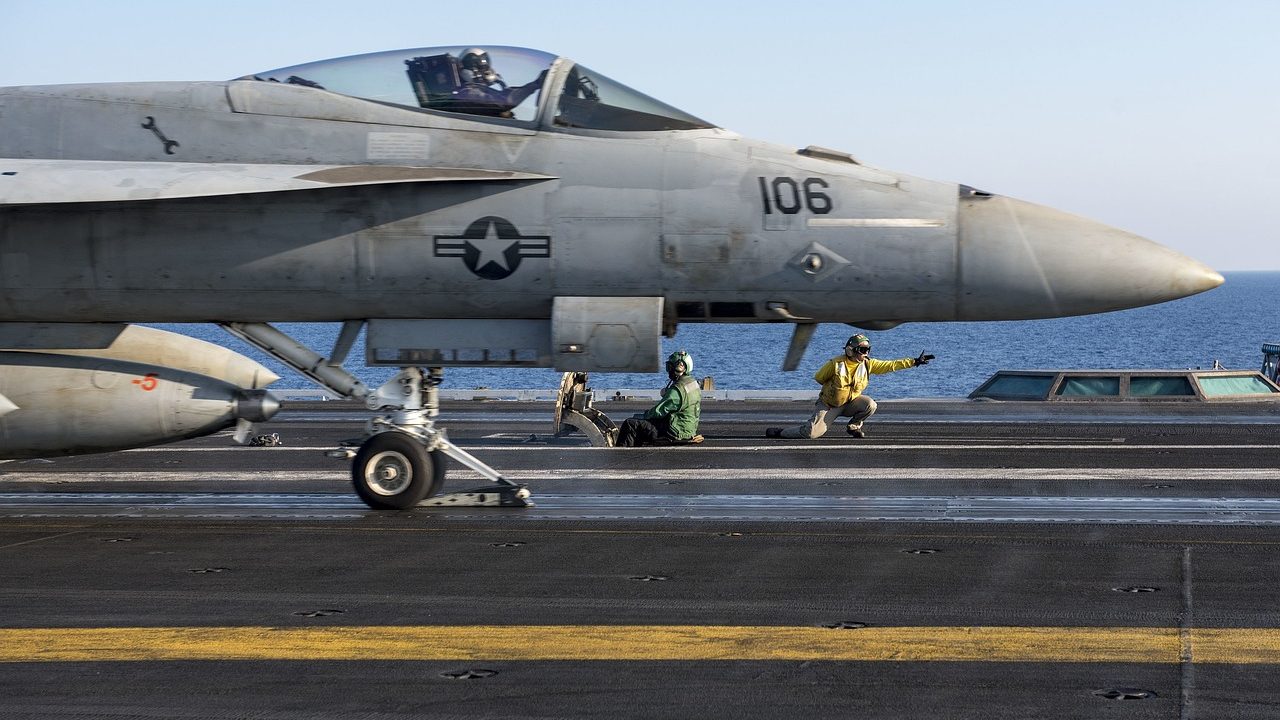
Viewed as a unified strategic picture rather than a series of individual news items, the Iran situation presents a decision tree with narrowing options on every branch. Tehran's leverage — the credible threat to disrupt Strait of Hormuz shipping — is most valuable as an unrealized threat. The moment Iran actually closes the strait, it loses that leverage while simultaneously devastating its own export economy. The operative question for intelligence analysts is at what level of external pressure Iran decides the deterrent value of the threat is no longer sufficient and escalates. There is no consensus answer.
Iran's nuclear enrichment capacity has expanded to the point where the timeline to weapons-grade material — if Iran chose to pursue it — is now measured in months rather than years, according to public assessments from the IAEA and independent analysts. That compression is what drives Israeli urgency. Netanyahu's reported framing — push for action 'after the midterms' — reveals the degree to which Israeli strategic planning is now calibrated to American electoral cycles, and carries an implicit assumption that the post-midterm political environment will be more permissive for action. That assumption is itself contingent on what Tuesday's results produce.
Overnight futures markets were not yet pricing in significant military action risk, with S&P Futures up approximately half a percent — thirty-eight points to seventy-six fifty-two — in trading Monday morning. Oil and defense sectors historically move sharply on credible military action signals; the absence of that pattern suggests traders are either discounting the Carlson report or, like the broader analytical community, reading ambiguous signals and withholding judgment.
The concrete tripwires to watch: any reported Hormuz shipping incident involving a U.S. Navy asset in the next twelve hours would dissolve the 'wait until after the midterms' assumption instantly. And any State Department or National Security Council communication that moves from Blome's carefully hedged 'channels remain open' language to something more definitive and urgent would signal that the timeline the analytical community is assuming may not hold. European allies, whose energy exposure to a Hormuz disruption is significantly higher than America's given expanded U.S. domestic production, have a lower tolerance for military escalation — and that constraint on Washington's freedom of action is consistently underweighted in American coverage of the Iran question.
Warfare, Governance, and the Gap Between AI's Promise and Its Physics

The cyberattack on civilian alert apps in Ukraine and Russia fits a documented pattern: ransomware attacks on water treatment facilities, power grid intrusions attributed to state actors across multiple countries, and now the targeting of civilian emergency notification systems. Each represents a category of harm distinct from traditional kinetic warfare, and the laws of armed conflict — largely written in the mid-twentieth century — have not kept pace with cyberattacks on civilian warning infrastructure as a legally or strategically defined category.
Musk's SpaceX orbital compute ambitions introduce a related governance gap at a different altitude — literally. The International Telecommunication Union governs radio frequency allocation and orbital slots, but its mandate does not extend to the computing payloads satellites might carry. If SpaceX deploys significant orbital compute capacity that is available for commercial use by any paying global customer, a nation-state could theoretically use that capacity for signals intelligence processing or military logistics planning entirely outside existing treaty frameworks. Starlink's role in the Ukraine-Russia conflict — providing communications infrastructure that proved difficult to jam — is already the first major case study in what commercial space infrastructure means for modern conflict, and the strategic lessons from it have not been fully drawn.
The Grok cost problem and the GPT-6 Astra 'vibe manufacturing' phenomenon, read together, describe where the AI industry actually sits versus where its marketing claims it is. The ceiling of capability is genuinely higher than it was two years ago. The floor — reliability, error rate in consequential applications, cost per agent run — has improved but remains a source of real friction for users who encounter it through failed physical prototypes or unexpected usage caps. Musk's public acknowledgment that Grok's agent economics are unsustainable is either unusual candor or a strategic move to pre-empt bad news — and plausibly both.
The 'vibe manufacturing' workflow is meaningful precisely because it is approximate rather than precise. Hobbyists are describing a process of describing intent, iterating conversationally, and arriving at a workable result without formal CAD training. The historical barrier to physical making — learning complex software, mastering precise specification requirements — has been meaningfully lowered. The path to serious industrial application runs directly through dramatically better error detection before the manufacturing stage. Until that reliability threshold is reached, the workflow scales for hobbyist prototyping and stalls at the door of anything where tolerances carry real stakes.
'What If We're Wrong?' Stress-Testing the Iran Strike Consensus
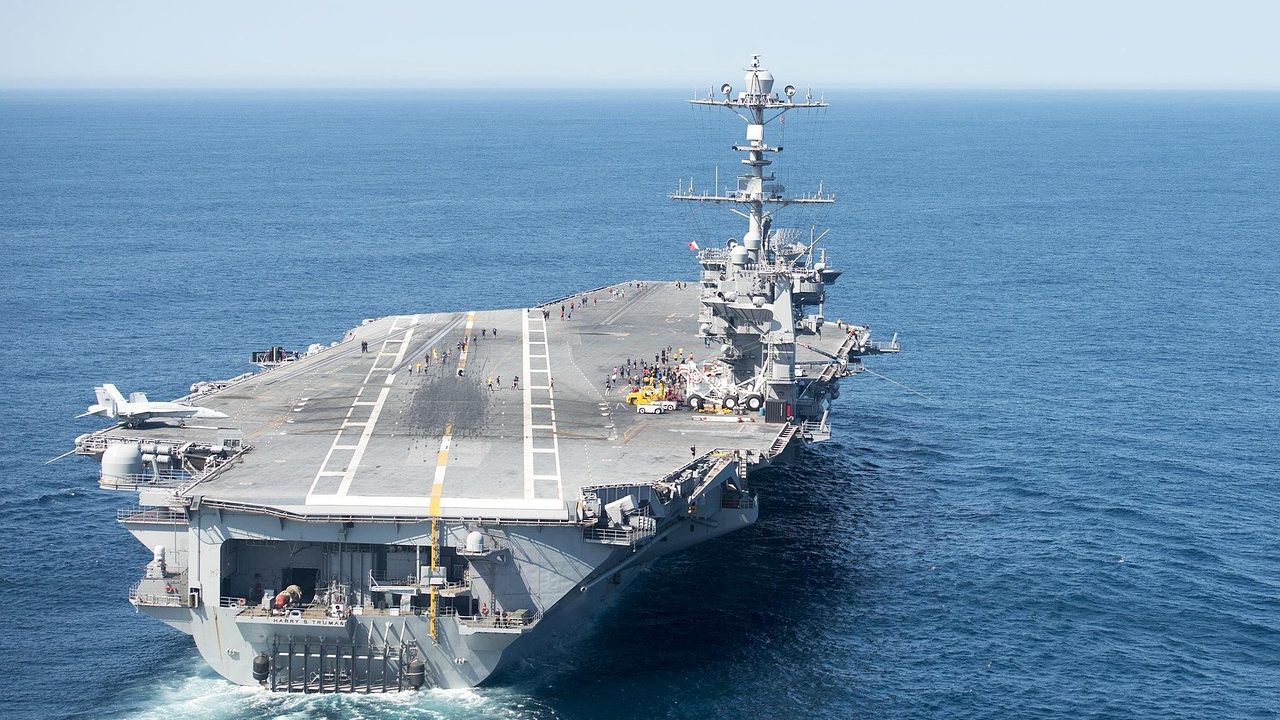
The near-universal analytical consensus Monday morning holds that Donald Trump will not order military action against Iran before midterm election results are certified. The political risk of a mid-election military escalation is considered prohibitive, and Netanyahu's reported recommendation to wait until after the midterms is read as confirmation that the operational plan is to hold. That consensus is probably right. But it is built on assumptions worth examining explicitly.
The primary assumption is that Trump is making a rational political calculation — that a pre-election strike is bad politics and that he recognizes it as such. The second assumption is that Netanyahu's 'after the midterms' framing represents an agreed timeline rather than a unilateral recommendation. The third assumption is that no trigger event between now and Wednesday alters the calculus rapidly. Each deserves scrutiny.
On the first assumption: Trump ordered the strike on Qasem Soleimani in January 2020 in a context where many analysts considered it politically risky. His polling improved in the immediate aftermath. If Trump believes that decisive action against Iran would be received as strength rather than distraction by his base, the political risk calculation looks different than the conventional wisdom assumes. The counterargument is structural — in 2020 he was an incumbent president with no immediate electoral consequence; in 2026, a major military action the night before an election where Republican turnout is already flagged as a problem could suppress that turnout by changing the information environment in unpredictable ways.
The Hormuz variable adds a compounding factor the consensus cannot fully account for: if Iran makes a move on the strait in the next twenty-four hours, the U.S. response becomes reactive rather than chosen. Reactive military engagement carries a different political dynamic than a preemptive strike and is harder to frame as an overreach. The honest intellectual position is that the consensus is built on behavioral assumptions about a political actor who has consistently defied behavioral assumptions — not a reason to reject the consensus, but a reason to hold it with appropriate humility and to watch the specific tripwires: any Hormuz incident involving a U.S. Navy asset, and any escalation in State Department or NSC language beyond the careful hedging of Blome's weekend statement.
After Election Night: The Stories That Won't Wait for Wednesday

By Wednesday morning, results will answer several of the election cycle's most closely watched questions: whether the RNC's acknowledged turnout concerns translated into seat losses; whether South Carolina's near-tied Senate race broke for Democrat Annie Andrews or Republican Darline Graham; whether El-Sayed or Rogers survived the 60 Minutes fact-check damage in Michigan; and whether Roger Marshall's medical debt campaign video was the boldest or most self-defeating closing argument of the cycle.
The Iran situation will not pause for the vote count. Blome's Hormuz warning, Netanyahu's reported pressure campaign, and Carlson's nuclear claim will all remain active Wednesday morning, and the political composition of the incoming Congress will immediately shape what the administration believes it can do next. On the technology side, Musk's Grok cost admission and the Meta-Amazon ad competition story both point to an AI industry that is powerful but not yet economical at scale — and beginning to produce genuine competitive friction between major platforms that will eventually require regulatory attention.
The forensic picture from the cyberattack on Ukraine and Russia's alert systems will develop as investigators identify how the apps were compromised and whether core warning infrastructure was genuinely unaffected or whether that reassurance was itself a confidence measure. The NTSB investigation into the Palm Beach Learjet crash, which killed nine people, will take months to complete though early findings typically emerge within sixty to ninety days.
A correction is also warranted before signing off: on May 18th of this year, reporting on this program described Ukraine striking its fourth Russian ship in the Caspian Sea. The Caspian Sea is landlocked, shares no connection to Ukrainian-controlled territory, and Ukraine has no military capability to strike ships there. No such attacks occurred. The claim was wrong, and naming it directly is the minimum standard of accountability that accurate journalism requires.