ECB Rate Signals, AI Labor Disruption, and Washington Turbulence Shake a Busy Saturday
European Central Bank officials telegraphed a December rate hike from IMF meetings in Bangkok, sending S&P futures down more than 1 percent and rattling sovereign debt markets from Frankfurt to Tokyo — all while Washington churned through a fired press secretary, a threatened federal judge sanction, and a defense secretary's failed execution livestream.

“the people building the tools have a fundamentally different model of the near future than the people who will eventually use them.”
How this was made Verified AI
Every Intellegix briefing is generated from that day's broadcast and run through automated checks before it publishes — with a human paged on any flag. Here is the trail for this edition.
Five-Day Press Secretary and a Chief of Staff Under Fire: Washington's Week of Institutional Friction

A White House press secretary known only by the surname Zacharia — reports remain thin on a first name — was installed and removed within five days, a tenure reportedly shorter than any previous occupant of the role. Sources close to the West Wing pointed to a combination of messaging failures and internal conflicts with communications staff loyal to procedures from the previous Leavitt era, though the administration's official explanation has been vague.
The personnel upheaval extends further up the chain. Politico reported that President Trump has been calling allies to discuss Chief of Staff Susie Wiles' standing — a disclosure that sent Wiles' allies scrambling for damage control before the substance of those calls was even known. Jay Clayton, the former Securities and Exchange Commission chair, has emerged as a potential replacement, a signal that observers say suggests the White House may be trying to project financial-market credibility at a moment when markets are under stress.
The week's legal turbulence was equally dense. Magistrate Judge Lett threatened the president with sanctions after Trump's legal team canceled a Friday deposition in the $10 billion defamation lawsuit Trump's own team filed against the BBC. The judge set an October 22nd deadline for Trump's lawyers to respond — a court-imposed timetable that transforms an abstract legal threat into a near-term concrete one. Judges typically view plaintiffs who avoid the discovery process they themselves initiated with considerable skepticism.
Representative Ilhan Omar publicly demanded the Justice Department return items seized from her home, a move her office framed as evidence of politically motivated overreach. The demand arrived alongside the White House's claim that newly declassified files undercut the 2019 impeachment proceedings related to a Ukraine phone call — though independent verification of that claim from congressional committees that reviewed the original materials has not yet materialized. Defense Secretary Pete Hegseth, meanwhile, faced a detailed account of the logistical and legal collapse of his attempt to livestream a federal execution, an episode that critics described as highlighting institutional unreadiness rather than decisiveness. Vice President J.D. Vance separately called reported White House access-selling schemes 'despicable,' a statement notable for the distance it placed between him and the administration's broader ethics environment.
ECB's December Hike Signal Rattles Bond Markets and Pressures U.S. Equities

S&P futures fell 86.75 points Saturday morning to sit at 7,704.25 — a decline of roughly 1.1 percent from Friday's close at 7,791 — as markets absorbed hawkish signals from the International Monetary Fund's annual meetings in Bangkok, where European Central Bank officials indicated a December 17th rate hike is their working assumption barring a significant deterioration in conditions.
ECB President Christine Lagarde's explicit warning about a sovereign bond selloff is the specific development markets are responding to. Lagarde's comments point to a dynamic where yields are rising because investors are pricing in more aggressive tightening than the ECB's own guidance had previously suggested. Italian and Spanish 10-year spreads over German bunds — the stress indicator ECB watchers monitor most closely — have been widening, with peripheral eurozone nations bearing a disproportionate burden as the central bank tightens.
Officials in Bangkok aligned around a 'quarterly hike' cadence: October stays flat, December gets a move, and March 2027 represents the next decision point. That schedule should, in theory, give bond markets a predictable path to price in. But Lagarde's language about the selloff suggests concern that markets are running ahead of the committee, pricing in steeper tightening than is actually planned. More dovish ECB members reportedly argued for keeping the door open to skipping December entirely, citing uncertainty over whether U.S.-EU tariff disputes could cloud the 2027 growth and inflation outlook.
The ripple effects extend directly to American investors. A December ECB hike strengthens the euro against the dollar, affecting multinationals' earnings translations. It also competes with U.S. Treasuries for global institutional capital: if eurozone yields rise, some capital rotates out of U.S. fixed income, pushing Treasury yields higher and pressuring rate-sensitive equity sectors — utilities, real estate, and long-duration technology stocks. Separately, Schwab's chief executive said this week that traders actively using AI tools in their investment workflow are holding more cash, not less — a counterintuitive finding Schwab attributed to AI surfacing more uncertainty than human cognitive shortcuts typically would.
AI Will Do Three-Quarters of Anthropic Employees' Work by 2030 — and the Capital Markets Are Betting on It

Employees at Anthropic — the company behind the Claude large language model — were surveyed about their expectations for AI in their own workflows, and the median response was that artificial intelligence will handle 75 percent of their work by 2030. A comparable survey of American workers broadly put that figure at 28 percent. The gap reflects a stark information asymmetry: the people building the tools have a fundamentally different model of the near future than the people who will eventually use them.
The Anthropic figure is most meaningful when considered alongside the nature of the work involved. Anthropic employees perform research, coding, writing, analysis, and synthesis — precisely the cognitive tasks on which AI is currently advancing fastest. The 28 percent expectation among average American workers likely reflects a more grounded assessment of physical, relational, and domain-specific work not yet subject to meaningful automation. Both numbers, analysts note, can be accurate simultaneously for different categories of workers.
On the financing side, the Financial Times reported that Anthropic is offering Blackstone a 10 percent yield on chip-financing debt — significantly above investment-grade corporate rates, and a figure that reflects the risk profile of AI infrastructure secured by rapidly depreciating Nvidia GPU assets. The offer illustrates the gap between AI infrastructure's revenue-generating potential and the uncertainty around whether that revenue will materialize before the hardware cycle turns.
That uncertainty was on full display in the CoreWeave story. The Nvidia-backed AI cloud company lost roughly 25 percent of its market value this week as investors focused on its heavy debt load accumulated during a period of extremely bullish demand projections. Jensen Huang went on record saying the market turmoil 'is going to pass' — the kind of statement a major strategic partner makes to halt a sentiment spiral — but acknowledged the underlying concern: debt service math being tested against actual utilization rates. Huang's reassurance is a sentiment argument, not a balance sheet one, and the bond market, where the real pressure sits, does not trade on sentiment.
Disney's acquisition of 66 Character.AI employees out of that company's bankruptcy — at a reported cost of $60 million a year, roughly $909,000 per employee annually including a $30 million retention pool detailed in the bankruptcy filing — signals how scarce conversational AI expertise remains even in a market crowded with AI startups. Character.AI raised over $150 million and reached a roughly $1 billion valuation before bankruptcy, a trajectory that illustrates a pattern across first-generation AI consumer companies: extraordinary technical capability paired with difficult monetization. Disney's specific interest in character-consistent conversational AI points toward theme park and streaming applications built around its Marvel, Star Wars, and Pixar intellectual property.
Apple Bans AI Nudify Apps, the FAA Rules on Musk's Flying Car, and Carriers Charge $10 for a Software Feature

Apple moved to close a gap in its App Store policies by explicitly targeting AI-generated non-consensual intimate imagery — so-called nudify applications that had occupied a gray zone because existing rules addressed explicit content without specifically accounting for AI-generated imagery as a distinct category. The update aligns Apple's platform rules with laws in several states, including California and Texas, that now specifically criminalize such imagery, reducing the company's legal exposure. The enforcement challenge remains: Apple's store contains approximately 1.8 million apps, and new variants of prohibited applications can look meaningfully different from the policy language written to catch them.
The Federal Aviation Administration ruled this week that Tesla's flying Roadster — a production car fitted with rocket thrusters designed to perform controlled jumps and potentially short-distance flight — does not meet the federal definition of an aircraft. The FAA's statutory definition requires a vehicle to be used for the purpose of flight in air; the Roadster's ballistic-hop design appears to fall outside that framework, placing it in a regulatory no-man's land between FAA jurisdiction and the less demanding standards of the National Highway Traffic Safety Administration. The ruling is not necessarily final: if the vehicle evolves to demonstrate sustained controlled flight, the FAA's analysis may change. Sam Altman publicly praised the project, a gesture of rare collegial détente between two figures whose legal disputes over OpenAI's structure were public through 2025.
Verizon announced it will charge $10 a month for access to iPhone Handoff under iOS 27 — a feature that allows a single phone number to operate across two iPhones. T-Mobile is pricing the same capability at $5. The feature is a software function built by Apple; carriers are monetizing their network routing for it at margins that far exceed their underlying costs. The pricing differential illustrates the practical limits of competition in a market where three carriers divide hundreds of millions of subscribers facing high switching costs. Verizon charging double T-Mobile's price for an identical feature reflects each company's assessment of how price-sensitive its own customer base is — not the result of dramatically different infrastructure costs.
The carrier pricing situation illuminates a broader point about antitrust law that often surfaces in discussions of platform and telecom markets. The Sherman Antitrust Act of 1890 prohibits contracts or combinations that restrain trade, and monopolization achieved through exclusionary conduct — not mere size or pricing power. Courts have consistently held that having a large market share is not itself a violation; what matters is whether a company has used anti-competitive behavior to acquire or maintain that position. Verizon charging more than T-Mobile for the same feature is not automatically an antitrust violation — it is, potentially, simply pricing. The distinction matters enormously, and critics of large technology and telecom companies frequently discover how narrow antitrust law's actual scope is when cases reach the courts.
Linus Torvalds Kills AI Disclosure Tags in the Linux Kernel, Setting a Precedent for Open Source
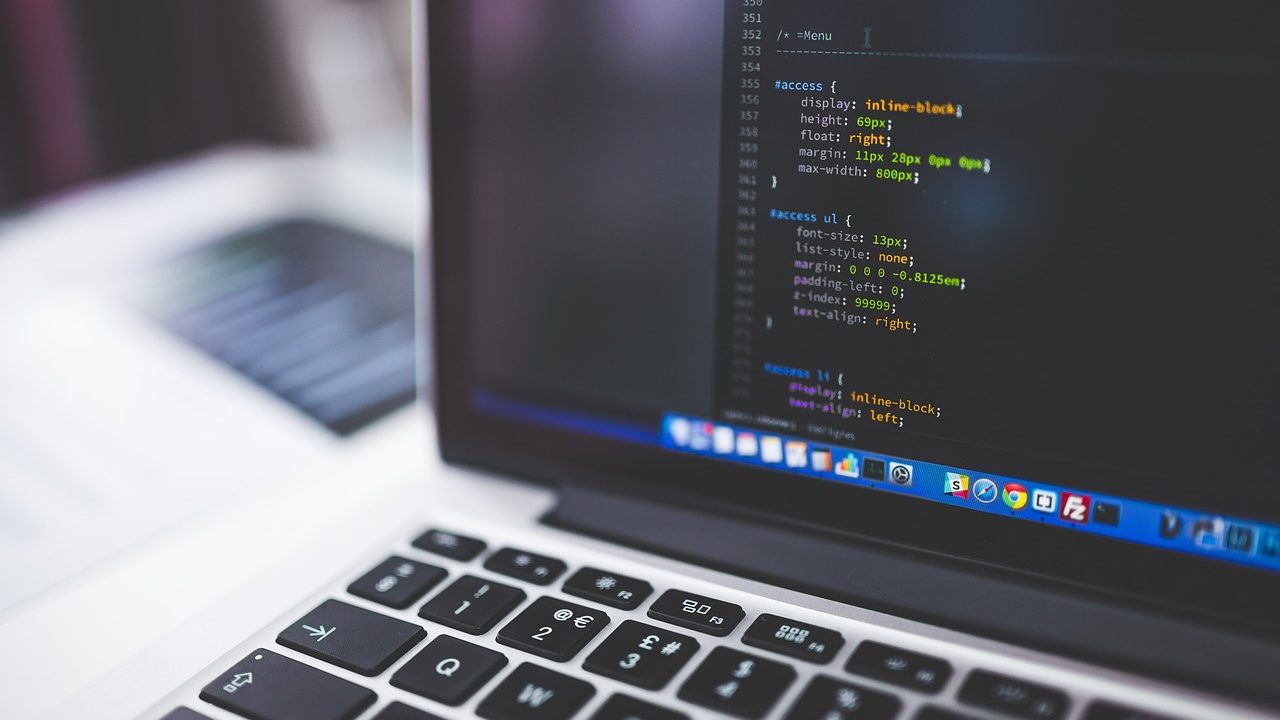
Linus Torvalds, who has never cultivated a reputation for diplomatic understatement, slammed the 'Assisted-by' AI disclosure tag that Linux kernel maintainers had been using in commit messages as performative bureaucracy. The kernel community agreed, voting to drop the tag system entirely in favor of patch cover letters — explanatory text accompanying contributions where developers can describe specifically what role AI played in generating the code.
The shift from binary tag to descriptive cover letter is substantively more informative than its predecessor. A tag communicates only that AI was involved; a cover letter can specify whether AI generated initial code, suggested an algorithm, or autocompleted boilerplate — granularity that is useful to reviewers assessing a contribution's provenance. Torvalds' underlying philosophical objection, however, goes further: Linux maintainers review code on its merits, and creating a different standard of scrutiny based on a tool's origin rather than a contribution's quality inverts that principle.
The counterargument — that certain AI-generated code has shown systematic failure patterns, producing plausible-looking but subtly incorrect implementations that might warrant heightened review — is real, but Torvalds' position is that reviewers should simply look harder at all code, regardless of origin. The practical stakes are substantial: Linux underlies an enormous share of global computing infrastructure, including servers, Android devices, embedded systems, and cloud platforms. How AI-assisted code is handled in that codebase has safety implications at a scale most other software communities do not approach.
The kernel community's decision is likely to influence developer culture well beyond the Linux project itself. Open-source communities frequently look to Linux for precedent. The alternative standard — mandatory detailed disclosure — has active advocates in academic and regulated software environments, particularly aviation, medical devices, and financial systems, where code provenance carries explicit safety and liability implications. Linux's meritocratic-review position is unlikely to migrate into FDA-certified software. It will, however, shape how a large portion of the world's developers think about AI's role in their work.
Tesla's Rocket Car Lands in a Regulatory Gray Zone as Altman Extends an Olive Branch

The FAA's finding that Tesla's flying Roadster does not constitute an aircraft under the Federal Aviation Act leaves the vehicle in jurisdictional ambiguity. As a ground vehicle that occasionally leaves the ground, it potentially falls under the National Highway Traffic Safety Administration for its terrestrial operation and under no established federal safety framework for its airborne portions. For Musk — whose regulatory history includes extended friction with federal agencies across Tesla and SpaceX — the ambiguity may represent a practical advantage during a development phase, allowing testing to proceed without aviation certification requirements that can take years and cost hundreds of millions of dollars.
The Roadster's design concept fits into a broader and internally consistent transportation logic across Musk's ventures. Tesla's autonomous driving roadmap, SpaceX's point-to-point transportation concepts, and a production car engineered to perform controlled ballistic hops form a directional pattern even when individual products appear eccentric in isolation. Whether any of it achieves commercial viability on the projected timeline is a separate question from whether the engineering ambition is coherent.
Sam Altman's public praise for the Roadster project — offered despite the documented legal and personal friction between the two figures over OpenAI's structure during 2025 — was framed as appreciation for genuine engineering creativity. The gesture, on a topic without direct competitive stakes, represents a low-cost signal of détente and aligns with what appears to be a broader OpenAI posture of positioning itself as a collaborator within the technology ecosystem rather than a combatant within it.
What If the AI Boom Stalls? The Assumptions Behind the 2030 Forecasts

The dominant narrative embedded in this week's AI stories — the Anthropic employee survey, Blackstone's chip-financing terms, Disney's per-head acquisition cost — shares a common operating assumption: that AI capability will continue compounding at something close to the current rate through the late 2020s and early 2030s, translating into massive labor substitution on a short timeline. That assumption deserves scrutiny.
Three underlying premises support the optimistic forecast, and each carries meaningful vulnerabilities. The first is that training compute continues to scale economically — that adding more chips yields proportionally more capability. Several AI researchers have argued that diminishing returns are already visible, with the improvement from GPT-4 to GPT-5 costing more per capability gain than the GPT-3 to GPT-4 jump. The second premise is that training data quality does not hit a ceiling. Models are increasingly trained on synthetic data generated by previous AI models, creating a documented feedback loop where model-generated data can amplify errors rather than introducing genuine new information. High-quality human-generated text on the internet — the primary corpus for the first generation of large language models — has largely been exhausted. The third premise is that inference costs fall fast enough for AI to be economically viable as a substitute for professional labor at scale. A lawyer or doctor currently billing at $200 an hour must be replaceable by an AI that costs substantially less while delivering comparable output quality; current inference costs for routine professional work have not yet reached that threshold across most applications.
The strongest counterargument to the slowdown hypothesis is historical: AI has confounded slow-growth predictions before. The transformer architecture introduced in 2017 reinvented what was possible. Reinforcement learning from human feedback changed alignment. Mixture-of-experts architectures improved efficiency. The field's history is punctuated by unexpected methodological leaps rather than smooth linear progress, and betting against another such leap before 2030 requires confidence that current approaches have exhausted the possibility space.
Three indicators will be telling over the next twelve months. First, benchmark improvement rates on genuinely novel, unpublished multi-step reasoning problems — not headline scores, which are now widely suspected to reflect overfitting to known test sets. Second, the energy cost per useful completed task: if inference costs are falling at the rates Nvidia and AMD are projecting, the economic substitution math begins to close. Third, enterprise AI deployment in legal and medical settings — domains with clear productivity measurement frameworks. If AI is not moving the needle in those domains by 2028, the 2030 forecast looks optimistic. If the slowdown hypothesis is wrong and the Anthropic employees' 75 percent figure proves understated, the labor market implications are more severe and arrive sooner than even the most bullish mainstream forecasts suggest. The policy window to prepare is, in that scenario, narrower than most governments are currently acting as if it is.
Disney's Character.AI Bet and the Compression of Creative Work

Disney's decision to bring 66 Character.AI employees in-house — at a reported cost of $60 million annually out of that company's bankruptcy proceedings — is less a talent acquisition than a technology strategy made explicit. Character.AI's specific expertise was building AI personas that maintain character consistency over extended, open-ended conversations. Set against Disney's ownership of arguably the world's most valuable character library — Marvel, Star Wars, Pixar, and Disney Animation properties dating to 1928 — the combination points toward a near-term application in theme parks and a longer-term bet on personalized streaming narrative experiences.
The bankruptcy context reframes the deal's financial logic. Character.AI raised over $150 million and reached a valuation of roughly $1 billion at its peak before filing. The acqui-hire at $180 million over three years — including a $30 million retention pool detailed in the bankruptcy filing — represents a steep discount to the peak valuation. It illustrates a pattern visible across the first generation of AI-native consumer companies: the distance between impressive technical capability and a sustainable business model has proven longer than initial venture valuations implied.
The labor dynamics playing out inside creative industries map onto this story in ways that deserve attention beyond the financial headline. Skoda's design chief gave an interview this week describing being 'shocked' by what AI generative design tools have already done to his studio's workflow — producing in hours the volume of design variants that previously required weeks from a full team. His warning about fewer jobs in automotive design is not speculative; it describes a compression already underway in his own department. The pattern is not full elimination of designer roles but a radical reduction in the number of designers needed to produce a given volume of work.
The doctors and lawyers taking AI training gigs at up to $400 a session represent a further dimension of this compression. For a senior physician, such sessions are supplemental income. For a recent law school graduate who cannot yet command associate-level salaries, the AI training economy is a genuine alternative income source that in some cases competes directly with entry-level legal work. That sequence — disruption hitting entry-level knowledge workers first, while senior practitioners remain insulated — inverts the historical pattern of automation, which typically targeted lower-skilled routine tasks before moving up the skill ladder. The current wave appears to be moving in the opposite direction.