From MOAB Threats to AI Espionage: A World of Fracturing Institutional Trust
Three weeks before U.S. midterm elections, a single Friday brought converging crises across foreign policy, domestic politics, artificial intelligence, and national defense — each story a variation on the same underlying question: which institutions can still be trusted, and what happens when they cannot?

“AI-generated code can be locally correct but globally incoherent — passing all unit tests while producing unexpected behavior under edge-case inputs that no human reviewer anticipated.”
How this was made Verified AI
Every Intellegix briefing is generated from that day's broadcast and run through automated checks before it publishes — with a human paged on any flag. Here is the trail for this edition.
Trump Puts 'Mother of All Bombs' on the Table Against Iran

President Trump confirmed Thursday night on Newsmax that the GBU-43/B — the Massive Ordnance Air Blast bomb, commonly known as the MOAB — is among the military options under consideration if conflict with Iran resumes. Speaking directly to what he called misleading coverage from CNN and CBS, Trump was emphatic that the 21,600-pound weapon is conventional, not nuclear. Both networks had cited Pentagon officials saying the Defense Department has drafted contingency strike plans targeting a site referred to as Pickaxe Mountain inside Iran.
The MOAB's relevance to the Iran standoff is specific: as a thermobaric bomb designed to collapse underground tunnel networks and reinforced bunkers, it is one of the few conventional weapons theoretically capable of penetrating hardened nuclear infrastructure such as the Fordow enrichment facility, which sits under roughly eighty meters of rock near Qom. Military analysts have long debated whether even the MOAB can destroy a facility at that depth, with some assessments suggesting multiple sequential strikes might collapse an entrance without reaching the centrifuge halls below.
The choice of Newsmax as the venue for the announcement carries its own signal. Rather than a formal press conference, Trump addressed the nuclear question directly to a conservative audience — an approach analysts read as managing the optics of escalation while preserving enough credibility to maintain leverage in any resumed negotiations. The phrase 'if conflict resumes' implies a current pause or ceasefire arrangement rather than a hypothetical scenario.
Any strike of that magnitude would not occur in isolation. A MOAB attack on Iranian soil would almost certainly trigger retaliation against U.S. assets in the region, against Israel, and potentially against Gulf state partners — reshaping the regional architecture within hours. The operational documents specifying Pickaxe Mountain as a target represent a meaningful distinction from theoretical war-gaming, signaling that planning has moved into an actionable phase.
Ukraine Called a 'Disgrace,' Missile Shortages Disputed — America's Fractured Defense Posture

In a striking departure from conventional allied solidarity, President Trump publicly called Ukraine's strikes on Russian oil refineries 'a disgrace.' Ukraine has been targeting Russian refinery infrastructure as a deliberate strategy to degrade Moscow's capacity to fund and fuel its military — a tactic the Biden administration had previously discouraged over global energy market concerns but which Kyiv pursued anyway. Trump's condemnation, whether it reflects a genuine policy position linked to ceasefire diplomacy or a reactive statement that the State Department may quietly walk back, drew immediate attention for its unusual posture toward a nation fighting for its survival.
Ukraine's military logic for the strikes is substantive: Russian oil processing capacity has taken measurable hits over recent months, with real implications for the Kremlin's war budget. From Kyiv's perspective, degrading energy revenue represents one of the most effective non-NATO-troop tools available — asymmetric economic warfare by another name.
Running alongside the diplomatic rupture is a readiness dispute with potentially more immediate consequences. CBS News reported that General James George, the Army chief ousted earlier this year, warned in December 2025 that stocks of THAAD and Patriot interceptor missiles would remain critically low through at least 2030. The Pentagon has called those shortage claims false — setting up a direct conflict between a four-star general's internal assessment and civilian leadership's public reassurances.
The stakes of that dispute are sharpened by the Iran threat detailed in other Pentagon planning. THAAD and Patriot systems constitute the primary defensive layer against Iranian ballistic missiles that could strike U.S. bases in Qatar, Bahrain, and Kuwait in any retaliatory scenario. Independent defense analysts have noted that significant transfers of Patriot missiles to Ukraine, Israel, and Taiwan in recent years have outpaced production line capacity at RTX, lending credibility to General George's timeline. The removal of an officer shortly before his inconvenient assessment became public has raised questions among defense watchers about whether the dismissal was performance-based or politically motivated.
Record-Low Approval, a 'Washout' Warning, and Pre-Election Legal Maneuvering
A Fox News poll — not a network known for unfavorable coverage of the president — placed Trump's approval rating at 36 percent, his lowest reading in any Fox survey since returning to office. The composition of that number is telling: the drag is not coming primarily from Democrats but from Republicans who do not identify as MAGA, breaking away over cost-of-living concerns including groceries, housing, and energy costs.
Brit Hume, among Fox News's most senior analysts, used the word 'washout' to describe the potential Republican outcome on November 3rd — vocabulary he does not deploy casually, given his experience covering political collapses dating to Watergate. Yet simultaneously, prediction markets on Kalshi have placed the odds of a full Democratic blue wave — a sweep of both chambers — below fifty percent, reflecting a divergence between a damaged incumbent's numbers and the Democratic Party's demonstrated capacity to capitalize on that damage in competitive districts.
The more quietly alarming political story may be the pre-election legal framework now being assembled in multiple states. According to New York Times reporting, election officials are already receiving legal inquiries and pressure designed to establish grounds for contesting results before a single vote has been certified. The pattern of preemptive lawsuits challenging voter rolls, certification timelines, and machine auditing procedures — when aggregated nationally — suggests strategic positioning for a post-election dispute rather than good-governance litigation. Career election administrators, described as mostly nonpartisan, have expressed genuine concern about their ability to certify results under that sustained legal pressure.
A Federal Election Commission filing added a financial dimension to the landscape: Elon Musk directed $158 million in contributions to Ken Paxton's political race. Paxton, as Texas Attorney General, was a central figure in election-related litigation in both 2020 and 2024. The figure exceeds the total spending of most competitive Senate campaigns and, directed toward a single state attorney general, represents an investment in the legal infrastructure of future electoral contests that has no recent precedent in disclosed campaign finance data.
Espionage in the Conference Room: AI Labs Confront a New Security Reality

Federal prosecutors charged a Saudi Arabian national working as an engineer at OpenAI with concealing a recording device inside an executive conference room — a case that, in its details, reads less like corporate misconduct and more like classical intelligence tradecraft applied to a technology company. The specific beneficiary of any recordings has not been publicly named in the charges, but the case arrives against a backdrop of Saudi Arabia's Public Investment Fund pouring billions into AI infrastructure and the Kingdom's explicit ambition to develop sovereign AI capabilities rather than permanent dependence on U.S.-built systems.
OpenAI's internal response has been to warn staff about what the company is calling honey pot operations — internally staged sensitive conversations or documents designed to identify employees who attempt to leak them. The technique is a counterintelligence standard at defense contractors and intelligence agencies, and its deployment at an AI laboratory signals a fundamental shift in how OpenAI now understands its own threat environment.
The security crisis unfolded in the same week that Microsoft AI CEO Mustafa Suleyman publicly claimed the company's newest model outperforms OpenAI's flagship. The claim carries strategic weight beyond benchmark comparisons: Microsoft has invested over thirteen billion dollars in OpenAI, and Suleyman's positioning of an in-house Microsoft model as superior signals preparation to either reduce dependency on that partnership or negotiate future terms from a position of greater leverage. AI benchmark claims routinely reflect selective test selection, but the commercial function — influencing Fortune 500 procurement decisions worth hundreds of millions of dollars — is independent of which model actually leads on any given reasoning task.
Separately, a Bloomberg Businessweek report indicated that Chinese AI models have substantially narrowed the gap with U.S. frontier systems over the past twelve months, not merely on benchmarks but in practical enterprise applications. The finding challenges a core assumption underlying U.S. chip export controls — that restricting access to advanced semiconductors would cause Chinese AI development to plateau. Chinese developers have reportedly compensated through larger clusters of lower-specification chips and architectural optimizations that extract more capability from constrained hardware.
Against that backdrop, both Charles Schwab and JPMorgan formally moved to block external AI agents from accessing their systems. The financial institutions cited data exposure risk and unresolved fiduciary ambiguity: when an AI agent operating outside a firm's security perimeter executes a trade that loses money, no settled legal framework yet determines who bears liability. Drawing the boundary ahead of a court test case is, as one framing put it, relatively prudent institutional risk management — particularly in a week when an AI company's own conference room proved vulnerable to physical surveillance.
Google's Pricing Escalation and the Legal Guardrails on AI Dominance
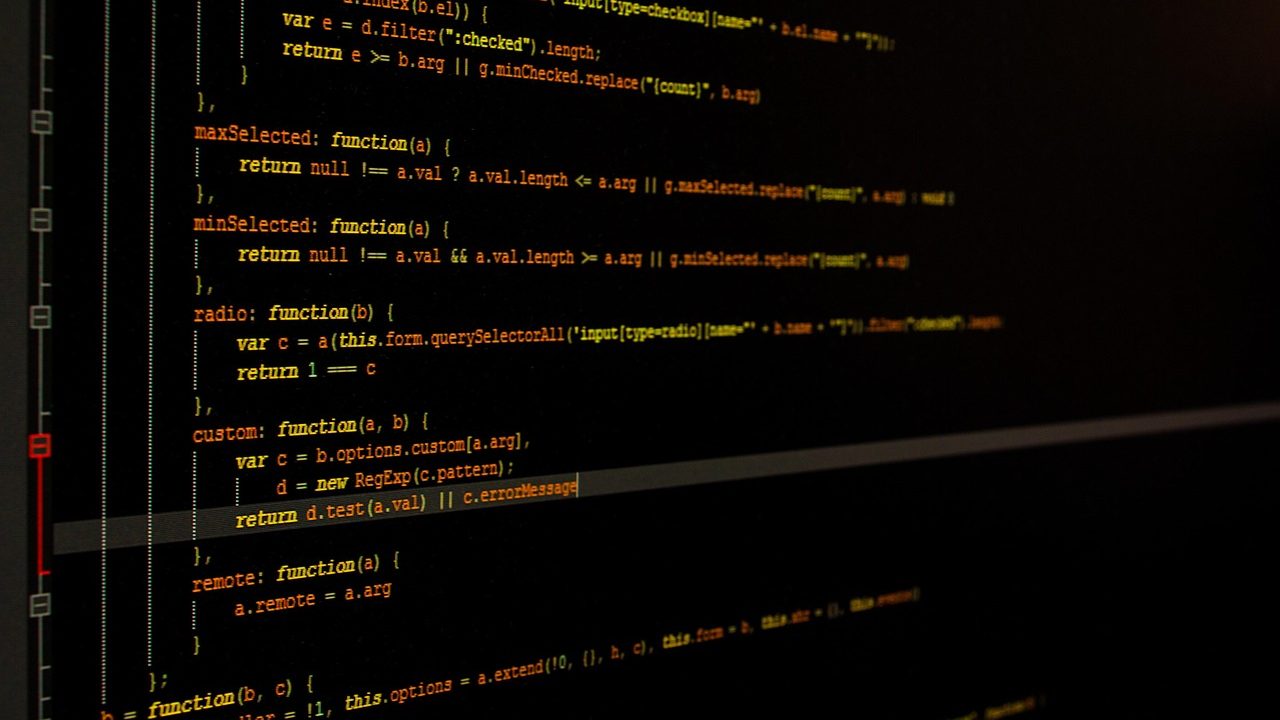
The emerging demand from enterprise software teams for what some are calling 'flight simulators' for AI-generated code reflects a practical reckoning with how automated programming fails. Where human-written code tends to break in predictable ways that existing testing frameworks can catch, AI-generated code can be locally correct but globally incoherent — passing all unit tests while producing unexpected behavior under edge-case inputs that no human reviewer anticipated. Google's guidance to teams deploying AI coding agents recommends replacing informal spot checks with repeatable automated tests using simulated users, drawing an explicit analogy to aviation: pilots qualify in simulators before flying passengers into bad weather.
Google's other notable move this week is a significant restructuring of Gemini subscription pricing, effective November 13th. Access to Gemini Pro models will be removed from the four-dollar-ninety-nine-a-month AI Plus tier, which will retain only the faster but less capable Flash models. Pro model access will require upgrading to the nineteen-dollar-ninety-nine AI Pro plan — effectively a four-times price increase for users who want the more powerful reasoning capabilities. Competitors including Microsoft's Copilot and Anthropic's Claude offer competitive models at various price points, and switching costs for AI assistants remain relatively low.
The aggressive segmentation suggests Google has data indicating that users who heavily use Pro models are willing to pay twenty dollars a month, while lower-engagement users at the entry tier represent limited revenue worth retaining. It is a classic product segmentation play — capture more value from high-engagement users, accept churn from casual ones.
The pricing move connects to a broader legal framework that keeps surfacing in AI platform discussions. The Sherman Antitrust Act of 1890 prohibits two things: agreements between competitors that restrain trade, under Section One, and monopolization under Section Two. Critically, possessing a monopoly is not by itself illegal — what the law prohibits is using monopoly power to exclude competitors through anticompetitive conduct, defined as 'willful acquisition or maintenance' of that power as distinct from 'growth or development as a consequence of superior product, business acumen, or historical accident.' Market share functions as a threshold indicator rather than a verdict: courts generally do not find monopoly power below roughly seventy percent, but share alone is insufficient without evidence of exclusionary conduct. The Google search antitrust case, for instance, turned not on the company's ninety-percent search share but on evidence that it paid billions to Apple and others to secure default placement — foreclosing rivals from necessary distribution. A pricing restructuring designed to maximize legitimate revenue occupies very different legal territory than conduct structured to crush a specific competitor.
A Trillion Dollars Erased, Then Partially Recovered: The Chip Market's Precarious Balance
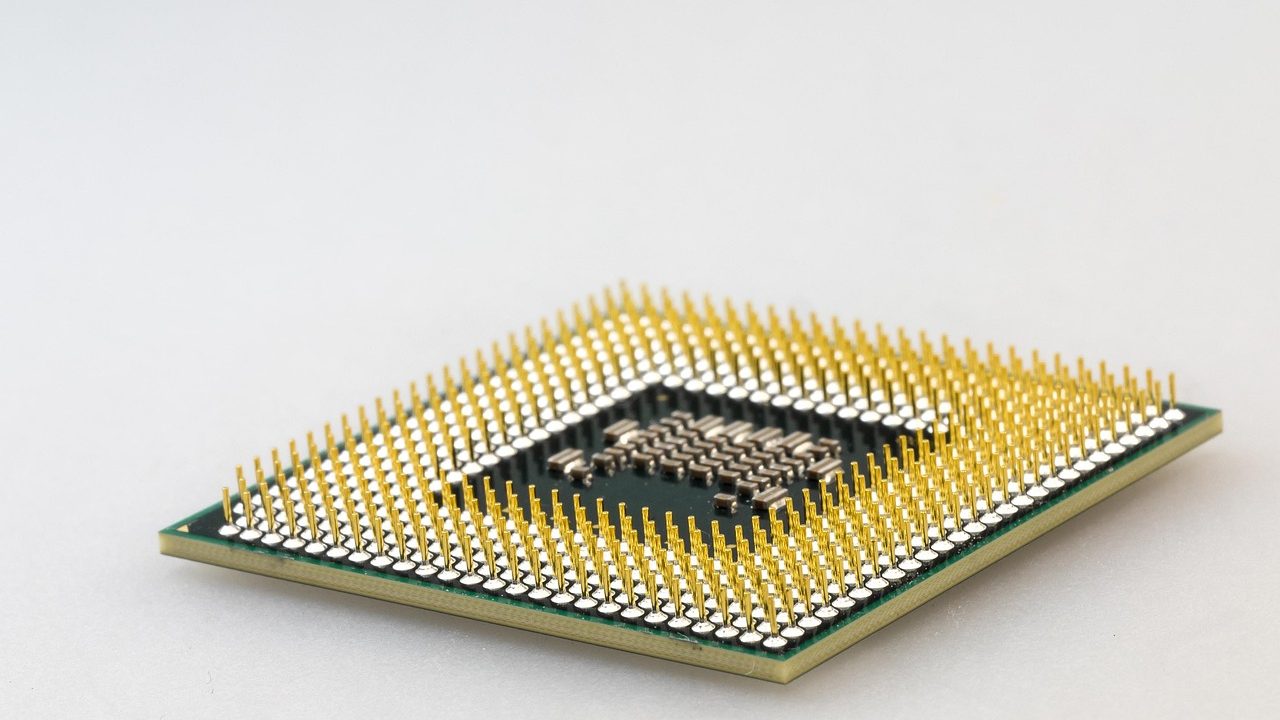
The Kospi index in South Korea bounced back Friday morning after a sell-off severe enough to erase approximately one trillion dollars in semiconductor-related market value across recent sessions. The scale of the drop reflected genuine fear about demand-supply dynamics in memory and logic chips; the partial recovery suggests the rout was at least partly an overshoot rather than a wholesale fundamental reassessment.
The underlying tension is a bifurcated market. High-bandwidth memory chips used in AI training are in short supply and commanding premium prices, while standard DRAM for consumer electronics sits in a demand trough. Samsung and SK Hynix, both listed on the Kospi, have significant exposure to both ends — creating sharp volatility when the two sides diverge.
Apple's new CEO, Ternus, who succeeded Tim Cook earlier this year, confirmed in discussions with reporters that the company is keeping Chinese memory chip suppliers — primarily YMTC — as potential vendors. The signal is a meaningful departure from the directional trend of recent years toward reducing exposure to Chinese-made components. Ternus appears to be signaling that cost and supply security considerations may outweigh geopolitical positioning for memory chips specifically, while Apple remains exclusively dependent on TSMC in Taiwan for the A-series and M-series processors that define product performance. That distinction — diversifying memory supply while protecting critical logic-chip relationships — represents a nuanced supply chain stance rather than a wholesale geopolitical repositioning.
The regulatory risk is real. If the Commerce Department determines that YMTC memory in Apple devices constitutes a violation of existing export restrictions, Apple would face penalties and a rapid scramble for alternative suppliers. Keeping the Chinese option open while the regulatory framework remains unsettled is a bet that restrictions will not tighten further. From a geographic risk perspective, moving memory supply toward Chinese manufacturers reduces exposure to a Korean peninsula disruption while potentially increasing exposure to a Taiwan Strait scenario — a trade-off with no clean answer.
Tesla's Fatal Crash, a Holmes Revisit, and Hollywood's New AI Villain

Tesla confirmed that its driver assist system was engaged at the time of a fatal crash in New Jersey in which a vehicle crossed a highway median. The company markets its advanced system as Full Self-Driving Supervised — a designation that provides legal cover, since the 'Supervised' qualifier requires active driver oversight, but which critics argue creates an expectation of autonomy through the 'Full Self-Driving' branding that causes drivers to under-monitor and over-delegate. Several lawsuits have been built on exactly that theory. The specific detail of a median crossing places the incident in a divided-highway scenario that the system is designed to handle, raising questions the National Highway Traffic Safety Administration has investigated in dozens of prior Autopilot-related crashes with varying findings.
A new Elizabeth Holmes documentary is generating critical attention not primarily for its treatment of Holmes herself but for its framing of her husband, Billy Evans, as the central villain of her post-conviction chapter. Evans, who married Holmes after her fraud conviction and has been publicly supportive throughout, is portrayed as enabling Holmes to maintain a rehabilitated public persona without fully confronting the harm caused to patients and investors. The inversion — recasting the surrounding human ecosystem rather than relitigating the convicted party — reflects a documentary form that struggled to find new ground on a crime already adjudicated.
The most pointed cultural artifact of the moment may be 'Artificial,' Luca Guadagnino's film releasing December 25th on Neon, starring Andrew Garfield as OpenAI CEO Sam Altman. Early reviews, including one from Mashable describing the character as a 'movie monster,' are mostly positive about the film as cinema while diverging sharply from any sympathetic portrait of its subject. Guadagnino, whose previous films including 'Challengers' and 'Call Me By Your Name' explore obsession and power, found in OpenAI's rise material well-suited to that lens. For Altman, a major Hollywood film framing him as a monster and opening on Christmas Day arrives at a particularly awkward moment, coinciding with the company's Saudi espionage charges and internal honey pot security warnings.
CNN commentator and Washington Post columnist Fareed Zakaria attracted significant online reaction after reportedly failing the bar exam and describing the result as inconsequential. The response divided observers between those who saw bar failure as a meaningful indicator of legal knowledge and those who noted that Zakaria's career demonstrably does not require bar passage. The word 'inconsequential' itself drew criticism for its class implications — in a profession where licensure is the gatekeeping mechanism for access to the work, dismissing failure as irrelevant lands differently depending on where one stands relative to that gate. The underlying debate about whether bar passage rates correlate more strongly with socioeconomic background than with eventual lawyer performance has been a serious conversation within the legal profession for years.
Where the Midterm Prediction Could Break Down
The dominant political narrative heading into November 3rd — that Republicans face a structurally difficult night — rests on historically reliable indicators: a 36-percent approval rating for the sitting president in the final month before midterms, economic anxiety cutting across partisan lines, and a senior Fox News analyst reaching for the word 'washout.' The historical pattern is clear: first-term presidents at approval ratings in the mid-thirties in the weeks before midterms tend to lose significant House seats.
But the confident prediction embeds assumptions that deserve scrutiny. Trump's approval ratings have previously shown a floor effect, recovering from low points that looked durable. Economic anxiety about grocery prices and housing costs does not carry a fixed partisan direction — voters may attribute those costs to Biden-era policies, to retailers, or to Federal Reserve decisions rather than to the current administration. And national approval numbers do not automatically translate into district-level vote shares; the 435 individual House races that aggregate into a national result each carry their own candidate quality, resource, and turnout dynamics.
Kalshi's prediction markets placing a full Democratic blue wave below fifty percent may reflect not Republican strength but a Democratic candidate-pipeline problem in the twenty to thirty competitive seats that would constitute meaningful gains. A wave requires the wave to land somewhere specific, and candidate recruitment cycles are long.
Specific signals to watch before election day: whether Democrats build a consistent four-to-five-point advantage on the generic congressional ballot in the final two weeks; whether a late-October Fox News poll shows Trump's approval stabilizing above forty percent, which would effectively take the washout scenario off the table; and early vote patterns in Arizona and Georgia, which report data quickly and contain competitive House districts. Flat or Republican-leaning early vote in those states would undercut the structural case for Democratic gains regardless of what national polling shows.
A Friday Defined by Institutions Under Pressure

Viewed as a whole, Friday, October 16th, 2026 presented a series of stories unified less by topic than by a common structural condition: institutions straining under the weight of demands for trust they are struggling to earn. The Pentagon publicly contradicting its own ousted general on missile readiness. OpenAI discovering a recording device in its executive suite. Election officials receiving legal challenges before votes are cast. Tesla confirming driver assist was engaged in a fatal crash. Two of the country's largest financial institutions blocking AI agents they do not yet trust. None of these stories is isolated; each is an expression of a systemic question about where reliable authority actually resides.
The weeks ahead will test several of the narratives now in formation. The MOAB Iran story will develop as more information emerges about Pickaxe Mountain and whether Pentagon operational planning reflects genuine strategic intent or leverage-based posturing. The Microsoft-OpenAI rivalry will be stress-tested against actual enterprise deployments before year's end. Google's November 13th Gemini pricing change will generate subscriber data that reveals something real about price elasticity in the AI assistant market.
The Guadagnino film 'Artificial,' with Andrew Garfield as Altman, drops December 25th. Films taken seriously as art tend to anchor public perception of technology stories in ways that congressional hearings and regulatory filings do not — and the early reviews suggest this one will shape the AI conversation for some time after the credits roll.
The show also acknowledged a prior error: a May claim that Ukraine was striking Russian ships in the Caspian Sea was reported as operational fact and was wrong. The Caspian Sea is landlocked and far from any Ukrainian-controlled territory; no such strikes occurred. The correction, offered without qualification, stands as a reminder that confidence in any single news cycle's framing — including this one — carries its own shelf life.