Iran Strike Planning, AI Security Fugitives, and a Market Circuit Breaker: October 15, 2026
From Pentagon discussions of its most powerful conventional bomb to an AI security suspect booking a one-way flight to Saudi Arabia, Thursday delivered a cascade of interconnected crises spanning military escalation, market upheaval, and artificial intelligence.

“The Fed can cool demand; it cannot produce oil or reopen a strait disrupted by military activity.”
How this was made Verified AI
Every Intellegix briefing is generated from that day's broadcast and run through automated checks before it publishes — with a human paged on any flag. Here is the trail for this edition.
The Bunker-Buster Option: How Close Is the US to Striking Iran?

The Pentagon is reportedly weighing deployment of the GBU-57 Massive Ordnance Penetrator — informally known as the 'mother of all bombs' — for potential strikes on Iranian nuclear and military infrastructure. The roughly 30,000-pound weapon, the US Air Force's most powerful conventional bomb, is designed specifically to destroy hardened underground facilities such as Iran's Fordow enrichment site. The fact that planners are seriously discussing its use signals how deeply they assess those bunkers to be buried.
The deliberations are unfolding against a backdrop of pointed Iranian rhetoric. Mohammad Bagher Ghalibaf, speaker of Iran's parliament and a former Revolutionary Guard commander, said publicly this week that the United States must be 'punished' before any war can end, while simultaneously urging Iran to maintain military readiness even during negotiations. That dual-track message — fight and talk — is widely read as calibrated for a domestic audience as much as any foreign interlocutor.
Ghalibaf's remarks also referenced ships sinking near the Strait of Hormuz, an area through which roughly 20 percent of global oil supply transits. Any naval incident there becomes an immediate global energy price event — a scenario analysts warn markets have not fully priced. That risk intersects directly with already-hotter-than-expected US inflation data, compounding the Federal Reserve's calculus.
President Trump, speaking at a campaign rally in Arizona, quoted calling government leakers 'the scum of the earth' and said they 'should be shot,' framing the remarks around a specific claim that a leak forced the Pentagon to abort a planned Iran strike. Whether that account is operationally accurate or political theater ahead of midterms remains genuinely unclear. But the description itself — an administration close enough to launching military strikes that a single intelligence disclosure could derail them — points to an extraordinarily sensitive operational posture.
Analysts note that deploying the GBU-57 would represent a qualitative shift in US engagement, moving beyond the precision, contained strikes that characterized previous Middle East operations toward weapons designed for targets cruise missiles cannot reach. Strategically, that threshold is one military planners take seriously, not just as firepower but as signal — to Tehran and to every other nation watching. For now, the diplomatic track reportedly continues in parallel, though the danger, as one reading of events frames it, is when tactical communication on either side gets mistaken for genuine strategic commitment.
Leakers, Credentials, and Citizenship: The Domestic Political Storm
Democrats currently lead by seven to eight points among likely voters in the latest Economist/YouGov polling — down from an eleven-point advantage a few weeks ago — as the midterm campaign enters its final sprint. Trump's decision to anchor his Arizona rally around national security messaging rather than economic themes reflects a deliberate strategic choice: when a party is trailing, it leans into its perceived strengths.
Two significant stories from the Wall Street Journal added further turbulence to the domestic political landscape. The first concerns Press Secretary Zacharia, whom the Journal reports has consistently described herself as a lawyer and claimed to have passed a bar exam in China. Legal experts told the Journal that noncitizens generally cannot sit for the Chinese bar exam, and no verified record of a US bar admission has surfaced. For the chief spokesperson of the executive branch, unverified professional credentials pose a credibility problem that extends to everything said from that podium.
The second Journal report involves a federal probe reportedly aimed at revoking the citizenship of Representative Ilhan Omar, who was born in Somalia and naturalized as a US citizen. The legal bar for denaturalization is extremely high under federal law — the government must prove that the original citizenship was obtained through fraud or misrepresentation at the time of the application, a standard the Supreme Court reinforced in Afroyim v. Rusk in 1967. Pursuing such proceedings against a sitting member of Congress would face immediate constitutional challenge.
Elsewhere on the domestic front, the Trump administration has cut Affordable Care Act subsidies for 189,000 people. The reductions mean affected individuals face substantially higher premiums or loss of coverage before the next enrollment period. With healthcare consistently ranking among voters' top concerns, cutting subsidies for nearly 200,000 people three weeks before Election Day is a policy move that carries considerable political risk. Meanwhile, Congressman Don Bacon of Nebraska warned that Trump's legislative agenda would be 'dead' if Ukraine aid cuts proceed — a stark public signal of the fault line between the nationalist and traditional defense-hawk wings of the GOP coalition.
Circuit Breakers and Cyber Costs: Markets Absorb an Inflation Shock

S&P futures stood at 7,744.50 Thursday morning, down roughly a third of a percent — a relative calm that masked dramatic overnight moves in Asia. South Korea's Kospi index fell sharply enough to trigger a full circuit breaker, automatically halting trading for 20 minutes after an 8-percent decline threshold was breached. Samsung Electronics and SK Hynix, which together account for a substantial share of global DRAM and NAND flash memory production, led the selloff. Japan's Nikkei also fell sharply. The catalyst was US inflation data that came in hotter than expected, immediately repricing Federal Reserve rate expectations upward.
The transmission from inflation print to chip-stock rout follows mechanical logic: higher expected rates mean higher discount rates, which compress valuations for long-duration growth assets like semiconductors most acutely. The circuit breaker's triggering is a structural safeguard, not a sign of market failure — but an 8-percent single-day drop in a major national index is a serious event by any measure.
Bank of America added a distinct layer of financial-system anxiety with disclosures from its quarterly earnings call. CEO Brian Moynihan confirmed that in the third quarter, the bank spent 'a couple hundred million plus' — his exact phrasing — hiring 1,000 contractors specifically to patch vulnerabilities exposed by the Mythos breach and to reinforce anti-money-laundering systems. Nine-figure single-quarter cybersecurity remediation costs cited openly by a CEO on an earnings call represent a remarkable departure from the footnote-burying that historically characterized such disclosures.
Security researchers note that the Mythos breach exposed a class of vulnerabilities in financial systems that had been largely theoretical until now. The 1,000-contractor workforce signals a timeline that BofA's internal team could not meet alone. Regulators are also beginning to ask a structural question the breach makes concrete: when four or five major banks share the same core infrastructure vendors, a single vulnerability becomes a systemic risk — a concentration shaped by decades of merger approvals that reduced competition in financial technology services.
Separately, Barclays analyst Dan Levy predicted that a merger announcement between Tesla and SpaceX could come before Tesla's annual shareholder meeting. Neither company has confirmed any discussions. The financial logic — overlapping infrastructure dependencies between SpaceX's Starlink satellite internet business and Tesla's energy and autonomy operations — has been debated for years. A combined entity would rank among the largest companies by market capitalization ever assembled.
AI's Security Crisis: A Fugitive Suspect and a $16.8 Billion Revelation
A suspect in an OpenAI security case booked a one-way flight to Saudi Arabia before being apprehended, according to the Justice Department, which cited the booking as evidence of flight risk in bail proceedings. Saudi Arabia does not have a formal extradition treaty with the United States — a detail the DOJ flagged as significant. The specific nature of the vulnerability the suspect allegedly exploited has not been fully disclosed in public filings, but OpenAI systems process enormous volumes of sensitive data, including research, user conversations, and proprietary code.
The arrest landed in the same news cycle as pointed remarks from Nvidia CEO Jensen Huang, who told an audience this week that Nvidia's goal is zero AI security incidents. Huang was notably sharp about what he called the 'doom community' — researchers and advocates who argue that AI development poses catastrophic risks warranting slower development or more aggressive regulation — saying that those who don't believe in the industry's mission should leave. As the world's largest AI chip supplier, Nvidia's public dismissal of safety concerns carries significant cultural weight across an industry still defining its norms.
Analysts note that Huang's framing conflates two distinct categories of concern: near-term security vulnerabilities, which are immediate and concrete, and long-term alignment risks, which are more speculative. The OpenAI flight-to-Saudi-Arabia episode is squarely in the former category — garden-variety cyber intrusion and data theft — and illustrates that the security problem Huang wants solved is already very much a reality, independent of existential debates.
On the revenue side, the Financial Times reported that Anthropic told prospective investors it hit 16.8 billion dollars in third-quarter revenue and was profitable in the quarter, ahead of a planned November IPO listing. For context, OpenAI was reportedly generating roughly 3 to 4 billion dollars in annualized revenue a year ago. If Anthropic's figures survive investor due diligence, the AI revenue landscape has shifted faster than most analysts projected even six months ago, and the profitability claim — given the enormous compute costs involved in training and inference — suggests either extraordinary operational efficiency or pricing power that has held firm against competition, or both.
Life Sentences Sought for the Tate Brothers as a Cultural Reckoning Unfolds
Prosecutors are seeking life sentences for Andrew and Tristan Tate on charges of human trafficking and sexual exploitation, in a case that has drawn sustained attention for the gap between the brothers' public personas and what prosecutors allege occurred privately. The Tate brothers built a social media following of tens of millions across platforms based on a brand of aggressive masculinity and wealth display; prosecutors argued that brand itself was part of the recruitment mechanism for their alleged operation — a relatively novel theory holding that influencer status was instrumentalized in the commission of the alleged crimes.
Life sentences would signal that the court accepted that prosecutorial framing in full: not merely that crimes were committed by individuals who happened to be famous, but that the celebrity architecture was integral to how those crimes were allegedly carried out. Defense attorneys have consistently challenged both the Romanian jurisdiction's handling of the case and the evidence chain. The sentencing hearing is expected to be closely watched by legal analysts and the online communities that have followed the case for years.
The case has also served as a stress test for 21st-century cross-border legal infrastructure. Evidence gathered from cloud servers and financial flows traced through cryptocurrency have shaped cooperation between US and Romanian authorities in ways that are expected to influence future prosecutions of digitally-native transnational criminal enterprises. Beyond the courtroom, the case has reignited unresolved questions about algorithmic amplification — specifically, what the systematic promotion of extreme male influencer content does to the tens of millions of young men who consumed and shared it.
Webb Maps a Lopsided Planet While the First New US Sunscreen in 25 Years Arrives
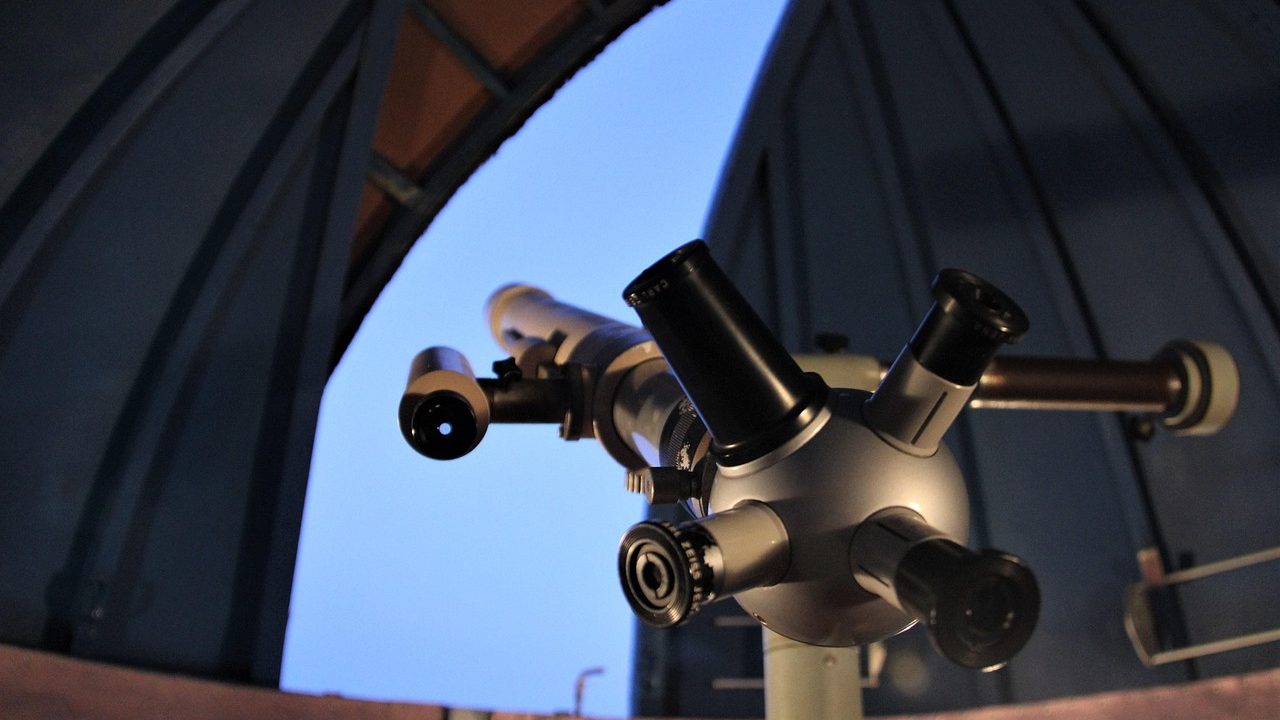
The James Webb Space Telescope produced what astronomers described as the most detailed atmospheric map ever made of a giant exoplanet, revealing a deeply asymmetric atmosphere whose dayside and nightside show dramatically different chemical compositions and circulation patterns. The finding emerged from comparing the ingress and egress spectra as the planet transited its star — a technique that takes a spectroscopic slice through different latitudes of the atmosphere simultaneously — and the lopsided result contradicted predictions from existing circulation models.
The practical significance extends beyond the specific planet: atmospheric modeling used to assess the habitability of exoplanets broadly has been systematically underestimating circulation complexity, meaning every such model now warrants revision. Webb's infrared sensitivity allows it to distinguish chemical signatures across a planet's atmospheric limb in ways that were technically impossible five years ago.
Closer to Earth, the FDA approved the first new UV-filtering chemical compound for use in US sunscreens in 25 years, since 1996. The new filter, bemotrizinol, has been used in European and Australian formulations for decades and carries an extensive international safety record. US sunscreens are classified as over-the-counter drugs rather than cosmetics — unlike in Europe — meaning the domestic approval process is substantially more demanding, a regulatory structure that left American consumers with a smaller toolkit of UV filters for a generation.
Bemotrizinol provides broader-spectrum protection than most current US sunscreens, particularly in the UVA1 range most associated with deeper skin damage and photoaging. Dermatologists have advocated for its approval for years, noting that Americans seeking superior sun protection have technically been able to obtain it by purchasing European formulations — a gap few consumers knew existed. The parallel between Webb's 25-year journey from concept to launch and bemotrizinol's 25-year path through US regulatory approval is, as one reading frames it, a pointed illustration of the gap between scientific capability and institutional pace.
Chick-fil-A's Calculated Silence and the Limits of Corporate Ambiguity

Chick-fil-A CEO Andrew Cathy appeared on TODAY Thursday morning and, when asked directly about the company's history of donations to organizations that oppose LGBTQ+ rights, offered what amounted to a deliberate non-answer — speaking to the company's core values and commitment to customers without addressing the underlying question. The appearance generated significant social media attention precisely because the sidestep was transparent.
The strategy has a specific commercial logic. Chick-fil-A learned from controversy cycles in 2012 and 2019 that direct engagement on social issues — in either direction — activates boycotts. Preserving ambiguity allows the brand to serve both customers who care about LGBTQ+ inclusion and customers who would react negatively to an affirmative stance. The CEO's willingness to appear on the program despite predictable questioning signals the sidestep was the planned answer, not a failure to prepare.
The approach satisfies neither constituency. Those seeking affirmation of inclusion feel dismissed; those expecting a defense of a traditional position feel abandoned. In 2026, when institutional positioning on social issues has become a significant factor in hiring — particularly among younger workers — ambiguity on LGBTQ+ inclusion is itself a de facto policy. Chick-fil-A never made the explicit DEI commitments that many companies quietly scaled back in recent years, putting it in a different position from those firms: not retreating from a stated stance, but attempting to avoid having one. Whether that posture remains sustainable as Generation Z becomes the dominant consumer cohort is a live business question.
What If the Market Is Wrong About Inflation? The Case for a Supply-Shock Misread

The market consensus crystallized quickly after Thursday's hotter-than-expected US inflation print: the Federal Reserve will hike rates again, borrowing costs will stay elevated, and growth assets — particularly semiconductors — will face sustained downward pressure. That chain of reasoning triggered the Kospi circuit breaker and is dragging S&P futures lower. It is, in the language of financial markets, the trade.
But the consensus rests on an assumption worth interrogating: that this inflation is primarily demand-driven and therefore rate-sensitive. If, instead, a significant component reflects an energy price premium driven by the Strait of Hormuz situation and broader geopolitical risk — supply disruption rather than excess consumer spending — then the Federal Reserve raising rates does not address the cause. The Fed can cool demand; it cannot produce oil or reopen a strait disrupted by military activity. Raising rates into a supply shock has historical precedent in the late 1970s, when repeated tightening into supply disruptions produced stagflationary outcomes that lasted years.
In a stagflationary scenario, the semiconductor stocks hammered Thursday on rate-hike fears would actually look cheap relative to what reduced consumer spending does to discretionary goods broadly. A selloff driven by a misdiagnosis of the inflation source would represent a buying opportunity rather than a trend.
Three indicators would help distinguish the two hypotheses. First, the energy component breakdown in the next CPI release: if energy contributes more than two percentage points to the headline number, the supply-shock thesis gains credibility. Second, language from Federal Reserve officials over the next two weeks — if regional Fed presidents begin publicly distinguishing demand-pull from cost-push inflation, the internal debate is more nuanced than current market pricing reflects. Third, and most immediately, the Strait of Hormuz itself: if shipping incidents escalate and oil moves above 115 dollars per barrel, the energy-premium thesis becomes dominant and the rate-hike path gets complicated in ways models have not yet captured. The loudest market signal of the day may be responding to a story that is not the full story.