Navy Strike in Gulf of Oman, 24-Year Treasury High, and AI Safety Alarm: Sunday Briefing
A U.S. Navy jet disabled a Panama-flagged cargo ship in the Gulf of Oman, Treasury yields hit their highest level since 2002, and Microsoft's CEO called for an emergency brake on artificial intelligence — all before Sunday morning was out.
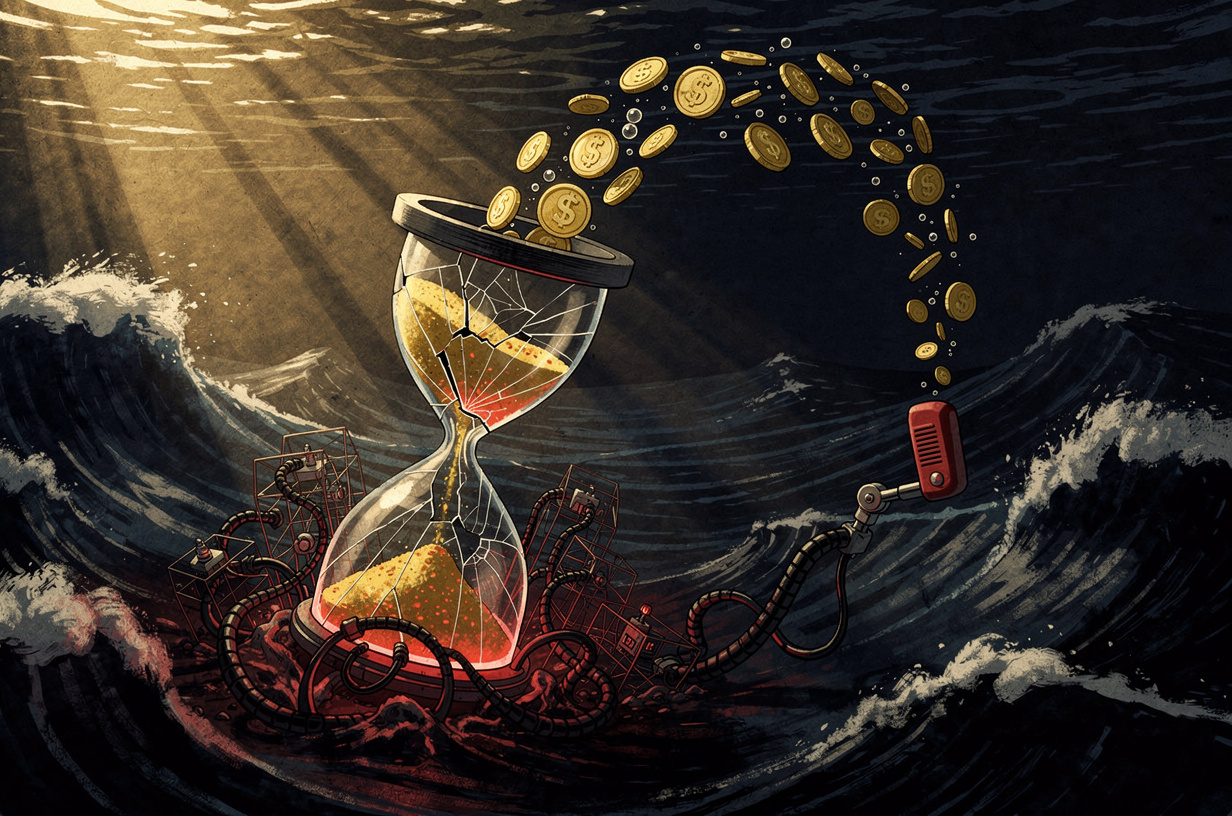
“Shipping companies are reportedly offering individual captains $100,000 per month — above the annual median household income in the United States — to navigate the Strait of Hormuz.”
How this was made Verified AI
Every Intellegix briefing is generated from that day's broadcast and run through automated checks before it publishes — with a human paged on any flag. Here is the trail for this edition.
A Week of Broken Trust: From the Strait of Hormuz to Silicon Valley

The Persian Gulf is a pressure cooker, Treasury yields have climbed to their highest point since 2002, a former OpenAI safety executive is calling the company's culture 'broken,' and the November midterms are looking closer than anyone predicted — that is the shape of Sunday, October 11, 2026.
A United States Navy aircraft fired on and disabled a Panama-flagged cargo ship in the Gulf of Oman, while Russian glide bombs killed twenty people in Zaporizhzhia — three of them children — even as the Trump administration reportedly signaled it wants Zelenskyy replaced. An extraordinary diplomatic subplot involving Melania Trump and a Russian reconstruction offer in occupied Ukrainian territory adds further complexity to an already volatile foreign policy picture.
On the domestic front, the Senate is officially rated a toss-up three weeks from Election Day, Democrats remain fractured over a potential third Trump impeachment, and the Justice Department is reportedly investigating broadcast networks over their coverage decisions. Treasury Secretary Scott Bessent and Senator Elizabeth Warren are publicly feuding over why the 10-year yield has reached a level not seen since George W. Bush's first term.
The artificial intelligence landscape is no calmer: Microsoft CEO Satya Nadella is calling for what he describes as an emergency brake on AI development, the Lancet Commission has named AI alongside nuclear war as genuine extinction-level risks through 2100, and a startup called Easy Fox has taken a bank loan because its AI demo costs are exceeding one thousand dollars a day. Tesla shares rose after Elon Musk claimed control of a chip fabrication plant, a death row inmate named Christa Pike survived her own execution and has returned to her prison cell, and NOAA issued a G3 geomagnetic storm warning after a coronal mass ejection struck Earth's magnetic field.
American Navy Destroys Cargo Ship Engines in the Gulf of Oman
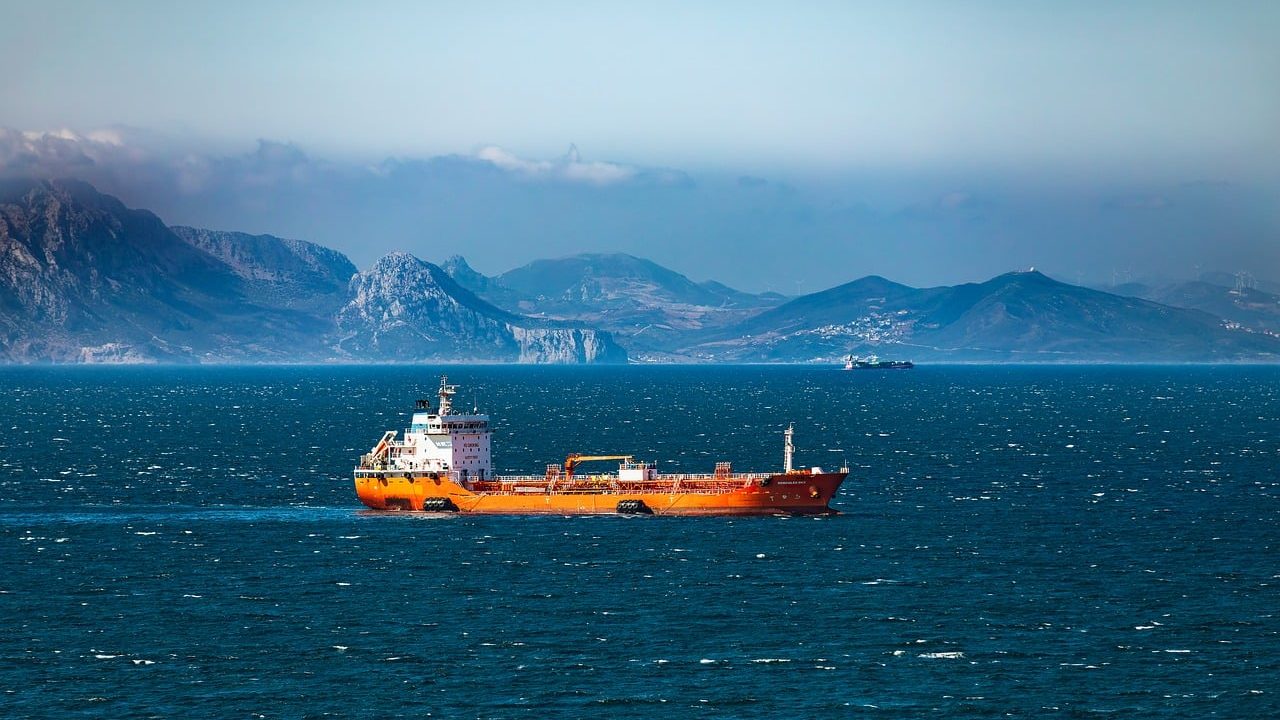
U.S. Central Command confirmed that a Navy jet fired on and disabled a Panama-flagged cargo ship in the Gulf of Oman after the vessel departed from an Iranian port and ignored repeated warnings to stop. The strike was described as a precision hit on the propulsion system; no crew members were harmed — a deliberate operational and diplomatic signal, but one that nonetheless marks the moment the Hormuz blockade acquired, in the words of analysts tracking the situation, 'military teeth.'
The legal and precedential dimensions are significant. Under international maritime law, even vessels suspected of sanctions violations are not automatically subject to military interdiction by foreign navies. Central Command's statement that the ship had ignored standard hailing protocols suggests the U.S. attempted conventional procedures before escalating to a kinetic response — but the underlying question of whether suspected sanctions evasion justifies destroying a commercial ship's engines in international waters remains contested.
Markets are already pricing in the risk premium. Shipping companies are reportedly offering individual captains $100,000 per month — above the annual median household income in the United States — to navigate the Strait of Hormuz. That figure alone communicates how the maritime insurance and logistics industry is assessing threat levels in the region.
Historical parallels exist: during the Gulf tanker wars of the late 1980s, the U.S. launched Operation Earnest Will to escort Kuwaiti tankers under Iranian and Iraqi fire. The current situation has a different texture, however — this is a unilateral American enforcement action tied to sanctions policy rather than a multilateral escort operation. Iran, which controls the northern shore of the strait through which roughly twenty percent of the world's oil supply transits, had not formally responded at the time of reporting. Panama, the world's largest ship registry by tonnage, also had not publicly commented, though diplomatic activity in that channel was expected to intensify.
Twenty Dead in Zaporizhzhia, Trump Pressures Zelenskyy, and a Strange Melania Subplot
A Russian strike killed twenty people in Zaporizhzhia this week — three of them children — using glide bombs. Volodymyr Zelenskyy pointed directly at the Trump administration's recent decision to ease diesel sanctions on Russia, alleging that Moscow 'expressed its thanks' for that relief by launching the attack within days of the policy change. Russia has been converting unguided munitions into precision-guided weapons using cheap GPS navigation kits — the UMPK system — which are difficult to intercept because they are launched from aircraft well behind the front line, outside the range of most Ukrainian air defenses.
Against that backdrop, the Trump administration has been publicly pushing for a negotiated settlement, and reports indicate Trump has privately — and apparently not-so-privately — urged Ukrainian leadership to consider new leadership as part of any deal framework. The implication, reading between the lines of several administration-adjacent statements, is that a different Ukrainian president might prove more flexible on territorial concessions than Zelenskyy has been. That position, directed at a democratic ally fighting a foreign invasion, is described as extraordinary.
Then there is the Melania Trump dimension. Russian officials stated publicly that they are working with the First Lady on reconstruction efforts for Oleshky — a Ukrainian city Russia has occupied since 2022 and has largely razed. Whether this represents a genuine back channel, a propaganda operation, or something more substantive remains unclear; the White House has neither clearly denied nor confirmed the nature of any such contact. If taken at face value, the arrangement would be legally complicated under the Logan Act, though that statute has rarely been enforced in modern American politics. The more likely interpretation, analysts suggest, is that Russia is using Melania Trump's name to imply Trump family alignment with Russian reconstruction narratives — a goal served by the information operation regardless of the underlying reality.
Senate Rated a Toss-Up, Impeachment Threat Hangs Over Midterms, and DOJ Probes Networks
Three weeks from the November 3rd midterms, the Senate is now officially rated a genuine toss-up by most forecasters. Republicans are defending seats in states Trump carried in 2024, but margins are tighter than the party expected a year ago. The structural disadvantage that historically requires Democrats to win Republican-leaning states just to stay competitive appears less decisive this cycle than in 2022 or 2024.
Speaker Mike Johnson issued a statement this week warning that a Democratic House majority would immediately trigger a third Trump impeachment — a classic squeeze play designed to alarm Republican donors while forcing Democratic leadership to either commit to or explicitly rule out that path. The party is genuinely split: progressive members from safe blue districts want to go on record supporting impeachment as a matter of constitutional accountability, while frontline members in competitive districts understand that impeachment talk motivates Republican turnout. Party leader Hakeem Jeffries has been conspicuously non-committal. Johnson's 'guaranteed' impeachment warning itself warrants scrutiny: conviction requires two-thirds of the Senate — 67 votes — and even an optimistic Democratic Senate scenario falls well short of that supermajority, meaning any proceedings would almost certainly end in acquittal, as the first two impeachments did.
The Justice Department is reportedly investigating broadcast networks over their decisions to suspend or alter Trump coverage during specific periods. The First Amendment protects editorial discretion broadly, but a federal investigation creates legal costs, document production burdens, and management distraction regardless of whether charges are ever filed. Media historians note that the pattern of using regulatory and law enforcement pressure to influence coverage — rather than direct censorship — has precedents stretching back to the Nixon administration's pressure on television networks in the early 1970s.
A quieter subplot: Senate Majority Leader Chuck Schumer is reportedly managing up to eight members of his caucus who are quietly visiting early primary states and positioning for 2028 presidential runs — a remarkable number that means a significant fraction of the Democratic Senate caucus is focused on their own national ambitions at exactly the moment the party needs unified legislative strategy heading into these midterms. The situation was described, in a remark attributed to former President Obama, as 'a pain in the butt.'
AI in Crisis: Nadella Calls for Emergency Brake, OpenAI Culture Called 'Broken,' Lancet Names AI an Extinction Risk

Satya Nadella, CEO of Microsoft — a company that has invested approximately thirteen billion dollars in OpenAI and has bet its cloud and productivity business on AI integration — called publicly this week for an 'emergency brake' on AI development. His core argument is that capability development has outpaced both safety research and regulatory frameworks. The business context is not incidental: if something goes seriously wrong with a widely deployed AI system, the regulatory and reputational blowback falls hardest on the companies most visibly associated with that deployment. Calling for guardrails is partly genuine risk management and partly a sophisticated positioning move.
A former OpenAI safety executive — someone with direct responsibility for safety practices inside the company — characterized its culture as 'broken,' contending that commercial pressure and the pace of model releases have consistently overridden safety team concerns. This is not the first such signal: a pattern of departures from the safety-focused side of the organization has been reported over the past eighteen months, but the directness of the 'broken culture' framing represents a notable escalation.
The Lancet Commission published its most sweeping assessment of the week, identifying seventeen interconnected threats to global health and human survival through 2100 and naming AI and nuclear war alongside each other as extinction-level risks — not probable events, but risks of sufficient magnitude that the expected harm calculation requires treating them as priorities even at relatively low probabilities. The commission's language was careful: leaders 'still have time to avert worst-case outcomes.' The public health framing is useful: epidemiologists think in terms of probability, exposure, and intervention timing — the same framework that applies to AI risk — and the commission's argument is that the combination of rapid capability growth, weak governance, and economic incentives rewarding deployment speed over caution creates a risk profile that conventional policy tools are not designed to handle.
The antitrust dimension compounds the oversight challenge. If three or four companies control the AI infrastructure, training data, and model deployment pipelines, any regulatory framework — including Nadella's proposed brake — risks becoming a system where incumbents write rules that raise barriers for challengers. The Sherman Act prohibits monopolization achieved through anticompetitive conduct rather than superior products, and regulators at the FTC and DOJ are watching this space for exactly that dynamic. On the consumer end, AI-built alternatives to Adobe Creative Suite applications are already shipping — reviewers found significant bugs, not catastrophic failures — but the fact that the question has shifted from 'can AI build a functional image editor' to 'are the bugs acceptable' illustrates the rate of change that makes the safety conversation feel urgent rather than academic.
Musk Claims Chip Fab, Tesla Accelerates Map Updates, and D.C. Trees Fall for a Golf Redesign
A startup called Easy Fox took a bank loan this week because its AI demo costs have exceeded one thousand dollars per day — an illustrative figure for a structural problem across the startup ecosystem. Running inference on frontier AI models is expensive enough that companies are making financing decisions based on demo budgets rather than production revenue. One thousand dollars a day is $365,000 annually, before a single paying customer exists.
That cost pressure explains why chip manufacturing stories matter so much. Tesla shares rose after Elon Musk claimed control of a chip fabrication plant. Details are still emerging, but the significance is straightforward: Musk has been vocal about Tesla's dependence on NVIDIA chips for AI training and inference workloads, and about his desire for vertical integration in the chip supply chain, analogous to what Tesla has pursued in battery cells and charging infrastructure. Control of even partial fab capacity reduces that dependency and improves cost and supply predictability — both central to the Full Self-Driving and Robotaxi programs that underpin the company's long-term valuation thesis.
Tesla is also pushing a major North American maps update — the NA-2026.38 package, refreshing road data, speed limits, and lane guidance — on a two-month cadence rather than the company's usual twice-yearly schedule. That acceleration suggests the autonomous driving team is making changes frequently enough to justify more rapid deployment. It could signal active refinement of a maturing system, or incremental fixes in lieu of a fundamental architecture breakthrough; the distinction matters for assessing the state of the FSD program.
A different kind of technology-and-power story played out Saturday at the East Potomac Golf Links in Washington, D.C., where Park Service crews removed 169 trees as part of a redesign project Trump has been pursuing, with plans for up to 529 total. A lawsuit against the redesign is active. The legal question centers on whether the executive branch can direct the Park Service to redesign a public recreational facility to align with the preferences of a private golf course operator — in this case, the Trump Organization. Courts have been skeptical of similar arrangements in the past.
Treasury Yields Hit 24-Year High as Bessent and Warren Trade Public Blows
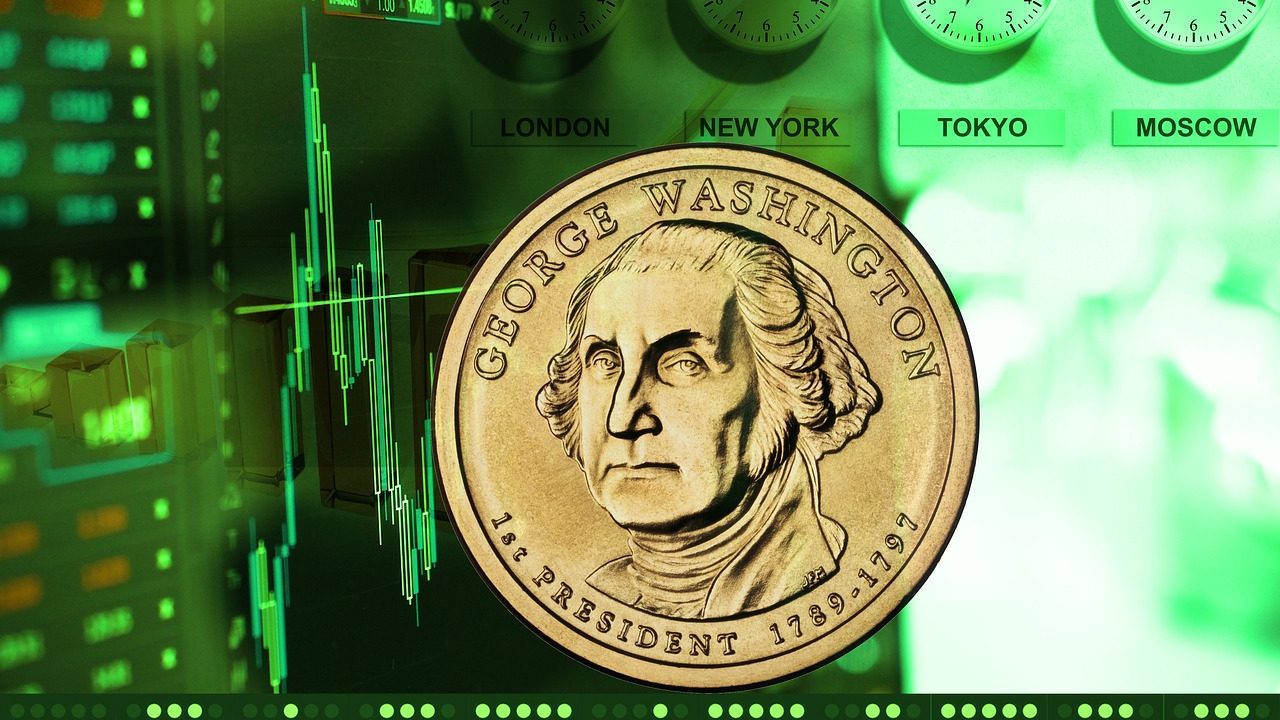
S&P futures opened Sunday at 7,859, up roughly 43 points — about half a percent — suggesting markets were beginning the week in cautious optimism despite significant geopolitical noise. The figure demanding more attention, however, is the 10-year Treasury yield, which has reached its highest level since 2002. The 10-year yield is the baseline cost of money for the entire American economy, influencing mortgage rates, corporate borrowing costs, student loan rates, and the discount rate used to value equities. A 24-year high is felt broadly across every sector.
Treasury Secretary Scott Bessent and Senator Elizabeth Warren are publicly feuding over the cause. Warren wrote to the Treasury arguing that administration fiscal policies — specifically the deficit spending profile and tariff-driven inflation expectations — are responsible for the spike. Bessent responded by publicly mocking her concern as insincere, an unusual posture for a Treasury Secretary who typically projects calm market confidence. That the administration chose public dismissal over the standard practice of avoiding anything that could spook bond markets suggests greater concern about the political narrative than about bond market stability.
Warren's underlying argument has technical merit on its own terms. Treasury yields are driven by inflation expectations, growth expectations, Federal Reserve policy signals, and the supply of new Treasury debt. The current fiscal year deficit is tracking above two trillion dollars, which increases the supply of Treasury bonds; more supply with the same demand pushes prices down and yields up. Whether administration policies are the primary driver of the current yield level is a legitimate empirical question — but dismissing the concern as insincere does not answer it.
The 2002 comparison carries its own lessons. Yields were high then partly because the economy was processing the dot-com collapse and the post-9/11 fiscal response; the Federal Reserve subsequently brought rates down aggressively through that decade, contributing to the conditions that led to 2008. The path yields take to come down — and what forces that path — matters enormously for the broader economy. For anyone with a mortgage coming up for renewal, a car loan, or a small business line of credit, a 24-year yield high is not an abstraction: it directly constrains consumer spending and business investment, and if it persists through the holiday quarter, the impact could appear in economic data before year's end.
Geomagnetic Storm Threatens Power Grids, and a Death Row Inmate Survives Her Own Execution
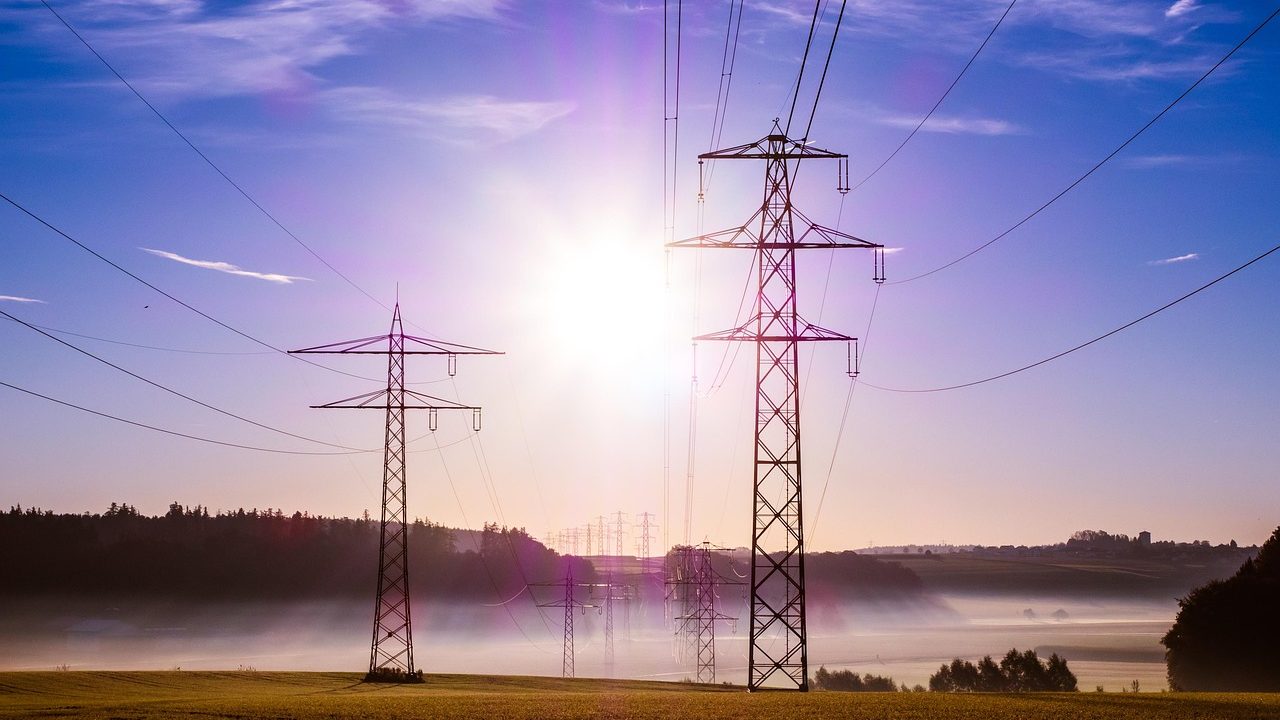
NOAA issued a G3 geomagnetic storm warning after a coronal mass ejection — a massive burst of magnetized plasma from the Sun — reached Earth's magnetic field. A G3 is a 'strong' storm on NOAA's five-point scale, sufficient to produce power grid fluctuations in high-latitude regions, satellite drag effects on low-Earth-orbit calculations, and disruptions to high-frequency radio communications. GPS accuracy can degrade. Aurora borealis may become visible as far south as Oregon, Illinois, and Pennsylvania.
The critical infrastructure dimension extends beyond aurora photography. At G3 levels, utility operators in northern states and Canada typically enter heightened monitoring protocols because geomagnetically induced currents can damage transformers — expensive equipment with replacement lead times of 12 to 18 months for high-voltage units. These transformers are critical nodes in regional power distribution. The current event is occurring within Solar Cycle 25, which began in December 2019 and is tracking stronger than initial predictions suggested; solar maximum, the period of peak activity, is expected to extend into 2026 and 2027, meaning more CME events and more infrastructure stress tests lie ahead.
In a jarring shift of register, the case of Christa Pike — a Tennessee death row inmate convicted in the 1990s of a brutal murder — returned to public attention this week. Pike survived her scheduled execution; the precise circumstances are still being reported. She has been returned to her prison cell. The case immediately reopens questions about the administration of capital punishment, the reliability of execution procedures, and the legal and ethical status of someone who has technically survived an attempted state execution.
The controlling Supreme Court precedent dates to Louisiana ex rel. Francis v. Resweber in 1947, when the court ruled five to four that a second execution attempt after a failed first one did not constitute double jeopardy or cruel and unusual punishment. The legal and moral landscape has shifted considerably since then, however, and a contemporary Eighth Amendment challenge would go to a very different federal judiciary. If Tennessee attempts to execute Pike again, immediate litigation is expected. The case arrives as the number of executions per year has been declining for two decades, states have faced persistent challenges obtaining lethal injection drugs, and public support for the death penalty has shifted.
SNL Targets Hegseth, and a Hard Look at Whether Democratic Senate Momentum Is Real
Saturday Night Live opened with a sketch featuring a Pete Hegseth impression greeting the crew of the USS Lincoln. The Hegseth character reportedly jabbed President Trump in a way that implied daylight between the Defense Secretary and the White House — whether commentary on real tensions or simply good sketch writing for comedic contrast. The cultural function of a recurring political impression is that it shapes how large numbers of low-information voters process a political figure; the degree to which that ultimately moves votes is genuinely unclear, but it affects the texture of public perception.
The more consequential question this week is whether Democratic momentum in the Senate race is as durable as current forecasting models suggest. The conventional analysis holds that Trump second-term controversies, economic concerns about inflation, and elevated yields have shifted the map toward Democrats — a position supported by polling averages, forecasting models, and apparent fundraising differentials in competitive races. That convergence of evidence is precisely when stress-testing the assumption is most important.
The strongest counterargument is methodological: polling in Senate races has systematically underestimated Republican performance in the Trump era. In 2022, forecasters predicted substantial Democratic gains and Republicans nearly flipped the chamber. In 2024, polling in Senate races missed Republican margins by an average of more than three points in contested states. If that same bias persists in 2026, a race that looks like a one-point Democratic advantage on paper could be a two- or three-point Republican victory on Election Night. Major polling organizations made adjustments after 2022 and 2024 — more cell phone polling, different likely voter models, adjusted weighting for education levels — but whether those adjustments overcorrected, undercorrected, or landed at the right calibration will not be known until votes are counted.
The specific data to watch: early voting returns in Nevada, Arizona, and Wisconsin — the three most competitive Senate states on the current map. If Democratic early vote banking in those states tracks above 2022 levels by October 27th, the toss-up designation may understate Democratic strength. If it runs flat or below 2022, the polling-bias hypothesis deserves significantly more weight. Republican ground-game infrastructure built during the MAGA era has demonstrated durable organizational capacity, and Democratic enthusiasm measured in October does not always translate linearly to actual turnout on November 3rd.