From Iranian Drones to Nuclear Clocks: A World on Edge Races Forward
Iranian drones, a Pentagon strike directive, and a Gallup poll showing collapsing faith in American elections set a tense backdrop on Thursday, October 8, 2026, even as scientific breakthroughs and an AI industry in overdrive signaled a world accelerating in parallel.

“Electoral results, when stripped of their shared legitimacy, cease to function as a feedback mechanism.”
How this was made Verified AI
Every Intellegix briefing is generated from that day's broadcast and run through automated checks before it publishes — with a human paged on any flag. Here is the trail for this edition.
A Day That Demands Attention

Thursday brought a convergence of crises and breakthroughs that rarely land in the same news cycle. New combat footage from a U.S. base in Kuwait, a Pentagon directive to prepare for strikes on Iran, and a president whose statements on defending American cities required public correction within 48 hours sat alongside the commercial launch of GPT-6, the world's first nuclear clocks, and a robotaxi shedding a door on a Philadelphia street.
The day's events stretched from the South Atlantic — where the world's largest chinstrap penguin colony has collapsed — to the surface of Mars, where scientists have identified a cloud-forming process never observed anywhere in the universe before. Whether in geopolitics, technology, or science, the defining quality of the day was acceleration without obvious resolution.
Camp Buehring, CENTCOM, and the Ambiguity of American Resolve
CBS News obtained video from March showing Iranian drones striking Camp Buehring in Kuwait — and buried in the reporting is a detail with significant operational implications: defenders at the base ran critically low on .50-caliber ammunition during the engagement. The footage arrives not as historical curiosity but as immediate context, landing alongside a separate report that the Pentagon has directed U.S. Central Command to begin preparing for strikes on Iran itself.
The two reports are distinct but clearly related. The Buehring footage documents that Iranian drone attacks on U.S. installations are not theoretical, while the CENTCOM directive suggests the administration's calculus has shifted toward a more direct response posture. Whether the preparation constitutes genuine military planning or deliberate coercive signaling — or both simultaneously — remains unclear. Such ambiguity is, analysts note, partly the point: ordering CENTCOM to prepare for strikes is itself a form of pressure on Tehran regardless of whether strikes follow.
What complicates the picture is the domestic political dimension. At a Nebraska appearance, President Trump made remarks widely interpreted as suggesting he might allow Iran to strike Los Angeles or San Diego — framing that California officials greeted with alarm, given that Naval Base San Diego represents one of the largest fleet concentrations on the West Coast. Within 48 hours, at a San Antonio rally, Trump recast those remarks, saying 'we protect our cities.' The reassurance was noted; so was the fact that it only became necessary because the prior statement had created public doubt.
Ukrainian officials, meanwhile, are describing an overnight Russian missile and drone barrage as one of the most intensive combined attacks on civilian infrastructure in months. Putin turned 74 on Wednesday, and the timing of the strike — conducted on the president's birthday — was widely read as calibrated for domestic Russian audiences as much as for military effect. The death toll continued to rise, and the international response consisted of further condemnation and discussion of additional aid packages.
Election Doubt, a Polygraph Failure, and a Six-Figure Favor

A new Gallup poll released this week found that majorities of Republicans and independents now doubt the integrity of U.S. elections. The Republican finding has been documented since 2020, but the independent number carries distinct weight: independents represent roughly 40 percent of the American electorate. When a majority of that bloc has lost confidence in electoral legitimacy, analysts argue, the concern moves from partisan positioning into structural territory — voter participation among people who believe their votes will not be counted correctly tends to fall, and courts and election administrators operate under intensified pressure.
Against that backdrop, Nate Silver's forecasting model shows Democrats favored to retake the Senate in November. Silver's models depend on polling data, and observers note a genuine methodological challenge: if Republican and independent voters in competitive states are less confident their participation matters, do they turn out at rates the model assumes? Silver has argued his models account for historical polling error in both directions, but the current confidence environment is without precise precedent.
Washington's political class is also absorbing two separate ethics stories from within Trump's orbit. Multiple outlets have confirmed, citing sources familiar with the situation, that a Trump ally failed a polygraph examination and subsequently lost a Department of Justice security clearance — a finding that, while not criminal, effectively bars the individual from accessing classified information and represents a meaningful loss of proximity to power. Separately, the Wall Street Journal reported that Kimberly Guilfoyle, currently serving as U.S. Ambassador to Greece, pressed a donor to pay a $100,000 American Express bill on her behalf, raising ethics questions about a sitting ambassador's use of political donor relationships for personal expenses.
Reports also surfaced of President Trump's interest in effectively relocating Camp David's presidential retreat functions to his West Palm Beach club — an arrangement that would revive emoluments questions that have followed his presidency from the outset, while creating a direct tension between limiting club access for security purposes and protecting its commercial value.
GPT-6 Arrives With Interactive Responses — and Raises an Antitrust Question

OpenAI on Thursday officially launched GPT-6 for paid ChatGPT subscribers, with free users set to receive access later the same day. The headline feature — branded Intelligent UI — marks a material departure from the conventional chatbot paradigm. Rather than returning text, GPT-6 responses can embed interactive elements: live calculators that update in real time as users adjust variables, manipulable charts, and clickable diagrams. A user asking the model to help analyze mortgage scenarios, for example, might receive a working calculator inside the response itself rather than a written explanation.
The shift begins to blur the distinction between AI assistant and AI-powered software application. If model responses are themselves functional and interactive, the use case for building a separate application layer on top of the AI narrows — with implications for developers, enterprise software buyers, and competitors alike.
The competitive landscape is moving on multiple fronts simultaneously. Meta's Muse AI platform is approaching two million users, while both ChatGPT and Google's Gemini reported user growth this week, suggesting the adoption curve is accelerating rather than plateauing. Muse's figures remain small relative to ChatGPT's reported install base, but Meta holds a distribution advantage no other AI company can replicate: WhatsApp, Instagram, and Facebook collectively provide access to billions of existing users. That position does not require Muse to be the most capable model — only capable enough, delivered everywhere Meta's users already are.
The distribution question carries antitrust implications that regulators at the FTC and DOJ are watching closely. Under Section 2 of the Sherman Act, having a large market share is not itself illegal; what is prohibited is using anticompetitive conduct to acquire or maintain a monopoly. Whether pre-loading an AI platform into billions of existing social accounts crosses the line from efficient integration into illegal tying is, legal analysts note, a genuinely difficult question in a nascent market — and one that is likely to be litigated for years.
A Cybercab Loses a Door; Amazon Profiles a Body
A Tesla Cybercab operating in Philadelphia lost a door in a collision Thursday — an incident that, in any ordinary vehicle, would register as a minor accident. For the autonomous vehicle industry, no incident is minor. Tesla has pursued fully driverless robotaxi deployment more aggressively than any major competitor except Waymo, and the Cybercab's commercial rollout represented a landmark for the company's autonomy ambitions. Every documented incident feeds the regulatory record being assembled by the National Highway Traffic Safety Administration and state transportation agencies, each of which operates under its own framework for autonomous vehicle oversight.
The robotaxi business model depends on that regulatory environment remaining permissive. If incidents like the Philadelphia crash accelerate state-level restrictions on fully driverless operation, the economic assumptions underlying Tesla's robotaxi revenue projections — built on expectations about how many Cybercabs can operate without human oversight and in how many markets — come under pressure. Tesla supporters note, with some statistical validity, that human drivers sustain far more serious accidents on a per-mile basis than autonomous systems do; the asymmetric public attention on autonomous vehicle incidents relative to human-caused ones does not reflect actual safety data. Perception, however, shapes regulation, and Tesla's internal assessment of the Philadelphia incident will likely extend well beyond the engineering analysis.
Amazon generated a different kind of scrutiny Thursday when a Threads post went viral after a user discovered that the company's internal 'About You' profile — derived from purchase history, search queries, and Alexa interactions — had inferred that the user, in the company's phrasing, 'has flat buttocks.' The commercial logic behind such profiling is straightforward: physical characteristic inferences enable more precise advertising targeting. The gap between that logic and what consumers understood themselves to be consenting to when they agreed to Amazon's terms of service is, by most accounts, vast.
The episode is likely to intensify legislative pressure for a federal consumer privacy standard. Under Europe's GDPR framework, inferring physical characteristics from behavioral data and storing them without explicit consent would trigger significant regulatory scrutiny. The United States has no equivalent federal standard, and stories that make data profiling concrete — as this one has — tend to move the political conversation further than abstract privacy arguments do.
Nuclear Clocks, a Martian Cloud, and a Colony in Collapse

Research teams at the University of Vienna and in Beijing independently unveiled what are being described as the world's first nuclear clocks — devices that measure time using the oscillation of an atomic nucleus rather than the outer-shell electron transitions that underpin conventional atomic clocks. Current cesium-based atomic clocks, which define the international second, are accurate to roughly one second in 300 million years. Nuclear transitions are far less susceptible to environmental interference, and the projected precision of nuclear clocks would represent a substantial improvement over that standard.
The practical stakes are considerable. GPS navigation, financial market transaction ordering, communications networks, and power grid synchronization all depend on clock accuracy as a foundational input. At the frontier of basic science, nuclear clocks could allow researchers to test whether physical constants — including the fine-structure constant governing how light and matter interact — vary slightly over time, a question that sits at the foundations of physics and has been inaccessible for lack of sufficiently sensitive instruments. That two independent teams reached the milestone simultaneously suggests the underlying science had matured to a point where multiple groups could solve the remaining engineering challenges in parallel.
Data from the European Space Agency's Mars Express satellite has yielded a discovery that researchers are calling genuinely unprecedented. Simulations based on long-term observations of the cloud formation above the Arsia Mons volcano — a white cloud that can stretch more than 1,100 miles — indicate it forms through deposition nucleation: water vapor freezing directly into ice crystals without first condensing into liquid droplets. On Earth, ice crystal formation almost universally requires a dust grain or other particle as a nucleation site. On Mars, apparently, none is needed. The process has no known analog anywhere else in the universe, and researchers say it may expand the theoretical framework for modeling atmospheres on other planets.
Less wondrous but no less significant: the chinstrap penguin colony on Zavodovski Island in the South Atlantic, once documented as the largest of its kind on Earth at approximately 1.5 million birds, has experienced a population collapse sufficient to relinquish that record. Researchers attribute the decline primarily to reduced krill availability driven by ocean temperature changes and shifts in sea ice patterns. Chinstrap penguins are krill specialists, making them particularly vulnerable to disruptions in the Southern Ocean food web. Separately, an El Niño-driven Kelvin wave — a large-scale subsurface movement of warm water traveling along the equator and up the coast — is now reaching Southern California, bringing above-normal sea surface temperatures and an elevated coastal flooding risk in the coming weeks.
New Paramount Owner Backs CNN; California Wealth Tax Falters
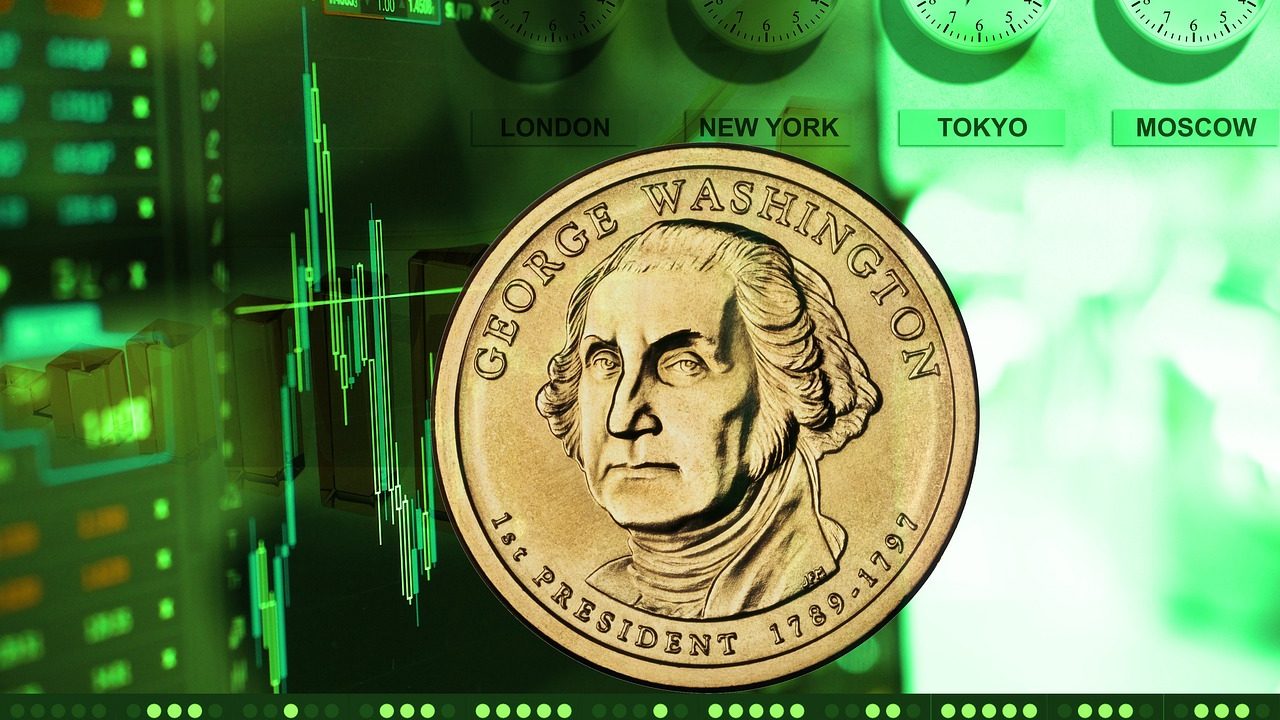
S&P futures opened Thursday down approximately 44 points, sitting around 7,809 — off roughly 0.56 percent from the previous close. The mild risk-off sentiment tracked, in part, with escalating Iran-related tension; defense sector names bucked the broader softness, a pattern analysts read as its own signal about where institutional money is positioning.
The Warner Bros. Discovery and Paramount merger officially closed this week, and as it did, Skydance's David Ellison — now effectively the new Paramount — made an explicit public commitment to back CNN's lawsuit against the Trump administration and to refrain from interfering with CNN's editorial independence. The pledge was designed to get ahead of concerns among CNN journalists and media observers that new ownership with political sensitivities might apply pressure — direct or indirect — on editorial decisions. The lawsuit itself involves press access and First Amendment questions about how the executive branch may or may not treat specific news organizations as adversaries, with implications for the broader press corps.
In California, Proposition 40 — the wealth tax initiative backed by SEIU-UHW — is struggling, with a late-September poll showing support at 45 percent. The measure's primary backer, Dave Regan, has publicly acknowledged underdog status, citing an opposition campaign significantly funded by donors including Sergey Brin that has dramatically outspent supporters. Regan has indicated that if the measure fails in California, he may pursue a similar initiative in Florida in 2028 — a state with no income tax and a political environment that would appear inhospitable to a wealth tax, though observers suggest the goal may be to build national infrastructure and attention rather than to win outright.
In the prediction market space, Novig pressed ahead with a new Sydney Sweeney advertisement despite ongoing backlash from professional athletes who objected to the original campaign. The company's position is that its 'Just Sports' campaign, which launched September 9th, drove measurable growth in trading volume and first-time deposits. The athlete objections center on a tension that sports leagues have largely resolved in favor of revenue: the commercial integration of gambling with athletic performance normalizes betting on players' outcomes while those players bear the associated reputational and integrity risks.
When Doubt Is Self-Reinforcing: The Election Confidence Problem
The Gallup election confidence findings and Nate Silver's Senate forecast, arriving in the same week, create what analysts describe as a structurally uncomfortable juxtaposition. Silver's model favors Democrats to win the Senate — the party that has been most vocal about defending election integrity. But the erosion of confidence documented by Gallup is concentrated precisely among Republican and independent voters, whose participation patterns will most determine outcomes in competitive Senate races. Whether that erosion translates into behavioral changes on Election Day — lower turnout among voters who believe the process is compromised — is a question Silver's historical polling models may not be well-positioned to answer.
The deeper structural problem is recursive. If majorities of Republicans and independents doubt election integrity and Democrats win the Senate, a portion of those voters is likely to interpret the outcome as confirming suspicion rather than updating it. Electoral results, when stripped of their shared legitimacy, cease to function as a feedback mechanism. Losing becomes evidence of fraud rather than a democratic result, and the institution of elections loses its capacity to resolve political contests with public acceptance.
Competitive Senate races this cycle are complicated further by candidate quality variables that are difficult to model from historical data. Several races feature non-traditional candidates whose voter coalition behavior has limited precedent. The historical pattern since 2016 has generally been that polls underestimate Republican performance in competitive environments, though that pattern carries no guarantee of continuation. Early vote and turnout data as November approaches, analysts say, will reveal more than polling about whether the Gallup confidence numbers are producing actual behavioral shifts.
Stress-Testing the AI Dominance Narrative

The day's technology coverage — GPT-6's launch, Muse's growth trajectory, Gemini's user figures — collectively reinforces a dominant narrative: the AI adoption curve is accelerating, distribution advantages are compounding, and the market is converging toward a small number of dominant platforms. That reading of the current data is defensible. It is also worth pressure-testing.
User growth figures from competing AI platforms are not directly comparable — each company defines 'users' differently, and engagement depth matters far more than top-line counts for long-term competitive position. A massive install base of occasional users may be more vulnerable to displacement than a smaller but deeply embedded user base integrated into daily workflows. The assumption that Intelligent UI gives OpenAI a durable advantage also assumes the feature is difficult to replicate; the history of software suggests that genuinely novel interface innovations are copied quickly by well-resourced competitors, and both Google and Anthropic have the resources to respond.
The scenario that most challenges the platform-dominance thesis is one where AI capabilities embed deeply in specialized vertical tools — accounting software, medical records systems, engineering environments — rather than consolidating around a single general-purpose chat interface. In that world, the winner of the consumer user-count race captures less of the total value than today's narrative implies, because enterprises are buying AI through specialist vendors who build on top of foundation models. If that fragmentation occurs, the competitive landscape remains more distributed than the current moment suggests.
Concrete signals to watch: enterprise contract announcements will tell more than consumer user counts about whether platform dominance is solidifying. Regulatory action targeting Meta's distribution of Muse through WhatsApp and Instagram — if authorities determine that constitutes illegal tying under antitrust law — would substantially alter Muse's growth trajectory. And if Muse crosses five million users by the end of the first quarter of 2027 while sustaining meaningful daily active usage rates, the platform convergence thesis will have held. If it stalls near two million with shallow engagement, the distribution-without-depth story will have played out instead.
Signing Off — With a Correction on the Record

Several threads warrant attention heading into the weekend. The Iran escalation picture — CENTCOM preparations, the Camp Buehring footage, and the administration's shifting public statements — has produced genuine ambiguity about U.S. deterrence posture, and the coming days will test whether a consistent message emerges. The Gallup election confidence findings are not a partisan story but a structural one about whether democratic institutions can function when a significant share of the electorate has preemptively delegitimized the process. And GPT-6's Intelligent UI launch, however incremental it appears today, marks the point at which AI responses become interactive applications — a transition whose downstream implications for software development, enterprise workflow, and competition will take months to fully register.
The nuclear clock milestone, easy to overlook on a heavy news day, is the kind of basic science achievement that tends to enable applied breakthroughs across GPS, communications, and fundamental physics over the following decade. It deserves more attention than the day's louder stories allowed it.
A correction: several months ago, in May, reporting was presented as credible that Ukraine had struck Russian ships in the Caspian Sea. Within days that claim proved entirely wrong — Ukraine has no realistic military reach to the Caspian, which is landlocked and hundreds of miles from Ukrainian territory. The error was made, and it is acknowledged here. The episode is a reminder to apply particular skepticism to dramatic military capability claims early in a news cycle, where initial reporting is most likely to outrun the available facts.