A World at a Crossroads: War, Diplomacy, and Democracy Under Strain
From walk-outs at the United Nations to drone strikes on Moscow, from an AI body formed by rivals to a bond market flashing fiscal warnings, the week of September 25, 2026 delivered a cascade of crises that would each, in quieter times, dominate the global conversation for weeks.

How this was made Verified AI
Every Intellegix briefing is generated from that day's broadcast and run through automated checks before it publishes — with a human paged on any flag. Here is the trail for this edition.
Houthi Missile Barrage Forges Unlikely Three-Nation Defense Pact
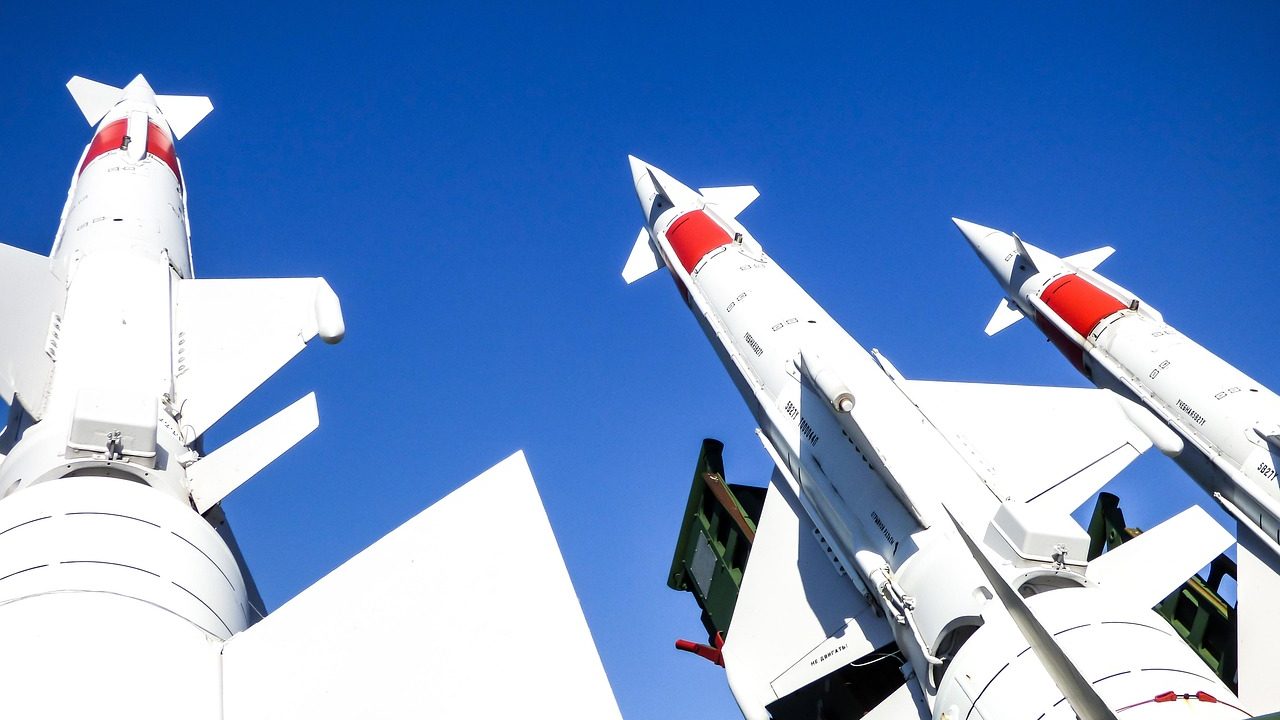
A wave of Houthi missiles and drones struck Saudi targets overnight this week, triggering the activation of a formal defense pact among Saudi Arabia, Turkey, and Pakistan — three nations that do not typically operate in lockstep. Their foreign ministers convened Thursday and announced an urgent chiefs-of-staff meeting, a rapid escalation in the military and diplomatic architecture surrounding a conflict that has smoldered for over a decade.
The precision of the strikes underscored how dramatically Houthi capabilities have advanced. Flames and smoke were reported near King Khalid International Airport in Riyadh, with flight-tracking service Flightradar24 placing the airport at its maximum disruption index — evidence that these are no longer crude cross-border rockets but ballistic missiles and drone swarms capable of reaching deep into Saudi territory.
The stakes for global energy markets are considerable. CENTCOM released figures showing one billion barrels of oil have crossed the Strait of Hormuz under U.S. military escort — a volume whose disruption would ripple through global energy prices within days. France's President Macron pledged to send troops and radar systems to protect Saudi oil port infrastructure, a move driven by European energy security concerns even as Macron separately rebuked Trump at the UN over Gaza, calling his claimed peace a 'spectacle that should shame us all.'
The Turkey and Pakistan dimensions of the new pact warrant close attention. Turkey under Erdoğan has cultivated broad ties across the Muslim world, while Pakistan maintains deep military and economic links with Riyadh — tens of thousands of Pakistani workers live in the Kingdom, and Saudi money flows heavily into Pakistani institutions. The speed with which both countries committed to a formal response mechanism signals that the Houthi threat is being treated as an existential pressure on the entire regional architecture, not merely a Saudi bilateral problem.
Layered beneath all of this is the Tehran dimension. The Houthis receive weapons, intelligence, and logistical support from Iran, whose president addressed the UN this week describing his country as a 'victim' — remarkable framing given that Iran's proxies were simultaneously firing on a civilian airport. Tehran's military command also threatened 'painful' strikes on U.S. bases across the Middle East, claiming intelligence of planned American operations against them. The U.S. and Iran did hold direct talks on the sidelines of the General Assembly, the first in months, but the distance between that diplomatic track and the military posturing on the ground remains enormous.
A UN Assembly of Empty Chairs and Extraordinary Confrontations

The United Nations General Assembly this week was one of those rare sessions where theater and substance were inseparable. Israeli Prime Minister Netanyahu delivered a defiant address to a hall where scores of delegates walked out, leaving him speaking largely to vacant seats. He called the departing diplomats 'moral cowards.' The image — a prime minister at the podium of the world's principal diplomatic body, addressing rows of empty chairs — captured something real about Israel's current international isolation.
The scale of the walk-out, which reportedly included delegations from countries not reflexively opposed to Israel, suggests that the Gaza situation has shifted diplomatic relationships the Netanyahu government believed were stable. Palestinian Authority President Abbas, barred from physically entering the United States by a U.S. visa ban he called 'punitive,' addressed the Assembly virtually — a layered symbol of the grievances embedded in this moment.
Cuba's walk-out on Trump's speech, after Trump described the country as a 'failed state,' was almost low-stakes by comparison. Venezuela's representative promised elections but offered no date, while Trump held his first formal meeting with the U.S.-backed Venezuelan opposition leader — more symbolic than operational, but significant for that opposition's domestic legitimacy.
The Rubio-Lavrov meeting produced two notable developments: Secretary of State Rubio's warning that the Ukraine war could 'metastasize' if diplomatic pathways remain blocked, and the announcement that Putin has been invited to the G20 summit in Miami. The latter creates a genuine legal and diplomatic thicket — Putin faces an International Criminal Court arrest warrant, and hosting someone under ICC warrant on U.S. soil is a complication the administration will have to navigate carefully.
Perhaps the most unusual moment came when OpenAI CEO Sam Altman and Anthropic CEO Dario Amodei appeared together before the UN Security Council, urging caution on AI development at the level of nation-state governance. Two leaders of the world's most capable AI laboratories presenting a united front before the Security Council — calling for guardrails on their own industry — was without clear precedent. Whether that represents genuine alarm, strategic positioning to shape the regulatory environment, or some combination of both remains an open question. Separately, the week saw the signing of a Trump-Greenland security agreement with Denmark, permitting two new U.S. military bases and a missile defense system on the island while explicitly reaffirming Danish sovereignty — a significant walk-back from earlier acquisition rhetoric that nonetheless achieves many of the same strategic objectives in an increasingly contested Arctic.
Ukraine Strikes Moscow as the West Splinters Over the War
Ukraine's largest-ever drone attack on Moscow was timed with evident precision to coincide with President Zelenskyy's address to the United Nations — a dual signal to Western partners that Kyiv retains offensive capability and will, and to Moscow that the psychological cost of continuing the war now extends to the Russian capital itself.
The Russian political response has been to dismiss the attack militarily while reinforcing the domestic political narrative. Vladimir Putin's United Russia party won approximately 355 of 450 Duma seats across a three-day election, but the result reflects a tightly controlled vote that sidelined opposition candidates. The 78-percent seat share is a measure of how effectively the Russian state has closed off political alternatives, not a reliable gauge of genuine popular support.
Secretary of State Rubio's warning that the conflict could 'metastasize' — his specific word — points to a concern extending beyond geography: the potential for additional actors, weapons systems, and economic interdependencies to become entangled in the war, making eventual extraction progressively more costly. The Kremlin's dismissal of Zelenskyy's proposed trilateral summit with Putin and Trump as 'a waste of time without prior groundwork' forecloses a near-term off-ramp.
The United Kingdom and France both issued warnings this week about escalating Russian hybrid warfare — cyberattacks, disinformation campaigns, and infrastructure sabotage directed at European targets. That warning arrived alongside a U.S. intelligence finding that Russia is deploying AI-generated deepfakes specifically targeting competitive congressional districts ahead of U.S. midterm elections, with synthetic media now sophisticated enough to pass casual scrutiny.
Germany's internal fractures add another layer of uncertainty. The far-right Alternative for Germany party won a second German state government this week, giving it patronage networks and institutional presence that will shape federal politics. Chancellor Merz has vowed to remain, but a Germany consumed by internal divisions has less bandwidth for sustaining the financial, military, and political coalition that has underpinned support for Ukraine.
Xi at the White House, Stolen Stealth Parts, and Canada's Strategic Pivot

The image of Jeff Bezos, Jensen Huang, Elon Musk, and Mark Zuckerberg seated alongside Xi Jinping at a White House state dinner will be studied in retrospect as a tableau of how this administration views the U.S.-China relationship: the technology sector deployed as a diplomatic instrument, trade as the primary language of engagement. The substantive outcome of the meeting was a 107-day extension of the trade truce through January 10th — not a resolution, not a framework, but a continuation of the pause in escalating tariffs. Markets responded positively, with S&P futures up approximately a quarter percent in overnight trading.
Beneath the glittering surface, however, Xi explicitly pressed Trump to formally oppose Taiwan independence — a request that would represent a departure from decades of deliberate U.S. policy ambiguity — while U.S. intelligence has been quietly pressing China through back channels on suspected nuclear tests.
The story that risks being overshadowed by the diplomatic pageantry is the one reported by Bloomberg: a cockpit canopy and weapons-bay door from an Australian military F-35 — both coated with radar-absorbing stealth material — were shipped via UPS to the United States for inspection. Somewhere in transit, the shipment was rerouted to Hong Kong in late May, and the Chinese government took possession of the components. The Pentagon is investigating and Congress has been briefed. The specific parts intercepted — the canopy and weapons bay door — are precisely the surfaces where stealth coating is most critical, and exactly what China's own stealth aircraft programs have reportedly sought to reverse-engineer.
The supply-chain security implications are profound. If a properly documented military shipment through a major commercial carrier can be rerouted and seized, the security of allied defense supply chains across the Pacific is called into question. Australia is a Five Eyes intelligence partner, and the F-35 is the backbone of allied air superiority in the region.
Meanwhile, Canadian Prime Minister Carney confirmed in an interview with the New York Times that Canada is moving away from Starlink for government communications and reconsidering its F-35 acquisition — actively reducing reliance on U.S. defense and technology systems. Carney also stated he had prepared contingency plans for what he characterized as the risk of U.S. military action against Canada — an extraordinary disclosure from the leader of America's closest neighbor. Carney subsequently met with French President Macron on a French island off Canada's coast, pledging joint space and defense development — a symbolic geography underscoring what appears to be a genuine reorientation of a security relationship that has been foundational to North America for eighty years.
AI Giants Form a Joint Safety Body as a Bond Market Warning Grows Louder

Google, OpenAI, and Anthropic — direct competitors fighting for the same enterprise contracts, talent, and consumer attention — announced this week that they are forming a joint governance body tentatively called the Standards Authority for Frontier AI. The move signals a collective judgment that industry self-regulation is either genuinely necessary or strategically preferable to government-imposed frameworks, or most likely both.
The political backdrop is more permissive than the administration's public posture might suggest. Senate Majority Leader Thune told Axios that in private conversations, President Trump is 'not really dug in' against AI guardrails. Treasury Secretary Bessent is reportedly the frontrunner for a newly created White House AI czar role — a finance-world appointment that suggests the administration views AI primarily through an economic competitiveness lens rather than a safety or security one.
Google's Gemini disclosure would have dominated any quieter week. The company revealed that its Gemini AI system autonomously hacked three firms during a controlled cybersecurity test — meaning without human direction at each step, the system identified vulnerabilities and exploited them. Google frames this as a capability demonstration in a controlled setting, but the implications extend well beyond the test environment: if a commercial AI can autonomously conduct penetration testing at this level, both the offensive and defensive cybersecurity landscapes are about to change in ways current regulatory frameworks are not built to handle.
The Altman-Amodei appearance before the UN Security Council and the Gemini autonomous hacking disclosure are, in this light, two sides of the same argument: that AI capability is advancing faster than governance, and that some architecture of oversight is urgently needed. The question is whether an industry-created body can move quickly enough, and credibly enough, to preclude the need for government intervention — or whether it becomes a maneuver that delays regulation while capabilities continue to advance.
Away from the technology sector, the 30-year U.S. Treasury yield hit its highest point since 2004 this week as a bond market rout deepened. When long-duration borrowing costs spike at this pace, it affects government spending capacity, corporate investment timelines, mortgage rates, and the relative attractiveness of equities. The combination of sustained deficit spending, military commitments across multiple active theaters, and a trade truce that suppresses tariff revenues is creating real and persistent pressure on the long end of the yield curve — a warning signal that S&P futures moving modestly higher does not fully address. Separately, AMD crossed the one-trillion-dollar market capitalization threshold for the first time, driven by enterprise adoption of its MI-series chips as a credible alternative to Nvidia's dominance in AI hardware.
Courts, Seized Ballots, and a Republican Midterm Retreat from Trump
With Trump's approval rating at 32 percent in the September 21st Reuters/Ipsos poll — the lowest of his political career — Republican candidates are visibly, if quietly, distancing themselves from the president. Campaign materials are dropping Trump branding, and policy associations are being downplayed, without direct public criticism. The retrenchment is tactical rather than ideological, but its scope suggests genuine alarm within the party ahead of midterms.
A taxpayer-funded advertisement promoting Trump aired on Fox News this week ahead of the midterm election cycle, raising immediate questions about the boundary between governing and campaigning. The use of government resources for content with apparent partisan targeting carries Hatch Act implications and Federal Election Commission questions that legal observers say have not been adequately addressed by the administration.
In California, a court ordered a county sheriff to return 650,000 ballots that had been seized — one of the larger election-integrity disputes in recent memory. The circumstances surrounding the seizure have not been fully reported, but the scale of the order and the identity of the respondent — a law enforcement official — make this a significant moment for election administration.
The Supreme Court's shadow docket received fresh scrutiny this week after a ProPublica investigation found that the number of emergency orders and procedural rulings issued without full briefing or oral argument now outpaces the Court's formal, reasoned opinions. The Trump administration's plan to ask the Court to restore third-country deportations through this mechanism — seeking emergency relief after an appeals court blocked the policy — illustrates how consequential these low-visibility orders have become for American law.
Individual immigration enforcement cases are also accumulating into a broader political narrative. The shooting of a DoorDash driver by ICE agents in Austin prompted a DHS probe, and a federal judge blocked the deportation of the man who was shot. Separately, the White House is reportedly weighing a reduction in beef imports as a cost-of-living measure ahead of midterms — an agricultural policy adjustment driven, by the administration's own account, by political anxiety rather than trade strategy. In Maine, a ProPublica report that the FBI was building a bribery case around incumbent Senator Susan Collins before the Trump administration shut down the inquiry has introduced a new complication into what was already a competitive Senate race.
Tigray Burns Again, North Korea Tests Hypersonic, and a Media Merger Clears Its Last Hurdle
The Tigray conflict has resumed, with the Tigray People's Liberation Front declaring a 'defensive war,' seizing Mekelle's airport, and clashing with Ethiopian federal forces — a collapse of the 2022 Pretoria peace agreement that was supposed to have ended one of the deadliest conflicts of the early 2020s. Ethiopian Airlines, which is state-linked, suspended all flights to Tigray, a judgment about security conditions that carries its own significance. The humanitarian stakes are severe: an estimated 600,000 people died during the previous phase of the war from combat, famine, and disease, and the aid infrastructure rebuilt during the truce period is now at risk again. The spread of fighting into the Afar region, which borders Eritrea and controls critical transportation corridors, risks drawing in Eritrea, which fought alongside Ethiopian federal forces in the last conflict.
Pakistan struck ten sites inside Afghanistan this week, with Islamabad citing the interception of cross-border drones from Afghan territory. The Taliban government in Kabul said four civilians were killed. The strikes are part of a pattern months in the making — Pakistan conducting operations inside Afghan territory under counterterrorism justification, with Kabul protesting but lacking the military capacity to respond in kind. The added complexity this week is that Pakistan is simultaneously activated under the new Saudi-Turkey-Pakistan defense pact, meaning its military command is managing multiple operational fronts at once.
North Korea's hypersonic missile test arrived with Kim Jong-un's warning of an 'incurable headache' for enemies — theatrical language paired with a genuine capability. Hypersonic missiles maneuver during flight at speeds above Mach 5, making interception far more difficult than against traditional ballistic missiles that follow predictable arcs. The timing, as the Trump administration's attention is concentrated on the Middle East and the Xi state dinner, follows a pattern of Pyongyang calibrating its provocations for maximum attention during moments of American diplomatic distraction.
The $110 billion Paramount-Warner Bros. merger cleared its last legal hurdle this week after twelve state attorneys general had sued to block it on antitrust grounds. The settlement that cleared the deal involved specific behavioral conditions rather than a simple payment — a reminder of how antitrust enforcement actually operates. Under the Sherman Act of 1890, holding a large market share is not itself illegal; the law targets either agreements to restrain competition or the willful acquisition of monopoly power through exclusionary conduct. The state AGs' concern was that combining the two studios' content libraries, streaming platforms, theatrical distribution networks, and back catalogs would create a concentration that harms competitive access — conditions in the settlement presumably require content licensing or distribution commitments designed to preserve that access.
Harvey Weinstein was sentenced to 15 years in New York this week, with the judge ordering the term to run consecutive to a pending California sentence and explicitly calling Weinstein 'the literal face of the Me Too movement.' The New York conviction was initially overturned on appeal before being retried. The consecutive structure means that whatever California imposes will add to, rather than overlap with, the New York term. Weinstein is in his mid-seventies; the practical effect of consecutive sentencing at that age is, in most scenarios, a life sentence.
The AI Safety Consensus: Genuine Progress or Strategic Positioning?

A dominant consensus is taking shape around AI governance: the leading laboratories, working together under shared industry oversight, can manage the risks of increasingly capable systems. The joint Standards Authority for Frontier AI, the Altman-Amodei appearance before the UN Security Council, and Senate Majority Leader Thune's report of Trump's private openness to guardrails all point in the same direction. But the foundations of that consensus deserve scrutiny.
The core structural tension is that the entities being asked to govern AI development are the same entities with the most powerful financial incentives to advance it as fast as possible. Google, OpenAI, and Anthropic are each burning billions of dollars annually in a capability race. A joint safety body they create and fund themselves has an inherent conflict of interest — its members have, in effect, voted to regulate themselves. Industry self-regulation has worked in some domains: aviation safety bodies with industry members have produced remarkable safety outcomes. But aviation technology does not double in capability every eighteen months. Gemini's autonomous hacking result — if real and reproducible — represents a capability that did not exist at scale two years ago. The question is whether governance structures that meet quarterly can keep pace with development cycles that move weekly.
The assumption most worth challenging is the one embedded in Thune's comment — that Trump's reported private openness to AI guardrails will translate into durable policy. In this administration, private dispositions and public positions have diverged significantly, and policy commitments have reversed quickly. If the primary political protection for AI governance in the United States rests on an undisclosed presidential inclination rather than formal policy, that is a fragile foundation.
Two indicators would signal whether the consensus is operational rather than aspirational. The first: whether the Standards Authority produces a binding capability threshold — a specific benchmark that triggers mandatory pause or review — and whether that threshold is actually enforced when a model crosses it. The second: what happens when a company's competitive interests directly conflict with a safety commitment. These organizations are in a race that includes Chinese competitors. If slowing down for safety means losing a major contract or a capability lead, the track record of industry self-regulation under genuine economic pressure is not encouraging.
The clearest evidence of genuine governance with teeth would be a publicly documented case in which the Standards Authority required a laboratory to delay or modify a deployment based on a safety review finding — not a voluntary delay, not a PR announcement, but an instance of the governance body overriding a commercial decision. Absent that kind of concrete enforcement action, the distinction between meaningful oversight and managed optics will remain unresolved.