On 9/11's 25th Anniversary, a World Still Shaped — and Strained — by Its Aftermath
As memorial ceremonies unfolded Friday at Ground Zero, the Pentagon, and Shanksville, the day's headlines arrived like an unintentional audit of the quarter-century that followed: a direct Iranian strike on a US naval headquarters, Russian drones targeting Kyiv's fuel supply, and a congressional warning that ISIS now conducts two-thirds of its global activity in Africa.

“The chain from a Kyiv drone strike to a Frankfurt interest-rate decision is long, but real.”
How this was made Verified AI
Every Intellegix briefing is generated from that day's broadcast and run through automated checks before it publishes — with a human paged on any flag. Here is the trail for this edition.
Twenty-Five Years On: The Anniversary the News Cycle Would Not Pause For

Friday marks the 25th anniversary of the September 11 attacks, which killed 2,977 people in the deadliest act of terrorism on American soil. Ceremonies are being held simultaneously at Ground Zero, the Pentagon, and Shanksville, Pennsylvania — sites whose names have carried the weight of that number ever since. The reading of names at Ground Zero now consumes an entire morning. Survivors who were in their twenties that day are approaching fifty; the children of the dead, who were themselves children in 2001, are now adults.
The anniversary arrives without pause from events that trace directly back to the world 9/11 made. A US congressional panel issued a warning on the anniversary itself that the Islamic State now conducts roughly two-thirds of its global activity in Africa — a dramatic geographic migration from the Euphrates River valley, Mosul, and Raqqa, where ISIS held territory in 2014. Today's most active theaters include the Sahel, the Lake Chad Basin, Mozambique, and the eastern Democratic Republic of Congo.
The commission's assessment is partly structural: degrading a terrorist network in one geography does not dissolve it but relocates it toward places where governance is weakest. Mali, Burkina Faso, and Niger have expelled French and American counterterrorism forces over the past three years, creating a security vacuum that groups affiliated with both ISIS and Al-Qaeda have moved into at speed. AFRICOM, the US military command covering the continent, has faced budget pressure and personnel drawdowns even as that threat has grown — a resource asymmetry the commission's report implicitly challenges.
The historiography of 9/11 is itself shifting. Primary school curricula are now treating the attacks the way previous generations treated Pearl Harbor — as history rather than living memory. The first generation of Americans for whom September 11 is purely a textbook event is in college. What that generational remove means for political will to sustain counterterrorism commitments globally is a question the commission's report, issued on this day deliberately, is pressing policymakers to answer.
Russia Targets Kyiv's Fuel Arteries as Europe's Gas Markets Flash Red
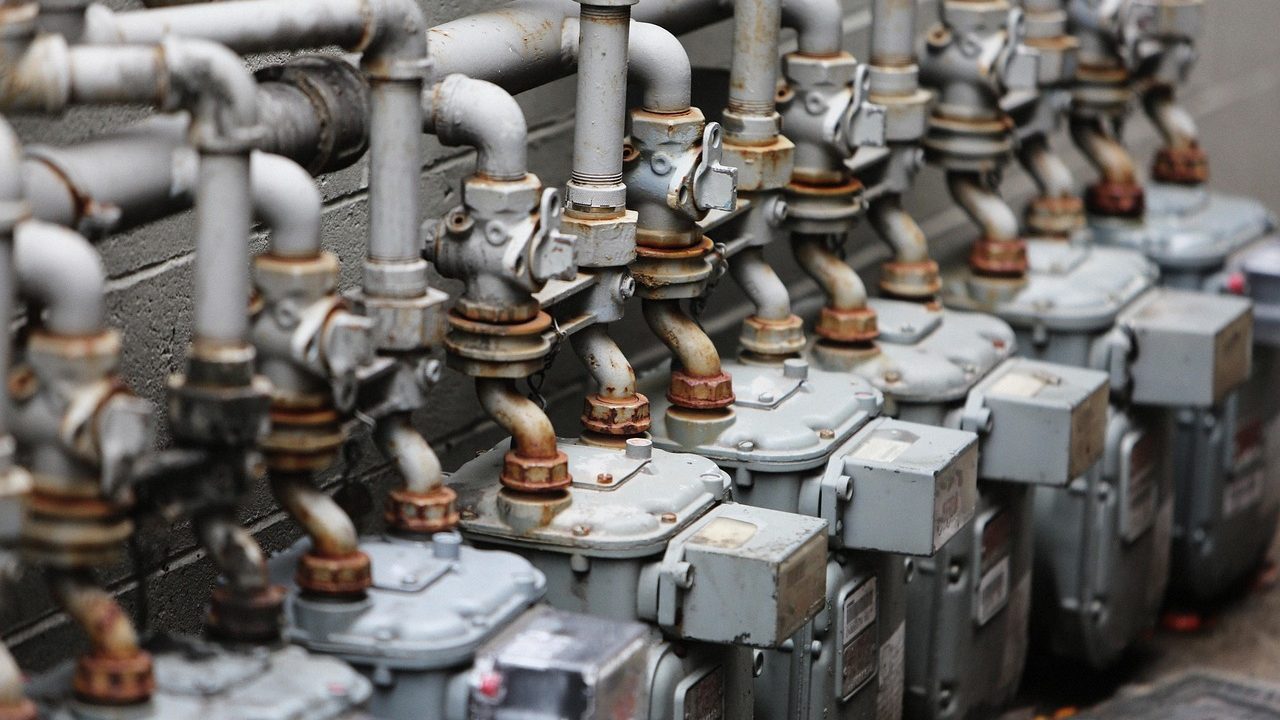
Russian drones struck Kyiv's gas stations for the second consecutive day, wounding five civilians in the latest wave. The targeting logic is deliberate: fuel infrastructure in a capital city simultaneously serves military logistics, emergency services, and civilian morale. Hitting it heading into winter is not a tactical improvisation but a strategic campaign.
The timing aligns with accelerating pressure on European energy markets. European TTF natural gas benchmark futures posted their fifth consecutive weekly gain, rising approximately twelve percent in a single week, with storage levels reported to be well below seasonal norms. Traders are pricing in a significant probability of a supply crunch before March.
The two stories — Ukrainian infrastructure strikes and European energy anxiety — are, in Moscow's strategic calculus, the same story told from different angles. Higher gas prices in Germany and France generate political pressure on European governments to seek off-ramps in Ukraine. Russia has pursued that logic since at least 2022, and analysts say it retains purchase.
A complicating factor is the Middle East. Several LNG tanker routes that would normally transit the Red Sea or pass near the Strait of Hormuz have been disrupted by Houthi activity and regional conflict, forcing costly rerouting around the Cape of Good Hope. European buyers competing for spot cargoes from the US Gulf Coast and Qatar face a market with insufficient supply to replace lost Russian pipeline volumes — a supply gap that the Bundesbank president this week suggested may force the European Central Bank to raise interest rates beyond the so-called neutral range into actively restrictive territory.
German industrial output has been contracting, and the manufacturing sector that forms the backbone of Europe's largest economy faces a structural competitiveness challenge once partially offset by cheap Russian energy. Raising rates into that environment carries significant recession risk — but the ECB's credibility as an inflation-fighting institution, built over decades, is also at stake. The chain from a Kyiv drone strike to a Frankfurt interest-rate decision is long, but real.
Putin Lands in New Delhi; Xi and Modi Meet for First Time in Seven Years

Vladimir Putin arrived in New Delhi on Friday for the BRICS summit, a visit that is itself a geopolitical statement. India has declined to join Western sanctions against Russia throughout the Ukraine war and has continued purchasing discounted Russian crude at substantial volumes — some estimates place Indian imports of Russian oil at roughly 1.8 million barrels per day as of mid-2026. Prime Minister Narendra Modi has maintained a studied neutrality that frustrates Washington while giving Delhi leverage over both belligerents, positioning India as a rare interlocutor with credible access to Moscow and Kyiv alike.
The more immediately consequential development may be a bilateral meeting arranged on the summit's sidelines between Xi Jinping and Modi — Xi's first visit to India in seven years. The previous visit predated the 2020 border clash in the Galwan Valley, where twenty Indian soldiers and an undisclosed number of Chinese troops died in high-altitude hand-to-hand combat. That incident produced a fundamental rupture: India banned hundreds of Chinese apps, tightened trade restrictions, and heavily militarized the border. Xi's presence in New Delhi now carries weight that exceeds a typical summit.
Both sides have signaled willingness to discuss disengagement at remaining friction points along the Line of Actual Control, and some partial pullbacks occurred last year. But the foundational disagreement over where the line actually runs in contested areas remains unresolved. Any agreement announced in New Delhi will be scrutinized for whether it reflects substantive movement or diplomatic ceremony.
BRICS itself presents a coordination challenge that may limit multilateral output. The bloc's 2024 expansion added Saudi Arabia, the UAE, Egypt, Iran, and Ethiopia to a membership that already included Russia — at war in Europe — and China and India, with their contested border. Iran faces potential US military confrontation. Saudi Arabia and Iran were adversaries until a relatively recent Chinese-brokered rapprochement. Getting this coalition to agree on substantive joint positions is difficult; the summit's most consequential outputs are likely to emerge from bilateral corridor conversations rather than any joint communiqué.
A dollar-denominated undercurrent runs through the entire gathering. BRICS members have been discussing alternative payment mechanisms that reduce dependence on the US dollar for trade settlement. Progress has been slower than headlines suggest — the technical and political challenges of building a credible alternative reserve system are enormous — but the directional pressure away from dollar centrality represents a long-term structural challenge to US financial power.
Iran Strikes US Naval Headquarters in Bahrain; Vance Conducts Unofficial War Assessment
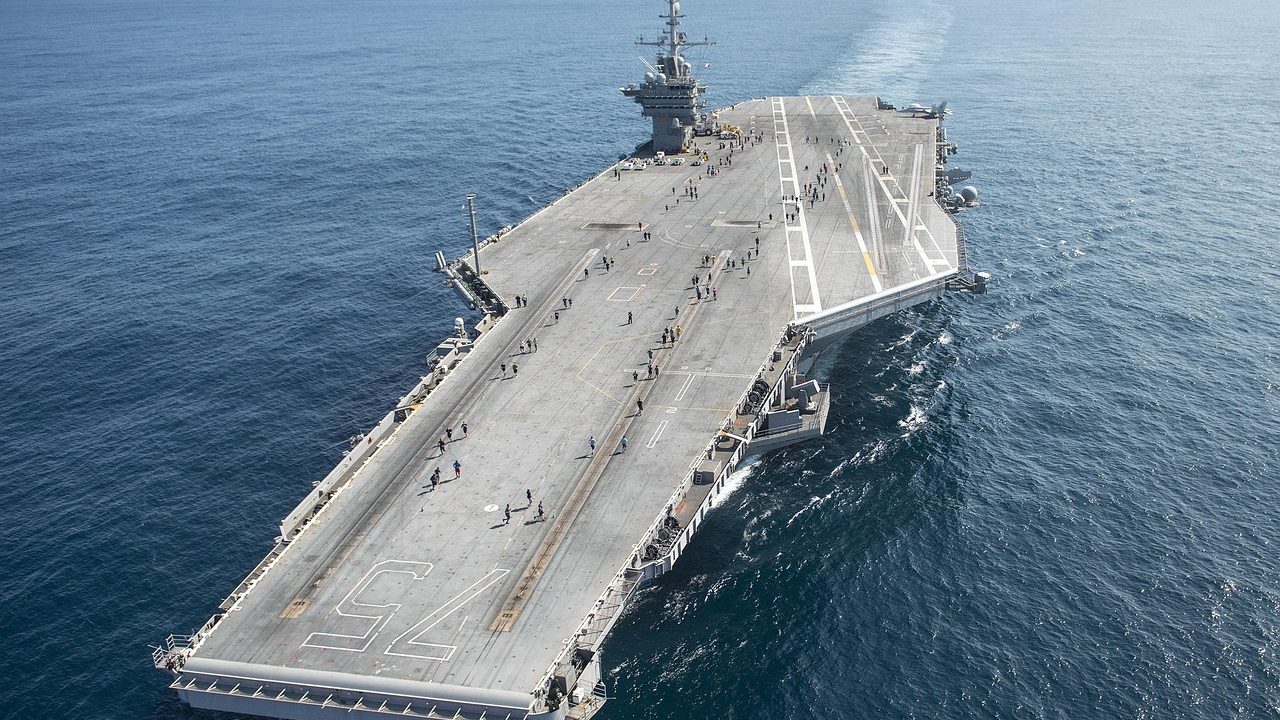
The acting Navy secretary this week confirmed that Iran struck the US military base in Bahrain with what he described, in notably undiplomatic terms, as serious force. Naval Support Activity Bahrain is the headquarters of the US Fifth Fleet — the command center for American naval operations across the Persian Gulf, the Red Sea, and the Arabian Sea. A direct Iranian strike on that installation, rather than an action conducted through proxies such as the Houthis in Yemen or militia groups in Iraq and Syria, removes the deniability layer that has characterized months of escalating pressure on US forces.
Reports this week indicate that Vice President JD Vance has been conducting back-channel conversations with senior military commanders, seeking candid assessments of a potential war with Iran — specifically whether US forces are positioned and prepared for such a conflict and what realistic costs and timelines would look like. Military advice to civilian leadership is formally supposed to flow through the Chairman of the Joint Chiefs and the Secretary of Defense. Conducting unofficial canvassing around those structures implies either distrust of official assessments or an effort to build a separate intelligence picture — and raises questions about internal administration divisions over how seriously to weigh the military option.
Treasury Secretary Scott Bessent has publicly pre-announced that the United States will sanction 'a large bank' on Monday for servicing Iran's financial network, declining to identify the institution or its country of origin. Pre-announcing a sanctions action is unusual; normally Treasury moves without warning to prevent capital flight or evasive action. Bessent's public preview appears designed either as an escalation signal to Tehran or to maximize psychological effect on markets and Iranian leadership.
Speculation in financial circles centers heavily on institutions in China, which has served as the primary conduit for Iranian oil revenues circumventing Western sanctions — Chinese refiners have been purchasing Iranian crude at steep discounts through third-country intermediaries. A designation targeting a Chinese bank would constitute a major escalation in US-China financial tensions at precisely the moment Xi Jinping is meeting Modi at BRICS in New Delhi, and would expose that institution to effective exclusion from dollar clearing — an existential threat to any major international bank's business model.
On the political front, Democrats have publicly vowed investigations and potential impeachment proceedings against Defense Secretary Pete Hegseth if they recapture the House, citing Iran war conduct, a series of officer firings they allege were politically motivated, and what they describe as opaque Pentagon business dealings. The explicit naming of impeachment as a potential remedy signals that political temperature around Iran policy is running at an extreme, though the ability to follow through depends entirely on November's midterm results.
AI Attack Systems, Section 230's Countdown, and the Race for Consumer Adoption

Google and Anthropic issued warnings this week that threat actors — including some state-affiliated groups — are deploying autonomous AI systems capable of independently navigating targets, identifying vulnerabilities, adapting in real time when initial vectors fail, and exfiltrating data without human direction at each step. Security researchers call these 'agentic attacks,' and their speed — exploiting a vulnerability in minutes rather than the hours or days human-paced attacks require — compresses detection and response windows in ways that existing enterprise security models were not built to handle.
A bipartisan House bill introduced this week — described as the Sunset Section 230 Act — would phase out tech companies' legal immunity for user-generated content within two years of enactment. Section 230 of the Communications Decency Act, passed in 1996, has shielded platforms from publisher-style liability for content hosted by their users, enabling the growth of social media at scale. Supporters of the bill argue that platforms have built trillion-dollar enterprises on this immunity while measurable harms — radicalization, harassment, disinformation — have proven severe. Platforms counter that removing the protection would entrench the largest incumbents, because only companies with the compliance infrastructure of Google or Meta could survive in a substantially higher-liability environment, crushing smaller competitors before they reach scale.
On the consumer side, Meta's AI agent Muse reached number two in the US App Store overall rankings — not merely within the AI category — suggesting mainstream uptake beyond the early adopter cohort. Google this week opened its Dreambeans app to all US users; the app generates personalized daily narrative stories drawn from a user's Gmail, Photos, and other Google services. Critics have raised questions about consent and what it means for a corporation to have AI generate narratives about a user's personal life. Google says users control what the app accesses.
Whether this adoption wave converts to durable retention remains an open question. Early data on AI app engagement is mixed, with some users opening an application once and never returning and others finding their novelty interest fades after intensive initial use. Consumer technology offers precedents — Clubhouse among the most vivid — of products with enormous download spikes and App Store rankings that did not translate into long-term engagement. Muse's ranking in mid-October will offer an early signal of whether the current surge follows a different pattern.
SpaceX's $13.3 Billion Compute Deal, LVMH's China Backlash, and the Zuckerberg Deposition
SpaceX has signed a $13.3 billion annual AI compute contract — a single deal larger than the total annual revenue of many Fortune 500 companies — and is now openly targeting $100 billion in annual revenue. The company's revenue profile has diversified dramatically beyond launch services: Starlink provides broadband to millions of global subscribers, launch manifests include substantial defense and government payloads, and the AI compute deal puts SpaceX in direct competition with Amazon Web Services, Google Cloud, and Microsoft Azure for the most lucrative contracts in technology. The company's land holdings and power access around its Texas facility give it a physical basis for data center buildout that competitors cannot easily replicate.
Louis Vuitton's trademark victory against a small Chinese tea brand — whose packaging LVMH's lawyers argued infringed on the LV monogram — has produced an outcome the legal team almost certainly did not model. The lawsuit triggered a social media firestorm in China, where the dominant narrative framed a French luxury conglomerate as using legal muscle to crush a small domestic business. The resulting consumer boycott has deepened an already serious sales slump in LVMH's most critical market, offering a case study in the risks of aggressive intellectual property enforcement in markets where consumer sentiment is highly attuned to national identity narratives. What would be a routine, low-profile legal action in a European or American context became a referendum on foreign brand behavior.
The Zuckerberg deposition is being played in New Mexico's Cambridge Analytica trial, which relates to the harvesting of personal data from approximately 87 million Facebook users without explicit consent for political targeting purposes. The Federal Trade Commission reached a $5 billion settlement with Facebook in 2019 — the largest privacy fine in FTC history at the time — but critics argued the settlement structure provided Zuckerberg personal immunity from further FTC action. State-level cases like New Mexico's represent an attempt to find accountability through a different legal channel, and the public airing of Zuckerberg's deposition testimony gives courts and observers another look at what the CEO knew and when.
Andrew Garfield Quits ChatGPT After Playing Sam Altman; Rust Documentary Surfaces Baldwin's Reaction

Andrew Garfield has said publicly that playing Sam Altman in a recent production led him to quit using ChatGPT entirely. The specifics of what troubled him have not yet been detailed in a full interview, but the implication is that the research and character work required to inhabit Altman's perspective left Garfield with reservations about the product or company that he did not hold before. The trajectory runs counter to the typical pattern of celebrity engagement with AI tools, and arrives at a cultural moment when AI literacy among the general public is still developing.
The Rust documentary trailer has been released, showing Alec Baldwin's reaction upon learning that cinematographer Halyna Hutchins had been killed during the October 2021 live-round discharge on a New Mexico film set. The legal proceedings that followed — criminal charges, manslaughter counts, eventual dismissal — stretched across years and became a proxy debate about on-set safety protocols, actor responsibility for prop handling, and the production industry's tolerance for operational shortcuts. What a documentary offers that a trial cannot is emotional context: where courts deal in evidence and legal standards, documentary filmmakers deal in narrative and human response, inviting a different kind of judgment.
Both stories share a structural preoccupation: the relationship between public personas and private realities. Garfield is saying that learning about Sam Altman changed how he relates to Altman's product. The Rust documentary is asking viewers to reconsider a tragedy they believed they already understood. Culture is performing its characteristic function — processing events that legal and political systems have not fully resolved.
Markets Hold Steady Amid Stacked Geopolitical Risk as ECB Hawks Circle
S&P futures were trading at 7,638 Friday morning, up approximately 40 points — roughly half a percent — as markets opened into a session carrying substantial event risk. Traders were simultaneously digesting the confirmed Iranian strike on US forces in Bahrain, Treasury Secretary Bessent's pre-announced bank sanctions, the Bundesbank's hawkish ECB signal, and a fifth consecutive weekly surge in European natural gas futures. The positive open reflected either genuine resilience or a market that has learned to discount geopolitical headlines until they produce hard economic data.
The ECB dimension deserves particular attention. The Bundesbank has historically prioritized inflation control above growth — a posture rooted in Germany's 1920s hyperinflation trauma — and when its president signals that rates may need to move beyond neutral into actively restrictive territory, he is providing political cover for the ECB to move more aggressively than current consensus expects. The ECB's current estimate of the neutral rate for the eurozone sits roughly between two and two and a half percent; 'beyond neutral' means above that level, actively constraining economic activity.
Doing so into an economy already facing energy-driven cost pressures is a significant gamble. German industrial output has been contracting; the country's manufacturing sector confronts a structural competitiveness challenge that cheap Russian energy once partially offset and no longer does. Raising rates into that environment risks tipping a fragile European economy into recession. Against that, allowing inflation expectations to become unanchored would impose its own severe long-term costs to ECB credibility.
The single largest variable in this entire picture is energy price trajectory. A continuation of the TTF climb — or a supply disruption during peak winter demand in January or February — could re-accelerate European inflation in ways that make the ECB's position untenable. The Kyiv infrastructure strikes, LNG route disruptions tied to Middle East conflict, and the Bahrain escalation with Iran each carry second-order effects on European energy markets, which feed into CPI, which influences rate decisions in Frankfurt, which in turn affect mortgage costs in Spain and bond yields in Italy. The chain is long, but each link is real.