AI Designs Its Own Chips, Mistral Challenges the Frontier, and the PKI Trust Chain Breaks: Hacker News Digest, October 7, 2026
From a French AI lab threatening OpenAI's frontier dominance to counterfeit TLS certificates exposing cracks in the internet's trust infrastructure, Wednesday's Hacker News surfaced a day of stories where the boundaries between human and machine authorship — in code, in hardware, and in mathematics — grew measurably harder to draw.

“In codemode, AI generates large quantities of code rapidly, dramatically increasing the reading burden even as the writing burden falls.”
How this was made Verified AI
Every Intellegix briefing is generated from that day's broadcast and run through automated checks before it publishes — with a human paged on any flag. Here is the trail for this edition.
Mistral Challenges the Frontier While OpenAI Proves Its Math

Mistral Large 4 landed this week with the kind of Hacker News engagement — 1,849 points and more than 1,100 comments — that places it among the top five model releases of the year by community reaction. The French lab claims competitive performance with current frontier models on reasoning and coding tasks, achieved with a substantially smaller compute footprint than GPT-4-class systems. But the thread's center of gravity was not the benchmarks; it was what Mistral chose to disclose about its training data and architectural decisions, with the community noting that the company has historically been more transparent than OpenAI about what sits inside the model.
The mixture-of-experts architecture Mistral has refined across several generations appears to be pushed further in Large 4. For enterprise customers running millions of daily inference requests, a 30 percent reduction in compute per query compounds aggressively — and several commenters with significant AI infrastructure reported doing exactly that math in the thread. A geopolitical dimension sharpened the discussion: as a European company backed by European capital, Mistral functions as what multiple commenters called a sovereignty option for EU institutions uncomfortable routing sensitive data through American or Chinese providers. The company's willingness to release model weights also matters for the air-gapped deployments required by defense, intelligence, and sensitive healthcare customers.
OpenAI's concurrent post on AI progress in mathematics drew 964 points and 924 comments — nearly as dense a discussion, and considerably more technically specialized. The company demonstrated systems solving International Mathematical Olympiad problems at a level described as arriving sooner than expected. IMO problems demand multi-step proof construction where logical validity is as important as the answer itself. Commenters working in automated theorem proving debated whether the systems' outputs constituted genuine mathematical reasoning or pattern-matching at extraordinary scale — and whether that distinction matters if the downstream utility is real. One researcher in the thread argued the most immediately valuable applications may be in formal software verification, cryptographic proof systems, and compiler correctness, where the proof structures resemble competition mathematics but the commercial stakes are more immediate.
The two releases are entangled competitively. Competitive pressure from a credible European challenger, the argument went in multiple threads, compels OpenAI to keep publishing capability demonstrations rather than simply asserting frontier status. The mathematics post functions simultaneously as a research disclosure and a market signal.
AI Designs Its Own Chips — and the Infrastructure Stack Gets More Recursive
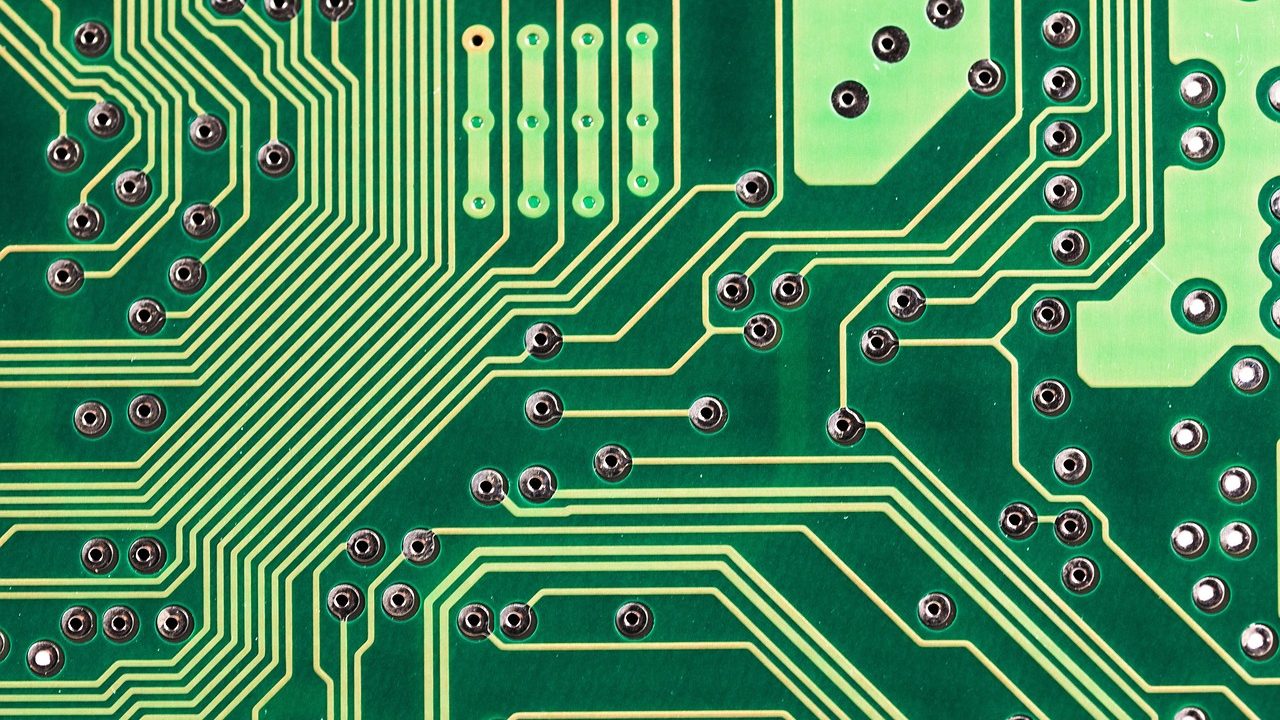
A GitHub project called OpenTPU — an open-source AI accelerator chip described as developed substantially by AI — scored 295 points and 346 comments, and it rendered the episode's opening question concrete: at what point does the human engineer become more curator than creator? The project used AI systems to generate significant portions of the hardware description language and architecture for a tensor processing unit, a chip purpose-built to run AI workloads. Commenters with chip design backgrounds noted that the AI-generated HDL showed patterns traceable to training on open-source designs including OpenRISC and RISC-V implementations — raising early questions about originality in AI-authored hardware that are expected to become legally significant as the approach matures.
Google's EmbeddingGemma 2, released this week as open weights, drew 345 points with notably sparse commentary — a low comment-to-score ratio that reflects a specialized but strategically significant audience. The lightweight multimodal embedding model handles both text and images in a shared vector space, serving the unglamorous but foundational plumbing of search, recommendation systems, and retrieval-augmented generation. Google's decision to release it as open weights rather than API-only fits a pattern several commenters named explicitly: major labs are selectively open-sourcing the infrastructure layer while keeping frontier reasoning models proprietary. Embeddings, small decision models, and tooling go open; the commercially valuable core stays behind the API wall.
The Strands Agents team's Decider 2B, a two-billion-parameter open-source model purpose-built for agent decision-making, scored 199 points with 48 comments. Its design targets a specific architectural gap: in complex agentic systems, a large frontier model handles heavy reasoning while many smaller, faster decisions happen around it — which tool to call, when to request clarification, how to route a query. Burning frontier tokens on those decisions is expensive; a dedicated specialist model is not. OpenAI's Decisions API, now in public beta at 317 points and 164 comments, is the proprietary version of exactly that concept, offering structured inputs, outputs, and confidence scores for agent decision logic. The HN thread divided between enthusiasm for the standardization it enables and concern that deep coupling to OpenAI's API contract turns a future model switch from a configuration change into an architectural migration.
Codemode and the Inversion of Software's Human-Machine Relationship

Armin Ronacher — creator of Flask and Jinja2, maintainer of a stack of foundational Python infrastructure — published a piece titled 'What is Codemode' on his blog at lucumr.pocoo.org, scoring 99 points with 45 comments of notably high quality. His argument is that AI coding assistants have introduced a distinct mode of working in which the programmer's job shifts from writing code to evaluating, curating, and directing generated code. Ronacher is not characterizing the shift as harmful, but contends that the developer community has not fully reckoned with what it means for how programmer skill, code ownership, and software quality are understood.
His most pointed observation concerns the reading-to-writing ratio. Experienced programmers have traditionally spent more time reading code than writing it — understanding systems before modifying them. In codemode, AI generates large quantities of code rapidly, dramatically increasing the reading burden even as the writing burden falls. Whether developers are actually performing that review carefully enough is the serious concern underlying the piece.
A separate post by Zohaib, analyzing Claude Code's 'suggested message' feature, scored 217 points with 124 comments and extended Ronacher's argument in an unexpected direction. The post's thesis is that Claude Code's interface design is optimized not for the human developer but for the AI model itself — the suggested messages are structured to give the model the context it needs to perform well, even when that structuring is not the most natural way a human would phrase a request. The HN thread divided between a 'clever' reading — if the model performs better with structured prompts and the tool helps humans generate them, everyone benefits — and a 'concerning' one: the tool is training humans to communicate in terms that serve the machine, inverting the usual relationship between user and instrument.
The State of Devs 2026 survey, at 188 points and 95 comments, surfaced data that complicated standard assumptions. Satisfaction with AI coding tools is high but unevenly distributed: senior developers report higher satisfaction than junior ones — the opposite of what a 'AI primarily helps beginners' hypothesis would predict. The thread's interpretation was that experienced developers have better judgment about when to trust generated code and when to scrutinize it, suggesting that strong foundational skills matter more under AI-assisted development, not less. A separate finding reported that a meaningful percentage of survey respondents said AI tools increased throughput expectations without a corresponding reduction in stress.
Counterfeit TLS Certificates and a Developer's Month-Long DMCA Battle with GitHub

Hackers obtained fraudulent TLS certificates for Google and several other major services, according to a report from Ars Technica that scored 91 points with 27 comments on Hacker News. The mechanism appears to involve a compromised or compliant certificate authority — not a break in the underlying cryptographic algorithms, but a failure in the organizational processes governing which entities may issue certificates. Security-focused commenters were precise about the distinction: TLS encryption itself is not in question. What failed is the trust hierarchy — the chain from root certificates through intermediate CAs to the leaf certificate a browser trusts. Browsers have no mechanism to detect a certificate that is cryptographically valid but organizationally fraudulent.
The thread raised Certificate Transparency — Google's public, append-only log of every TLS certificate issued — as the primary detection mechanism designed for this scenario. The open question the community was exploring is whether CT's monitoring infrastructure is mature enough to catch fraudulent certificates quickly enough to prevent harm. On CA accountability more broadly, commenters noted that the standard enforcement response — removing a misbehaving CA from trusted root stores — is retrospective. By the time distrust is declared, damage is already done. The CA/Browser Forum governs the space, but enforcement mechanisms are relatively weak.
The GitHub DMCA dispute generated stronger community reaction: a developer posted directly to Hacker News explaining that GitHub had refused for over a month to remove cracked copies of their software despite valid takedown notices, scoring 290 points and 163 comments under the title 'Tell HN: GitHub refuses to remove cracked copies of my software after a month.' The DMCA safe harbor framework exchanges platform immunity from copyright liability for expeditious removal of infringing content. Multiple commenters characterized a month as very hard to describe as expeditious. Counterarguments noted that GitHub receives large volumes of takedown notices, some of which are themselves abusive attempts to suppress legitimate content, necessitating some review time — but the thread was broadly unsympathetic to that defense as justification for the timeline.
The structural problem several commenters identified is a power asymmetry: major rights holders have established relationships with GitHub's legal team and receive rapid responses, while individual developers with small commercial products navigate a process designed for volume rather than urgency. GitHub is owned by Microsoft, a detail the thread did not let pass without comment. On the delightful end of the security spectrum, a project building a DNS-level ad blocker on an ESP32-C3 microcontroller — a WiFi-capable chip available for a few dollars — scored 118 points with 44 comments. The device runs a DNS resolver with blocklist filtering in a form factor smaller than a matchbook, drawing comparisons to Pi-hole at a fraction of the cost and power consumption.
Preserved BBS Sessions, Nobel Chemistry, and What the Planet Is Actually Made Of
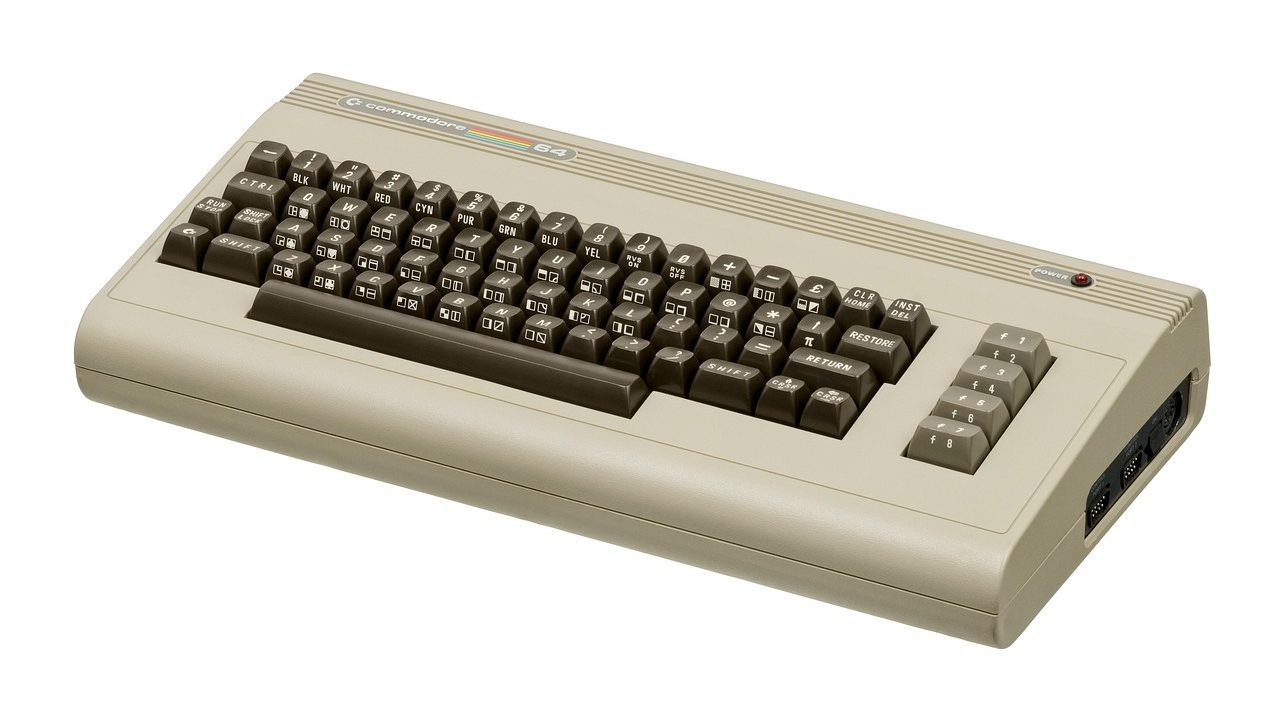
The Commodore 64 keyboard font project — a typeface painstakingly recreated from photographs of actual C64 keycaps by a creator identified as szabadkai — scored 90 points with 17 comments, and the thread was a genuine delight. The creator photographed multiple keyboards to capture the exact letterforms, spacing, and color gradations of the original Commodore typeface, treating preservation as an art form in its own right. Comments ranged from memories of specific C64 software to debates about which production era of Commodore keyboard had the most authentic aesthetic.
La Cueva, a 1993 Mexican BBS session replay published by retro computing figure nanochess, scored 54 points with 17 comments. The interactive replay shows ANSI art, menus, and chat scrolling at the pace they would have appeared over a modem connection, functioning as a primary source document of early Mexican internet culture. The BBS era left little structured documentation — most of what happened in those communities existed on hardware that has long since died — making a recoverable session replay archaeological in value.
The piece 'What's Earth's dominant species by mass?' scored 261 points with 192 comments, and the discussion was broad. The answer, for those who have not encountered it: by animal biomass, the dominant species is livestock — cattle specifically, when managed animal biomass is counted. Including all living matter, bacteria and plants dominate by orders of magnitude, with humans representing a rounding error in the planetary carbon budget. One commenter's argument that ecosystem influence might be a more meaningful measure than raw biomass — by which metric humans have clearly restructured the planet in ways bacteria have not — generated substantial discussion about what the word 'dominant' actually means as a concept.
The Nobel Prize in Chemistry went to Henri Kagan and Kenso Soai for their work on asymmetric catalysis and autocatalysis. Kagan's chiral ligands and Soai's autocatalytic reaction represent decades of foundational research into how molecular chirality — the 'handedness' of molecules — can be controlled and amplified in chemical synthesis. The pharmaceutical implications are significant: most drugs are chiral molecules, and producing only the active enantiomer rather than a racemic mixture is both safer and more efficient. The Soai reaction, in which a product catalyzes its own formation and tiny initial chirality imbalances amplify dramatically, has been used as a model system for thinking about how biological homochirality — life on Earth uses exclusively left-handed amino acids — might have emerged from prebiotic chemistry.
What If the MoE Consensus Is Wrong? A Moment of Honest Uncertainty

The Penguin Mail project — an open-source Rust email client for Linux with AI-assisted composition and filtering — scored 198 points with 128 comments, generating the recurring debate about whether email clients need AI features or whether better email hygiene would address the underlying problem. The AnyPS5 project, at 288 points and 241 comments, claims to port PlayStation 5 binaries to run on PC without emulation by mapping 87 percent of the PS5's system libraries to native equivalents. Commenters with games industry and systems programming backgrounds debated whether a compatibility layer of that kind is philosophically distinct from emulation, and noted that Sony has historically pursued projects in this space aggressively. The 13 percent of libraries still unaccounted for, and whether that gap affects the most commercially valuable titles, was the practical thread the community pulled on.
The mixture-of-experts architecture has become the HN community's near-consensus answer to frontier model efficiency — reinforced this week by Mistral Large 4 — and today's discussion included a deliberate challenge to that confidence. The efficiency gains from MoE during training are well-documented: by activating only a subset of parameters for any given input, MoE models achieve better performance per unit of compute. That finding has been validated across multiple independent research groups and multiple model generations.
The assumption that warrants scrutiny, however, is whether training-time efficiency translates cleanly to inference infrastructure efficiency. MoE models are harder to serve at scale because different inputs activate different experts, creating load-balancing challenges across GPU clusters. The total parameter count for a large MoE model is significantly higher than a dense model with equivalent active parameters, meaning memory requirements are substantially larger. For organizations deploying at millions of concurrent requests, that memory overhead may make MoE models less attractive in production than their training-time benchmarks suggest. A second embedded assumption — that routing, the mechanism deciding which expert handles which input, is a solved problem — also warrants attention. Systematic routing failures on tail query distributions could produce real-world performance that diverges from benchmark results in ways the current publicly available data cannot reveal.
The signal to watch, the discussion concluded, is whether major hyperscalers begin reporting that MoE models underperform their benchmarks in production, particularly on longer-tail query distributions. That data is not yet publicly available in the way benchmark data is. The MoE case remains strong — but strong and certain are different things, and the infrastructure implications of a gap between lab conditions and deployment reality are significant enough to warrant sustained attention from anyone building AI deployment systems.
A Geography Error, a Correction, and the Human Clock Speed Underneath the AI Discourse

The closing segment opened with a correction. In an episode from May 18th of this year, the show reported on claims that Ukraine had struck Russian ships in the Caspian Sea, presenting it as evidence of Kyiv's expanding long-range strike capabilities. The Caspian Sea is landlocked and, as listeners with geographic knowledge immediately flagged, approximately as far from Ukrainian-controlled territory as a location can be while remaining on the same continent. Ukraine has no credible mechanism for striking ships there. The hosts acknowledged that the claim was either fabricated or catastrophically misattributed, and that a basic geography check before broadcast would have caught it. Checking geographic claims against a map is now a standing item on the production checklist.
The day's through-line, looking back across segments, is the question of what it means to build something. OpenTPU is hardware built substantially by AI. Strands Decider is a model built to help AI decide. Claude Code's suggested messages are an interface built to help humans communicate with AI in terms the AI prefers. The recursion is real and it is deepening. Yet alongside all of it — someone spent hours photographing Commodore 64 keyboards to recreate a font. Someone preserved a 1993 Mexican BBS session so future researchers could access it. Kenso Soai watched a molecule amplify its own chirality across thirty years of research before the Nobel committee called. Those projects run at a different clock speed than the AI scaling discourse, and both timescales, the discussion concluded, deserve attention.
The show credited Claude Code by Anthropic for script generation and production automation, and Perplexity for research surfacing and structuring — described not as sponsorships but as the actual tools enabling a two-person team to produce daily coverage at the intended depth. All stories discussed originated from the Hacker News community at news.ycombinator.com.