Denmark's 8.8 Million-Record Identity Breach Exposes the Fragility of Centralized Digital Government
A breach of Denmark's national identity registry exposed records tied to virtually every citizen in the country, while elsewhere a gaming GPU ran a 125-billion-parameter AI model and Formula One drivers lost control of their cars mid-race — all on a Monday defined by the question of who controls complex systems when they fail.

“Unlike a password, a CPR number cannot simply be reissued to 8.8 million people — the government's remediation options are severely constrained by the very design choices that made the system efficient.”
How this was made Verified AI
Every Intellegix briefing is generated from that day's broadcast and run through automated checks before it publishes — with a human paged on any flag. Here is the trail for this edition.
A Nation's Identity, Exposed
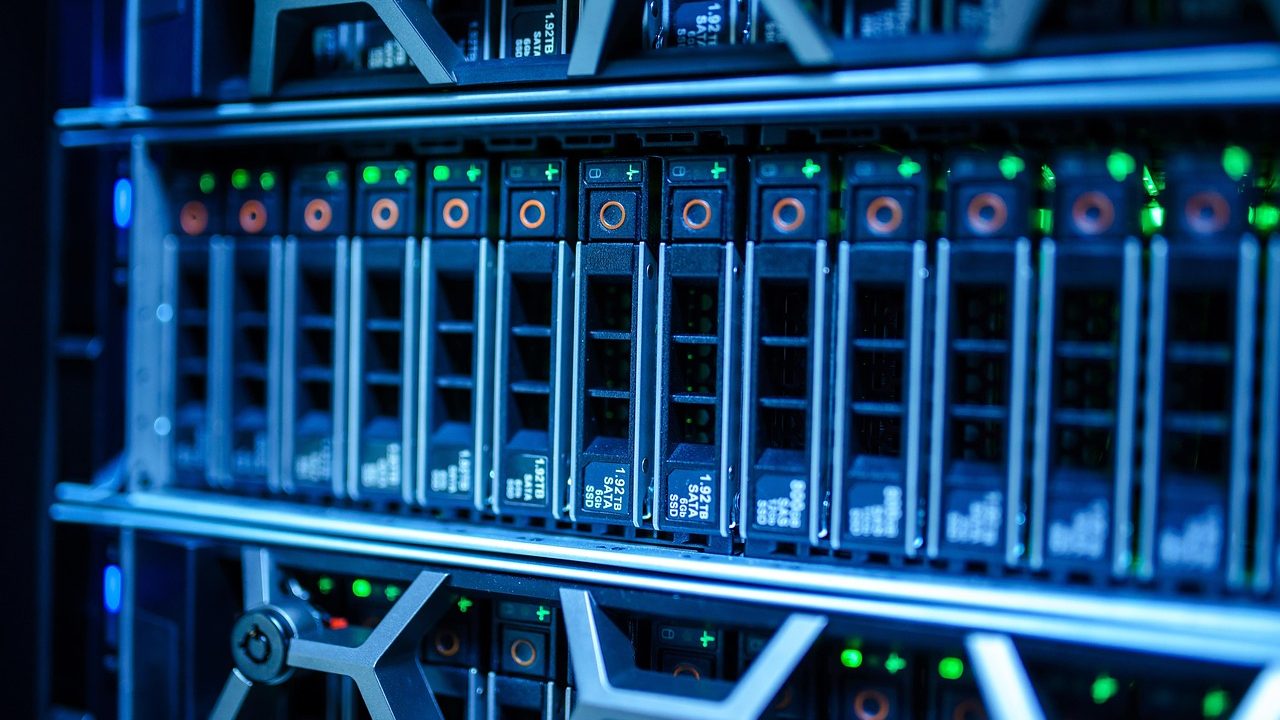
Denmark's Central Person Register — the CPR registry — has suffered what authorities are calling 'extensive unauthorized access,' exposing 8.8 million records tied to the country's foundational national identifier. Every Danish citizen receives a CPR number at birth, a ten-digit code that serves as the backbone of the country's integrated digital infrastructure: healthcare appointments, tax filings, banking verification, and pension access all route through it. Denmark's total population is roughly 5.9 million, meaning the breach also swept up citizens living abroad, historical registrations, and related records, making the scope essentially total.
What makes the exposure particularly alarming from a systems design perspective is what CPR numbers enable. Denmark built its digital government — anchored through the NemID and successor MitID authentication platforms — deliberately around CPR integration as a feature, not an accident. That deliberate choice creates a single point of catastrophic failure: once an attacker holds a CPR number alongside even basic supplementary data, the social engineering surface becomes enormous.
Denmark's Data Protection Authority, Datatilsynet, is investigating. The government's statement used the phrase 'extensive unauthorized access' rather than more specific technical language such as 'breach' or 'exfiltration,' suggesting either that forensics are still ongoing or that the disclosure is being carefully managed. Commenters in the Hacker News thread noted the phrasing is consistent with an insider access event or a compromised privileged credential rather than an external intrusion.
The breach arrives at a consequential moment for European digital policy. The EU's eIDAS 2.0 framework has been pushing member states toward more interoperable national identity systems, with Denmark frequently cited as a success case. The incident does not invalidate the approach, but it strengthens the hand of critics who argue that centralized identity infrastructure requires distributed architecture or stronger compartmentalization. Unlike a password, a CPR number cannot simply be reissued to 8.8 million people — the government's remediation options are severely constrained by the very design choices that made the system efficient.
Qualcomm and Huawei Strike a 'Broad' Patent Deal — and the Signal Matters More Than the Transaction
Qualcomm and Huawei have announced a broad patent licensing agreement, a development that sounds routine until the geopolitical context comes into focus. Both companies used the specific word 'broad' in their announcement, suggesting a significant expansion of the licensing relationship — one that has been deeply entangled in the U.S. export control regime restricting Huawei's access to American semiconductor technology since 2019.
The business logic for Qualcomm is reasonably clear: patent licensing has historically accounted for a substantial portion of the company's operating income, and Huawei, despite export restrictions on certain components, remains one of the largest technology companies in the world by revenue. A licensing deal generates income without requiring component sales that might trigger export control exposure.
The deal's signal, however, is more interesting than the transaction itself. If Huawei is signing a broad patent license with Qualcomm, it could indicate that its own internal designs — developed through the HiSilicon unit and in partnership with SMIC, a domestic foundry — are converging toward architectures that touch Qualcomm's patent portfolio, offering a window into the direction of Huawei's R&D. Alternatively, the agreement could be defensive: Huawei has been attempting to rebuild handset market share decimated by export restrictions, and clearing IP exposure ahead of expansion into markets where Qualcomm patents are enforceable — Europe, Southeast Asia — would be a logical precaution before shipping volume.
The deal will likely attract antitrust scrutiny given both companies' regulatory histories. Qualcomm spent years defending against FTC allegations centered on what regulators characterized as a 'no license, no chips' policy that conditioned chip supply on licensing agreements. Under U.S. antitrust law, the question regulators ask is whether licensing terms are being used to maintain dominance in a downstream market rather than simply to monetize legitimate intellectual property — a fact-intensive, case-by-case analysis. What the deal does not address is Huawei's parallel national security exposure in Western markets: the carrier equipment bans in the U.S., UK, and elsewhere remain entirely separate tracks.
A 125-Billion-Parameter AI Model Runs on a Single Gaming GPU — and the Implications Are Larger Than the Benchmark

A GitHub project called Strata, published by a user identified as Niko1221, claims to run Qwen 3.8 Flash Next — a 125-billion-parameter language model — on a single consumer RTX 4090 at 100 tokens per second. The post attracted 822 upvotes and 364 comments on Hacker News, a level of engagement that reflects genuine technical surprise. The RTX 4090 carries 24 gigabytes of VRAM; a straightforward FP16 load of a 125-billion-parameter model would require something closer to 250 gigabytes, making direct execution impossible without significant compression.
The technical approach, as reconstructed from the Hacker News thread, appears to combine aggressive quantization — reducing model weights to very low precision, possibly 2-bit or 3-bit — with CPU offloading and an optimized inference kernel engineered to minimize the latency penalty of moving data between CPU RAM and GPU VRAM. The 'Flash' designation in the model name suggests architectural optimizations for inference speed derivative of the FlashAttention family of attention implementations. For context, a fluent conversational exchange with a language model starts to feel natural around 30 to 50 tokens per second; 100 tokens per second at this model size, if reproducible, would place capable AI inference comfortably within reach of local consumer hardware.
The privacy implication is significant and underappreciated. A meaningful fraction of professional technology users — legal practices, medical systems, government applications, proprietary business analysis — faces data governance requirements that preclude routing sensitive queries through third-party cloud APIs. Local inference at this quality level does not just reduce cost; it unlocks a category of applications previously blocked by compliance constraints.
Independent reproductions reported in the thread are producing mixed results, with performance varying substantially based on CPU speed, RAM bandwidth, and system configuration — normal variance for early open-source benchmarks, but a reason for caution about the headline figure. Separately, a Red Hat study comparing AI decision models against LLM-as-a-judge approaches and traditional classifiers found that newer architectures do not consistently outperform simpler baselines on the tasks tested — a useful counterpoint to capability enthusiasm, and a reminder that bigger is not automatically better for every production workload.
Apple's Locked Garden, a Race-Day Software Failure, and the Cost of Opacity
Two seemingly unrelated stories — users mass-removing Apple Intelligence from macOS 27 and Formula One drivers losing control of their cars' power delivery systems at the Bahrain Grand Prix — share a common thread: the consequences of software systems that are opaque to the people operating them.
A GitHub project called RemoveMacAI, which describes how to fully disable Apple Intelligence and reclaim the disk space it occupies, has drawn 610 upvotes and 414 comments on Hacker News. The frustration in the thread is not simply about the feature itself but about the feeling that the operating system is allocating compute resources — including a significant storage reservation for local model weights and inference infrastructure — without meaningful user consent or a straightforward opt-out. The comment volume of 414 suggests this is not a fringe concern among the technically literate. The debate reflects a structural tension in Apple's design philosophy: a security model that is genuinely protective for most users depends on the same mechanisms that frustrate the modification and security research community.
Formula One surfaced the sharper version of the same problem. At the Bahrain Grand Prix, a software glitch left multiple drivers unable to properly control their cars' power delivery systems. Drivers described the experience as 'horrible' and 'totally unacceptable.' Formula One has moved toward standardized electronic control unit software across teams in certain areas, partly for cost control and regulatory simplicity — an architectural choice that concentrates bug exposure rather than isolating it. The 192 comments in the Hacker News thread reflect genuine engineering concern about software in safety-critical contexts, and the recurring lesson that testing environments never fully replicate the combination of conditions encountered in production.
On a more hopeful note in the medical device space, the first fully implantable cochlear implant has launched commercially. All components sit inside the body; a microphone embedded under the skin captures sound and processes it without the external processor unit that conventional implants require. The design has significant quality-of-life implications — waterproof, invisible, and free of external battery management — and the Hacker News thread, though small, drew comments from people with cochlear implants in their families that reflected the human stakes of the advance.
SQL Renders Doom, VB6 Lives in the Browser, and the Case for Preservation

CedarDB, a columnar analytical database company, published a post demonstrating the original 1993 id Software game Doom running as a SQL query — game loop, rendering, and collision detection implemented through recursive common table expressions and window functions inside the query execution engine. The post drew 152 upvotes, with comments expressing genuine astonishment alongside practical questions about frame rates. CedarDB claims playable performance, an implicit argument about the expressive power and speed of its execution engine that functions as technically audacious marketing.
A separate project — a working Visual Basic 6 IDE running in the browser, complete with form designer, properties panel, and code editor — attracted 266 upvotes and 90 comments. VB6 was officially discontinued by Microsoft in 2008, but the Hacker News thread became a time capsule: programmers recounting the first applications they built with it, reports of business software still running in production in 2026, and appreciation for the rapid application development philosophy the environment embodied. Implementing the form designer with functional VB6 runtime semantics in JavaScript represents a genuine technical achievement alongside the nostalgia.
The resurfacing of the 'Tao of Backup' document — a classic text that advocates for three backup principles: multiple copies, geographic distribution, and regularly tested restores — prompted 55 comments, many of them horror stories. The recurring failure mode is not backup jobs that report errors; it is backup jobs that complete silently and produce unrestorable data that no one discovers until an actual recovery event.
The Tippett Studio archive appeared online following the closure of Phil Tippett's studio, whose practical effects work shaped the creature sequences in Jurassic Park, Starship Troopers, and the original Star Wars films. The archive reportedly includes reference materials, process documentation, and possibly production files. The HN community's 154 upvotes reflect recognition that stop-motion and practical effects craft knowledge is genuinely at risk of disappearing as studios close and institutional knowledge disperses — and that digital preservation requires active effort, not passive assumption.
Data Centers, Draper, Cringely, and the Stories Behind the Numbers

An improperly redacted regulatory filing revealed actual water and electricity consumption figures for Google's data center in Lincoln, Nebraska. The specific numbers were not fully detailed in the original report, but the story attracted 540 comments on Hacker News — the second-highest comment count of any story on the day — focused on the gap between voluntary aggregate sustainability disclosures and facility-level operational data. Data centers account for a growing fraction of total U.S. electricity consumption, and water use for cooling represents a genuine resource competition in water-stressed regions. The disclosure raised pointed questions about whether aggregate company-level environmental reporting provides adequate information to communities that host these facilities.
German industrial robotics startup RobCo reached a $1 billion valuation, a milestone worth noting in a market historically dominated by large incumbents such as KUKA and ABB. RobCo's pitch is modular robotics that small and medium enterprises can configure and reconfigure without specialized integration work — addressing a specific friction point in the SME automation market that larger players have underserved.
Bill Draper died on September 30th at 92. A founding partner of Draper and Johnson Investment Company and later involved with Sutter Hill Ventures, he was an early architect of the venture capital model as it operates today. He also served as head of the Export-Import Bank and the United Nations Development Programme under President Reagan — an unusual combination of private capital and public service. His son Tim Draper and grandson Adam Draper both entered venture capital, making the Drapers the most multigenerational VC dynasty in the industry.
The Hacker News community's response to the death of Bob Cringely — the pen name of technology journalist Mark Stephens — was larger still: 885 upvotes and 190 comments. Cringely wrote the 'I, Cringely' column for PBS's technology publication and later independently, and had worked at Apple before turning to journalism, giving his analysis unusual credibility. His book 'Accidental Empires' remains one of the most cited accounts of how the PC industry actually developed. The tribute thread includes accounts of specific columns that changed readers' thinking, and predictions of Cringely's — particularly regarding IBM's strategic drift and Microsoft's antitrust exposure — that proved accurate years after publication. Both Draper and Cringely represented careers built on genuine expertise and genuine relationships rather than audience performance, a combination the community noted as increasingly rare.
Testing Our Own Confidence — and Correcting the Record

The most enthusiastic consensus in the Hacker News community today centered on the Strata project's claim that local inference on consumer hardware is approaching a threshold where it displaces cloud AI for capable workloads. That claim deserves scrutiny before it hardens into conventional wisdom.
The most important assumption to challenge is the equivalence between parameter count and effective capability after compression. Getting a 125-billion-parameter model into 24 gigabytes of VRAM requires quantization aggressive enough — likely 2-bit or 3-bit precision — that the model running on the hardware is not the same model as the full-precision version. Quality degradation on complex reasoning tasks at that compression level can be substantial and uneven: the model may perform well on simple tasks that make throughput benchmarks look impressive while failing on the nuanced tasks that justify running a large model in the first place. If the effective capability post-quantization is comparable to a much smaller full-precision model, the story becomes more interesting as compression research than as an inference displacement argument.
The use-case constraint is equally important. One hundred tokens per second is fast for a conversational interface. It is not fast for batch processing. Legal discovery, financial document analysis, and content moderation at scale require parallelization across many GPUs that cloud infrastructure provides and a single consumer card cannot replicate regardless of per-second throughput. Local inference addresses privacy and cost constraints in low-volume interactive scenarios; it does not obviously displace cloud for high-throughput workloads. The hardware assumption also deserves inspection: the RTX 4090 costs upward of $1,600 at retail and represents the high end of the consumer enthusiast market, a different claim than 'your laptop can run this.'
What would constitute evidence that local inference is genuinely displacing cloud at scale? Independent reproductions confirming quality metrics on complex reasoning benchmarks — not just throughput numbers — would be the first signal. Quantization research demonstrating specific techniques that close the quality gap with full precision would be the second. The third and most concrete: enterprise customers citing local inference as a reason to reduce API spend in earnings call commentary. Benchmark performance is the claim. Revenue impact is the proof.
This episode also carries a correction. In a May episode, the show referenced Ukraine striking Russian ships in the Caspian Sea. The Caspian Sea is landlocked, surrounded by Russia, Kazakhstan, Turkmenistan, Iran, and Azerbaijan; Ukraine has no realistic military reach to that body of water. The claim was either a factual error in sourcing or a fabricated claim that was not caught before broadcast. Getting the facts right is the baseline obligation of the format, and that one failed it.