AI Privacy Leaks, Google's Decline, and the Race to Shrink Machine Intelligence
From a viral essay dissecting Google's transformation into a 'mall directory' to academic research catching AI companies funneling user prompts into advertising pipelines, Tuesday's Hacker News surfaced a sweeping audit of how the internet's most powerful information systems are quietly working against their users — while a parallel wave of tiny, local AI models offers a possible escape hatch.

“the advertising revenue optimization loop became so dominant internally that product teams whose work improved search quality but did not improve ad yield lost resources and influence”
How this was made Verified AI
Every Intellegix briefing is generated from that day's broadcast and run through automated checks before it publishes — with a human paged on any flag. Here is the trail for this edition.
Google's Search Decay and the AI Prompt Surveillance Problem

An essay titled 'When Did Google Get So Weird?' — written by someone going by Sancho and published on Bear Blog — cracked nineteen hundred upvotes on Hacker News overnight, triggering a thread of more than a thousand replies that reads, in the words of commenters, like 'a collective exhale from people who've been holding this frustration for years.' The piece traces Google's transformation from a search engine that felt like a trusted librarian into something increasingly resembling a mall directory designed to keep users inside the mall.
The critique is not merely nostalgic. Studies over the past three or four years have tracked search result quality and found that the proportion of results pointing to original, authoritative sources has declined while SEO-optimized aggregator content has increased. Long-tenured engineers and researchers in the HN thread offer a consistent explanation: the advertising revenue optimization loop became so dominant internally that product teams whose work improved search quality but did not improve ad yield lost resources and influence. Google's ad business and its search product, they argue, are now in genuine tension — maximizing engagement is not the same objective as maximizing information quality.
The antitrust dimension adds a structural layer. Google controls roughly ninety-one percent of global search market share by the most recent measurements. The Department of Justice's 2024 ruling found that Google's exclusive default search agreements with Apple and device manufacturers violated the Sherman Act — federal competition law dating to 1890 — by maintaining dominance through exclusionary conduct rather than product merit. But the degradation the essay describes is harder to remedy: traditional antitrust tools can break up distribution agreements, but they cannot mandate that a company's search results be good. Competitive pressure, commenters note, may be the only real corrective — and meaningful competition has not yet arrived.
Running alongside the Google story is a piece of academic research titled 'Prompt Like a Butterfly, Sting Like a Tracker,' which the HN community is treating as its companion document. The paper documents that several major AI companies are leaking user prompt data into advertising and analytics infrastructure — sometimes through third-party analytics SDKs embedded in AI interfaces that capture interaction data including portions of user inputs. The implications extend well beyond embarrassment: a user prompting an AI about a medical condition, a legal situation, or a financial decision may be generating context that flows into advertising data pipelines, creating a surveillance vector that captures not what sites a person visits but what they are thinking about and asking for help with.
Cal Newport's essay calling for formal investigation of AI labs collected five hundred and twenty-five points and two hundred and fifteen comments — significant engagement for a regulatory proposal on a forum that skews toward engineering and is often skeptical of government intervention. Newport is not calling for breaking up Anthropic or OpenAI; he is calling for independent audits, mandatory disclosure of training data provenance, and third-party safety evaluations — the kind of structured external accountability that finance and pharmaceuticals have carried for decades. The HN thread is genuinely split, with one faction warning that regulation will stifle development during a critical period and another countering that the 'critical period' argument is precisely what tobacco, banking, and aviation used to delay oversight before it became unavoidable.
Smaller, Faster, Cheaper: The Micro-AI Wave Takes Shape
Anthropic's release of Claude Sonnet 5.5 landed as the second most-engaged story on Hacker News, drawing eight hundred and seventeen points and five hundred and fifty comments. Benchmark numbers circulating in the thread suggest meaningful improvements on multi-step reasoning tasks, and the community is conducting its usual rigorous cross-model comparisons — running identical prompts through multiple frontier models and posting results inline. The general shape of the feedback is that Sonnet 5.5 follows nuanced, multi-constraint instructions more reliably than its predecessor and shows greater resistance to the kind of prompt injection documented in the butterfly-tracker paper, though whether that improvement is structural or behavioral remains an open question.
A model called Jeff — 0.8 billion parameters, decision-focused, described as Jev-compatible, and trained on consumer hardware at home — is generating serious traction with five hundred and twelve points and a hundred and ninety-six comments. Its headline figure is roughly thirty milliseconds of inference latency, which compares favorably to the hundreds of milliseconds or multi-second response times typical of API-based frontier model calls. For decision-making loops inside agent systems that make many sequential small calls, that difference compounds. Jev compatibility means Jeff can plug into existing agent orchestration frameworks without custom integration work, making it a practical component rather than an interesting demonstration.
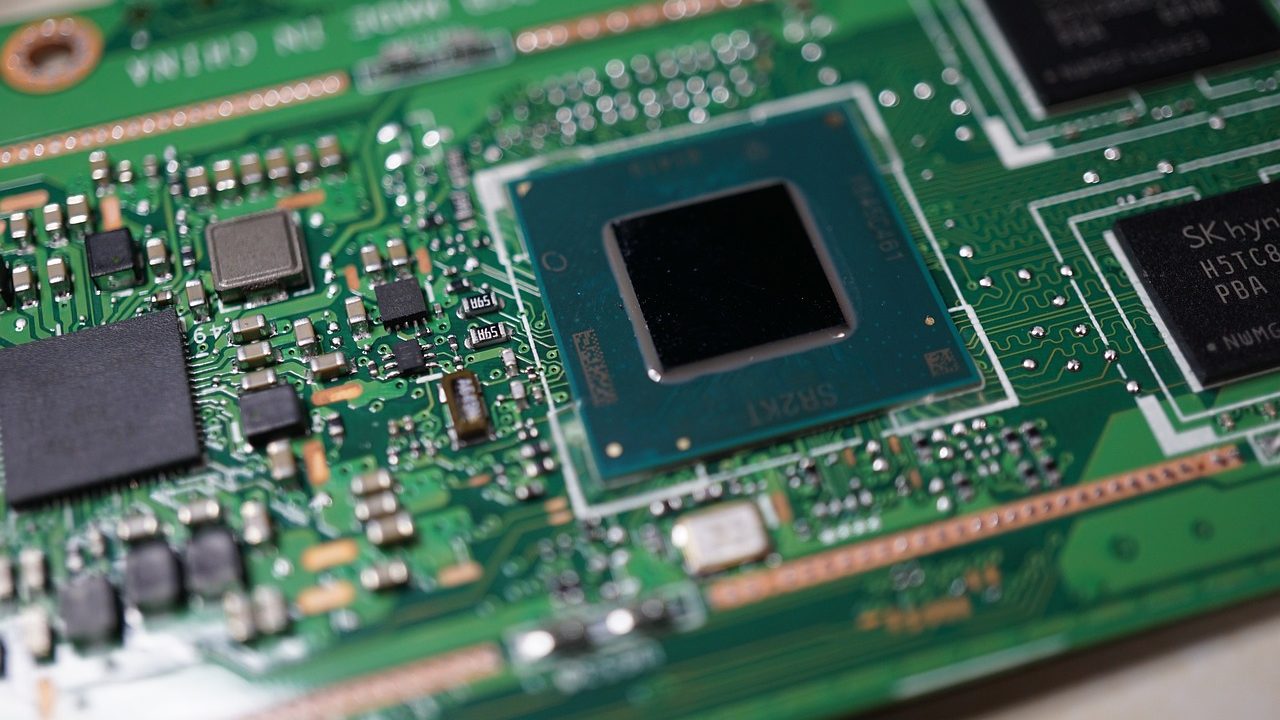
The ESP32S3 cluster project pushes the miniaturization argument further. A researcher built a cluster of microcontrollers — chips that normally cost a few dollars each and are designed for IoT devices — and got a 1.58-bit BitNet language model running on them. BitNet is Microsoft Research's architecture for extreme quantization: instead of sixteen-bit or eight-bit floating-point weights, the model operates with weights that are essentially ternary — negative one, zero, or one. The compression is extraordinary. The point, as the HN community reads it, is not the use case but the implication: if inference can run on chips designed for temperature sensors and WiFi switches, the assumption that AI requires specialized accelerators looks like a transitional constraint rather than a permanent one.
The MicroLLM Lab project, available at stateofutopia.com, extends the same logic to the browser. Seven small models run entirely in-browser with no server calls and no API keys required, drawing two hundred and fifty-one points and eighty-seven comments. Three different projects — Jeff, BitNet, MicroLLM — represent three different implementation approaches to the same question: how small can capable AI get? The HN community, which has strong opinions about infrastructure costs, data privacy, and deployment complexity, is responding to all three because local inference solves problems that API-based inference does not, including the privacy vulnerabilities documented in the butterfly-tracker research.
Nvidia's proposal for a dedicated watchdog chip — silicon that would sit alongside AI agent deployments and monitor their behavior in real time — frames the oversight problem in hardware terms. The technical debate in that thread divides between those who call this security theater, arguing that a watchdog monitoring a system it does not fundamentally understand offers a false guarantee of safety, and those who argue that hardware-level oversight is harder to circumvent than software-level oversight precisely because it is harder to update or manipulate. The deeper question the thread is circling is whether safety constraints belong in the model itself, in the deployment environment, or in dedicated hardware — with the emerging answer being that all three layers probably need to be doing something.
Craft, Legacy Systems, and a PS5 Vulnerability Hiding in Plain Sight

The Phyllotaxis LED display earned a hundred and fifty-nine upvotes not through utility but through craft. The project builds an audio-reactive LED display organized around phyllotaxis patterns — the mathematical spirals found in sunflowers, pine cones, and nautilus shells, governed by the Fibonacci sequence and the golden angle — and wires it to audio input so the LEDs pulse in response to sound. The comment section is populated by people who recognized the phyllotaxis reference immediately and got genuinely excited about the implementation choices, a reminder that Hacker News rewards technical depth for its own sake as readily as it rewards commercial ambition.
The PS5 RTMP stream hijacking, documented by researcher Yash Garg, is the security story in this cluster. The PS5's streaming setup uses RTMP — Real-Time Messaging Protocol — and Garg found a way to intercept and manipulate that stream in ways Sony almost certainly did not intend. The HN thread is part security analysis and part archaeology: RTMP is a Flash-era protocol that has persisted into the streaming age because it works and its surrounding infrastructure is mature, even though it was designed without the threat model that exists today. Consumer hardware running complex streaming protocols represents an attack surface that does not receive the scrutiny given to enterprise systems.
A 2017 Computerworld article about a server booted up in 1993 — and still running at the time of publication — resurfaced on HN and drew a characteristically warm response. The community's first calculation is obvious: if it was running in 2017, is it still running now? The discussion turns into an exchange of stories about infrastructure that outlasted every estimate, systems too important to take offline and too old to be fully understood by current staff. Christian Perone's essay 'The Systems That No One Will Test' provides the theoretical frame: these systems look stable because they have not broken recently, but their stability is not the result of ongoing verification. Their fragility is hidden, not absent.
On the lighter end, a 1996 chat room simulator — connected to what appear to be Windows 95 and System 7 desktop emulations — drew a thread that functions as its own form of historical documentation, with the HN community sharing memories of early internet experiences in a space designed to evoke them. The software occlusion culling post for Block Game and a Conan.io write-up on integrating C++ libraries into the Godot engine round out the technical craft stories — one exploring CPU-side visibility determination in voxel worlds, the other offering a practical integration path for developers with existing C++ codebases who have moved to Godot as an open-source alternative to Unity.
Astroturfing, Secret Teen Spaces, and California Wine's Structural Crisis

Peter Vijeh's data-driven investigation into Reddit astroturfing pulled two hundred and thirty-eight points and nearly three hundred comments by doing what opinion pieces about platform manipulation rarely do: showing the methodology. Vijeh pulled behavioral data, examined account activity patterns, posting timing, and cross-subreddit coordination signatures, and found patterns consistent with coordinated account networks — accounts created in batches, posting rhythms suggesting automation, upvote patterns deviating from organic behavior. The HN discussion quickly generalizes: if Reddit has this problem, every platform with voting and ranking mechanisms presumably does too, and the incentive to manipulate is proportional to the influence the platform has over investment decisions, political opinions, and consumer choices.
A This American Life piece about teenagers colonizing NPR's Spotify comment sections provided a counterpoint that drew four hundred and twenty points and two hundred and twenty-four comments. The teenagers discovered that NPR's Spotify episode comment sections were essentially unwatched — the audience skews older and mostly does not read comments, and nobody was moderating them. A community built a social space there. The pattern the HN thread identifies is durable: every generation finds the gaps in the attention economy where adults are not looking and builds something in them. Bulletin boards, early IRC channels, Tumblr's back-alleys, NPR's Spotify comments. The space itself is almost irrelevant; what matters is the sense of a place that belongs to its inhabitants.
MUBI's Notebook published a piece called 'Pirating the Pirates' — on the history and ethics of piracy in cinema itself, films about pirates, films that pirated other films, and bootleg culture — that became one of the day's top-scoring stories at six hundred and eight points and three hundred and five comments. The HN thread moves in directions the headline does not predict: legal analysis of how copyright law interacts with derivative works, historical discussion of how early Hollywood studios violated patents held by Edison's Motion Picture Patents Company and essentially pirated their way into existence, and contemporary debate about AI training on copyrighted data — all orbiting the same conceptual question about where the line between inspiration, influence, and infringement actually falls.
The California wine grape story generated six hundred and twenty-one comments — among the day's highest — because it is simultaneously a farming story, a consumer behavior story, and a generational story. California's wine grape farmers are facing a demand collapse driven primarily by younger consumers moving toward spirits, cannabis, and simply drinking less. The structural problem is that wine grape agriculture is a long-cycle business: vines take several years to mature after planting, and producers cannot pivot from Cabernet Sauvignon to another crop in a single season. Studies of drinking behavior suggest habits established in one's twenties tend to persist, meaning the demand reduction appears structural rather than cyclical — the cohort entering adulthood now is drinking significantly less wine than previous cohorts, and that preference is unlikely to reverse as they age. The HN thread debates policy options including direct subsidy payments, crop-switching assistance, and water allocation changes, while noting that the political economy of California wine — its cultural cachet and political representation — complicates purely economic remedies.
Ancient Burials, Solar Storms, AMD's World Labs Bet, and the Limits of Tiny AI

New findings at Göbeklitepe — the site in southeastern Turkey whose structures date to roughly twelve thousand years ago, predating the agricultural revolution — resolve a longstanding puzzle about scattered human bones with no clear burial context. Research published in Archaeology Magazine suggests these were deliberate secondary burials: a practice in which bodies are first interred elsewhere, allowed to decompose, and then moved to a new location as part of ritual activity. The practice is documented in multiple later cultures, but finding evidence of it at twelve thousand years ago pushes the complexity of pre-agricultural ritual behavior considerably further back than the prior consensus. The HN thread draws on commenters with domain knowledge to debate what the site implies for theories of how religion and social organization co-evolved.
Scientists reported by Ars Technica have resolved an anomaly in historical magnetometer records from the 1840s — unusual readings that did not fit the understood pattern of solar activity. The resolution involves identifying a previously unrecognized sequence of solar events that produced compound effects on Earth's magnetic field. The relevance is not purely historical: understanding the range of solar weather events in the pre-satellite record helps calibrate risk models for modern infrastructure. Power grids, satellite operations, and GPS systems all carry dependencies on the geomagnetic environment that can be disrupted by intense solar activity, and the research community believes the pre-instrumentation record contains evidence of events more severe than the 1989 Quebec blackout, the modern reference point.
AMD's acquisition of World Labs — a spatial intelligence company founded by Fei-Fei Li and colleagues, focused on building systems that understand three-dimensional physical environments — is the business story of the day. AMD has been aggressively positioning its AI accelerator hardware as an alternative to Nvidia's dominance, and its MI300 series has made real inroads in data center AI workloads. Acquiring a team with Fei-Fei Li's research reputation and a differentiated technical approach to spatial understanding gives AMD both engineering talent and strategic credibility in a capability area — robotics, augmented reality, autonomous navigation — that current frontier models handle poorly.
The episode's sharpest analytical tension concerns the small-model convergence thesis that runs through the Jeff, BitNet, and MicroLLM stories. The consensus in HN threads holds that smaller, faster, local models are on an inevitable trajectory toward replacing many use cases currently handled by large frontier models — that quantization keeps improving, hardware keeps getting cheaper, and the capability gap keeps narrowing. The counterargument worth taking seriously: the benchmarks where small models have closed the gap tend to be structured tasks — classification, short-form question answering, code completion in well-defined contexts. The benchmarks where the gap has remained large are multi-step reasoning over long contexts, synthesis of information across many domains, and novel problem-solving with limited training examples.
The bifurcation scenario — in which large models keep gaining capability on complex reasoning while small models get cheaper and faster on structured tasks, and the market permanently splits rather than converges — is at least as plausible as the convergence scenario. Jeff and its successors may come to dominate agent orchestration and classification loops while legal analysis, scientific literature synthesis, and complex code architecture remain the province of large models running expensive data center hardware. A proposed empirical test: if the gap between small and large models on multi-step math and scientific reasoning benchmarks such as GPQA and FrontierMath remains ten or more percentage points in twelve months, the bifurcation scenario has more traction; if small models close to within five points on those specific benchmarks, the convergence thesis strengthens. The honest answer, as the community acknowledges, is probably twelve to eighteen months away.