Mumps Outbreak Grows at SDSU, and a $50 Million Civic Bet Gets Stress-Tested
How this was made Verified AI
Every Intellegix briefing is generated from that day's broadcast and run through automated checks before it publishes — with a human paged on any flag. Here is the trail for this edition.

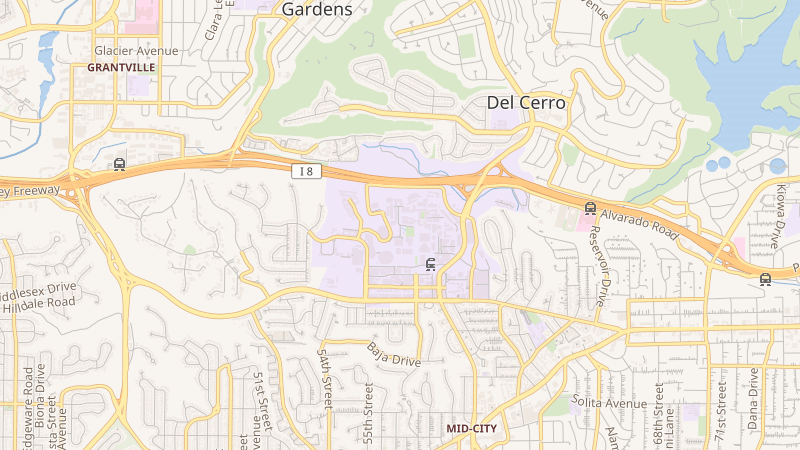
A mumps outbreak among SDSU football players continued to grow this week, with the count standing at 14 confirmed cases and one probable case earlier in the week before subsequent reporting indicated the number had risen further — though a specific revised total was not available in early Thursday reporting. Mumps spreads through respiratory droplets and contact with infected saliva, and while the vaccine is effective, it does not provide complete protection against all strains. A football program's environment — shared equipment, close physical contact during practice, and communal facilities — creates conditions that can accelerate spread.
The public-health implications extend beyond the athletics program. SDSU is a campus of tens of thousands of students, and if the outbreak is not contained within the football team, county health guidance is likely to become a significantly larger story. Key indicators to watch include any county advisory expanding beyond the program, game-day protocols for player participation, and whether contact tracing reaches opponents from recent games. On the school infrastructure front, Measure BB — a proposed $30 million Santee school bond for elementary campus repairs — is also on the November 3rd ballot, with a district town hall scheduled for October 8th at Cajon Park. In Encinitas, parents are publicly pressing the city to resolve a permitting dispute that has delayed a school renovation project for the Encinitas Union School District.
The What If We're Wrong analysis this week turns to the confident civic narrative surrounding Irwin Jacobs' $50 million gift to Father Joe's Villages. The implicit assumption embedded in coverage is that this anchor commitment will unlock a comprehensive, functional complex that meaningfully improves homelessness outcomes. The stress test begins with a pointed question: is physical capacity actually the bottleneck? A well-funded, well-designed building does not automatically solve the outreach problem — getting people into the system in the first place — or the mismatch between available services and individual needs. San Diego has expanded shelter capacity before without resolving the structural problem.
The counterargument is that Father Joe's Villages operates as an integrated services organization, not merely a shelter — running housing, healthcare, and wraparound support under one operational umbrella. The theory of change is co-location: putting interventions in proximity so people don't fall through the gaps between agencies. That is a more sophisticated model, but it carries its own assumptions. Downtown San Diego has historically been a difficult environment for large social-services developments to navigate zoning timelines and community opposition, and a $50 million lead gift does not waive the entitlement process.
The concrete checkpoints worth tracking are not the groundbreaking date but the intermediate signals: Does the project clear environmental review within 18 months? Does the full funding package close — because a gift of this size, while extraordinary, likely does not cover the full three-building campus? And does the city's permitting office treat this as a priority? The ultimate measure of success, those watching the project closely suggest, will be whether the number of people cycling back through the downtown homeless population stabilizes or drops in the 12 to 24 months after the facility opens. If it does, the model is working. If it holds flat or rises, the building will have solved a visibility problem rather than a housing one.