Born from Stellar Death, Lost in a Pacific Lagoon: Two Scientific Mysteries
How this was made Verified AI
Every Intellegix briefing is generated from that day's broadcast and run through automated checks before it publishes — with a human paged on any flag. Here is the trail for this edition.
Astronomers analyzing Hubble Space Telescope data have found unusual concentrations of niobium — a relatively rare metallic element — in the atmosphere of white dwarf star HS 0209+0832. The finding is extraordinary for what it implies: the niobium may be evidence of a Jupiter-sized planet that formed from material expelled when that star died. White dwarf atmospheres are typically dominated by hydrogen or helium because intense gravity causes heavier elements to sink rapidly. When unexpected heavy elements appear, it indicates recent accretion from an external source. The specific concentrations of niobium observed match the signature of a geologically differentiated planetary body — circumstantial evidence, but evidence pointing strongly in one direction.
If the interpretation holds, it substantially expands the conditions under which planets can form. The conventional model places planetary formation around young stars with protoplanetary disks. A planet assembled from the expelled remnants of a dying star would represent a different and previously unconfirmed formation pathway — a finding with broad implications for how astronomers understand where, when, and how often worlds emerge across a universe far older and stranger than standard models suggest.
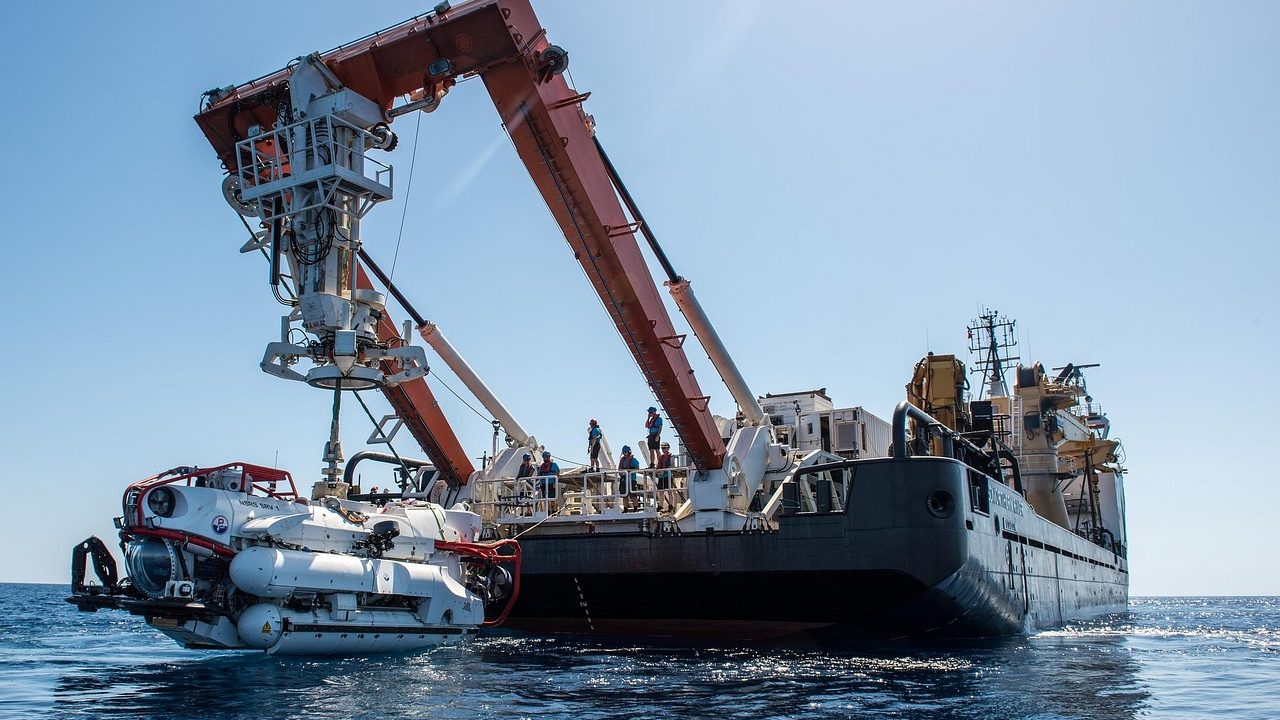
Eight thousand miles from any telescope, a 17-member Purdue University expedition is currently sailing toward Nikumaroro Island in the central Pacific, probing a lagoon object that researchers believe could be the wreckage of Amelia Earhart's Lockheed Electra 10E. Earhart disappeared July 2nd, 1937, during her attempt to circumnavigate the globe. The Nikumaroro hypothesis — that she and navigator Fred Noonan landed on or near the island and eventually died there — has been systematically researched for decades. The lagoon object was identified through underwater sonar and imaging data; its dimensions and features are argued to be consistent with a twin-engine aircraft of the Electra's approximate size. Credible skeptics maintain it is most likely a large tree trunk or natural formation.
The five-day probe will employ the same underwater sonar, remotely operated vehicles, and advanced imaging technologies used to survey deep-sea shipwrecks. Whatever the object proves to be, every expedition of this kind advances methodology for underwater search and recovery. Purdue's connection to the search is personal and historical: Earhart was a faculty member there before her final flight, and the university has been a consistent institutional supporter of systematic research into her fate. Eighty-nine years after her disappearance, the mystery remains genuinely unresolved — and people are still sailing across oceans to find the answer.