Grid-Scale Batteries, Cuba's Clock Decision, and the Biology That Outengineers Us
How this was made Verified AI
Every Intellegix briefing is generated from that day's broadcast and run through automated checks before it publishes — with a human paged on any flag. Here is the trail for this edition.
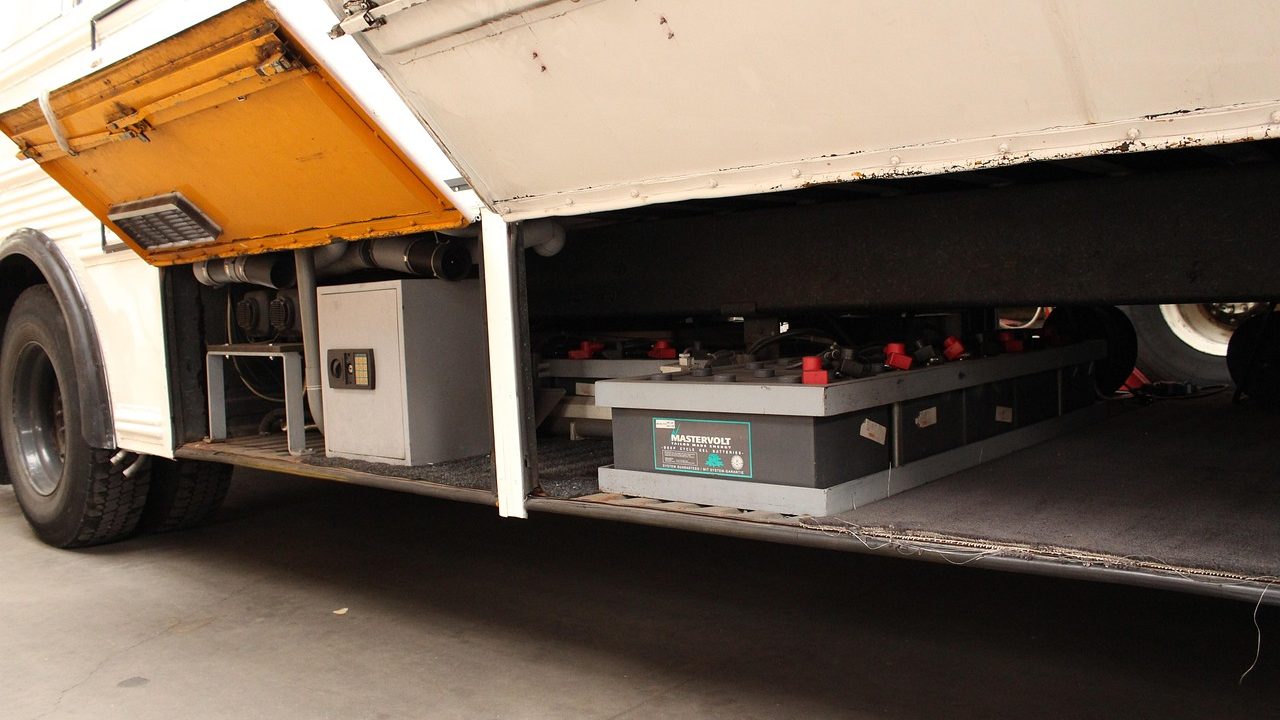
The United States added 20.2 gigawatt-hours of utility-scale battery storage in a single quarter — a figure the Hacker News thread treated more as confirmation than revelation for those already tracking grid data. For context, the entire U.S. grid held roughly 10 gigawatt-hours of utility-scale battery storage at the start of 2023. The deployment rate reflects a combination of IRA tax credits, declining lithium iron phosphate cell prices, and increasingly strong economics for pairing solar generation with storage to capture grid services revenue. Twenty gigawatt-hours of quarterly additions is sufficient to shift substantial solar generation into evening peak hours across entire regions, materially changing what grid operators can promise about renewable reliability.
Cuba's decision to skip the November 1st clock change and remain on daylight saving time until 2027 generated 150 comments for 76 points — a ratio that reliably signals a topic with strong pre-existing opinions. Cuba has faced chronic energy supply constraints, and the stated rationale is that remaining on DST keeps activity patterns offset from the peak evening demand window, reducing grid stress. The Hacker News thread diverged into a long-running discussion of DST abolition generally, noting that the EU voted to end seasonal clock changes but has never implemented the decision because member states could not agree on whether to adopt permanent standard time or permanent summer time.
A Spain train crash reported by the BBC — multiple fatalities, rescue operations underway — drew 31 points and 33 comments. The score is modest because it is not a technical story, but the community engagement was genuine, prompting discussion of European rail signaling systems and infrastructure investment. It deserves acknowledgment as a real tragedy with real casualties. A personal health update from Craig Hockenberry, a longtime and respected iOS developer posting at furbo.org, drew 280 points and 43 comments — a warmer response than many technically richer stories, reflecting the human dimension of a community that knows and follows certain contributors over years.
A 2020 Nautilus piece on why birds can fly over Mount Everest resurfaced to 175 points, with the answer centering on physiological adaptations including hemoglobin with dramatically higher oxygen affinity in species like bar-headed geese and heart-to-body-mass ratios that sustain exertion above 9,000 meters. It appeared alongside a spider silk piece documenting researchers studying 'silk dope,' a liquid precursor drawn into fiber with mechanical properties exceeding synthetic alternatives. Both stories fed a recurring Hacker News thread type: biological solutions to engineering problems that outperform our best designed materials, which partly explains why biomimicry research continues to attract serious funding. A Nature journal piece on human-enhanced tsunami hazard in large lakes — 43 points — documented how shoreline development and increased precipitation variability from climate change are expanding the geographic risk of displacement waves in freshwater bodies, a slow-moving hazard that receives far less attention than coastal tsunami risk despite potentially significant scale.