Crows, Roman Trade Networks, Super Ice, and a Correction
How this was made Verified AI
Every Intellegix briefing is generated from that day's broadcast and run through automated checks before it publishes — with a human paged on any flag. Here is the trail for this edition.
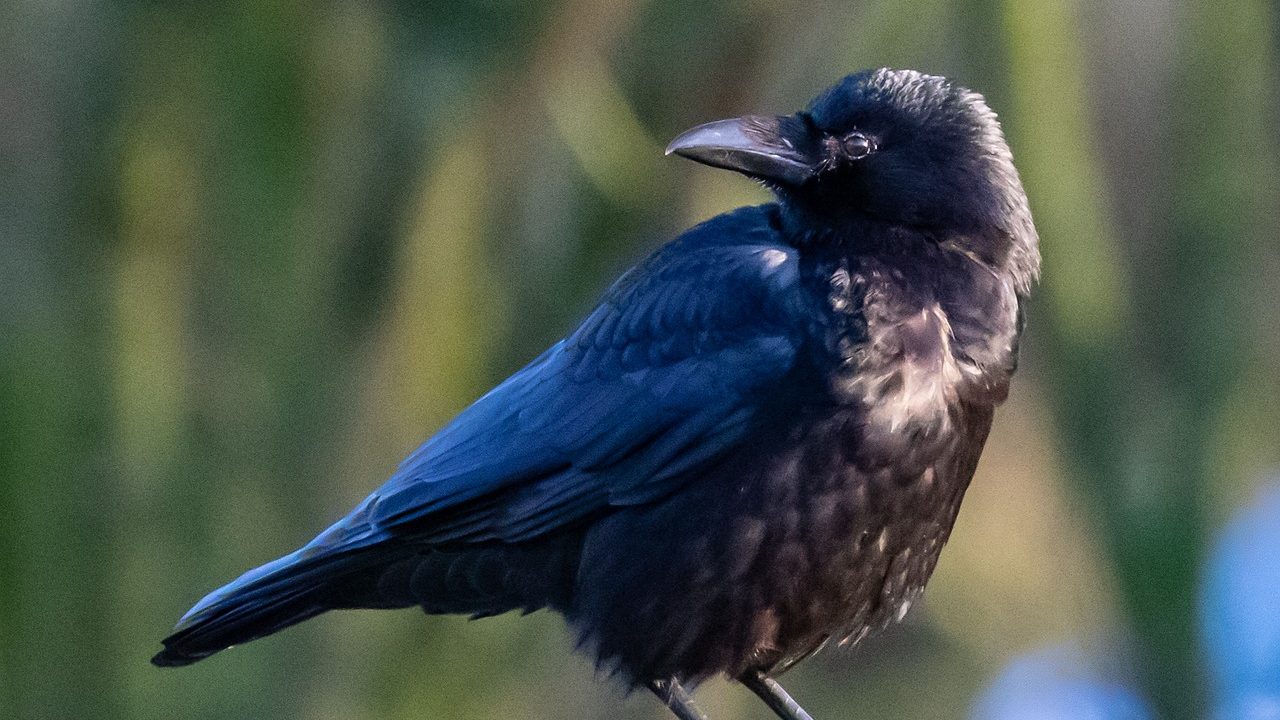
Among Friday's stories that did not receive full segment treatment: the woman who rescued an injured crow and now receives regular gifts — bottle caps, shiny pebbles, a safety pin — from birds drew 390 points and 131 comments, many from people sharing their own corvid interaction stories. The science of corvid reciprocity and memory is documented, but the video circulating is, by the thread's consensus, warming in a way the rest of the internet rarely manages.
A genuine academic piece by Michele Coscia applies network analysis to the Western Roman Empire, measuring economic complexity through product diversity, trade network density, and specialization across archaeological periods. The finding that Roman economic complexity peaked well before the traditional political decline markers offers a quantitative lens on the relationship between economic and political resilience that historians have historically been unable to apply.
Materials science made a brief appearance: "super ice," a new crystalline form of ice reportedly ten times stronger than regular ice and approaching the compressive strength of concrete, is circulating as preliminary research. The underlying mechanism — high-pressure crystalline phases — is described as real materials chemistry. Practical applications remain speculative. Libreboot 26.10, released as "Ominous Olive," adds UEFI support and Chromebook compatibility to the free firmware project — notable because UEFI's complexity has historically been a barrier to fully auditable firmware, and the large installed base of older Chromebooks abandoned by Google's official support cycle now has a viable alternative. The skeuomorphic Wayland desktop compositor DEsk, on GitHub with 623 points and 251 comments, revives the woodgrain-and-leather aesthetic Apple killed in 2013, to reactions split evenly between delight and horror.
A correction, stated directly: an earlier episode of Intellegix HN Daily, reported to be from May 18th, included a claim about Ukraine reporting hits on Russian ships in the Caspian Sea. That claim was wrong. The Caspian Sea is landlocked and entirely surrounded by Russia, Kazakhstan, Turkmenistan, Iran, and Azerbaijan. Ukraine has no capability to conduct naval strikes there, and no such attacks were reported by any credible source. The error passed through the production process without sufficient scrutiny. "When a claim seems dramatic and plausible," the hosts acknowledged, "that's exactly when it needs the most scrutiny, not the least."