Zimmermann's Warning at 35, Fortran at 70, and the Joy of Useless Knowledge
How this was made Verified AI
Every Intellegix briefing is generated from that day's broadcast and run through automated checks before it publishes — with a human paged on any flag. Here is the trail for this edition.
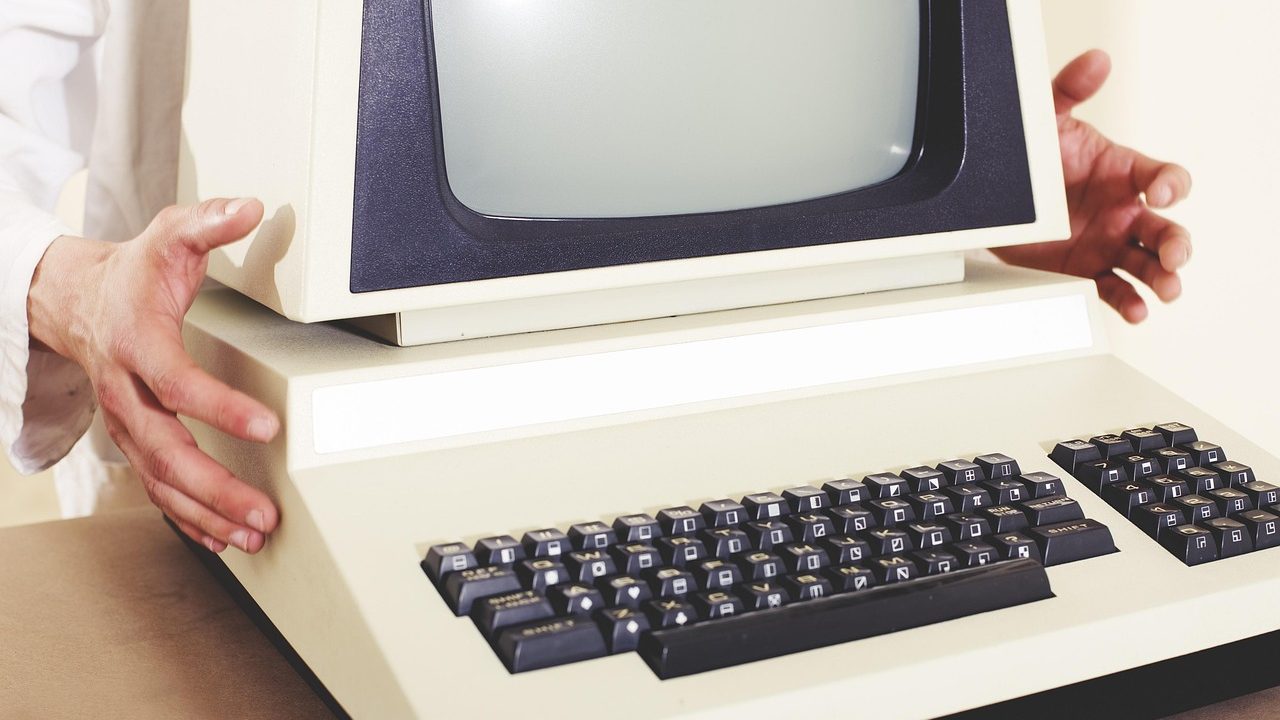
Phil Zimmermann's essay "Why I Wrote PGP" — published in 1991 and revised in 1999 — is circulating on Hacker News with 165 points. Its core argument remains disarmingly direct: without strong encryption accessible to ordinary people, governments would be able to surveil all digital communication by default, and the power asymmetry between states and individuals would become permanent. Zimmermann wrote explicitly about the FBI's Digital Telephony proposal in 1991, an early attempt to mandate wiretap-friendly backdoors in communications infrastructure, and described PGP as a preemptive strike against that outcome. He expected prosecution — the State Department classified encryption as a munition, making export potentially a federal crime — and released the software anyway.
The HN comment thread reflects on what has and has not changed. End-to-end encryption is now mainstream across Signal, iMessage, and WhatsApp. But the threat model Zimmermann described has evolved: metadata surveillance, device-level compromise rather than transit interception, and legal compulsion of service providers have arguably intensified the power asymmetry through different vectors than he anticipated.
Fortran's seventieth birthday — the language was first released in October 1956 — drew 283 points. Its continued relevance in scientific computing, weather modeling, finite element analysis, and computational fluid dynamics is not nostalgia but practicality: the BLAS and LAPACK numerical libraries underlying most linear algebra in Python, R, and Julia are Fortran under the hood, and modern Fortran has evolved to include array syntax, modules, and interoperability features. The activation energy to rewrite twenty million lines of validated scientific code in a nominally modern language is, practitioners in the thread explain, essentially infinite — particularly when the Fortran version may run faster anyway.
Lighter fare rounded out the programming segment. A post on invoking functions without parentheses catalogs techniques in Python, JavaScript, and Haskell — property accessors, decorators, operator overloading, symbol coercion — that are useless to know and yet clarifying about what "calling a function" means at a language design level. The Folders programming language, created by Daniel Temkin and classified as an esoteric language, is Turing-complete and encodes programs entirely through directory and folder structures, with no file contents whatsoever. A two-stack sliding window aggregation algorithm — for computing running aggregations over a moving time window without scanning the whole window on each step — received few comments but substantial upvotes, suggesting readers recognized the value without wanting to engage publicly. And a 1998 ICQ security advisory about improper session token validation drew attention because the same class of vulnerability, commenters noted, still appears in modern applications twenty-eight years later.