Connected Car Privacy, Singapore's State-Run Dating Service, and Rethinking Vector Databases
How this was made Verified AI
Every Intellegix briefing is generated from that day's broadcast and run through automated checks before it publishes — with a human paged on any flag. Here is the trail for this edition.
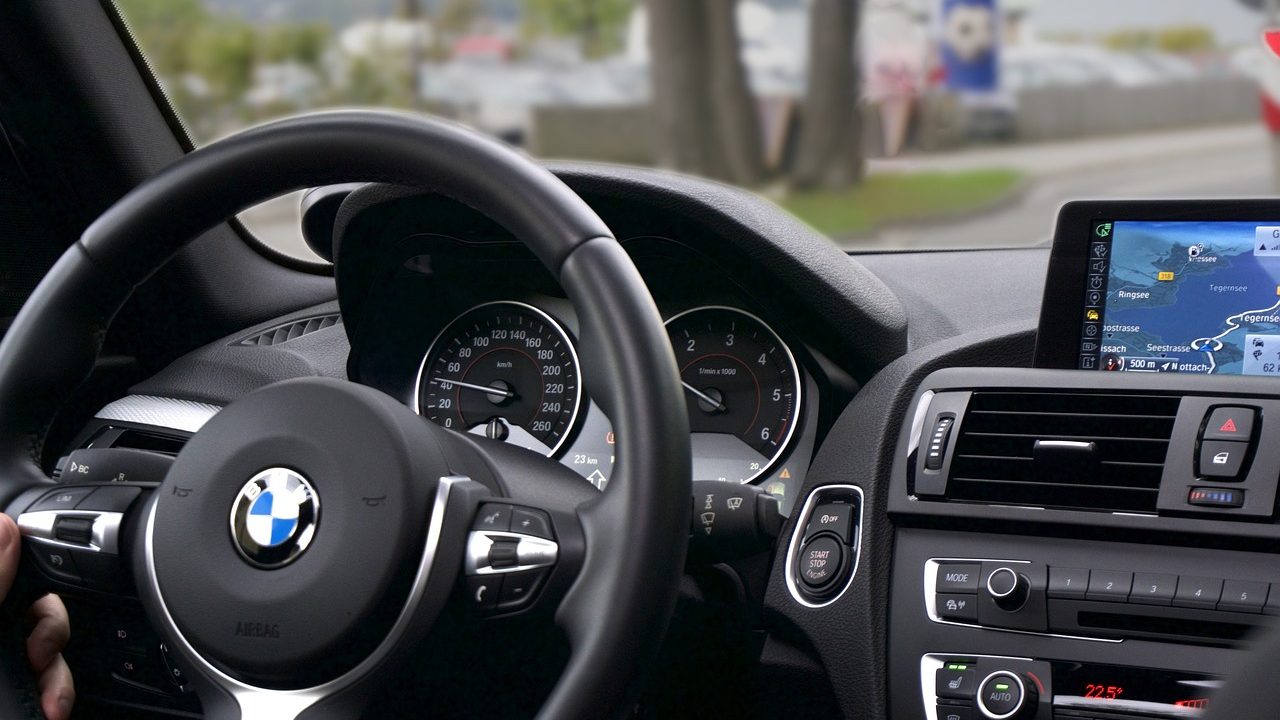
A Northeastern University study titled 'Automatic Transmission,' scoring 199 points and 171 comments, documented the breadth of data collection in modern connected vehicles: location data, driving behavior, in-cabin audio detection, smartphone integration data, and in some cases biometric data from driver monitoring systems. The study found that most vehicles collect data categories drivers are not meaningfully aware of, with consent mechanisms buried in terms of service documents. In the European Union, GDPR enforcement against automotive data collection has been inconsistent, partly because regulators have not fully inventoried what the industry actually collects. Systematic evidence of the kind Northeastern produced tends to accelerate those regulatory conversations.
A feature on Singapore's government-run dating program — the Social Development Network's FirstDate service — drew 185 points and 161 comments. The program has operated for decades, driven by persistent government concern about birth rates and social cohesion, using a compatibility matching system run by a government agency and offering subsidized introductions. The HN thread mixed policy analysis with cultural comparison: several commenters noted that government-facilitated matchmaking is less unusual globally than it might appear to Western observers, since family-network arranged marriages function as structurally similar systems with different institutional actors.
Turbopuffer's 'RIP, Vector Database' post, at 342 points and 89 comments, argues that standalone vector databases as a product category are being absorbed — by general-purpose databases adding vector indexes, by embedding search directly into AI frameworks, and by broader AI infrastructure consolidation. PostgreSQL with pgvector, Redis, and Elasticsearch have all added credible vector search, making the category's core differentiator a checkbox feature in major databases. The post contends that companies such as Pinecone, Weaviate, and Qdrant face existential pressure as a result.
The strongest counterargument — raised in the thread and worth taking seriously — is that dedicated vector database performance at billion-scale retrieval with sub-10-millisecond latency is measurably different from pgvector on a general-purpose Postgres instance, and may remain so as AI applications mature and retrieval demands grow. The analogy that holds some predictive weight: time-series databases were similarly predicted to be absorbed by general-purpose alternatives, and the category neither died nor dominated — it consolidated, with surviving players occupying specific niches where general databases genuinely fell short. Whether standalone vector databases find an equivalent durable floor may depend on whether large-scale retrieval-augmented generation applications grow faster than anticipated.
On a lighter note, new research published in an AGU journal suggested that oceanic dead zones — oxygen-deprived regions historically regarded as purely negative ecological phenomena — may harbor microbial life relevant to astrobiology and provide windows into early Earth biochemistry. Separately, a behavioral ecology study found that certain butterfly wing patterns exploit the same perceptual shortcuts in predator vision that human visual artists use deliberately, creating false depth cues that make the insect appear to move differently than it actually is. Evolution, the researchers concluded, discovered optical illusions independently.