Nine Billion DNA Variants, Ancient Psychedelics, and a Stress Test for the Week's Biggest Claim
How this was made Verified AI
Every Intellegix briefing is generated from that day's broadcast and run through automated checks before it publishes — with a human paged on any flag. Here is the trail for this edition.
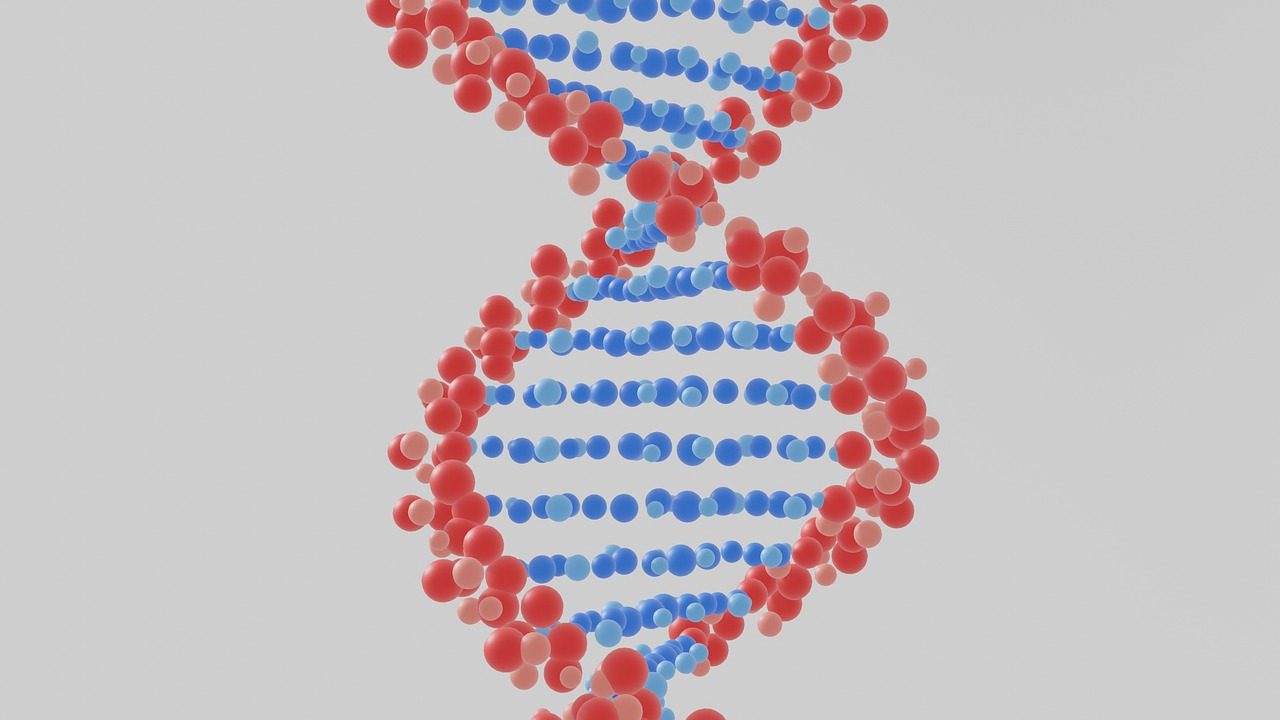
Google DeepMind's AlphaGenome announcement — mapping nine billion DNA variants with predicted functional annotations — represents a scale that exceeds previous variant databases by a factor that makes it qualitatively different from prior work. The human genome contains roughly three billion base pairs; a variant is a position where the sequence differs between individuals or from the reference genome. High-quality functional annotations for variants are the difference between a hypothesis and a guess when researchers are trying to understand why a specific variant correlates with a disease phenotype or why a patient responds differently to a drug than population averages predict. If the annotations hold up under biological validation, AlphaGenome potentially compresses years of experimental work into query time.
A Science article on Andean civilization and mind-altering plants surprised observers with its evidentiary grounding. Researchers using residue analysis on ceremonial objects — providing direct chemical evidence rather than inference from iconography — found that ritual use of vilca, a DMT-containing plant preparation, may have been structurally central to the social coordination mechanisms that allowed hierarchical Andean societies to form and maintain cohesion. The proposed mechanism is that shared psychedelic ritual created common experience and elevated social trust in ways that enabled large-scale cooperation. The HN thread drew 110 comments touching anthropology, pharmacology, comparative religion, and contemporary psychedelics policy.
The week's 'What If We're Wrong?' exercise focuses on the two most confident claims circulating in the Navier-Stokes threads. The first is that the Clay Institute's announcement reflects a genuine mathematical breakthrough. The Institute is careful with its language, but careful language has not historically been a reliable filter at this stage: there have been claimed proofs of Millennium Problems before, including of Navier-Stokes itself, that did not survive peer review. The community is treating this one with more credibility, primarily on the basis of institutional framing and favorable initial expert reactions — neither of which is conclusive.
The second assumption is quieter but present throughout the HN discussion: that a proof of existence and smoothness would have significant practical implications for fluid dynamics and engineering. That framing deserves scrutiny. Engineers have been using Navier-Stokes equations to design aircraft, model weather, and analyze blood flow without waiting for a mathematical proof of existence. A proof resolves a question about the structure of mathematics, not about whether the equations work in practice. The counterargument is that proof techniques sometimes reveal constructive methods that generalize to related problems where theoretical grounding is currently lacking — but that is a potential downstream benefit, not a guaranteed one.
A third assumption worth examining is the community's confidence that AI systems cannot make genuine mathematical contributions, only perform sophisticated pattern matching. The mathandai.org piece argues this distinction matters, and it does — but the line between sophisticated pattern matching and genuine reasoning is not as sharp as the piece implies. If that line is wrong, the implications for how mathematical research is organized are substantial. The practical thing to watch for: if the Navier-Stokes proof proceeds through review and relies primarily on classical mathematical infrastructure in a clever new combination, that strengthens the case that the current mathematical enterprise is robust and AI assistance is supplementary. If it relies on a fundamentally new construction that required computational search or AI-assisted conjecture generation, that is a different signal entirely.