Election Eve, Rain, and Consequential Decisions: San Diego Enters a Pivotal Week
With Election Day two days away, an inch and a half of rain bearing down, and city and county governments reshaping health care, housing, and tech policy, San Diego heads into one of its most consequential weeks in recent memory.

“A colocation provider chasing the cheapest megawatt-hour is a flight risk; a research institution generating petabytes of genomics data on Torrey Pines Mesa is not.”
How this was made Verified AI
Every Intellegix briefing is generated from that day's broadcast and run through automated checks before it publishes — with a human paged on any flag. Here is the trail for this edition.
Storm, Ballot Deadlines, and a Fatal Capsize Shadow the Weekend

Most of San Diego County could receive approximately one inch of rain by Sunday afternoon, with some areas potentially reaching an inch and a half, according to the Union-Tribune. City forecasters flagged ponding and hydroplaning risk, urging drivers to slow down, increase following distance, and watch for standing water in underpasses and low-lying intersections. Conditions are expected to improve considerably by Monday — welcome timing ahead of Tuesday's election.
Election Day polls open at 7 a.m. and close at 8 p.m. at county vote centers on November 3rd. Official drop boxes accept ballots until 8 p.m. Tuesday; mailed ballots must be postmarked by November 3rd and received by November 10th. Voters who missed the October 19th registration deadline can still participate through conditional registration at any vote center or at the Registrar of Voters office at 5600 Overland Avenue.
The stakes are substantial. Two County Board of Supervisors seats are contested, four San Diego City Council districts — 2, 4, 6, and 8 — appear on the ballot, and countywide voters will weigh in on supervisor term limits and Measure B, a proposed half-cent sales tax increase aimed largely at social-service programs. In the District 5 supervisor race, San Marcos Mayor Rebecca Jones, a Republican, faces former county Democratic Party chair Kyle Krahel in a contest that has drawn considerable regional attention.
A somber note from the weekend: a fatal boating accident near the Del Mar Jetty is under investigation. A survivor reached the jetty and called 911 around 7 p.m. Friday, October 30th; responders located a second person in the water at 7:13 p.m., began CPR, and transported that person to Tri-City Medical Center, where the individual was pronounced dead. Oceanside Fire Department responded. The victim's identity has not been released and the cause remains under investigation. Separately, the Sheriff's Office has submitted a $10 million funding request for Central Jail upgrades intended to reduce in-custody deaths — a request awaiting County Board of Supervisors consideration, not yet an approved appropriation.
City Halts Data Centers; County Builds a Health-Care Bridge
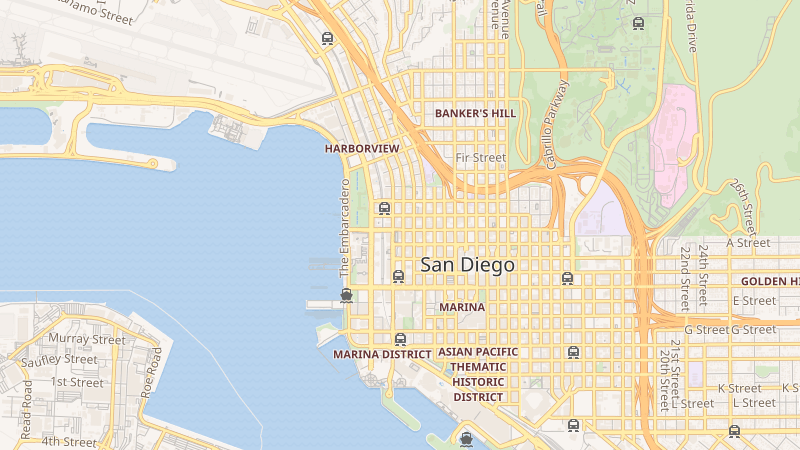
The San Diego City Council voted nine to zero on October 27th to adopt a 45-day emergency moratorium on data-center permitting, approvals, and new development within city limits, following Mayor Todd Gloria's October 22nd executive order directing staff to bring forward a temporary pause. The moratorium explicitly carves out ordinary internal computing equipment and accessory server rooms serving otherwise-permitted uses, targeting instead larger facilities whose electricity demand, water consumption, and neighborhood proximity have raised planning concerns.
Councilmember Sean Elo-Rivera added several policy directions to shape whatever permanent framework emerges from the pause: mandatory council notification within seven days of any proposed facility, a prohibition on passing utility costs to residents, renewable-energy requirements, and minimum separation distances from schools, parks, and child-care facilities. Those remain directions to staff, not enacted rules. Staff now has 45 days to draft a permanent regulatory framework, and the urgency ordinance can be extended after additional hearings and council votes. A carve-out for public safety and emergency operations ensures the moratorium cannot interrupt life-safety infrastructure.
The backdrop is the explosion of AI-driven computing demand that has pushed data-center proposals into cities across the country, with concerns in several metros that large facilities drove up electricity rates for surrounding neighborhoods. The central question the 45-day period is meant to answer is what permanent standards San Diego will adopt for energy consumption, water use, and community impact.
On the same day, the County Board of Supervisors approved a $20.4 million Safety Net Bridge program for residents who will lose Medi-Cal coverage as state eligibility rules tighten. The total includes $17.6 million drawn from county reserves. The program provides up to 180 days of primary care — including prescription drugs, telehealth, and mobile medical services — with approximately $12 million allocated directly to medical services and the remainder supporting enrollment retention, health fairs, and administration. The board simultaneously reformed the County Medical Services program, eliminating a property-lien requirement that had discouraged homeowners from applying, streamlining the application process, aligning eligibility rules with Medi-Cal, and adding coverage for emergency-room follow-up care. The bridge funding direction passed unanimously.
Also in the pipeline: Vintage Housing plans to convert the 19-story office tower at 610 West Ash Street in Little Italy into 184 income-restricted apartments. An affiliated entity purchased the property September 28th for $26 million following foreclosure. These represent project and financing plans, not completed construction, and subsidy awards are not guaranteed — but the proposal involves a building that has sat largely unused, distinct from the city-owned 101 Ash Street controversy.
Padres Reshape Their Pitching Staff Ahead of Monday's Option Deadline

The Padres front office entered a compressed decision window this weekend, with contract-option deadlines due Monday, November 2nd. According to MLB.com, which attributed the information to a source and noted the club had not confirmed the moves, the team declined right-handed starter Nick Pivetta's $14 million team option for 2027, making him a free agent, while left-handed reliever Wandy Peralta exercised his $4.45 million player option to return.
Those decisions compound earlier departures. Starter Michael King declined his player option and took the buyout, officially entering free agency, though reporting indicates interest in his return without any agreement in place. Left-handed reliever Adrián Morejón and first baseman Ty France are also among the departing free agents, leaving general manager A.J. Preller with a significant pitching reconstruction project. The situation is further complicated by the current collective bargaining agreement expiring December 1st — an expiration that does not automatically mean a work stoppage but adds uncertainty to every negotiation between now and then.
On the field Saturday, SDSU defeated Washington State 26 to 20 in a Halloween showdown at Snapdragon Stadium. Lucky Sutton and Javion Kinnard combined for more than 200 rushing yards and two touchdowns. USD football improved to four wins and five losses overall, three and three in Pioneer Football League play, with a home victory over Marist. San Diego FC closed out a 1-0 win over St. Louis City, with Anders Dreyer scoring his fourteenth goal of the season in the 39th minute, assisted by Alejandro Alvarado and Marcus Ingvartsen; Pablo Sisniega recorded the shutout. The club — now 9-13-11 and eliminated from postseason play — hosts Sporting Kansas City in its regular-season finale November 7th.
High school football produced some of the weekend's most dramatic results. Helix staged a comeback to defeat Granite Hills, claiming the Grossmont Hills league title and ending the Eagles' 19-game league winning streak. St. Augustine overcame a 21-point deficit against San Diego High to win the Eastern League. And Southwest-San Diego claimed its first league championship since 1982 — a 44-year wait for that school community.
Santee Heads to the Polls with Tax Measure and Council Races on the Line

Halloween in Santee delivered what FOX 5 documented as determined trick-or-treaters out in the rain as late as 10:15 p.m. Saturday — costumes damp, spirits intact. The more consequential East County news arrives Tuesday, when Santee voters decide two city council races and a local ballot measure alongside county and statewide items.
The Santee vote center at Cajon Park School — multipurpose room at 10300 North Magnolia Avenue — is open today and Monday from 8 a.m. to 5 p.m., and on Election Day from 7 a.m. to 8 p.m. In Districts 1 and 2, both incumbents face challengers: Rob McNelis in District 1 is opposed by Matthew Rascon, and Ronn Hall in District 2 faces Eddie Vandiver. The winners serve four-year terms extending through 2030.
Measure Y proposes a one-percentage-point general sales tax for ten years, estimated to generate $14 million annually for city services and infrastructure. Because it is classified as a general tax rather than a special tax, it requires only a simple majority to pass. The measure includes independent audits and a citizens' oversight committee. Whether Santee voters judge $14 million a year worth a penny more on each dollar spent at local businesses is the question Tuesday settles.
Also from East County this past week: Andre Ford and Didesisi Franklin were sentenced to prison following their convictions in the 2021 killing of Jordan Amon in Spring Valley. The sentencing was reported October 30th; accessible reporting did not include sentence lengths. The case has now reached its conclusion in court. For families planning weekend recreation, the trout-season opener at Santee Lakes is next weekend, November 7th and 8th, with 3,500 pounds of rainbow trout scheduled for stocking. Adult fishing permits are $10, juniors and seniors pay $6, and a second-pole stamp is $4, available at the Gatehouse on arrival. The Lakes' sprayground is in seasonal closure through February.
After Nine Unanimous Votes: Could the Data-Center Moratorium Backfire?

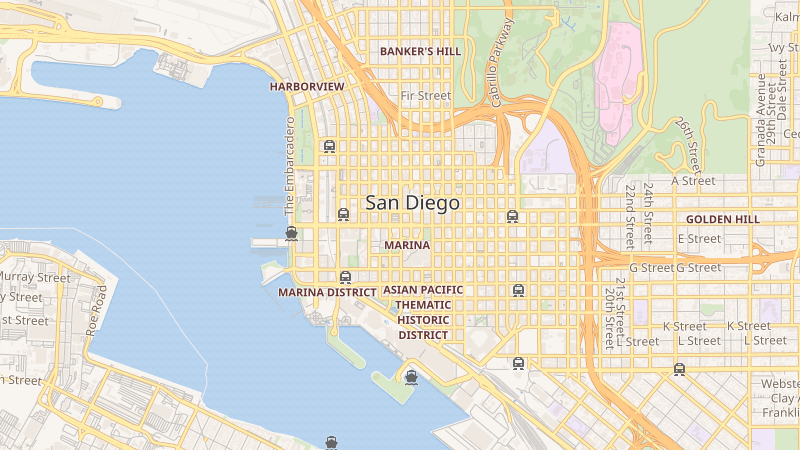
A nine-to-nothing City Council vote signals political consensus, but consensus in a council chamber is not the same as effective policy in a competitive real-estate market. The moratorium rests on an assumption worth examining: that data-center operators want to locate in San Diego specifically enough to wait through a 45-day regulatory pause, absorb whatever permanent rules emerge, and still proceed. That assumption may be only partially correct.
Large hyperscale data-center operators are actively building in Reno, Phoenix, the Texas panhandle, and parts of the Carolinas — locations where land is cheap, power is cheap, and permitting is fast. San Diego is expensive on all three counts before the moratorium adds regulatory uncertainty. The concern is less about losing a potential Amazon Web Services campus — San Diego was unlikely to attract that in any case — and more about signaling to the next tier of mid-sized operators and colocation providers that the city is a difficult regulatory environment, causing capital to route elsewhere.
The failure mode is specific: the city drafts careful permanent rules, and data-center proposals stay scarce — not because of the rules themselves, but because the signal the moratorium sent changed the development calculus. That outcome would cost the city tax revenue, the economic activity those facilities generate, and potentially the local AI-infrastructure jobs that would otherwise be drawn to San Diego's tech talent ecosystem.
The strongest counterargument is that San Diego has a captive-demand base that no moratorium erases. The military presence drives federal data-center contracts. The biotech and genomics research concentration at institutions including UCSD, Salk, and Scripps generates enormous computing demand that needs to locate near where the research itself is produced — not in Nevada. A colocation provider chasing the cheapest megawatt-hour is a flight risk; a research institution generating petabytes of genomics data on Torrey Pines Mesa is not.
The concrete indicator to watch: permit application data from the city's Development Services Department in the first quarter of 2027. If applications resume at normal rates once permanent rules are adopted, the moratorium will look prescient. If the pipeline stays thin through mid-2027 and major operators publicly cite San Diego's regulatory environment when explaining site selections elsewhere, that is the early warning that the moratorium's signal cost was real.
Events, Education, and What Comes Next
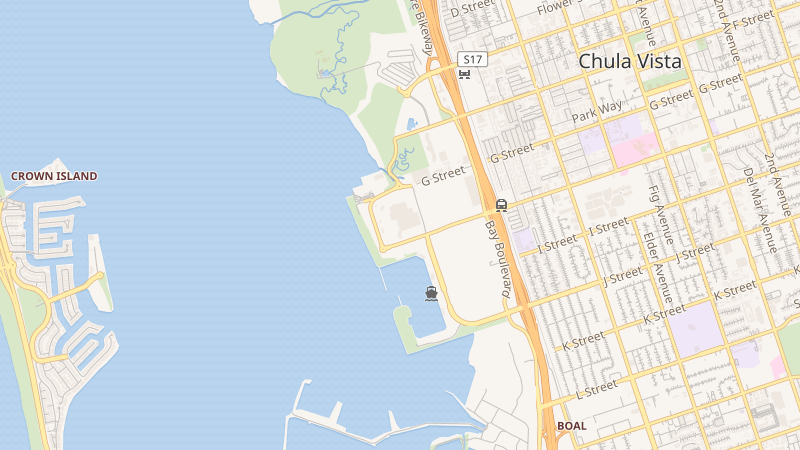
The HACU College and Career Fair runs today from 2 to 5 p.m. at the Gaylord Pacific Resort in Chula Vista — free admission, indoors, and designed to connect students with college and career pathways regardless of the rain outside. On Monday, the San Diego County Office of Education hosts 'Building Healthy Foundations for Young Learners' from 5 to 7 p.m., a professional-development session for early childhood educators.
The 32nd Annual Día de los Muertos celebration in Sherman Heights continues today and Monday at the Sherman Heights Community Center, beginning at 11 a.m. The San Diego Food and Wine Festival opens today and runs through November 8th across multiple locations. Voters who believe they missed the registration window are encouraged to look into conditional registration — a legal option available at any vote center or the Registrar's office at 5600 Overland Avenue that many eligible residents do not know exists.
The week ahead will move quickly. Election results Tuesday night will reshape every story the region has been tracking — supervisor races, city council seats, and sales-tax measures at both the county and Santee levels. The Padres' contract-option deadline arrives Monday. The data-center moratorium framework enters its drafting phase. And with the rain wrapping up Sunday, the county gets its first real test of storm-channel preparation work completed ahead of the season.