San Diego Leaders Freeze Data Centers, Reshape Water Rates, and Commit $20M to Health Safety Net in Packed Tuesday Session
Tide gauges running nearly a foot and a half above predicted levels along the San Diego coast set the backdrop for a consequential Tuesday in which City Council and County Supervisors alike made sweeping decisions on energy, water, and health care that will reshape life across the region for years.

“La Mesa's cameras function as nodes in a regional surveillance infrastructure serving hundreds of other agencies.”
How this was made Verified AI
Every Intellegix briefing is generated from that day's broadcast and run through automated checks before it publishes — with a human paged on any flag. Here is the trail for this edition.
Coastal Flooding, a Packed Agenda, and a Region at a Crossroads

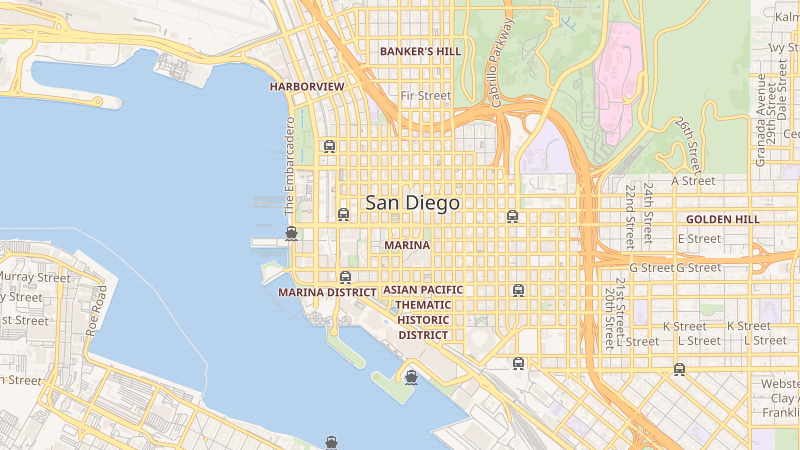
High tides pushing seven-point-seven to seven-point-nine feet — roughly one-point-four to one-point-six feet above astronomical predictions — greeted San Diego on Wednesday morning, with the National Weather Service's Coastal Flood Warning in effect through Thursday afternoon. The physical drama on the shoreline mirrored the policy turbulence playing out in government chambers across the county.
In a single Tuesday session, the San Diego City Council imposed a unanimous 45-day freeze on new data-center development, restructured the distribution of an already-approved water-rate increase, and received a pointed oversight letter directed at federal immigration detention authorities. Meanwhile, the County Board of Supervisors unanimously committed more than twenty million dollars to bridge health coverage for residents losing Medi-Cal benefits and reformed a separate county assistance program by stripping out one of its most widely criticized requirements.
East County added its own texture: a life-without-parole sentence in El Cajon, newly released surveillance data from La Mesa's automated license-plate reader network, and a tense public-safety situation near a Clairemont Mesa mosque that drew a multi-agency response. The breadth of Tuesday's decisions — from energy infrastructure to conservation incentives to detention-center oversight — illustrated how much governing happens in county chambers with little public attention.
Council Halts Data Centers, Rewrites Water Bills, and Presses Feds on Detention
The San Diego City Council voted unanimously Tuesday to impose a 45-day moratorium on new data-center development citywide, following Mayor Todd Gloria's executive order on the matter. The freeze is temporary, not a permanent ban — the explicit goal is to allow time for a regulatory framework to be finalized before additional projects enter the approval queue. The zero-dissent vote on a question that touches on development, energy, and economic growth signaled that concern about grid strain has reached a political threshold where no council member wanted to be the vote that green-lit major new electricity consumers ahead of a potential infrastructure crisis.
Data centers are among the most electricity-intensive facilities in modern development; a single large facility can draw power comparable to a small city. San Diego's grid already faces significant strain during extreme-heat events, and a national wave of proposals tied to artificial intelligence and cloud computing has accelerated pressure on cities to establish rules before projects accumulate.
The council also voted six-to-two to approve a revised water-rate structure taking effect January 1, 2027, with Councilmembers Kent Lee and Henry Foster dissenting and Marni von Wilpert absent. The critical distinction residents need to understand: Tuesday's vote does not impose a new rate increase. The fourteen-and-a-half percent hike for 2027 had already been approved. What the council changed is how that increase is distributed across customer classes — and the redistribution runs counter to decades of conservation-pricing logic. Lower-volume households, those that have already cut water use, will see larger bills than previously scheduled, while higher-volume users and several other classes see relative reductions. City staff told the council that restoring conservation-oriented tiered pricing is not anticipated before 2030 at the earliest.
The council agreed to explore assistance for affected low-income customers using revenue sources outside water-rate collections — but 'explore' remains early-stage language while the new rate structure takes effect in 65 days. Separately, Supervisors Paloma Aguirre and Terra Lawson-Remer sent a demand letter to Homeland Security Secretary Markwayne Mullin and acting ICE Director David Venturella regarding the Otay Mesa Detention Center. The letter requests that federal officials preserve medical records and video footage, make staff available to county investigators, supply a full timeline of medical care provided to detainees, and permit ongoing county public-health inspections — with a written response deadline of November 10.
County Commits $20M to Medi-Cal Bridge, Eliminates Property-Lien Barrier

The San Diego County Board of Supervisors approved two distinct health-care actions Tuesday that are easy to conflate but solve fundamentally different problems. The first — a twenty-point-four million dollar Safety Net Bridge program, passed unanimously — creates a new funding pool to provide up to 180 days of medical care for county residents who lose Medi-Cal benefits. Seventeen-point-six million comes directly from county reserves; approximately twelve million of the total is designated for primary-care medical services, with the remainder supporting community health fairs, Medi-Cal enrollment maintenance efforts, and administrative costs.
The county plans to competitively procure a health-care provider contract to deliver the coverage, meaning no single existing network has yet been designated to carry the load. One hundred eighty days of bridge coverage — roughly six months — targets the gap period when someone loses Medi-Cal eligibility before securing replacement coverage. For people managing chronic conditions, that window without primary care can generate serious downstream health consequences. The unanimity of Tuesday's vote, committing more than twenty million in reserves, reflects broad supervisorial consensus about the urgency of anticipated Medi-Cal disruption.
The second action addressed County Medical Services, a separate existing assistance program, and its most significant change was the elimination of a property-lien requirement. Under previous rules, homeowners enrolled in County Medical Services had to accept a government lien on their property as a cost-recovery mechanism — a condition that functioned as a de facto enrollment barrier for asset-holding but low-income residents. Supervisors removed that requirement Tuesday. They also simplified the application process and added emergency-room follow-up care as a covered benefit, an addition with real clinical value: patients discharged from an ER without a path to follow-up care frequently return within weeks as underlying conditions go unmanaged.
Supervisor Jim Desmond cast the lone opposing vote on the County Medical Services reforms; the Safety Net Bridge passed without dissent. The divergence — zero opposition to a twenty-million-dollar new commitment, one dissent on reforms to an existing program — reflects where political consensus currently sits on safety-net health care at the county level. County Health and Human Services Agency is the starting point for residents seeking information on either program as implementation unfolds over the coming months.
Mosque Lockdown, Housing Momentum, and a Biotech Wind-Down Takes Shape

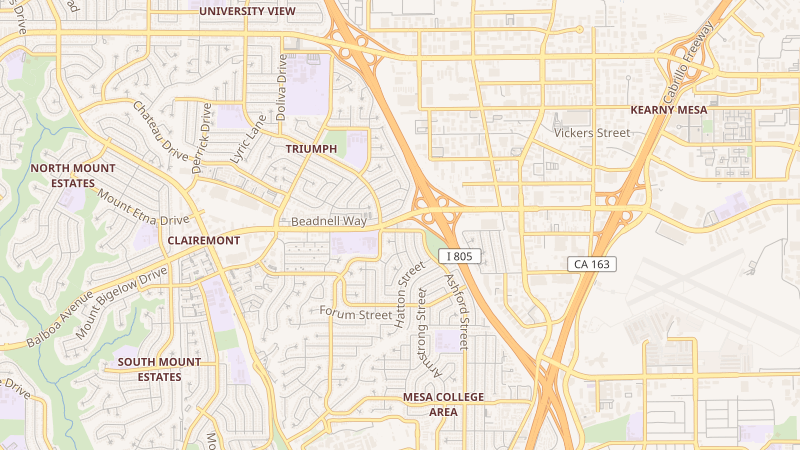
A tense public-safety situation unfolded near the Islamic Center of San Diego in Clairemont Mesa on Tuesday afternoon after Carlsbad police attempted a traffic stop involving a woman driving erratically. The woman's family subsequently warned authorities she was making suicidal statements, might be armed, and could be heading toward the Islamic center. By approximately 2:30 p.m., SDPD had received that information and responded — but the woman had already spoken with the center's security guards and departed before officers arrived. Police instituted a precautionary lockdown and dispatched officers to additional Islamic centers and mosques across the city as a protective measure given uncertainty about her destination.
The lockdown was subsequently lifted. Police identified the vehicle as a gray 2015 Toyota 4Runner with New York plate KGN3027 and said in their last update that the woman was no longer believed to be in San Diego County. Anyone spotting the vehicle was advised not to approach it and to call 911. The multi-site response — covering several houses of worship simultaneously — reflects standard threat-assessment protocols when a subject's location is unknown.
On the economic front, the S&P Cotality Case-Shiller index released Tuesday placed San Diego County's home-price growth at two-point-two-nine percent year over year as of August, ranking seventh among the twenty metro areas in the index and slightly above the national annual pace of approximately two-point-one percent. More striking was the month-over-month figure: according to PNC's analysis of the release, San Diego recorded the largest seasonally adjusted monthly gain among all metros with available data — zero-point-seven-three percent from July to August. Annual appreciation has moderated significantly from the double-digit rates of recent years, but short-term price momentum in late summer was the sharpest of any major tracked market.
Artiva Biotherapeutics, the San Diego-based biotech, filed new SEC disclosures Tuesday offering the most specific public window yet into its wind-down. The company reported approximately three-hundred-nineteen-point-one million dollars in preliminary cash, cash equivalents, and investments as of September 30. The filing projects that the workforce reduction will be completed in the first quarter of 2027, with most wind-down costs incurred during the fourth quarter of this year. The board's underlying approval for the process dated to October 22; Tuesday's SEC filing was the first public disclosure of the specific figures and timeline. With more than three hundred million in available resources, Artiva is positioned for an orderly rather than distressed wind-down — though the concentration of talent departures heading into early 2027 will be closely watched by the region's broader life-sciences labor market.
Santee Meetings, a Murder Sentence, and the Scale of East County Surveillance
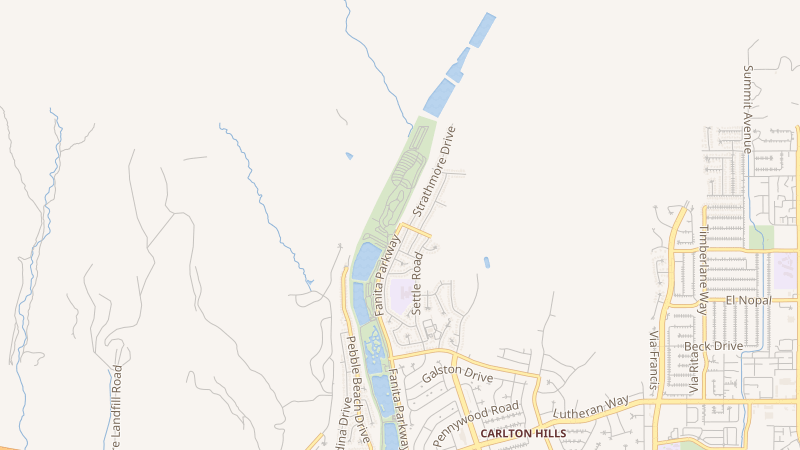
East County carried a full slate of civic and criminal-justice news Wednesday. The Padre Dam Park Committee meets at 4 p.m. at 9300 Fanita Parkway, with the agenda covering ongoing construction at Santee Lakes under the Advanced Water Purification project's Phase 3 — contractor W.M. Lyles remains active throughout the park and campground, with temporary work and material-storage areas affecting operations. Staff reports also address shoreline restoration at West Lake 5, targeted to go out for bid in November, and broader North Lake 5 improvements including a replacement amphitheater, a new bridge, and ADA-accessible routes.
Proposed 2027 rate increases are also before the committee: weekday vehicle parking would rise from four dollars to five, weekend and holiday parking from seven to eight, adult day-fishing permits from ten to eleven, and lakefront camping from a 2026 range of seventy-one to one-hundred-seven dollars to an eighty to one-hundred-eighteen dollar range in 2027. Tonight at 6:30 p.m., the Santee City Council meets at City Hall, where the consent calendar includes authorization of up to one-hundred-fifty-one-thousand-six-hundred dollars to purchase and install a permanent generator at Interim Fire Station 20, plus thirty-five-thousand-four-hundred dollars to continue renting the existing generator through October 2027 during a projected 36-week procurement and installation process. A transfer of eighty-nine-thousand-one-hundred dollars from the Interim Fire Station 24 project budget would cover the remaining cost, and the council will also consider paying sixty-seven-thousand-nine-hundred-forty-seven dollars and ninety-four cents in September legal bills.
In El Cajon, a chapter that opened with a 2020 murder closed this week with a sentence of life without parole plus twenty-five years to life for Jafet Prieto, 34. An El Cajon Superior Court jury convicted Prieto of first-degree murder with the special circumstance of shooting from a vehicle in the drive-by killing of forty-one-year-old Tony Montantes. Six years separated the crime from the final sentence.
La Mesa released data this week revealing the operational scale of its twenty-camera automated license-plate reader network. Over a seven-month period, those cameras were queried more than three-point-one-three million times — approximately fourteen-thousand-four-hundred searches per day. La Mesa police themselves averaged slightly more than six local searches daily. The vast majority of queries came from outside the department: the system is shared with three-hundred-six government and law-enforcement entities, meaning La Mesa's cameras function as nodes in a regional surveillance infrastructure serving hundreds of other agencies. Separately, Anthony Dotson, 36, was arrested in Spring Valley Saturday after a pursuit that ended with a crash on Austin Drive; he was booked on an outstanding Los Angeles County felony warrant, suspected felony evading, and DUI. In Lemon Grove, Jose Martin Garcia, 47, faces arraignment Wednesday afternoon on suspicion of setting small fires and vandalizing a Federal Boulevard auto business.
Stress-Testing the Safety Net: Where the Health Programs Could Fall Short

The county's dual health-care commitments from Tuesday drew unanimous or near-unanimous board support, but several design assumptions embedded in both programs deserve scrutiny before the congratulations become complacency. The Safety Net Bridge program's central bet is that twenty-point-four million dollars — twelve million of it for primary care — will provide meaningful coverage during a Medi-Cal disruption whose scale depends on federal policy dynamics San Diego County cannot control. If the number of residents losing Medi-Cal eligibility in a short window significantly exceeds what the funding was sized against, the bridge may run out of capacity before people reach stable coverage on the other side.
The competitive procurement process for a health-care provider contract is sound governance in principle but introduces a timing risk: procurement for a contract of this magnitude can take three to four months, meaning the funding could sit largely undeployed while the people it is designed to help go without care. The program was approved Tuesday; the urgency is immediate. If federal Medi-Cal disruption turns out to be smaller than anticipated, the reverse problem emerges — twenty-point-four million in county reserves committed against a risk that did not fully materialize. That is not a failure in the traditional sense, but it is a contingency worth naming clearly.
On the County Medical Services reforms, removing the property-lien requirement eliminates a documented enrollment barrier — but the lien also functioned as a cost-recovery mechanism, recouping program expenses from estates when patients died with assets. No new funding stream for County Medical Services was announced alongside the reform. If enrollment expands significantly — the explicit goal — program costs grow without a clearly identified offset. That fiscal gap may be manageable, but it is an assumption that will require examination in next year's budget cycle.
Specific signals to watch: if the Safety Net Bridge program's per-patient primary-care cost exceeds what the twelve-million-dollar allocation implies, or if procurement remains incomplete by February, the design assumptions were off. For County Medical Services, flat enrollment in the first quarter after implementation would indicate the property lien was not actually the primary barrier and the real obstacle remains unaddressed. The county's health-care staff, as one observer put it, will have more answers in March.
Flood Warning Through Thursday, Halloween Weekend in Focus

The National Weather Service Coastal Flood Warning remains in effect through 1 p.m. Thursday, October 29, covering San Diego County coastal areas. High tides are running approximately seven-point-seven to seven-point-nine feet — one-point-four to one-point-six feet above astronomical tide levels — pushing elevated water into low-lying coastal zones. Residents in coastal areas should plan Thursday morning around those conditions. Inland, Santee can expect a sunny to mostly sunny Wednesday with a high near seventy-nine degrees, overnight low near fifty-four, and west-to-southwest winds at ten to fifteen miles per hour in the afternoon.
Looking toward the weekend, the National Weather Service is calling for the best regional rainfall chances late Saturday night into early Sunday — Halloween night into November 1 — though that window is characterized as probabilistic rather than a guaranteed washout. Outdoor Halloween planners should monitor the Saturday forecast as it refines over the next 48 hours.
Halloween-adjacent events include Santee's Hallowheels Trunk-or-Treat on Thursday, October 29, from 3 to 6 p.m. at Santee Lakes (9310 Fanita Parkway), with vehicle participation at twenty dollars including park entry. Also Thursday, the Santee Seniors 55-plus program hosts a fitness walk at 9 a.m. at Walker Preserve. Friday, October 30, the Santee Teen Center at Big Rock Park offers teen pumpkin painting from 3 to 4:30 p.m. In the Gaslamp, the new venue The Quin — at 500 Fourth Avenue in the former FLUXX space — hosts a Halloween event called Heaven and Hell on Saturday, October 31, with DJ and producer Sam Feldt headlining from 9 p.m. to 2 a.m., supported by aerial performances and a costume contest. A separate grand opening for The Quin is planned for November, though a specific date has not yet been announced.